
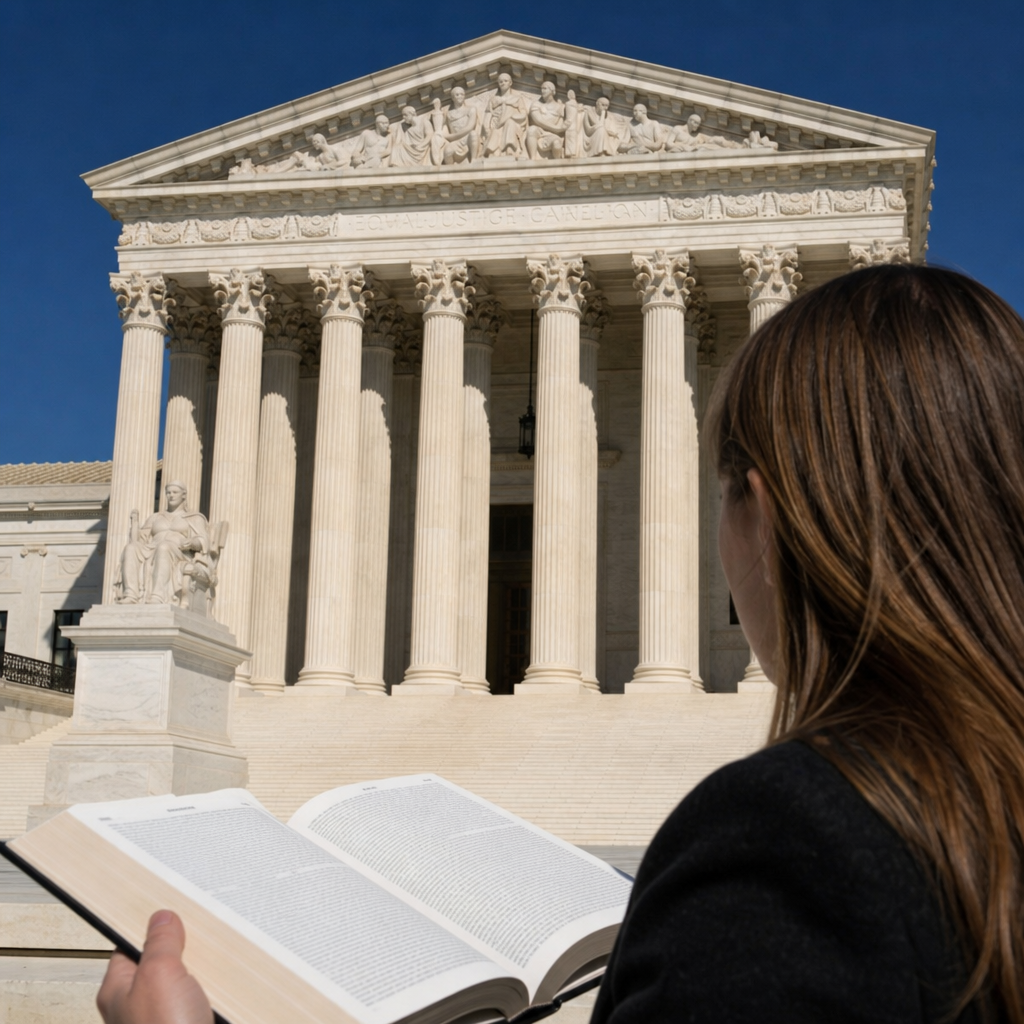
A Supreme Court majority opinion is the controlling written explanation issued by more than half of the justices who participated in a case, and learning to read it well is one of the most practical skills in AP Government and Politics. Students often know that the Supreme Court decides constitutional disputes, but they are less sure how to unpack the document that actually states the rule, applies the law, and binds lower courts. In class, I have seen strong students quote a famous case name yet miss the exact holding because they read the opinion like a textbook chapter instead of a legal instrument. That mistake matters. A majority opinion is not simply a summary of who won. It is the Court’s authoritative reasoning, and every sentence can affect later disputes about rights, federalism, separation of powers, elections, civil liberties, administrative power, and judicial review.
To read a Supreme Court majority opinion, start with four core terms. The holding is the legal rule necessary to resolve the case. Dicta is additional commentary that may persuade but does not control future outcomes in the same way. Precedent refers to earlier decisions the Court relies on, distinguishes, or limits. The majority opinion differs from concurring opinions, which agree with the judgment for different reasons, and dissenting opinions, which explain disagreement. If no single opinion gains a full majority on reasoning, the controlling rule can become harder to identify. For AP Government and Politics, however, your first task is usually simpler: find the majority’s answer, the constitutional basis, and the practical impact.
This skill matters far beyond one assignment. Majority opinions shape how Congress drafts laws, how presidents execute them, how agencies write regulations, and how state governments test the edge of federal power. They also give students a direct view into how constitutional meaning develops over time. Reading Brown v. Board of Education, United States v. Lopez, Tinker v. Des Moines, or New York Times v. United States through the majority opinion reveals not just outcomes but methods of reasoning. Once you know how to identify facts, questions presented, standards of review, and the scope of the ruling, court opinions become readable. More important, they become useful evidence for essays, debates, and FRQs across the full AP Government and Politics curriculum.
Start with the case caption, vote, author, and procedural posture
The fastest way to get oriented is to read the opening metadata before the body of the opinion. Note the case name, decision year, vote split, and opinion author. A 9-0 decision sends a different signal than a 5-4 decision, and an opinion written by Chief Justice Roberts may use a different style than one written by Justice Kagan or Justice Thomas. Then identify the procedural posture, meaning how the case reached the Court. Was the Court reviewing a federal appellate decision, a state supreme court ruling, or an emergency application? In my own work with students, this step prevents a common error: treating every Supreme Court case as if it began there. The Court is usually reviewing another court’s judgment, and that background often explains why the opinion spends so much time on jurisdiction, standing, mootness, or remedy.
Next, ask what the Court is actually deciding. The issue section in a commercial case brief may help, but when reading the opinion itself, you should formulate the question in one sentence. For example: Does a public school violate the First Amendment by punishing student speech that does not substantially disrupt classwork? That framing turns Tinker into a usable constitutional question. The same method works for congressional power, equal protection, due process, religion, campaign finance, voting rules, and presidential authority. If you cannot state the question precisely, you are not ready to identify the holding. A disciplined reader writes the question in plain language before moving deeper into the text.
Separate facts from law before you hunt for the holding
Many students rush straight to the famous quotation and skip the factual narrative. That is a mistake because constitutional reasoning is tied to facts. The Court decides concrete disputes, not abstract civics prompts. Facts tell you who the parties are, what government action is challenged, what constitutional provision is invoked, and what harm is alleged. In Gideon v. Wainwright, the facts matter because the defendant lacked counsel in a felony trial. In Hazelwood School District v. Kuhlmeier, the school-sponsored nature of the student newspaper matters. In District of Columbia v. Heller, the specific firearm regulation matters. Details define scope.
After the facts, identify the legal sources the Court uses. These usually include the constitutional text, prior precedents, historical practice, statutes, and institutional principles. You should mark each source differently if you annotate. I advise students to underline constitutional text, box the formal holding, and circle case names. This makes the opinion easier to review later. It also helps you see whether the Court is relying primarily on text, original public meaning, precedent, balancing, structure, or practical consequences. Different justices emphasize different methods, but the majority opinion tells you which method controls in that case.
The holding usually appears in direct language, though not always in one neat sentence. Look for formulations such as “we hold,” “we conclude,” or “the Constitution permits/prohibits.” Then rewrite that rule narrowly and accurately. A strong reader avoids overstatement. Brown did not say every educational inequality is unconstitutional; it held that state-imposed racial segregation in public schools violates equal protection. Precision is the difference between real analysis and broad paraphrase.
Read the opinion in layers: issue, rule, reasoning, limit, result
The most reliable method for reading a Supreme Court majority opinion is a layered approach. On the first pass, identify the issue and result. On the second, locate the rule and supporting reasoning. On the third, identify limits, exceptions, and unresolved questions. This structure mirrors how lawyers and judges actually use cases. They need the answer, but they also need to know how far that answer extends. In AP Government and Politics, that distinction is crucial because exam questions often ask students to apply precedent to a new fact pattern rather than recite a slogan from a landmark case.
Reasoning deserves special attention. The majority opinion typically explains why one constitutional principle controls over competing claims. In West Virginia State Board of Education v. Barnette, the Court did not merely say students could refuse the flag salute; it grounded that result in protection against compelled speech. In McCulloch v. Maryland, the Court did not simply uphold congressional power; it articulated an expansive understanding of implied powers under the Necessary and Proper Clause and rejected state taxation of federal institutions. Those are reusable principles. When you read, ask: what logical steps connect the facts to the constitutional rule?
Another key layer is the opinion’s limit. Courts often define boundaries explicitly. A majority may state that its decision is narrow, confined to school settings, limited to content-neutral regulations, or dependent on a specific government interest. Those limits matter because later courts use them to distinguish precedent. Students who skip limiting language often misapply cases in essays. The best notes include one line for the rule and one line for what the rule does not reach.
| Reading Step | What to Find | Example Question to Ask |
|---|---|---|
| Orientation | Case name, year, vote, author, lower court | Who wrote the controlling opinion, and how divided was the Court? |
| Facts | Relevant events, government action, claimed injury | Which facts seem necessary to the outcome? |
| Issue | Constitutional or statutory question | What exact legal question is the Court answering? |
| Holding | Controlling rule and result | What did the Court say the law requires here? |
| Reasoning | Text, precedent, history, tests, policy consequences | Why did the majority reject the opposing argument? |
| Limits | Narrowing language, exceptions, open questions | How far does this rule extend to future cases? |
Track tests, standards of review, and constitutional vocabulary
Supreme Court opinions become much easier once you recognize recurring legal tests. In equal protection cases, the Court may apply strict scrutiny, intermediate scrutiny, or rational basis review. In speech cases, it may distinguish content-based from content-neutral regulation, prior restraints from subsequent punishment, and public forums from nonpublic forums. In religion cases, older opinions may discuss the Lemon test, endorsement, coercion, or historical practice. In criminal procedure, opinions may turn on probable cause, reasonable suspicion, voluntariness, or harmless error. Learning this vocabulary is not extra; it is the key to understanding the majority’s reasoning.
Standards of review tell you how demanding the Court will be. If a law is subject to strict scrutiny, the government usually must prove a compelling interest and narrow tailoring. That is hard to satisfy. Under rational basis review, the government generally receives deference. So when reading a majority opinion, identify the test before evaluating the outcome. In Adarand Constructors v. Peña or United States v. Virginia, the standard explains much of the result. Without the standard, the holding can look arbitrary. With it, the opinion becomes coherent.
This is especially important for the “Misc” side of AP Government and Politics because many subtopics overlap. A majority opinion about elections may involve equal protection, federalism, standing, and statutory interpretation at once. A case about executive action may involve administrative law, delegation, due process, and justiciability. Hub-level understanding means seeing these connections instead of treating each case as isolated trivia. The opinion’s vocabulary tells you which doctrinal lane the Court is using and which neighboring topics you should review next.
Use landmark cases to build a reusable reading framework
The most efficient readers create a framework from major AP cases and then apply it to unfamiliar opinions. Brown teaches how the Court can overturn or transform precedent. Baker v. Carr teaches justiciability and opens the path to reapportionment cases. Engel v. Vitale and Wisconsin v. Yoder show how religion disputes involve different constitutional clauses and different modes of reasoning. Tinker, Bethel, and Hazelwood show that student speech doctrine depends heavily on context. United States v. Nixon demonstrates that executive privilege is real but not absolute. Each majority opinion becomes a model for reading later disputes.
When I prepare students for document-based analysis, I ask them to build a one-page case map for each landmark opinion. The map includes the issue, holding, constitutional clause, legal test, strongest quote, and one sentence on scope. This method works because Supreme Court opinions are patterned documents. Once you know where holdings, standards, and limits usually appear, you can move through new cases faster without sacrificing accuracy. It also helps students connect a hub article like this one to narrower articles on judicial review, civil rights, civil liberties, federalism, political participation, and the presidency.
It is also wise to compare the majority to concurrences and dissents only after you understand the controlling rule. Students often read a vivid dissent and accidentally treat it as law. Start with what binds lower courts. Then ask whether a concurrence narrows the majority, whether a dissent identifies weaknesses, or whether future courts might adopt the dissent’s logic. This habit keeps your analysis accurate while still showing depth.
Avoid the most common reading mistakes students make
The first common mistake is confusing the syllabus summary with the actual holding. Review books often compress a case into one sentence. That helps memory, but it can distort scope. The second mistake is ignoring procedure and jurisdiction. If the Court dismisses a case for lack of standing or mootness, it may never reach the constitutional merits. The third mistake is reading quotations without surrounding context. A famous line may be rhetorical rather than doctrinal. The fourth mistake is overlooking footnotes, which sometimes define terms, answer counterarguments, or narrow the opinion’s reach.
Another major error is assuming every majority opinion is broad and permanent. Some decisions are incremental, and some are later limited, distinguished, or overruled. Planned Parenthood v. Casey modified Roe’s framework before Dobbs v. Jackson Women’s Health Organization overruled Roe and Casey. That history shows why reading only a single case in isolation can mislead. Constitutional law develops through sequences of majority opinions. A hub-level approach requires tracking how one decision interacts with earlier and later rulings.
Finally, do not confuse personal agreement with legal analysis. A strong reader can explain a majority opinion accurately even when disagreeing with it. On AP exams and in serious civic discussion, precision earns more value than opinion. If you can state the facts, issue, holding, reasoning, and limit without distortion, you are reading the opinion the way courts, lawyers, and advanced students do.
Turn your reading into notes you can use on AP Government tasks
The best Supreme Court notes are short, structured, and reusable. After reading a majority opinion, write five lines: facts, issue, holding, reasoning, and significance. Add the constitutional clause and any legal test. Then connect the case to one neighboring topic, such as federalism, civil liberties, or institutions. This turns a single opinion into evidence for multiple prompts. It also creates natural pathways to related AP Government and Politics resources, whether you are studying the bureaucracy, Congress, elections, parties, public opinion, or foundational documents.
For FRQs, the goal is not to retell the whole opinion. The goal is to cite the case accurately and explain how its rule applies. For multiple-choice questions, your notes should help you recognize the issue quickly. For class discussion, they should help you compare judicial philosophies without losing sight of the actual holding. Reading majority opinions this way builds durable political literacy. You stop treating the Court as a list of famous names and start seeing it as an institution that explains, limits, and sometimes redefines government power.
Reading a Supreme Court majority opinion well means reading with discipline. Start with orientation: case name, vote, author, and procedural posture. Separate facts from law. State the issue in one sentence. Identify the holding precisely. Trace the reasoning, including constitutional text, precedent, tests, and practical consequences. Mark the limits of the ruling, not just the headline result. When you do this consistently, even dense opinions become manageable, and the Court’s role in AP Government and Politics becomes clearer and more concrete.
The main benefit is accuracy. You can explain what the Court actually decided, use cases correctly in essays, and connect one opinion to broader themes across rights, institutions, and public policy. That is what makes this skill central to the “Misc” hub of AP Government and Politics: it supports nearly every other subtopic. Pick one landmark case today, read the majority opinion with the framework in this article, and build your own case map before moving to the next decision.
Frequently Asked Questions
What is a Supreme Court majority opinion, and why does it matter so much when studying a case?
A Supreme Court majority opinion is the official written explanation of the Court’s decision when more than half of the participating justices agree on both the outcome and the legal reasoning. In practical terms, it is the controlling opinion in the case. That matters because it is the portion of the decision that establishes the rule lower courts must follow. Students sometimes remember the case name or the final result, but in AP Government and Politics, the majority opinion is where the constitutional meaning is actually spelled out. It explains what question the Court is answering, what legal test or standard it is using, how the justices interpret the Constitution, statute, or precedent at issue, and why the winning side prevails.
It is also important because not every written opinion in a Supreme Court case carries the same authority. Concurring opinions may agree with the judgment but use different reasoning, and dissenting opinions explain why other justices disagree. Those can be valuable for understanding debate, future legal developments, or competing constitutional philosophies, but they do not control the law in the way the majority opinion does. If you want to know what the Court held and what lower courts are bound to apply, the majority opinion is the place to start. Reading it carefully helps students move beyond memorizing case outcomes and toward understanding how constitutional doctrine is actually built.
How should I begin reading a Supreme Court majority opinion without getting lost in the legal language?
The best approach is to read with a simple structure in mind rather than trying to absorb every line at once. Start by identifying the basic case information: the parties, the constitutional or legal issue, and the final decision. Then look for the central question the Court is answering. Often, that question can be stated in plain language, such as whether a government action violated free speech, equal protection, due process, or another constitutional principle. Once you know the question, the opinion becomes much easier to follow because you can see how each section contributes to the answer.
Next, separate the opinion into manageable parts. Most majority opinions include background facts, procedural history, the legal issue, discussion of prior precedent, the Court’s reasoning, and the formal holding. The facts tell you what happened. The procedural history tells you how the case reached the Supreme Court. The reasoning section shows how the justices connect legal principles to the facts. The holding tells you the rule or conclusion that emerges. If students read with those categories in mind, legal writing becomes far less intimidating. Instead of seeing a wall of text, they begin to recognize a pattern.
It also helps to annotate as you go. Underline the legal issue, circle references to earlier cases, and briefly summarize each section in your own words. If a sentence feels dense, translate it into everyday language. For example, if the Court says a law “fails strict scrutiny,” write a note explaining that the government did not meet the highest standard of justification. Reading actively is far more effective than reading passively. Supreme Court opinions are not designed for speed; they reward slow, deliberate reading. The goal is not to understand every phrase immediately, but to identify the core argument and the rule the Court is establishing.
What parts of a majority opinion should I focus on most for AP Government and Politics?
For AP Government and Politics, the most important parts are the issue, the holding, the reasoning, and the constitutional principle involved. The issue is the exact question before the Court. The holding is the answer the Court gives. The reasoning explains why the Court reached that answer, often by interpreting constitutional text, applying precedent, and weighing the facts of the case. The constitutional principle is the broader idea the case illustrates, such as judicial review, federalism, free exercise, symbolic speech, or equal protection. These are the elements most likely to help you connect a case to a course concept rather than treating it as an isolated fact.
You should also pay close attention to the legal test or standard of review the Court uses. In many major constitutional cases, the opinion turns on a particular framework: strict scrutiny, intermediate scrutiny, rational basis review, the Lemon test, clear and present danger, time-place-manner analysis, or another standard. If you can identify the test and explain how the Court applied it, you are doing more than summarizing the case—you are showing real understanding of how judicial reasoning works. On exams and in class discussions, that skill is often more valuable than simply recalling who won.
Finally, focus on the language that signals the rule of law. Look for statements that sound broader than the immediate dispute, especially when the Court explains what government may or may not do in future cases. That is the part that gives the opinion lasting significance. A strong reader asks: What principle from this case could be applied to another situation? That question helps distinguish the controlling rule from interesting but less important details. In AP Government, that habit makes it easier to compare cases, explain precedent, and connect Supreme Court decisions to larger themes in American politics.
How can I tell the difference between the holding, the reasoning, and the background facts in a majority opinion?
This is one of the most useful reading skills to develop because students often blend these parts together. The background facts are the events that led to the lawsuit. They answer questions like: What happened? Who did what? What law or government action was challenged? Facts are essential because the Court applies legal principles to a real dispute, but facts alone are not the legal rule. If you only remember the story of the case, you may miss why the case matters constitutionally.
The reasoning is the part where the Court explains how it gets from the facts to the conclusion. This usually includes discussion of constitutional text, prior cases, legal tests, historical context, and policy concerns. Reasoning is often introduced through phrases that signal analysis, such as “we hold,” “because,” “under our precedents,” “the Constitution requires,” or “the government has failed to show.” This section is where the Court does its real work. It tells you which facts mattered, which precedents were controlling, and which legal principles drove the result.
The holding is the Court’s actual decision on the legal issue. It is narrower and more precise than a general summary of the case. A useful way to think about it is this: the holding is the rule plus the result. It tells you what legal principle the Court adopted and how that principle resolves the dispute before it. If someone asks what the case stands for, they are asking for the holding, not a retelling of the facts and not a list of every argument in the opinion. One effective method is to write each case in three sentences: one sentence on the facts, one on the reasoning, and one on the holding. That forces you to separate these components clearly and prevents the common mistake of confusing the case’s story with its constitutional significance.
What are the biggest mistakes students make when reading a Supreme Court majority opinion, and how can they avoid them?
One common mistake is treating the syllabus, headnotes, or online summaries as if they are the opinion itself. Those tools can be helpful for orientation, but they are not the controlling legal text. If you rely only on a summary, you may miss the exact language of the holding, the limits of the Court’s reasoning, or the test the justices actually used. Another frequent mistake is focusing only on the outcome—who won and who lost—without understanding why. In constitutional law, the “why” is everything. Two cases can reach similar outcomes using very different reasoning, and those differences matter for future cases and for AP Government analysis.
Students also often quote famous case names without being able to explain the rule that came from the majority opinion. That usually happens when they memorize instead of read. A better habit is to ask four questions of every majority opinion: What was the issue? What did the Court hold? What reasoning did it use? Why does this case matter beyond its own facts? If you can answer those four questions, you are engaging the opinion the way a strong student should. You are no longer just recognizing the case; you are understanding its doctrinal meaning.
Another mistake is giving equal weight to every sentence. Not every paragraph is equally important. Some sections provide background, some distinguish prior cases, and some announce the rule that future courts must follow. Good readers learn to identify the “center of gravity” in the opinion—the legal rule and the reasoning that supports it. To avoid overload, read once for structure, then read again for substance. On the second pass, pull out the issue, holding, key precedent, and legal test. That method makes even complex opinions more manageable. Over time, students become more confident because they learn that Supreme Court opinions are not impossible documents; they are structured arguments that can be unpacked step by step.