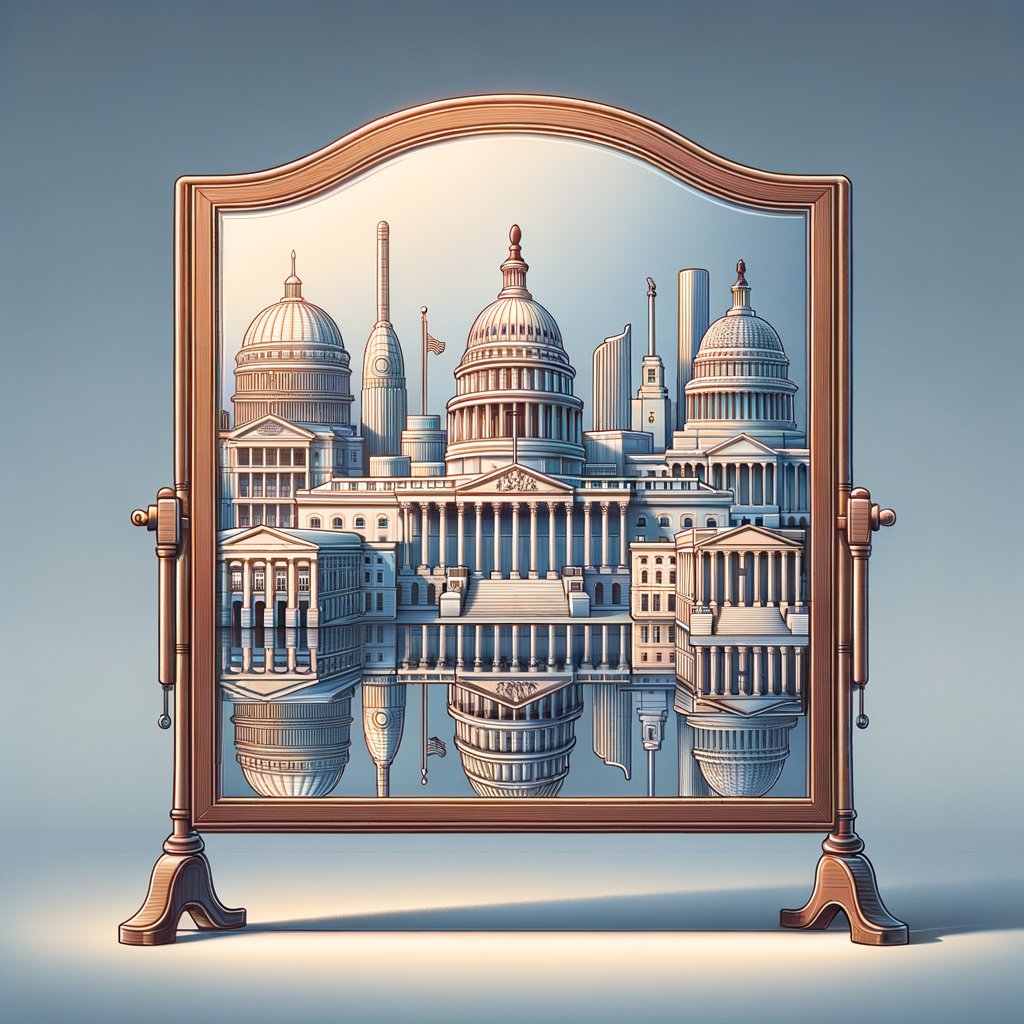
The architecture of governance in the United States presents a fascinating framework where different layers of government operate in parallel, yet distinct manners. One of the most striking aspects of this system is how state governments often mirror the federal government. This mirroring encompasses various facets, including structural organization, checks and balances, powers, and functions. By inherently adopting similar models, state governments ensure a cohesive national governance framework while maintaining a significant degree of autonomy. Understanding these parallels provides insights into how governance is standardized across the country despite the diverse needs and aspirations of individual states.
The concept of mirroring is not coincidental but rather a deliberate architectural choice rooted in historical, legal, and practical considerations. From the crafting of state constitutions to the application of laws, the states have adopted models akin to the federal government, ensuring that citizens experience consistency and familiarity with institutional procedures regardless of their geographic location within the United States. This approach facilitates smoother interactions between different government layers, promotes stability, and provides a template for state-specific adaptations.
Structural Organization
The most evident way that state governments mirror the federal government is through their structural organization. Both operate on a tripartite system comprising the executive, legislative, and judicial branches. This mirroring establishes a baseline of governance that allows for a balance of power, a principle deeply ingrained in the United States’ political ethos.
The legislative branch at the state level, much like Congress at the federal level, is bicameral in all except one state—Nebraska. Typically, state legislatures consist of two houses: a Senate and a House of Representatives or Assembly. This setup ensures that legislation is scrutinized from different perspectives, promoting thoroughness and diversity of opinion, much like the Senate and House of Representatives do on the federal scene.
Moving to the executive branch, each state elects a governor who parallels the role of the President as the chief executive officer. State governors carry significant responsibilities, including implementing state laws, overseeing the operation of the state executive branch, and serving as the face of the state government both domestically and in diplomatic activities. Furthermore, much like the President, governors often have veto powers over state legislation, influencing lawmaking directly and indirectly.
The judicial branch in states mirrors the federal courts through a hierarchical system that typically consists of trial courts, appellate courts, and a supreme court. The state supreme court serves as the highest court in the state, resembling the U.S. Supreme Court’s function in resolving complex legal questions and interpreting state constitutions. This judicial mirroring allows for a streamlined approach to justice, enabling a uniform set of legal processes and norms to emerge.
Checks and Balances
A cornerstone of both state and federal governance is the system of checks and balances designed to prevent any one branch from overpowering the others. This doctrine, fervently practiced at the federal level, is mirrored within state governments as a means of promoting fair and equal governance.
Each branch of state government exercises specific powers that can influence and restrict the powers of the other branches, similar to the federal system. For instance, while state legislatures draft and pass laws, the executive branch—or the governor—has the authority to veto legislation, requiring a greater consensus for laws to be enacted if vetoes are overturned. This mirrors the President’s veto power over federal legislature.
Additionally, state courts hold the authority to interpret state laws and verify their alignment with the state constitution, echoing the judiciary’s role at the national level. This ability to declare state laws unconstitutional acts as a critical check on legislative power, ensuring that legal enactments do not overstep constitutional boundaries.
Balancing these powers are vital aspects of state governments emulating the federal structure, thereby securing liberties and preventing the concentration of power within any one branch. This synergy ensures government accountability and responsiveness to the people’s needs.
Powers and Functions
State governments parallel the federal government in the way powers and functions are established to cover legislative, executive, and judicial duties. While each state retains sovereignty afforded by the Tenth Amendment, which grants powers not delegated to the federal government to the states or the people, the mirroring of divisions of power ensures efficacy and clarity in governance.
Legislative powers at both the state and federal levels involve crafting laws, levying taxes, and deciding on budgets. State legislatures draft numerous laws covering local matters, often reflecting federal legislative processes in terms of debate, committee reviews, and amendments. Similarly, governors play an executive role comparable to that of the President in functioning as the head of police, receiving foreign state officials, and managing crises within the state.
The judicial functions in states may vary, yet generally maintain a mirrored importance as federal courts in setting legal precedents, deliberating on contentious legal issues, and adjudicating criminal and civil cases. As such, the judicial processes across states constitute a patchwork that parallels national guidelines, albeit with room for variance based on state-specific laws and constitutions.
While mirroring the federal structure, states also infuse unique nuances within their governments to better fit their sociopolitical and economic landscapes. The adaptability of state governance systems enables local matters to resonate more closely with the population’s, thus allowing a dual allegiance to both the state and the nation.
Governmental Processes
Processes within state governments reflect those of the federal government in terms of election cycles, legislative procedures, and bureaucracy. Like the federal government, states conduct regular elections for their governors, legislators, and other key officials, allowing for democratic expressions of will to shape state leadership dynamically.
Legislative sessions in states often match the periodic nature seen at the federal level, with specified times for regular, special, and emergency sessions. These schedules help keep state governments in step with the legislative rhythm found nationally, fostering a synchronized approach to governance across the states.
Bureaucratic structures within both governments reflect a form of hierarchical organization that ensures effective administration of public affairs. State agencies mimic federal department counterparts, handling a range of functions from public health to transportation, housing, and education. These entities help operationalize policy decisions and ensure that legislative intents materialize into real-world impacts.
Political Influence and Public Policy
Political influences and public policy decisions at the state level can closely resemble the overarching policy frameworks set by the federal government. Engagement with stakeholders, advocacy groups, and public opinion are important drivers for policy-making at both levels.
The coordination between federal and state governments on issues such as healthcare, education, environmental protection, and infrastructure often results in policies that are mirrored but adapted to local contexts. This allows states to benefit from federal funding and programs while pursuing tailored initiatives that meet their specific needs.
Furthermore, state governments actively participate in national policy discussions, providing feedback, proposing amendments, or aligning state laws with federal statutes. This collaboration fosters a robust state-federal dynamic that enhances policy coherence across the nation.
Conclusion
The mirroring of state governments to the federal model reflects a strategic effort to maintain consistency, governance equity, and operational harmony within the United States. By adhering to similar foundational structures, checks and balances, powers, functions, and procedures, states contribute to a system where governance is decentralized yet unified.
This mirroring not only facilitates administrative efficiency but also encourages a reciprocal relationship between state and federal governance, where both levels learn from, adapt to, and complement one another. It reinforces democratic principles, ensuring that power is appropriately distributed and accountability maintained throughout the country. As the states evolve and face new challenges, continuous collaboration with the federal government remains a critical component of a resilient, adaptable American governance framework.
Understanding the symbiotic relationship between these layers of government provides valuable insights into how the United States maintains its unique balance between unity and diversity. The mirroring ensures that as the nation progresses, both state and federal structures remain robust, responsive, and equipped to meet the demands of their constituencies effectively.
Frequently Asked Questions
1. How do state governments in the United States mirror the federal government in terms of structure?
State governments mirror the federal government primarily through their structural organization. Similar to the federal government, each state in the U.S. typically has three branches: the executive, headed by a governor; the legislative, comprising a bicameral or, in the case of Nebraska, unicameral legislature; and the judicial, made up of various levels of state courts. This three-branch system reflects the federal model, designed to ensure a separation of powers that prevents any single entity from gaining too much control. Just as the President leads the executive branch federally, the governor holds equivalent power at the state level. Both the federal Congress and state legislatures draft laws, while judicial branches at both levels interpret these laws and their constitutionality. This similar structural foundation ensures coherence between state and federal governments, allowing both to operate within a familiar framework that citizens can understand and engage with.
2. In what ways do checks and balances function similarly in state and federal governments?
The concept of checks and balances is a pivotal element in both state and federal governments designed to ensure that no single branch becomes too powerful. At the federal level, this principle is manifest in the ability of Congress to impeach a president or the Supreme Court to declare laws unconstitutional. Similarly, at the state level, the governor can veto bills, forcing the state legislature to reconsider their decisions or even override the veto with sufficient legislative support. State courts also have the power to interpret and apply the state constitution, ensuring that legislation and executive actions do not overstep legal bounds. These mechanisms within state governments perform akin to their federal counterparts, maintaining a balanced distribution of power within each state, thereby reinforcing a system where each branch has the autonomy to operate effectively while being kept in check by the other branches.
3. How do states mirror the division of powers found in the federal government?
Each state government reflects the federal government’s division of powers in several key ways. The U.S. Constitution delineates specific powers to the federal government, leaves some powers to the states, and provides for shared powers between them. States adopt this by designating specific responsibilities to various state-level entities. For example, states have authority over local matters, such as education and public safety, paralleling how the federal government handles national defense and foreign policy. Additionally, states work in tandem with the federal government on shared initiatives such as transportation infrastructure and environmental protection. This division ensures that governments operate within their respective domains efficiently, thereby fostering cooperation while addressing the diverse needs of their citizens. This mirroring of responsibility helps balance local autonomy with overarching national interests, maintaining order and consistency in governance across the country.
4. How do state governments conduct lawmaking similarly to the federal government?
State lawmaking processes substantially mirror the federal legislative process, facilitating an understanding of governance that resonates across different levels. At the state level, like the federal, the legislature is responsible for drafting, debating, amending, and voting on proposed legislation. Typically, this involves a bill being introduced, referred to committees for review and potential amendments, and eventually being brought to the legislative floor for a vote. If the state’s legislature passes the bill, it is sent to the governor for approval or veto, akin to the President’s role at the federal level. Some states even permit citizens to partake in lawmaking through initiatives and referendums, reflecting the democratic underpinnings similar to those found in the federal system. This parallel structure allows for laws that cater specifically to state needs while being processed in a manner familiar to the nation’s broader legislative process.
5. In what ways do state governments maintain a system of government similar to the Electoral College at the federal level?
While the Electoral College is unique to presidential elections, states mirror this indirect election method in several ways. Firstly, some states use similar systems, such as indirect elections, for various state positions, where electors or representatives vote on behalf of the populace. Moreover, the electoral districts established for state legislatures also reflect the division seen in the Electoral College, ensuring representation that accounts for both population size and geographic diversity. Furthermore, governors are often elected directly by the people, echoing the democratic principles embedded in electing a federal President but differing from the Electoral College mechanism. Although the methodologies may vary, the underlying principle of representing the electorate through appointed or elected individuals upholds a democratic tradition that resonates both at the state and federal levels, providing citizens with multiple points of representation and influence within their government.