
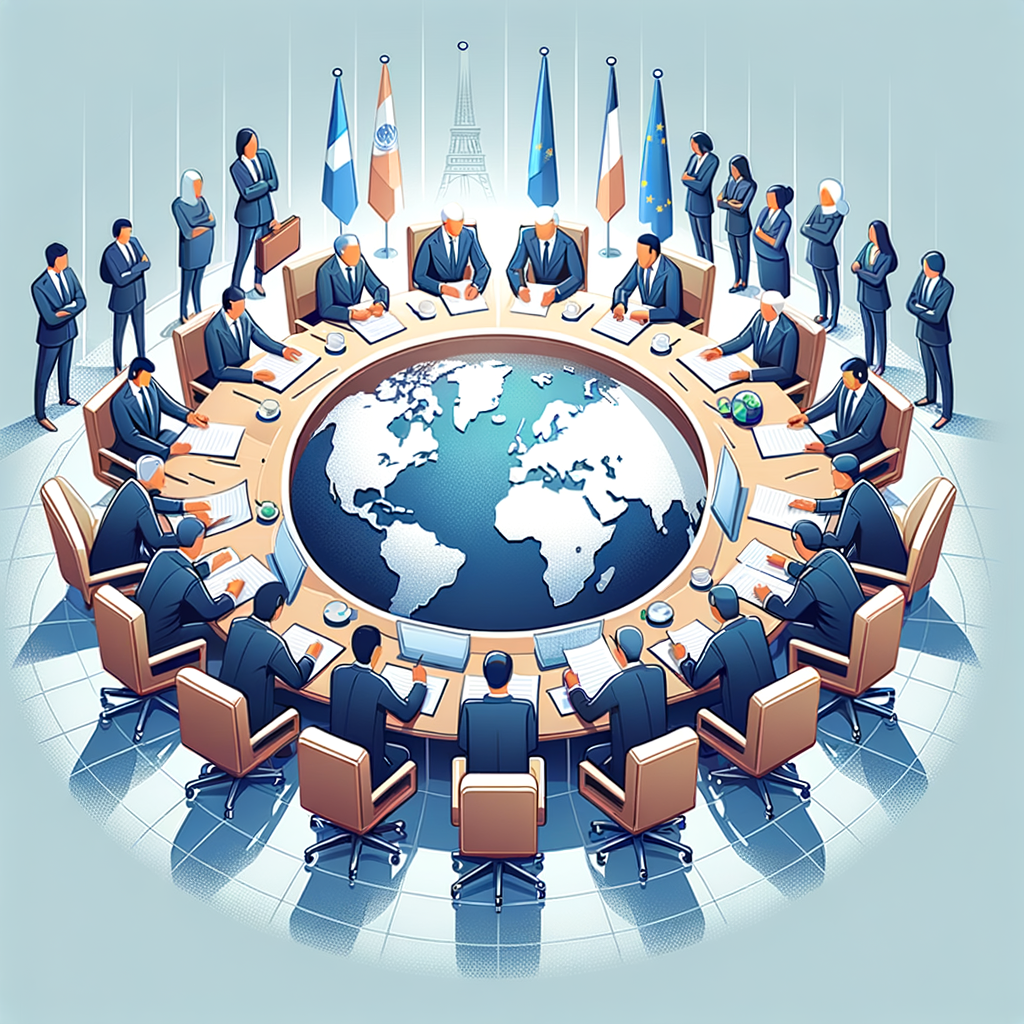
In the realm of international relations, foreign policy stands as a crucial aspect defining a nation’s approach towards other countries. This intricate system is primarily influenced by national objectives, security considerations, economic interests, and the ideological inclinations of its leaders. Understanding how foreign policy is made in the United States entails an examination of the complex interplay between the President, Congress, and the bureaucratic institutions that support and execute governmental operations. These entities collectively navigate domestic and international landscapes, offering checks, balances, and varying degrees of influence over the country’s global posture. In this extensive exploration, we shall dissect the roles and responsibilities assigned to the President, Congress, and the supporting bureaucracy. This inquiry will illuminate the multifaceted processes and interactions that shape U.S. foreign policy. The United States’ foreign policy is not only key to maintaining international relations, but it’s also pivotal for cultivating and nurturing economic, political, security, and cultural ties worldwide. Therefore, understanding its crafting is pivotal, as it provides deeper insights into how the US maintains its global standing, confronts threats, and engages with allies and adversaries.
The Role of the President
The President of the United States holds a significant leadership position in formulating and implementing foreign policy. As the Commander-in-Chief and the nation’s primary representative on the international stage, the President wields considerable power in determining the country’s strategic priorities and how they align with overarching national interests. The President’s influence in foreign policy is most pronounced in the negotiation and signing of treaties, international agreements, and trade deals. While these actions require Senate approval to be ratified, the President’s authority in spearheading such negotiations illustrates a significant degree of executive power. Additionally, through the appointment of ambassadors, the President extends the country’s diplomatic reach, selecting representatives who align with the administration’s foreign policy agenda.
The President’s role is buttressed by the National Security Council (NSC), a body that advises and assists the President on national security and foreign policy matters. The NSC, which includes key members such as the Secretary of State, the Secretary of Defense, the Vice President, and other key national defense and security officials, acts as a direct advisory group to the executive, engaging in the coordination of policy decisions and the integration of national security strategy. Furthermore, the President exercises authority through executive orders and memorandums which can direct specific foreign policy actions without requiring explicit legislative sanction, allowing for agile and responsive actions to international events.
Crisis situations often reveal the President’s extensive sway over foreign policy. In times of international conflict or emergent threats, the President’s ability to leverage military power ensures a swift and often unilateral response, framing the U.S. stance and engagement without waiting for lengthy legislative approval. This power is balanced via legislation such as the War Powers Resolution, which seeks to limit the President’s ability to commit the country to armed conflict without Congress’ consent.
Congressional Oversight and Influence
While the President orchestrates the executive branch in foreign policy matters, Congress possesses significant checks on presidential power. Congress is vested with the authority to declare war, granting it direct control over the initiation of hostilities. Moreover, it is responsible for ratifying treaties negotiated by the executive, through the Senate, which requires a two-thirds majority vote. This means that despite the President’s negotiating position, international agreements lack permanence without Congressional sanction.
Funding decisions provide another critical avenue through which Congress exercises influence over foreign policy. Through its power of the purse, Congress can fund or defund foreign policy initiatives, military operations, or foreign aid programs, thereby exerting considerable leverage over the direction of policy. This financial power ensures that Congress maintains a pivotal role in strategic decisions, as executive initiatives without legislative financial backing are effectively stymied.
Additionally, Congressional committees play a vital role in overseeing and shaping foreign policy. The Senate Foreign Relations Committee and the House Foreign Affairs Committee are instrumental in discussing, evaluating, and scrutinizing foreign policy initiatives, ensuring that proposals align with national interests and undergo legislative debate and adjustment. Members of Congress also engage in diplomacy through congressional delegations, enabling legislators to gather information, represent American interests, and foster international partnerships.
Congress uses legislative measures not only to sanction the foreign policy pathway but as a tool to ensure accountability and transparency. Through reports and oversight hearings, Congress compels the executive branch to provide information on foreign initiatives, consequences, and strategic outcomes, ensuring that the policy direction remains within constitutional and legislative boundaries.
The Bureaucracy’s Role in Foreign Policy
The bureaucratic apparatus, though often unsung, constitutes the backbone of foreign policy formulation and implementation. The Department of State, as the primary diplomatic body of the federal government, undertakes the day-to-day management of international relations, overseeing embassies and consulates worldwide. This department works to promote U.S. objectives by engaging with foreign governments, advocating American policies, and maintaining diplomatic relationships.
The Department of Defense also plays a formidable role by shaping military policy and providing strategic defense advice. As the administrator of the country’s armed forces deployment, it serves as both an instrument and a substantial influencer of foreign policy. Through extensive planning and strategic operations, it ensures that military readiness aligns with diplomatic and security objectives.
The Central Intelligence Agency (CIA) presents another critical component in the bureaucratic landscape by providing intelligence that informs policy decisions. The CIA’s role in gathering, analyzing, and reporting global intelligence ensures that the executive branch is equipped with comprehensive information necessary for making informed strategic decisions. Intelligence contributes to risk assessment, threat identification, and policy development crucial for foreign relations.
Additional federal agencies, including the Department of Treasury, with its focus on economic policy and sanctions, and the United States Agency for International Development (USAID), which administers civilian foreign aid, add layers of expertise and operational capability to the U.S. foreign policy framework. These agencies execute and adapt policies that range from trade regulation to humanitarian assistance, ensuring the seamless integration of myriad governmental efforts in pursuit of foreign policy objectives.
Interconnected Dynamics in Foreign Policy Formulation
The crafting of foreign policy is never a solitary endeavor but a nexus of interactions between the President, Congress, and the bureaucracy. Decisive policy actions involve intricate consultations and negotiations encompassing all these entities, ensuring that policy is neither exclusively executive nor solely legislative but a balanced orchestration of institutional commands.
The President’s proposals and strategic goals require legislative backing from Congress. Conversely, Congress requires the President’s leadership and the bureaucracy’s expertise in translating legislative directives into actionable tasks. When these forces harmonize, the resultant policies are often robust, embodying comprehensive insights and foresight. However, discord between them can lead to gridlocks, resulting in strategic delays or policy vacuums.
The efficacy of foreign policy thus hinges on the cooperative functioning of each sector within this triad: a President with cohesive strategic vision, a Congress that offers statutory guidance and oversight, and a bureaucracy that delivers functional and strategic execution. Each retains a vital function, yet it is their combined synergy that propels the nation’s foreign policy into successful fruition.
Conclusion
In sum, the creation of U.S. foreign policy is an extraordinarily complex process, one which deftly combines the President’s decisive leadership, Congressional checks and deliberations, and the bureaucratic machinery’s expertise. Each segment contributes essential components to the overall policy framework, and precisely how they coordinate determines the nation’s diplomatic posture and effectiveness. It reflects a democratic balance where different powers can converge to craft policies that respond effectively to world challenges.
Recognizing the integral roles played by the President, Congress, and bureaucracy ensures a nuanced comprehension of how policies are conceived, negotiated, enacted, and enforced. This understanding extends beyond academic interest since a nation’s foreign policy directly impacts global stability and politics. It influences international cooperation and conflict, sharing a global ripple effect, further underscoring its profound significance.
By navigating through priorities and perspectives, engaging in substantive discourse, and committing to strategic agility and foresight, the architecture of U.S. foreign policy continually adapts to dynamic global realities. With each entity playing its role, this collaborative effort helps define not only the United States’ international engagements but also its enduring role as a pivotal player on the world stage.
Frequently Asked Questions
1. How does the President influence foreign policy?
The President plays a pivotal role in shaping U.S. foreign policy by exerting considerable authority and influence across various domains. As the nation’s chief diplomat and Commander-in-Chief of the armed forces, the President possesses the ability to set the tone and direction of foreign relations through direct engagement with other heads of state. This includes negotiating treaties, which, although requiring Senate approval, are initiated and crafted by the President. Furthermore, the President can issue executive agreements with foreign nations that do not require Senate approval, thereby facilitating swift diplomatic actions. The President’s role as the face of the nation on the global stage allows them to impact international perceptions and relations through speeches, policy statements, and symbolic gestures.
2. What role does Congress play in the development of foreign policy?
Congress holds significant powers that influence U.S. foreign policy through its legislative, financial, and oversight responsibilities. One of the key ways Congress asserts its influence is through the power of the purse, as all government spending, including on foreign aid and military operations, must be authorized by Congress. Additionally, Congress has the authority to declare war, though this power has been exercised sparingly in recent history. Congressional committees, such as the Senate Foreign Relations Committee and the House Foreign Affairs Committee, play a critical role in shaping foreign policy by holding hearings, crafting legislation, and reviewing appointments of ambassadors and other key foreign policy positions. Through oversight, Congress can also scrutinize presidential actions and ensure that executive agreements and treaties align with national interests. Moreover, individual members of Congress can impact foreign policy by engaging in public diplomacy, drawing attention to specific foreign issues, and advocating for certain international policies.
3. How does bureaucracy influence the formulation and execution of foreign policy?
The bureaucratic institutions, such as the State Department, the Department of Defense, and intelligence agencies, are instrumental in both the formulation and execution of U.S. foreign policy. These entities provide vital expertise, analysis, and recommendations that inform the President and Congress’s decisions. The State Department, led by the Secretary of State, is primarily responsible for managing international relations and implementing diplomatic policies. It gathers intelligence from its embassies around the world to help shape government strategies and negotiate with foreign entities. The Department of Defense, on the other hand, provides analyses on security and defense needs, advising on military capacity and implications of foreign engagements. Intelligence agencies, like the CIA, offer critical information and assessments that help policymakers navigate complex international situations. These institutions work together to ensure that U.S. foreign policy is consistently informed, strategically sound, and effectively executed across a diverse range of global issues.
4. What checks and balances exist between these branches in foreign policy making?
The U.S. Constitution establishes a system of checks and balances among the branches of government to ensure no single entity holds too much power, including in foreign policy making. The President, as the head of the executive branch, has substantial influence over foreign policy but must work within limits set by Congress. For instance, while the President can enter into treaties and agreements, these often require Senate ratification to become legally binding. Furthermore, congressional authority over budgetary allocations means the President must seek approval for funding international initiatives and military actions. In turn, the Congress is checked by the need to gain broad consensus for policy shifts, as legislative measures involving foreign policy typically require substantial agreement to pass. Bureaucratic agencies, meanwhile, operate under directives from both the President and Congress, ensuring their actions align with broader governmental priorities. This interplay prevents unilateral decision-making and encourages collaboration and oversight in crafting a balanced and responsible foreign policy.
5. Can public opinion influence U.S. foreign policy?
Public opinion plays a significant, albeit indirect, role in shaping U.S. foreign policy. While decision-makers operate within their constitutional mandates, their policy choices are often influenced by the views and sentiments of voters. Elected officials, including the President and members of Congress, are ultimately accountable to their constituents and may adjust their policy stances in response to popular opinion. Public pressure can manifest through various channels including protests, petitions, and media campaigns that highlight specific issues within foreign policy such as human rights, global conflicts, or climate change initiatives. Moreover, during election cycles, candidates often address foreign policy issues that resonate with voters, shaping their platforms to align with public attitudes. This responsiveness to the electorate ensures that the democratic views of citizens are reflected in foreign policy to some extent, encouraging flexibility and adaptation to global changes as necessitated by the collective national mood.