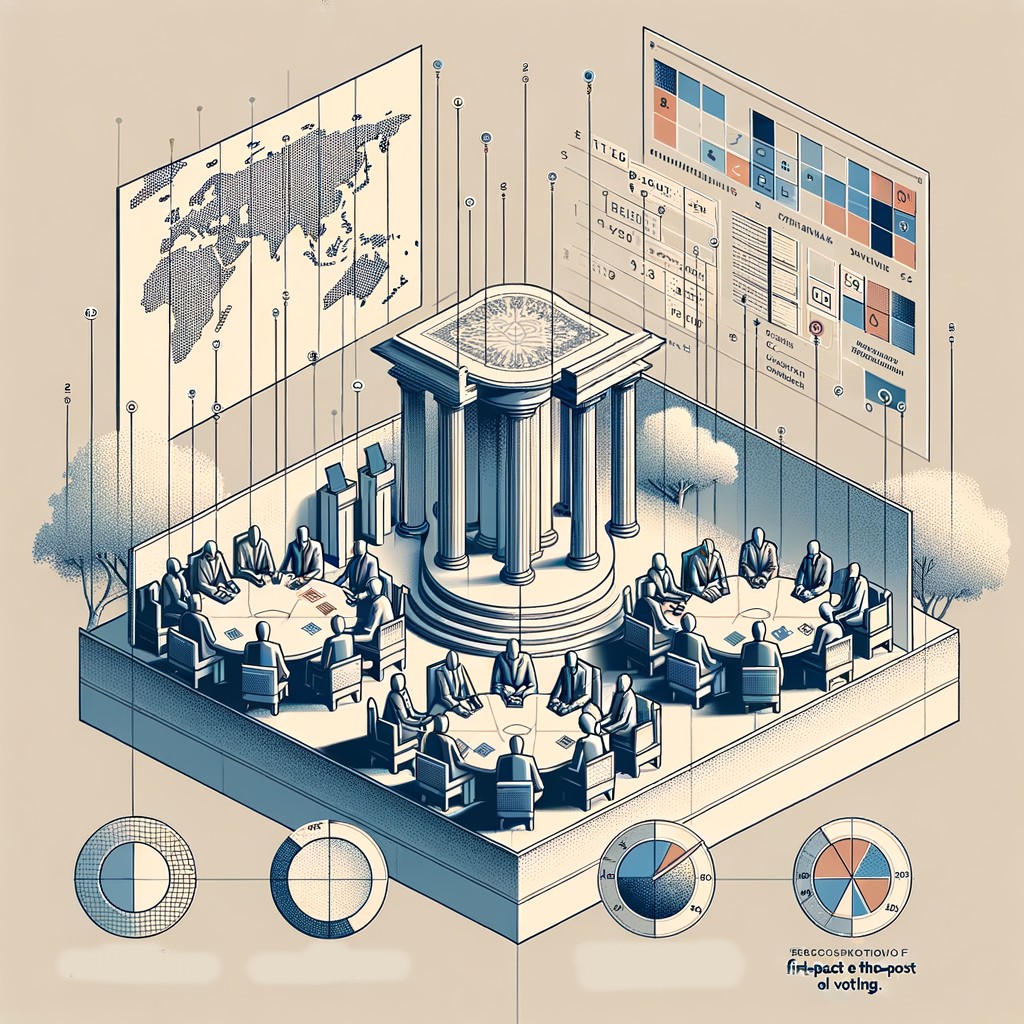
Electoral systems hold significant sway over political outcomes in democracies worldwide. These systems define how votes are translated into power, determining who holds decision-making authority and shaping national policies. One need only look at the ongoing discussions surrounding the U.S. Electoral College and the popular vote to see how electoral systems can stir both public debate and controversy. Democratizing these systems and making them transparent are issues near and dear to many citizens’ hearts worldwide. But why is the electoral framework so pivotal? This article delves into how varied electoral structures impact political landscapes, paying particular attention to the United States by examining how the Electoral College and the popular vote significantly influence the outcome of elections. Within this context, one of the most perplexing questions emerges: How can a U.S. presidential candidate win the popular vote yet lose the Electoral College and, consequently, the election? Through this exploration, the importance and implications of diverse electoral systems become palpable, shedding light on the complexities that flow inevitably from democracy itself.
Understanding Electoral Systems
Electoral systems are the bedrock of democratic governance, encompassing the rules that govern how votes are cast and counted. These systems determine who wins the elections for public offices and carry the vital role of ensuring the reflection of a country’s or state’s popular will. It would be a mistake to believe that all electoral systems are created alike; they come in multiple configurations and involve different processes, each with its strengths and weaknesses. Broadly, electoral systems may be categorized into three main types: first-past-the-post (FPTP), proportional representation (PR), and mixed electoral systems. Understanding these distinctions is crucial in deciphering how they mold political atmospheres and election outcomes.
The first-past-the-post system is one of the oldest and most widely used electoral mechanisms. Primarily, it’s employed in countries like the United States, Canada, and the United Kingdom. Known for its simplicity, FPTP allows voters to cast a ballot for one candidate, and the candidate receiving the most votes wins. This system tends to create clear winners but can result in the underrepresentation of various political viewpoints, given that a candidate needs only the majority—not a specific proportion—of votes to win. Consequently, it gravely risks marginalizing smaller parties and promoting a dichotomy in political landscapes.
Proportional Representation: An Inclusive Approach
Contrasting FPTP, proportional representation aims for inclusivity by aligning the number of seats a party receives with the percentage of votes it secures. Common in countries like Germany, Sweden, and New Zealand, PR systems are regarded as more representative of voter intentions, given the stratified political spectrum. Such systems are often utilized within parliamentary systems where coalitions are frequent, requiring negotiations and compromises for the efficient governance of the populace.
By embracing a PR system, parties are encouraged to put together a balanced team reflective of various demographic and ideological segments. While PR intimates inclusivity, its pitfalls include the risk of political fragmentation and gridlock due to difficulties in forming governments. Each vote bears substantially more weight here, enabling minority communities and smaller parties to gain traction—albeit at the potential cost of political stability.
Mixed Electoral Systems: A Balanced Approach?
Mixed electoral systems seek to offer a middle path by incorporating characteristics of both FPTP and PR systems. Countries deploying this framework, such as Germany with its Mixed-Member Proportional system, endeavor to blend the benefits of decisive results with broad representation. By doing so, they attempt to maximize electoral fairness while concurrently nurturing political depth and diversity.
Mixed systems generally allow voters to cast two types of votes: one for a local representative and another for a political party. Consequently, they often achieve equilibrium between individual and collective mandates. Yet, their complexity can lead to confusion among the electorate and accusations of manipulation in jurisdictions where election laws aren’t rigorously enforced.
The Electoral College vs. Popular Vote: A Case Study
No discussion of electoral systems is complete without diving into how the Electoral College impacts American democracy. Introduced as a compromise between electing a president by popular vote and electing a president by Congressional vote, the Electoral College compounds diverse democratic ideologies and historical considerations. While designed to give smaller states a louder voice, this electoral mechanism has led to several high-profile elections where the candidate winning the popular vote doesn’t secure the presidency.
Before comprehending why such dissonance can occur, one must grasp the Electoral College’s nitty-gritty. Comprising 538 electors, this body requires a candidate to garner at least 270 electoral votes, constituting a majority, to claim the presidency. The allocation of electors mirrors Congressional representation, with each state receiving electors equivalent to its number of Senators and House representatives. Implicit within this framework are the nuances that lead to significant political outcomes, sometimes paradoxically contradictory to the national popular vote.
The Impact of Swing States
Swing states, or battleground states, introduce unpredictability into American elections due to closely matched political allegiances, making them critical for candidates intent on meeting the threshold of 270 electoral votes. States such as Pennsylvania, Florida, and Wisconsin often garner enormous attention and resources. Their electoral results can hinge on a relatively small number of votes, leveraging their political weight disproportionately in determining the ultimate victor. As candidates concentrate extensively on swing states, a disparity emerges in addressing issues that don’t necessarily ring alarm bells in these tightly contested areas.
Such strategies produce a peculiar dynamic: Residents in non-swing states often feel marginalized or neglected, with presidential campaigns primarily focusing on policies designed to win over voters in swing states. This focus heightens regional discord in the political machine, leading to voter disillusionment in areas perceived to have less of an immediate impact on election results. Thus, the parochial nature of campaigning that emerges from the Electoral College magnifies disparities between voter populations, casting shadows over the ideal of united national decision-making.
Popular Vote vs. Electoral College: The Divergence
The mechanics of the Electoral College system afford scenarios where a presidential candidate potentially loses the popular vote yet clinches the presidency. Such discrepancies occurred in the contentious 2000 and 2016 elections. How does such divergence unfold? The Electoral College predominantly favors populous states while compensating for less populated states with a minimum of three electoral votes. Due to this structured imbalance, the peculiarities of winning slim majorities in populous states while losing larger majorities in others can culminate in losing the popular vote but winning the decisive Electoral College count.
Critics of the Electoral College argue that it subverts democratic ideals, suggesting a shift toward a national popular vote would better reflect a democratic voice. Proponents, conversely, declare it ensures equilibrium by preventing dense, urban areas from solely determining outcomes. The debate remains emblematic of ongoing tensions between federalist principles and democratic ideologies, offering a microcosm encapsulating broader nationwide dialogues surrounding electoral justice and reform.
Conclusion
Electoral systems around the globe – from first-past-the-post to proportional representation, from hybrid approaches to the unique complexities of the Electoral College – significantly influence political outcomes. Each system unfolds with inherent advantages and drawbacks, whether privileging decisive leadership or encouraging multi-party inclusivity, whether rendering simple choices or nurturing intricate coalitions. In the case of the United States, the contentious interplay between national popular vote and the Electoral College exemplifies how structured mechanisms can dramatically alter perceived electoral mandates.
The Electoral College and its impact on U.S. presidential elections spark robust debate and necessitate a thorough understanding of system mechanics. For proponents, it offers a check and balance appropriate for a vast, diverse nation. For detractors, it signals points of democratic divergence, advocating for reforms more closely aligned with the popular will. However, as long as democracies exist, so will dialogues and deliberations concerning their electoral processes. Understanding electoral systems and their implications becomes paramount in an era defined by rapidly evolving political landscapes, ensuring that citizens comprehend the unique lenses through which their votes are interpreted.
Education, transparency, and informed civic discussions anchor the electorate to platforms capable of enlightening public participation and decision-making. Ultimately, electoral systems remain intricate patchworks that must be continually evaluated and, when necessary, tailored to meet the evolving aspirations of a nation’s citizenry. No system is immune to criticism, yet in engaging dialogues about electorates’ fairness, integrity, and representation, societies inch closer to the cherished ideals of democracy.
Frequently Asked Questions
1. What are the main types of electoral systems, and how do they differ?
Electoral systems are the rules that dictate how votes are converted into seats, and these systems vary significantly across democracies. The primary types include:
First-Past-The-Post (FPTP): Also known as a plurality voting system, FPTP is used in countries like the United States and the United Kingdom. In this system, the candidate with the most votes in a constituency wins. It tends to create a two-party system and can result in a government that does not reflect the overall popular vote, as only the winner in each district counts.
Proportional Representation (PR): This system aims to allocate seats in proportion to the number of votes each party receives. Used in countries like Sweden and the Netherlands, PR is often seen as more representative of the electorate’s preferences because it allows smaller parties to gain seats and influence. It typically leads to multi-party systems and coalitions, which can influence policy making significantly.
Mixed-Member Systems: Systems like Germany’s combine elements of FPTP and PR, where voters have two votes—one for a candidate in their constituency and another for a political party. This allows for local representation and a proportional aspect in the legislature.
The differing structures of these systems shape political parties’ strategies, voter behavior, and ultimately, policy outcomes.
2. How does the U.S. Electoral College impact the results of presidential elections?
The U.S. Electoral College is a unique feature of American presidential elections, where citizens vote for electors who then officially elect the president. Each state gets a number of electors based on its number of senators and representatives in Congress. A majority of 270 out of 538 electoral votes is needed to win the presidency.
This system can significantly impact election outcomes. It means that a candidate can win the presidency without winning the popular vote, as happened in the 2000 and 2016 elections. This prompts debate over its fairness and whether it accurately reflects the will of the people. Critics argue it gives disproportionate power to smaller states and swing states, which can lead to candidates focusing their campaigns on a limited number of regions rather than the entire country.
The Electoral College underscores how an electoral system can influence both election strategies and national politics, sparking ongoing discussions about potential reforms.
3. How do electoral systems affect the policy decisions of governments?
Electoral systems can significantly influence a government’s policy decisions because they determine which parties gain power and who leads the government. In a First-Past-The-Post system, governments often have clear majorities, allowing them to push through policies without compromise. This can lead to decisive governance but also potentially to policies that do not have broad support.
In contrast, Proportional Representation typically results in coalition governments, as no single party often gains an outright majority. This system necessitates negotiation and compromise among parties to form a government and pass legislation. As a result, policies are often more moderate and represent a broader spectrum of public opinion. However, forming and maintaining coalitions can lead to political instability and frequent elections if coalitions fall apart.
Thus, the type of electoral system in place can directly impact whether policies are the result of unilateral decision-making or collaborative compromise, shaping the legislative landscape of a country.
4. Are some electoral systems more democratic than others?
Debates about the democratic nature of electoral systems stem from their ability to accurately translate the public’s votes into political power. Systems like Proportional Representation are often considered more democratic because they aim to reflect the diverse political views of the electorate more accurately. Every vote is seen as contributing to the final outcome, encouraging higher voter engagement and participation.
On the other hand, First-Past-The-Post can result in ‘wasted votes’—votes that do not contribute to a candidate’s election, either because they were cast for losing candidates or for winning candidates beyond what was necessary. This can lead to voter apathy and disillusionment if people feel their votes do not affect the overall result, potentially reducing voter turnout.
Different systems have their strengths and weaknesses, and what might be deemed as “more democratic” can also depend on cultural, historical, and societal contexts unique to each country.
5. Why do electoral systems generate so much debate and controversy?
Electoral systems are foundational to how democracies function, making them inherently controversial due to their profound influence on political power distribution and policy development. They can exacerbate or mitigate political divides and impact different populations in various ways.
For example, in places where First-Past-The-Post is used, there can be heated discussions about whether the system disenfranchises voters and small parties. Those in favor argue it provides stable governments, while opponents believe it doesn’t reflect diverse political views.
In contrast, supporters of Proportional Representation argue it offers fairer and more inclusive representation, yet critics of PR claim it can lead to fragmented legislative bodies and inefficient governance due to the frequency of coalition governments.
These differing views highlight the complexities in designing an electoral system that balances effective governance with fair representation. As societies evolve and new issues emerge, the conversation around electoral systems continues, driving the quest for systems that align closely with democratic ideals and values.