
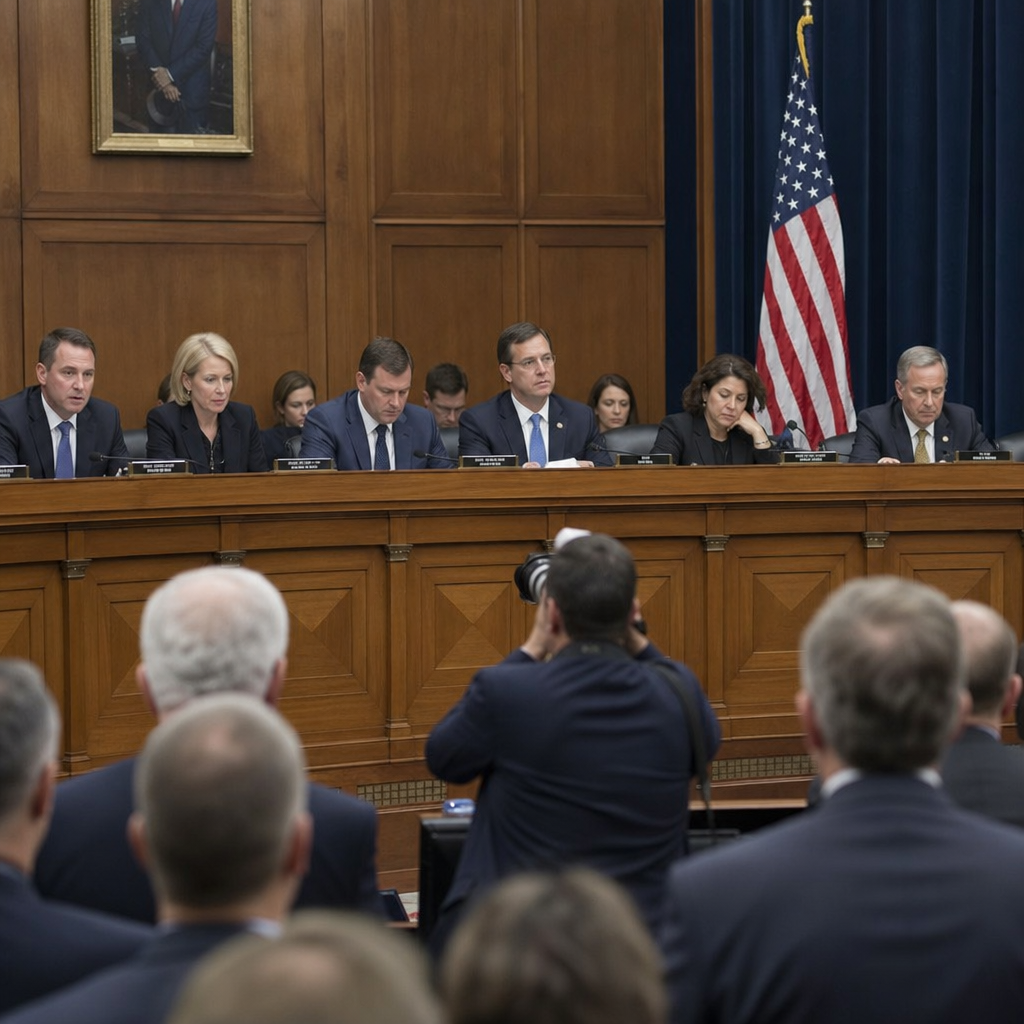
Congressional investigations shape public opinion because they turn complex disputes about power, law, and accountability into public narratives that voters can see, hear, and judge. In AP Government and Politics, a congressional investigation is an inquiry conducted by the House or Senate, usually through a standing, select, or joint committee, to gather facts, oversee the executive branch, expose wrongdoing, and consider legislative reforms. Public opinion refers to the distribution of attitudes held by citizens about political leaders, institutions, issues, and events. When these two forces meet, the result can redefine trust in government, alter election debates, and move policy from abstract disagreement to urgent national concern.
I have worked through many investigation transcripts, hearing videos, committee reports, and polling cross-tabs, and one lesson is constant: investigations rarely matter only because of the facts uncovered. They matter because Congress stages information in a way that the public can process. Televised testimony, subpoena fights, leaks, interim memos, and final reports all create a sequence. That sequence helps citizens decide whether a scandal is minor mismanagement, a constitutional crisis, partisan theater, or a legitimate act of oversight. In practice, public opinion often shifts not at the moment misconduct occurs, but when Congress frames and publicizes it.
This topic matters because investigations sit at the center of democratic accountability. The Constitution gives Congress implied investigative power through its legislative and oversight responsibilities, and courts have long recognized that authority when tied to a legitimate legislative purpose. In plain terms, Congress investigates so it can write better laws, monitor agencies, check the president, and inform the public. For AP Government students, this makes investigations a bridge topic linking separation of powers, checks and balances, civil liberties, media effects, political parties, and electoral behavior. Understanding how investigations shape opinion also helps explain why some hearings transform politics while others disappear within days.
Several key terms clarify the discussion. Oversight is Congress’s review of executive action and administration. A hearing is a formal session where members question witnesses. A subpoena is a legal order requiring testimony or documents. Contempt of Congress is the refusal to comply with lawful demands. Agenda setting describes the process by which media and political institutions tell the public what issues deserve attention. Framing refers to how those issues are presented, including what causes, values, and remedies are emphasized. Priming occurs when exposure to one issue changes the standards people use to evaluate leaders. These concepts explain why investigations can move opinion even before any final conclusion is reached.
The constitutional basis and political purpose of congressional investigations
Congressional investigations are powerful because they combine legal authority with political visibility. The Constitution does not spell out every investigative procedure, but Congress derives this power from Article I responsibilities to legislate, appropriate funds, and oversee the executive branch. The Supreme Court affirmed broad investigative authority in cases such as McGrain v. Daugherty in 1927, which recognized that inquiry is an essential auxiliary to legislation. Later decisions, including Watkins v. United States and Barenblatt v. United States, also showed that this power has limits, especially when witness rights and legislative purpose are in question. That balance matters for public opinion, because people are more likely to trust an investigation they see as lawful, relevant, and restrained.
In practical politics, investigations serve several purposes at once. They can expose corruption, test agency performance, pressure reluctant officials, gather information for new legislation, and signal to voters that Congress is doing its job. They can also be used strategically by majority parties to damage opponents or by minority parties to create media moments. From experience reviewing committee activity, the most influential investigations usually have three features: a clear public hook, credible witnesses, and a direct connection to broader concerns such as war, elections, executive abuse, public health, or consumer safety. Without those elements, hearings may produce records for specialists but little movement in mass opinion.
Committees matter because they shape both substance and presentation. Standing committees like House Oversight, Senate Judiciary, and House Energy and Commerce often handle recurring oversight. Select committees are created for major events such as Watergate, Benghazi, or the January 6 attack. Select committees can become especially important because they focus public attention, centralize evidence, and often build a clearer storyline than multiple committees working separately. Staff work is equally significant. Skilled committee counsel can organize witness testimony, authenticate documents, sequence revelations, and prepare members for questioning. The public often sees only the hearing, but opinion is usually influenced by the quality of evidence assembled before cameras ever turn on.
How investigations reach citizens through media, framing, and repetition
Most Americans never read a full committee report, so investigations shape public opinion through mediated exposure. Television transformed this process during the Army-McCarthy hearings and especially Watergate, when daytime broadcasts let millions watch testimony in real time. Cable news later intensified repetition by replaying exchanges and adding partisan commentary. Today, social platforms, podcasts, livestream clips, and email newsletters fragment audiences, but they also help key moments spread faster. A ten-second exchange can now define an entire day of coverage. That means members of Congress often question witnesses with clip production in mind, knowing a concise confrontation may travel farther than a nuanced exchange.
Agenda setting is the first mechanism. When committees hold hearings, issue subpoenas, and release documents, they signal that a problem deserves national attention. News organizations then allocate space, interview experts, and create timelines. Framing comes next. The same investigation can be described as anticorruption oversight, constitutional defense, bureaucratic failure, partisan retaliation, or election messaging. The chosen frame affects whether citizens interpret facts as evidence of systemic abuse or just another political fight. Priming follows. If coverage repeatedly emphasizes honesty, abuse of power, or competence, voters begin using those standards to judge presidents, cabinet secretaries, agency heads, and even Congress itself.
Investigations also work through repetition and cumulative exposure. Single hearings rarely change opinion dramatically unless they reveal shocking, easy-to-understand facts. More often, opinion moves after weeks or months of steady disclosures. Watergate is the classic example. Early reaction was muted, but public concern rose as the Senate Watergate Committee hearings, court rulings, special prosecutor actions, and White House tape revelations built a coherent pattern. Polling by Gallup and other organizations showed declining support for President Nixon over time, not instantly. This incremental movement is common. Investigations persuade by layering facts, validating suspicions, and making denial harder to sustain.
| Investigation | Main public issue | Communication channel that mattered most | Public opinion effect |
|---|---|---|---|
| Watergate | Abuse of presidential power | Televised hearings and newspaper reporting | Eroded trust in Nixon and increased support for accountability |
| Iran-Contra | Secret foreign policy operations | Live television and network summaries | Mixed views; concern about secrecy but limited lasting partisan realignment |
| Benghazi | Diplomatic security and executive credibility | Cable news and partisan media ecosystems | Deepened polarization more than broad consensus |
| January 6 hearings | Election legitimacy and democratic stability | Prime-time hearings, livestream clips, and social media | Raised concern among persuadable viewers, especially with insider testimony |
Why some investigations change minds and others reinforce polarization
Not every congressional investigation changes public opinion in the same way. Some produce broad national consensus; others mainly harden existing partisan views. The difference usually depends on prior beliefs, source credibility, issue salience, evidence clarity, and the media environment. In the 1970s, broadcast networks created a more shared information space. Today, audiences sort themselves into ideologically friendly outlets, and motivated reasoning is stronger. People often accept information that protects their partisan identity and dismiss information that threatens it. As a result, the persuasive burden on investigators is much higher than it was during Watergate.
Credible witnesses can still break through polarization. Career civil servants, military officers, judges, election administrators, and former insiders often carry more weight than elected politicians because they appear less self-interested. During the January 6 hearings, testimony from Republican aides, White House officials, and law enforcement officers gave the proceedings legitimacy beyond partisan attack lines. Likewise, during Watergate, testimony from John Dean and the existence of tape recordings made denial increasingly implausible. The strongest investigations do not rely on dramatic rhetoric alone. They pair narrative clarity with corroborated evidence, contemporaneous documents, and witnesses whose professional roles make their statements harder to dismiss.
The nature of the alleged wrongdoing also matters. Public opinion moves more when the conduct is understandable and personally relevant. Financial fraud affecting consumers, corruption involving public money, election interference, unsafe products, and emergency mismanagement are easier for citizens to connect to their lives than procedural disputes about classification rules or jurisdictional boundaries. Simplicity does not mean triviality; it means the issue can be translated into a clear question. Did officials lie? Did they misuse power? Were warnings ignored? Were laws broken? Hearings that answer those questions plainly are more likely to shape opinion than hearings that bury viewers in technical detail.
There are also limits. Investigations can backfire if they appear selective, repetitive without new evidence, or timed too obviously for electoral advantage. Oversight that looks performative may reduce trust in Congress rather than in the target of the inquiry. I have seen this dynamic in modern hearings where members spend their time speaking to cameras instead of building factual records. Citizens notice when questions are designed only for viral clips. That does not mean communication is unimportant; it means presentation must be anchored to substance. Investigations persuade best when the performance serves the evidence, not when evidence is stretched to serve the performance.
Historical examples every AP Government student should know
Several investigations belong in any serious AP Government and Politics review because they show different pathways from inquiry to public opinion. The Teapot Dome scandal in the 1920s demonstrated that Senate investigations could expose corruption in executive leasing of federal oil reserves, contributing to a wider image of Harding-era cronyism. The Army-McCarthy hearings in 1954 revealed Senator Joseph McCarthy’s bullying methods to a mass television audience; the famous rebuke, “Have you no sense of decency,” crystallized a shift in public mood and accelerated his decline. These cases show that visibility can damage not only the investigated but also the investigator.
Watergate remains the benchmark. The Senate Watergate Committee hearings, federal court decisions, investigative journalism by Bob Woodward and Carl Bernstein, and the release of White House tapes combined into a sustained accountability process. Public opinion did not move because one institution acted alone. It moved because Congress, courts, prosecutors, and the press reinforced one another. By 1974, support for impeachment had climbed substantially, Republican elites began to abandon Nixon, and resignation became unavoidable. The lesson is foundational: congressional investigations are most influential when they fit within a broader evidence ecosystem that validates claims across multiple trusted institutions.
More recent examples reveal a more polarized era. Iran-Contra generated serious concern about secret arms sales and circumvention of Congress, but President Reagan’s personal approval remained comparatively resilient. Benghazi produced years of hearings and major media attention, yet opinion effects were often filtered through party identification. The January 6 investigation showed both the possibilities and limits of modern oversight. Prime-time hearings were carefully structured, evidence-rich, and accessible, using testimony, text messages, and video to build narrative coherence. They influenced many independents and low-information viewers who actually watched them, but fragmented media habits prevented truly universal reach. That pattern is central to understanding contemporary opinion formation.
How to analyze congressional investigations for exams and civic understanding
For AP Government students, the best way to analyze an investigation is to ask five questions. First, what legitimate legislative or oversight purpose is being asserted? Second, what powers are being used, such as hearings, subpoenas, depositions, or contempt referrals? Third, how is the investigation being framed by Congress, the press, and political parties? Fourth, what evidence is strongest: documents, sworn testimony, expert analysis, or visual proof? Fifth, what happened to public opinion, institutional trust, elections, or policy afterward? This framework helps turn a long hearing into a manageable case study.
The broader civic lesson is that congressional investigations are not side shows. At their best, they make hidden government action visible, create records that courts and journalists can use, and give citizens enough information to evaluate leaders on more than slogans. At their worst, they become noise that confirms cynicism. The difference depends on evidence quality, procedural fairness, and the public’s willingness to pay attention. If you are studying AP Government and Politics or following current events, compare hearings across time, read summaries alongside polling, and watch how narrative, law, and media interact. That is how congressional investigations shape public opinion, and understanding that process makes you a sharper student and a more informed citizen.
Frequently Asked Questions
What is a congressional investigation, and why does it matter for public opinion?
A congressional investigation is a formal inquiry conducted by the House of Representatives or the Senate, usually through a standing, select, or joint committee. Its main purposes are to gather facts, oversee the executive branch, expose misconduct, evaluate how public officials or agencies have acted, and determine whether new laws or reforms are needed. In AP Government and Politics, these investigations are important because they show Congress using its oversight power, one of the key checks within the constitutional system.
These investigations matter for public opinion because they translate complicated legal, political, and institutional conflicts into stories the public can follow. Hearings, witness testimony, official reports, and media coverage give people a visible framework for interpreting what happened, who is responsible, and whether government is functioning as it should. Instead of abstract arguments about authority or accountability, voters see public questioning, evidence, and competing explanations. That process helps shape attitudes about political leaders, public trust, and even the legitimacy of government institutions themselves.
In practice, congressional investigations can influence whether citizens see an issue as a scandal, a policy failure, a partisan attack, or a necessary act of democratic oversight. The way information is presented often affects whether the public becomes more engaged, more skeptical, or more polarized. For that reason, congressional investigations do more than collect facts. They also help define the public meaning of political events.
How do congressional hearings influence the way voters understand political events?
Congressional hearings influence public understanding by turning raw information into a public narrative. Most political controversies are initially confusing. They may involve legal questions, bureaucratic decisions, classified information, conflicting testimony, or complicated chains of responsibility. Hearings organize those details into a more accessible format by calling witnesses, asking questions, presenting documents, and creating a sequence that audiences can follow. This makes it easier for citizens to form opinions about whether wrongdoing occurred and what should happen next.
Hearings also matter because they are public-facing political events. Members of Congress often use them to highlight certain facts, frame the stakes, and connect an investigation to broader themes such as abuse of power, corruption, national security, or constitutional limits. As a result, voters are not just learning facts; they are being introduced to interpretations of those facts. One side may frame a hearing as a serious effort to defend democratic accountability, while another may present it as political theater. Those competing frames strongly influence public reaction.
Media coverage amplifies this effect. News outlets select memorable exchanges, dramatic testimony, and key moments that can quickly shape public impressions. Social media accelerates this even further by spreading clips, quotes, and reactions in real time. For many citizens, the investigation is not experienced through complete transcripts or full hearings, but through summaries and highlights. That means public opinion is often shaped by both the hearing itself and the way it is communicated afterward. In this sense, congressional hearings influence not only what people know, but also what they believe is important, credible, and urgent.
Why do congressional investigations sometimes increase political polarization instead of building consensus?
Although congressional investigations are intended to uncover facts and support accountability, they often unfold in a highly partisan environment. Members of Congress usually belong to opposing parties with different political incentives, and those incentives shape how they question witnesses, interpret evidence, and communicate findings to the public. Instead of creating a single agreed-upon account, investigations can produce rival narratives that reinforce existing divisions among voters.
One reason polarization increases is that people tend to process new information through prior beliefs. Supporters of one party may view an investigation as necessary oversight, while supporters of the other party may see it as selective enforcement or a politically motivated attack. Even when both groups are watching the same hearings, they may come away with very different conclusions. This is especially common when the investigation involves a president, cabinet officials, election-related disputes, or other high-stakes political figures.
Media ecosystems also contribute to polarization. Different outlets emphasize different evidence, witnesses, and interpretations, which can lead audiences into separate informational worlds. In addition, politicians often use investigations strategically to energize supporters, raise money, and dominate the news cycle. That can make the investigation feel less like a neutral search for truth and more like another front in an ongoing political battle. As a result, congressional investigations can deepen partisan loyalty even while increasing public attention. Rather than producing consensus, they may harden attitudes and intensify disagreement over both the facts and the legitimacy of the process itself.
What role does the media play in shaping public opinion during congressional investigations?
The media plays a central role because most citizens do not watch every hearing from beginning to end or read every committee report in full. Instead, they rely on journalists, commentators, headlines, clips, and summaries to make sense of what happened. This gives the media enormous influence over which aspects of an investigation become widely known and which remain in the background. By deciding what to emphasize, how to frame events, and which voices to feature, media outlets help shape the public narrative surrounding the investigation.
Coverage can affect public opinion in several ways. First, it can set the agenda by signaling that an investigation is important and worthy of attention. Second, it can frame the meaning of the investigation by presenting it as a constitutional showdown, a corruption probe, a partisan conflict, or a routine oversight matter. Third, it can shape perceptions of credibility by highlighting certain witnesses as trustworthy experts or portraying them as politically motivated actors. These choices influence whether audiences see the investigation as serious, persuasive, and relevant.
The speed and style of modern media intensify these effects. Television and digital platforms reward dramatic moments, sharp exchanges, and simple takeaways, even when the underlying issues are legally or institutionally complex. Social media, meanwhile, encourages rapid reactions and selective sharing, which can amplify outrage and reduce nuance. At the same time, strong journalism can also improve democratic understanding by fact-checking claims, providing historical context, and explaining how congressional oversight works. In that sense, the media can either clarify an investigation for the public or contribute to confusion and polarization, depending on the quality and framing of the coverage.
Can congressional investigations actually change public trust in government or lead to political reform?
Yes, congressional investigations can change public trust in government, although the effect is not always predictable. When an investigation uncovers real misconduct, demonstrates that oversight mechanisms are functioning, and leads to meaningful accountability, it can strengthen confidence in democratic institutions. Citizens may conclude that the system is capable of checking abuses of power and correcting failures. In that sense, investigations can reassure the public that government is not operating without scrutiny.
On the other hand, investigations can also reduce trust if they reveal corruption, deception, incompetence, or repeated institutional breakdowns. When the public sees evidence that officials misused authority or concealed important information, confidence in leaders and agencies can decline sharply. Trust may also erode if people believe Congress is using investigations mainly for partisan gain rather than for principled oversight. So while investigations can promote accountability, they can also expose weaknesses that leave the public more cynical.
In some cases, investigations lead to concrete reform. Committee findings can support new legislation, tighter rules, improved oversight procedures, ethics reforms, administrative changes, or greater transparency requirements. Even when laws do not immediately change, investigations can still reshape political expectations by signaling that certain actions are unacceptable and by placing pressure on officials to respond. Over time, this can influence elections, public trust, and the standards voters apply to political leaders. Ultimately, congressional investigations matter because they do not just examine the government; they help define how the public judges whether government deserves confidence at all.