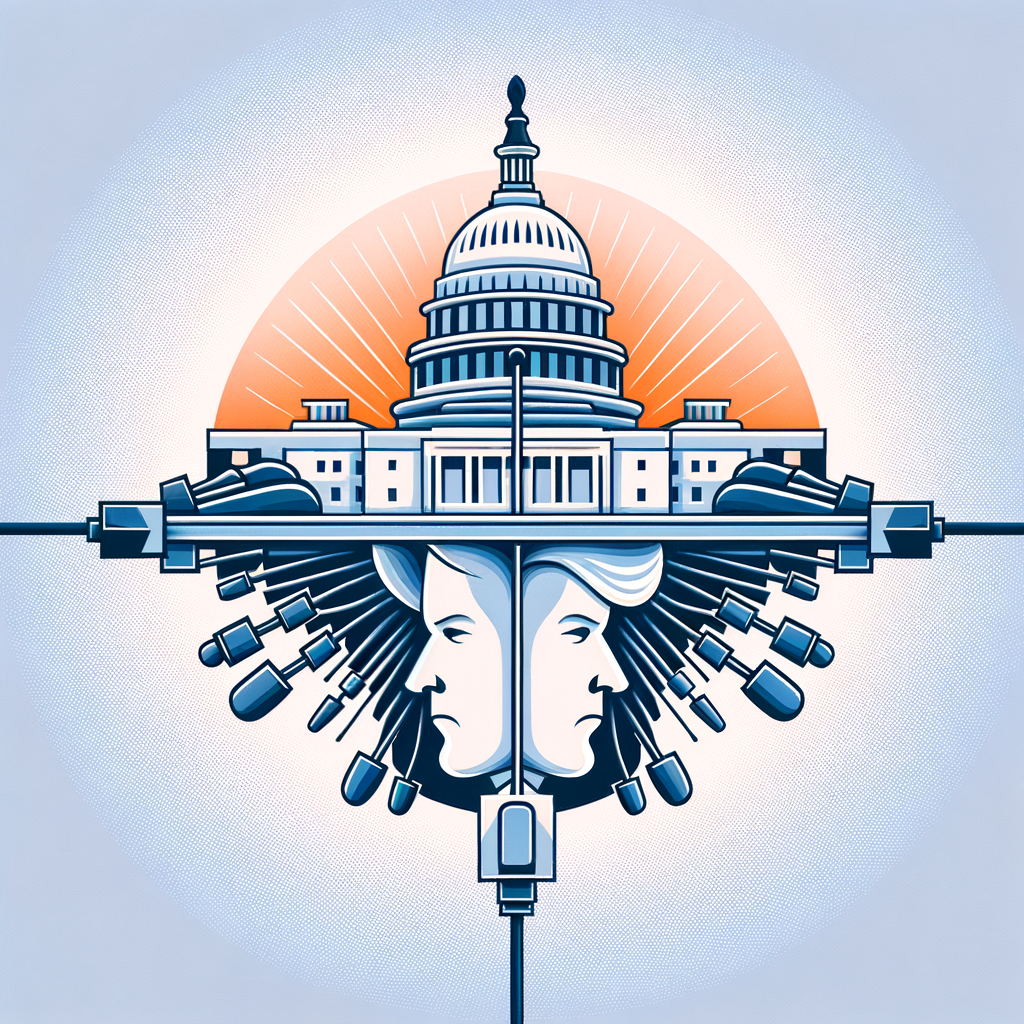
In today’s increasingly digitized world, information is consumed like never before. Among the vast array of media outlets, cable news has become a significant player in shaping public opinion, especially regarding political issues. The instantaneous and constant exposure to news has offered viewers the opportunity for an informed perspective. However, this rapid access to information has not come without consequences. Cable news channels have a significant role in polarizing political opinions, creating an “us versus them” mentality among viewers. This polarization is evidenced by the stark divide in political ideologies, influencing voting patterns, public discourse, and, ultimately, democracy itself. The emphasis on sensationalism, bias, and competition for ratings over unbiased reporting has contributed to this trend. As a result, cable news has impacted political landscapes, dividing society in ways that were previously unprecedented. This introduction seeks to explore how cable news has driven political polarization, setting the stage for a detailed analysis of mechanisms, consequences, and potential solutions.
The Mechanisms of Polarization in Cable News
Cable news channels, including but not limited to Fox News, CNN, and MSNBC, occupy a significant portion of the media landscape. Such platforms harness various strategies that contribute to polarizing political opinions. Primarily, the dedicated pursuance of targeted audiences plays a crucial role in the content they produce and broadcast. By understanding the ideological leanings of their viewership, cable news channels can tailor programming that echoes and reinforces existing beliefs and biases. This strategy leads to a phenomenon known as “echo chambers,” where audiences are exposed primarily to opinions and information aligning with their perspectives, while dismissive or outright neglectful of opposing viewpoints.
Sensationalism and conflict-driven content are among the most prevalent methods cable news applies to captivate audiences. Stories are framed and presented in a way that often emphasizes drama, conflict, and emotional appeals over fact-based reporting. Facts can be skewed, and information selectively presented to create compelling narratives designed to attract viewership. Such content exacerbates existing divides, heightening divisions between political ideologies. Furthermore, the repackaging of news as entertainment contributes to misinformation and disinformation, prioritizing engagement over accuracy.
The 24-hour news cycle offers an abundance of content, providing a continuous stream of information. The relentless pressure to produce fresh content leads to decreased motivation for in-depth investigative journalism. Instead, surface-level reporting, sound bites, and pundit commentary dominate airtime. These dynamics serve to dilute the quality of discourse and promote fragmented understanding. Moreover, pundits and commentators on cable news often adopt confrontational and sensationalistic styles of communication, reducing nuanced political discussions to competitive debates that underscore division. By presenting complex political issues as binary choices, cable news further entrenches viewers in a polarized framework.
Another key mechanism of polarization is the framing of issues in partisan terms. Cable news frequently privileges polarizing topics that create an emotionally charged atmosphere, catering to audiences’ cognitive biases. Policies and political developments are reframed to fit specific narratives or ideologies, squeezing out subtlety and compromise in favor of definitively partisan rhetoric. This approach fosters an environment where individuals are encouraged to identify strongly with particular parties or beliefs while demonizing those who deviate from these norms.
The extensive use of polling and viewer analytics further exacerbates polarization. By invoking statistics and surveys, cable news channels lend authority to their narratives, often cherry-picking statistics that align with desired perspectives. This can manipulate public perception, leading individuals to assume that certain political stances are more widely endorsed than they truly are. Consequently, individuals can feel justified in maintaining polarized beliefs, while audiences become divided over what constitutes reality.
Consequences of Polarization on Society and Politics
The effects of cable news-fueled polarization extend beyond individual beliefs, significantly impacting society and politics as a whole. One immediate consequence is the erosion of public trust in media institutions. As cable news networks become associated with bias and ideological agendas, viewers may lose faith in journalists’ ability to deliver fair and accurate reporting. This declining trust has profound implications, as a skeptical public is more prone to seek alternative, potentially less reliable sources.
Democracies thrive on constructive debate, negotiation, and compromise. However, polarized environments foster a zero-sum game approach to politics. Individuals become less willing to engage with those holding opposing views, opting instead for monolithic echo chambers. In such a climate, partisan gridlock becomes a staple of political governance, impeding legislative processes and policymaking. Negotiations stall, and vital policy issues are left unresolved, with debates succumbing to polarization rather than wholistic solutions.
Electoral outcomes are likewise affected by polarization. Partisan cable news channels have cultivated ideological silos, reinforcing political echo chambers. This contribution to polarization breeds extreme partisan loyalty, discouraging political moderation. As a result, electorates become less flexible in their voting patterns, exacerbating the divisions between “left” and “right.” Polarized elections often result in contentious political transitions, further destabilizing a nation’s democratic processes.
The impact of polarized political opinions extends beyond governance and reaches into social interactions. Individuals adhering to polarized beliefs may disengage from social connections with those they perceive as ideologically distinct. Social and familial relationships can deteriorate due to intransigent views and the absence of constructive dialogue. This isolation from alternative perspectives contributes to societal fragmentation and diminishes the potential for cohesive community building.
The sensational nature of cable news reporting can significantly affect public perception of political issues, fostering misconceptions and fueling tensions. When facts are misrepresented, audiences are susceptible to forming inaccurate understandings of political realities. Misconceptions reinforced by cable news can incite fear, suspicion, and prejudice toward those holding contrasting viewpoints. In some cases, this heightened tension may incite civil unrest, as collective anxieties translate into aggression or violence.
Addressing The Challenge of Polarized Cable News
To mitigate the adverse effects of cable news on political polarization, stakeholders, including media organizations, policymakers, educators, and individuals, must adopt dedicated strategies and practices. Media organizations bear significant responsibility to prioritize fair, balanced reporting over sensationalism and biased narratives. Steps should include diverse editorial staff, investing in investigative reporting, and offering a variety of opinions to provide viewers a richer and more nuanced understanding of political complexities.
Engagement with media literacy programs is vital to empower individuals with the skills needed to critically assess news content. By cultivating analytical skills, individuals become better equipped to identify journalistic biases, discern credible sources, and navigate misinformation. Educational institutions play an essential role in fostering these skills, giving citizens the tools to counteract the influence of polarized media environments.
Policymakers are in a position to support media reform and policy interventions that ensure greater transparency, accountability, and diversity in media ownership. Encouraging competition and challenging media monopolies enhances the diversity of news sources available to the public. Digital platforms and social media, as supplementary information channels, further diversify audiences’ access to varied perspectives.
Moreover, efforts should be made to promote constructive public discourse by championing civility, empathy, and understanding in political conversations. Encouraging dialogue across differences and fostering an appreciation for multiple viewpoints can mitigate the entrenchment of polarized beliefs. Encouraging forums for discussion and creating environments conducive to deliberative dialogue can foster mutual understanding, bridging ideological chasms.
Personal responsibility is pivotal. Viewers should proactively seek a diverse range of news sources, be accountable for their media consumption, and foster critical engagement with political content. Open-mindedness and a commitment to understanding diverse perspectives are invaluable in combatting the pervasive effects of cable news polarization.
Conclusion
Cable news plays an undeniable role in polarizing political opinions, significantly altering the media landscape and democratic participation. Through targeted content, sensationalistic approaches, and partisan tactics, cable news channels shape ideological divides among the viewing public. As these mechanisms drive political polarization, they precipitate widespread consequences that permeate society and governance, affecting social cohesion, political dialogue, and election outcomes. While the challenges presented by polarized cable news are substantial, concerted efforts by media organizations, educators, policymakers, and individuals alike offer opportunities to curb the tide of polarization. By embracing media literacy, mindfulness, and open dialogue, society can seek a fairer media environment and restore the potential for collaborative democratic engagement. Ultimately, the reconciliation of media practices with democratic ideals is integral to fostering a more unified and resilient socioeconomic future.
Frequently Asked Questions
1. How exactly does cable news contribute to the polarization of political opinion?
Cable news contributes to the polarization of political opinion primarily through its content curation, presentation style, and narrative framing. News channels often tailor their content to specific audiences with distinct political leanings. By focusing on sensationalism and conflict-driven narratives, they cater to the emotional biases of their viewership, subsequently deepening partisan divides. Cable news outlets frequently emphasize the most extreme viewpoints and controversies, which can reinforce pre-existing biases and cultivate an us-versus-them mindset. Furthermore, the continuous cycle of news reporting creates an echo chamber effect, where viewers are inundated with viewpoints that align with their own, minimizing exposure to opposing perspectives. Over time, this leads to entrenchment in one’s views and an increased polarization among different political factions.
2. Why are certain cable news channels more influential in swaying public opinion than others?
The influence of certain cable news channels over public opinion can be attributed to several factors, including market reach, perceived credibility, and editorial stance. Channels with larger viewership bases naturally wield more significant influence because they reach a broader audience. Furthermore, news outlets that establish a strong brand identity and maintain a narrative consistency are typically seen as more credible by their audiences, making their opinions more persuasive. Additionally, cable news channels often align themselves with particular political ideologies, and this alignment appeals to viewers who seek news that confirms their worldview. This targeted presentation fosters loyalty and trust among viewers, making it more effective in shaping public perception and political opinions.
3. Can the format and structure of cable news broadcasts contribute to polarization?
Yes, the format and structure of cable news broadcasts play a crucial role in political polarization. Cable news tends to favor short, impactful sound bites over nuanced discussions, a preference that leads to oversimplification of complex issues. This condensed format often limits context and depth, leading viewers to form opinions based on incomplete information. Additionally, the reliance on debate-style programming, where opposing viewpoints are directly pitted against each other, can intensify division. The need to fill a continuous 24-hour news cycle often results in repetitive coverage of polarizing topics and sensational stories, further exacerbating polarization. Headlines and graphics are frequently designed for dramatic effect, emphasizing controversy and reinforcing divisive narratives.
4. Are there instances where cable news has helped unify political opinions rather than polarize them?
While less common, there are instances where cable news has played a role in unifying political opinions, particularly during national crises or significant events. During moments of national importance, such as natural disasters or attacks, cable news can cultivate a sense of solidarity and collective empathy by highlighting shared human experiences and needs. By presenting factual, non-partisan information, cable news can help unify public opinion by creating awareness and encouraging communal action. Moreover, human-interest stories that focus on compassion, resilience, and civic duty can transcend political lines and foster a spirit of unity. However, these instances are generally concentrated to specific circumstances and are not as prevalent as polarizing coverage.
5. How can viewers actively combat cable news-induced polarization in their own media consumption habits?
Viewers can combat cable news-induced polarization by diversifying their media consumption and engaging with multiple sources that present differing viewpoints. Actively seeking out media outlets that are known for balanced reporting and factual accuracy can provide a more well-rounded understanding of political issues. Viewers should be mindful of their biases and make concerted efforts to explore perspectives that challenge their views. Critical thinking is essential; viewers are encouraged to question the motivations behind news presentations and recognize sensationalism. Participating in constructive dialogues and discussions with people who hold different political views can also aid in mitigating personal polarization. By fostering a culture of open-mindedness and inquiry, individuals can become more informed citizens and contribute to a less polarized society.