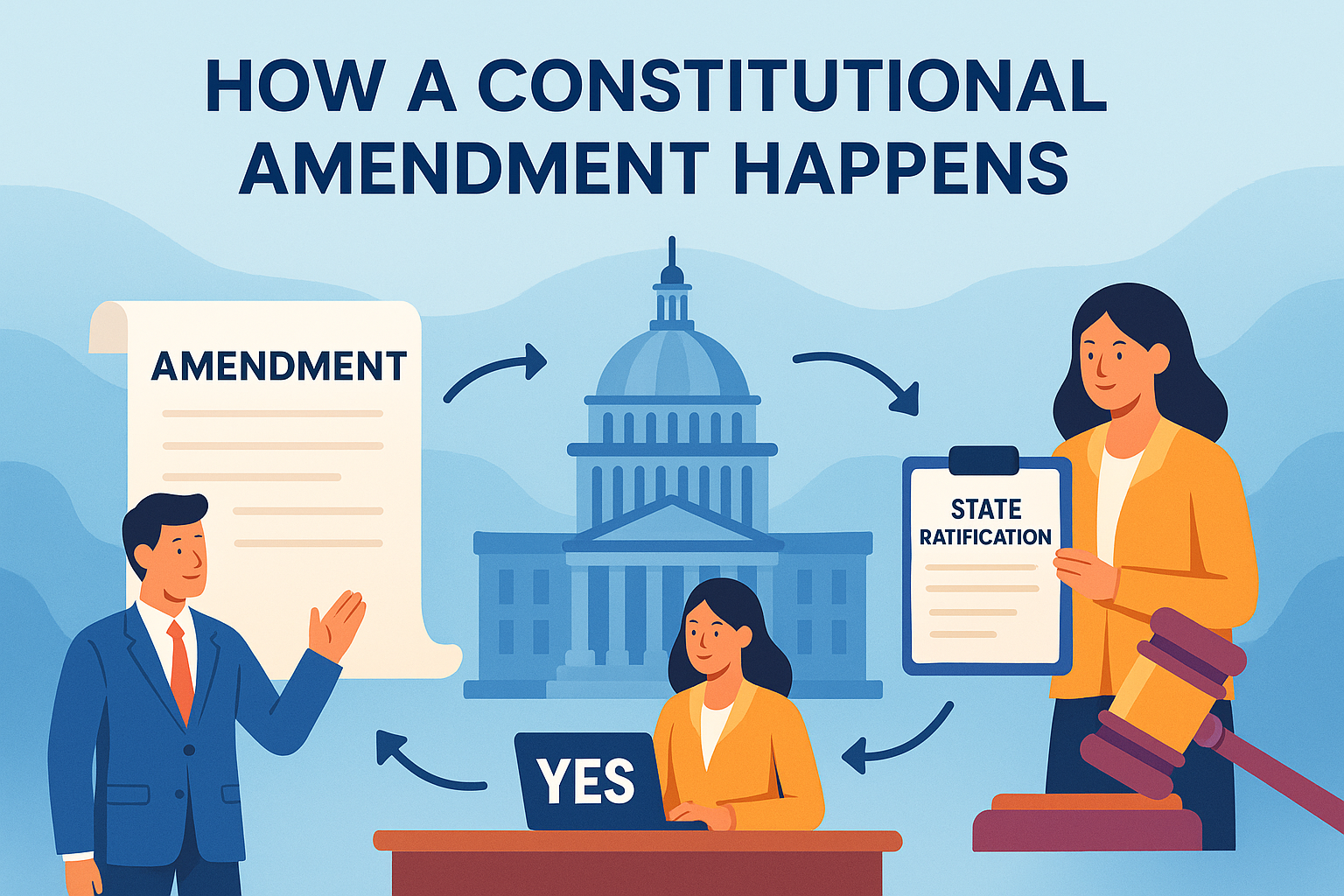
The process of amending a constitution is a crucial element in any democratic society. A constitution serves as the foundational legal document outlining the structure, functions, powers, and limitations of a government. It is designed to be a lasting framework but may require changes over time to reflect the evolving needs and values of society. Constitutional amendments, therefore, are necessary tools to ensure that a nation’s governing principles remain relevant and effective. But how does this complex process work? Understanding the intricacies of constitutional amendments is essential, as they have direct implications on governance and citizens’ rights. In this article, we will delve into the full process of a constitutional amendment, breaking down each step and providing real-world examples to illustrate how changes come to fruition.
Understanding the Nature of Constitutional Amendments
A constitutional amendment is a modification or addition to a constitution. The process varies between countries and governing bodies, yet the objective remains the same: to ensure that the constitution remains relevant while maintaining overall stability and rule of law. Amendments can address a myriad of issues, from expanding civil rights to altering government structures.
In the United States, the amendment process is famously rigorous. The U.S. Constitution, for example, has been amended only 27 times in over two hundred years, despite thousands of proposals. This demonstrates the robust mechanisms in place to prevent hasty changes, ensuring that amendments reflect significant societal consensus.
The Formal Proposal: Initiating the Amendment Process
The journey of a constitutional amendment typically begins with a formal proposal. In many cases, this proposal can be introduced by members of a legislative body, such as Congress in the United States. Alternatively, some constitutions allow for constitutional conventions or referendums as additional avenues to propose amendments.
For instance, in the United States, an amendment can be proposed either by a two-thirds majority in both the House of Representatives and the Senate or by a national constitutional convention called for by two-thirds of state legislatures. The latter method has never been used, underscoring the rarity and gravity of such a measure.
- Legislature Proposal: Two-thirds majority in both houses (U.S.)
- Constitutional Convention: Two-thirds of state legislatures (never used)
Deliberation and Debate: Crafting the Amendment
Once a proposal gains preliminary traction, it enters a phase of deliberation and debate. Lawmakers and stakeholders examine the merits and implications of the proposed amendment. This stage is vital to ensure that the amendment addresses its intended purpose without unintended consequences.
Consider the 19th Amendment to the U.S. Constitution, which granted women the right to vote. Proposed in 1878 by Susan B. Anthony and Elizabeth Cady Stanton, it faced numerous rejections before finally being passed in 1919, following decades of public discourse and advocacy. This process highlighted the need for thorough vetting and discussion to build widespread support.
Approval by Legislative Bodies: Achieving Consensus
The next step in the process is securing approval from legislative bodies. In many systems, this involves multiple levels of government or branches of the legislature, each of which must ratify the amendment. In the United States, for instance, once a constitutional amendment is approved by a two-thirds majority in Congress, it must then be ratified by three-fourths of the state legislatures or conventions.
Such high thresholds ensure that only the amendments with broad and deep support become part of the fabric of a nation’s laws. The ratification of the 13th Amendment, which abolished slavery in the U.S., is a prime example. After passing both the House and Senate in 1865, it was swiftly ratified by the requisite number of states, reflecting the country’s shifting political and social landscape.
| Country | Initial Approval | Final Ratification |
|---|---|---|
| United States | Two-thirds of both Houses | Three-fourths of state legislatures |
| India | Majority in both Houses | President’s assent |
| Australia | Absolute majority in both Houses | Majority of voters in a national referendum |
Public Engagement: Referendums and Public Opinion
In many countries, particularly those with direct democratic elements, the public plays a crucial role in the amendment process. This can take the form of a referendum, where voters directly accept or reject the proposed amendment. Such referendums provide a direct gauge of public sentiment and ensure that constitutional changes have democratic legitimacy.
For example, Australia’s constitution requires that any proposed amendment be approved by a majority in a national referendum. This mechanism was employed in 1999 when Australia voted on whether to become a republic, ultimately rejecting the amendment and demonstrating the power of public opinion in shaping constitutional changes.
Challenges and Controversies in Amending Constitutions
Amending a constitution is inherently challenging due to the stringent processes designed to protect the document’s integrity. One of the main challenges is achieving the level of consensus required, which can be difficult when political divisions run deep. Moreover, controversies often arise regarding the interpretation or implementation of amendments.
Consider the Equal Rights Amendment (ERA) in the United States, aiming to guarantee equal legal rights for all American citizens regardless of sex. Despite initial support, it has faced hurdles and controversies over its perceived implications on gender equality and legal rights, illustrating the complex interplay of politics, societal values, and constitutional law in amendment processes.
The Role of Interpretation and Judicial Review
Once adopted, the impact of a constitutional amendment largely depends on its interpretation and implementation. Courts often play a vital role in constitutionally reviewing amendments, ensuring they align with existing legal frameworks and principles. Judicial interpretation can sometimes lead to significant shifts in the legal landscape.
An illustrative example is the interpretation of the 14th Amendment in the United States, which provides equal protection under the law. Over the years, various landmark Supreme Court cases, such as Brown v. Board of Education, have used this amendment to dismantle racially segregated schools, demonstrating how judicial interpretation can transform abstract constitutional principles into concrete societal changes.
Concluding Thoughts: Why Constitutional Amendments Matter
Understanding the process of constitutional amendments is vital for anyone interested in governance and the rule of law. These amendments serve as instruments for legal and political evolution, enabling societies to adapt to changing circumstances while preserving democratic principles. The rigorous processes involved ensure that changes are deliberate and reflect broad societal consensus.
In today’s rapidly evolving world, being informed about constitutional processes empowers citizens to engage in meaningful discussions and advocate for necessary changes. As we’ve explored, constitutional amendments are complex but essential mechanisms for ensuring that a nation’s foundational document remains vibrant and relevant.
As a takeaway, actively participating in civic processes, whether through voting, public discourse, or civic education, ensures that amendments reflect the collective will and wisdom of the people they serve. Whatever your role, staying informed and engaged is crucial as constitutions around the world continue to evolve. Consider participating in local forums or discussions to share thoughts on potential amendments that resonate with your beliefs and values. Your involvement in the amendment process is not just a civic duty but a vital component of a thriving democracy.
Frequently Asked Questions
1. What is the initial step in the process of amending a constitution?
The initial step in the process of amending a constitution involves the proposal of an amendment. This can be initiated either by the legislative branch of government or through a constitutional convention. In a legislative approach, a member of the legislative body drafts and introduces a proposal for a constitutional amendment. It is then subject to debate, discussion, and revision within the legislative committees, ensuring that the language and intent of the amendment are clearly defined and that it addresses the current needs and values of the society.
On the other hand, a constitutional convention is a gathering specifically convened to consider changes or additions to the existing constitution. Delegates representing various constituencies discuss potential amendments and decide on the most pressing changes required. This method is less common due to its complexity and the potential for broad changes, but it provides a comprehensive forum for constitutional reform. Regardless of the method used, the proposal signifies the beginning of a potentially transformative journey for the legal framework of a nation.
2. How is an amendment proposal approved through the legislative route?
Once an amendment proposal is put forth within a legislative body, it undergoes a rigorous approval process. Typically, the proposal must pass through both houses of a bicameral legislature or gain support from a predetermined majority in a unicameral system. This involves several readings and debates, during which lawmakers discuss the merits and implications of the proposed change.
The threshold for approval is often set higher than that for ordinary legislation, requiring a supermajority—such as two-thirds or three-quarters of votes—to ensure widespread support for the amendment. This high threshold is vital because constitutional amendments have far-reaching and long-lasting effects, and broad consensus helps to ensure stability and acceptance across the political spectrum. If the amendment successfully garners the necessary legislative support, it moves forward to the next phase of the process.
3. What role do citizens play in the constitutional amendment process?
Citizens play a crucial role in the constitutional amendment process, serving as the ultimate arbiters of change in many democratic societies. After a proposed amendment clears the legislative hurdles, it often requires ratification by the voters. This step is designed to give the populace the final say on whether the amendment should be incorporated into the constitution, reflecting the fundamental democratic principle of governance by the people.
This ratification process might take place during a general election or through a special referendum dedicated to the amendment in question. Public discussion, debates, and campaigns inform and engage citizens, ensuring they understand the implications of the amendment proposal. The citizen vote operates as a powerful validation tool, either cementing the proposed changes as part of the constitutional fabric or rejecting them if they don’t align with the public’s vision or preferences. This layer of approval underscores the democratic nature of constitutional amendments, ensuring they have broad-based legitimacy.
4. How does a constitutional convention operate in the amendment process?
A constitutional convention is a unique method of proposing amendments and can take different forms depending on the jurisdiction’s specific rules and procedures. Typically, it begins with a call to convene the assembly, which might arise from a legislative decision or citizen initiative, depending on the country’s laws. The convention brings together delegates who represent various stakeholder groups, viewpoints, and interests, tasked with discussing and drafting proposed amendments to the constitution.
The convention operates with a degree of independence from the regular legislative processes, enabling it to explore fundamental changes that might be difficult to address through normal legislative means. Throughout the convention proceedings, delegates engage in in-depth discussions and negotiations to craft amendments that reflect a broad consensus and address the populace’s needs and values. Once the convention concludes, its recommendations or proposed amendments typically require further approval, either through the legislative process or a direct vote by the electorate, similar to amendments proposed through the legislative route.
5. What challenges are typically encountered in the constitutional amendment process?
The constitutional amendment process can face multiple challenges due to its complexity and the high stakes involved. One major challenge is achieving the requisite level of consensus among lawmakers or delegates, as constitutional changes often require a supermajority or cross-party support. This can be difficult in politically polarized environments where agreement is elusive.
Additionally, mobilizing public engagement and garnering voter approval during the ratification phase can present hurdles. Citizens may be wary of changes to a document that forms the foundational legal structure, requiring extensive education and transparent communication about the proposed benefits and potential impacts of amendments. Moreover, vested interests and powerful groups can exert influence to sway the outcome, adding layers of complexity to the process.
Ultimately, the challenges underscore the importance of a thorough, deliberative amendment process designed to ensure that constitutional changes are meaningful, necessary, and in alignment with the nation’s collective goals and democratic values.