
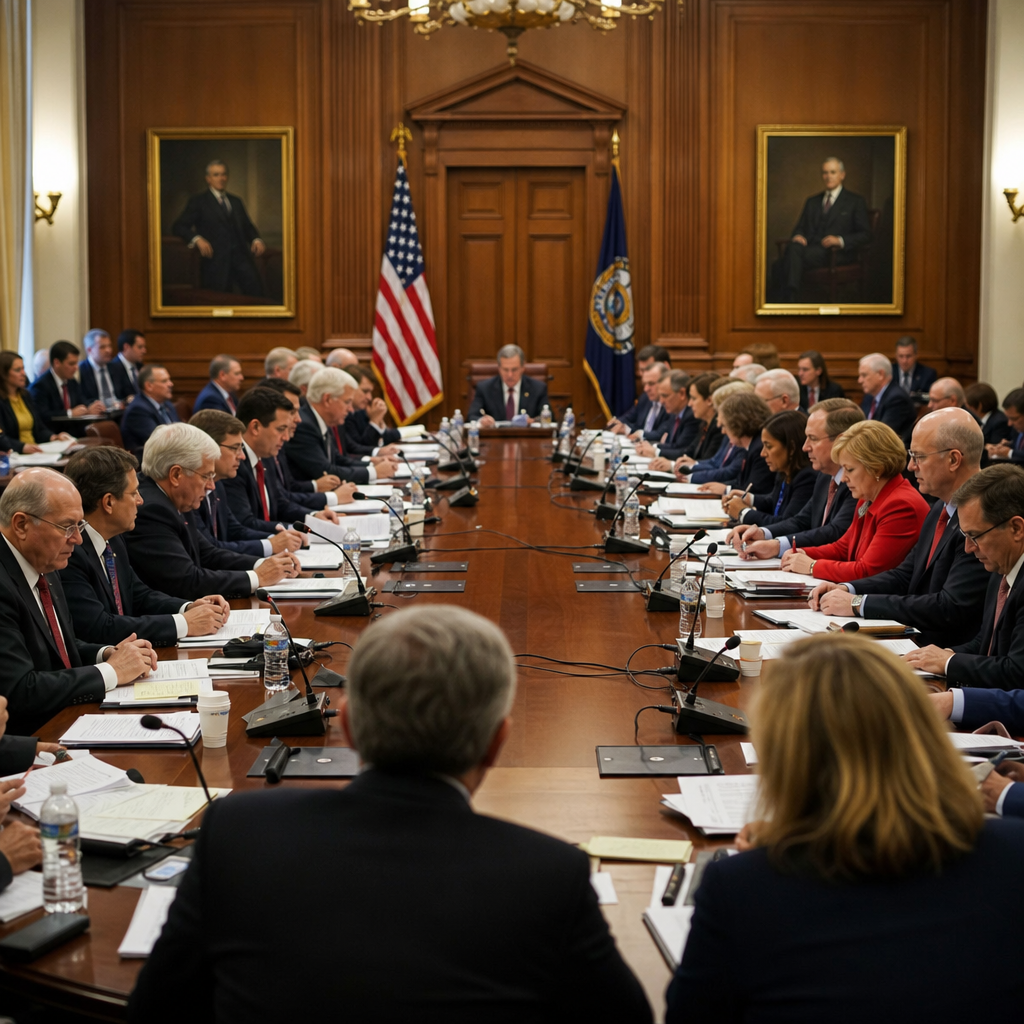
The House Rules Committee sits at the point where congressional procedure turns into political power. In AP Government and Politics, students often learn the headline fact first: this committee decides how, when, and under what limits bills reach the House floor. That description is accurate, but it is not complete enough to explain why procedure can decide policy. In practice, the Rules Committee shapes debate, amendments, timing, coalition strategy, and even whether a proposal receives a meaningful vote at all. When I have taught legislative process, this is the committee students underestimate most, because its work looks technical until you trace how technical choices produce real policy outcomes.
A useful definition comes first. A rule is a House resolution reported by the Rules Committee that sets the terms for considering a bill. It can establish how long members may debate, whether amendments are allowed, which amendments are allowed, and whether points of order are waived. The committee itself is a standing committee of the U.S. House of Representatives, but unlike policy committees such as Agriculture or Energy and Commerce, it functions as a traffic controller for legislation. The Rules Committee is sometimes called the Speaker’s committee for a reason: the majority party typically uses it to manage the chamber’s agenda and protect its legislative priorities.
This matters because the House is a majoritarian institution with 435 members, strict time pressures, and intense partisan competition. Without procedural management, floor consideration could become chaotic, and bills could be delayed or reshaped in ways party leaders do not want. With procedural management, leaders can speed favored bills, block troublesome amendments, and frame the final vote to maximize party unity. That is why studying the House Rules Committee helps explain outcomes that seem puzzling if you look only at ideology or public opinion. Policy is not decided only by what lawmakers believe. It is also decided by what lawmakers are allowed to propose, debate, and vote on.
For students using this page as a hub within AP Government and Politics, the Rules Committee connects to several recurring themes: formal powers versus practical power, majority rule versus minority rights, party leadership, committee government, and the difference between House and Senate procedure. Understanding this committee gives context for broader topics such as how a bill becomes law, why omnibus legislation grows, why some amendments never receive votes, and why congressional leaders invest so much effort in scheduling. If you can explain the Rules Committee clearly, you can explain a large share of how the modern House actually works.
What the House Rules Committee Does
The central job of the House Rules Committee is to report special rules for bills before floor debate begins. These special rules are adopted by the full House through a simple majority vote, and once adopted, they structure what happens next. In plain terms, the committee writes the playbook for floor action. If a bill is important, controversial, or vulnerable to strategic amendments, leaders often rely on the Rules Committee to shape the battlefield before debate starts.
In day-to-day practice, the committee decides four questions that matter immediately to policy outcomes. First, will the bill reach the floor at all, and when? Second, how much debate time will each side receive? Third, what amendments, if any, may be offered? Fourth, will procedural objections be waived? Those decisions are not neutral housekeeping. They determine whether opponents can alter the bill, whether supporters can keep a coalition together, and whether legal or budgetary objections can derail consideration.
Rules can be open, closed, or something in between. An open rule allows broad amendment opportunities under the five-minute rule. A closed rule bars floor amendments entirely. A structured rule permits only specified amendments, often preprinted in the Congressional Record and approved in advance. In the modern House, structured and closed rules are common on major legislation because party leaders want predictable floor outcomes. When students ask why the House often feels more centralized than the Senate, this is one of the clearest answers: the Rules Committee gives the majority a powerful mechanism for control.
The committee also issues rules for resolutions, conference reports, and occasionally self-executing provisions. A self-executing rule is especially important for AP Government because it shows how procedure can produce substantive effects. Under this device, when the House adopts the rule, it is deemed to have adopted a specified amendment or procedural action as well. That means a member may vote once on the rule and thereby lock in a policy change before the main bill is debated. Critics call this opaque; defenders call it efficient floor management.
Why Procedure Decides Policy
Procedure decides policy because the sequence and terms of consideration affect the substance that survives. If a bill comes to the floor under a closed rule, legislators cannot offer amendments to narrow, broaden, or poison-pill the proposal. If points of order are waived, language that might otherwise violate House rules may stay in the bill. If debate is short, opponents have less time to persuade wavering members or generate outside attention. None of that changes the text by magic, but it changes the political environment in which the text lives.
I have seen students understand this fastest through a simple example. Imagine a farm bill with nutrition funding, crop insurance, and conservation programs. Under an open rule, fiscal conservatives might offer spending-cut amendments, environmental members might add stronger conservation provisions, and regional blocs might fight over subsidy formulas. Under a structured rule, leadership can allow only amendments that are coalition-safe. The final policy can differ dramatically even if the underlying committee-reported bill started the same way.
The Rules Committee also affects bargaining. Members deciding whether to support a bill care not only about the current text but also about what amendments may come later. A swing-district representative may back a bill if leadership promises a rule blocking controversial amendments. A faction within the majority may demand a structured rule allowing one symbolic vote to satisfy constituents. In other words, procedural choices help assemble the majority itself. Policy outcomes often reflect that negotiated procedural architecture as much as ideological preference.
Another reason procedure matters is agenda control. Political scientists distinguish between positive agenda power, the ability to bring a proposal forward, and negative agenda power, the ability to keep alternatives off the floor. The House Rules Committee is a leading instrument of both. If leadership wants a vote on disaster aid, tax reform, or surveillance renewal, the committee can clear a path. If leadership fears an amendment on immigration, Ukraine funding, or earmark limits could split the party, the committee can stop that vote from happening. A policy that never receives an amendment vote can be just as consequential as one that passes after lengthy debate.
How the Committee Strengthens Party Leadership
The House Rules Committee is formally a committee of the chamber, but functionally it is an extension of majority leadership. The Speaker influences its membership, and the majority party typically holds a lopsided advantage on it. That design is not accidental. The House developed stronger leadership tools over time because managing a large chamber requires coordination, and the majority party wants to protect its brand. The Rules Committee became one of the most efficient instruments for that coordination.
Its hearings reveal the dynamic clearly. Committee chairs, rank-and-file members, and leadership allies appear to request amendment opportunities or favorable scheduling. The Rules Committee listens, but the majority’s strategic priorities usually dominate. When a leadership team wants to move a debt ceiling package, annual appropriations, or a reconciliation bill, the committee can tailor a rule to reduce uncertainty. That may include limiting amendments, combining measures, or waiving points of order that would otherwise slow the process.
Minority party members on the committee still matter because they can highlight fairness concerns, create a record, and frame later criticism. Yet they rarely control the outcome. This asymmetry teaches an essential AP Government lesson: institutions contain formal procedures, but those procedures often operate through party incentives. The Rules Committee does not erase conflict; it channels conflict in ways that usually favor the majority’s governing strategy.
| Type of rule | What it allows | Policy effect |
|---|---|---|
| Open rule | Broad amendment opportunities from the floor | Increases member participation but raises uncertainty for leadership |
| Closed rule | No floor amendments | Protects negotiated bill text and speeds passage |
| Structured rule | Only specific amendments, often preapproved | Balances flexibility with strong agenda control |
| Self-executing rule | Adoption of the rule automatically triggers another action | Lets procedure produce immediate substantive consequences |
Historical Development and Modern Use
The committee’s power makes more sense when viewed historically. In the nineteenth century, House procedure was less centralized, and obstruction could be severe. As the chamber grew and policy agendas became more complex, members built stronger rules to manage time and order. The Speaker once exercised direct and sweeping control, especially under Thomas Brackett Reed and Joseph Cannon. After the revolt against Cannon in 1910, power dispersed somewhat, but the need for agenda management did not disappear. Over the twentieth century, the Rules Committee remained a pivotal gatekeeper, though its political role shifted with party coalitions and institutional reform.
One major period came in the mid-twentieth century, when conservative coalitions could use committee positions to block civil rights and other legislation. At times, the Rules Committee itself became a bottleneck, showing that procedural power can cut against elected majorities if control is lodged in resistant hands. Reforms eventually reduced some of that independent gatekeeping and aligned the committee more closely with party leadership. The modern result is a committee that usually works to implement majority-party strategy rather than frustrate it.
Today, its importance is visible during high-stakes legislative pushes. Consider budget reconciliation-related measures, major tax packages, pandemic response bills, or emergency national security funding. Leadership cannot leave floor conditions to chance on issues that divide factions within the majority. A carefully written structured rule can protect a fragile coalition by allowing a few negotiated amendments while blocking others that would trigger defections. That is not abstract process theory; it is how modern House majorities survive difficult votes.
What AP Government Students Should Know
For AP Government and Politics, the House Rules Committee is best understood as the bridge between committee work and final floor action. Students should know its formal role, but also the broader concept behind it: institutions shape outcomes by controlling options. If an exam question asks why the House majority leadership is powerful, the Rules Committee is one of the strongest examples you can use. If the question asks how the House differs from the Senate, emphasize that the House relies on special rules to structure debate, while the Senate often operates with looser amendment opportunities and the threat of extended debate.
Students should also connect the committee to congressional terms such as quorum, calendar, discharge petition, Committee of the Whole, and conference committee. Most major bills move from standing committee to a special rule, then to floor consideration often in the Committee of the Whole, where debate and amendment procedures are more efficient. That sequence explains why the Rules Committee matters even when it is not the committee that wrote the policy. It decides the conditions under which policy is tested.
A strong exam response avoids saying the committee simply “sets debate rules” and stops there. Better answers explain consequences. Closed rules strengthen majority leadership and reduce amendment opportunities. Structured rules manage intraparty conflict. Waivers can protect bills from procedural challenges. Scheduling decisions affect momentum, media coverage, and coalition maintenance. Those are the analytical moves that distinguish memorization from real understanding.
Limits, Criticisms, and Why the Topic Matters Beyond Class
The Rules Committee is powerful, but it is not unlimited. The full House must adopt the rule, and close majorities can produce rebellion. If the majority party is internally divided, the committee cannot manufacture votes out of nothing. Leaders sometimes lose rule votes, which is a visible sign of weakness because even the terms of debate cannot command support. In those moments, procedure reveals the underlying coalition problem rather than solving it.
Critics argue that heavy use of closed and structured rules weakens deliberation and marginalizes rank-and-file members. That criticism has force. A chamber with fewer amendment opportunities can become less transparent and less responsive to unexpected coalitions. On the other hand, supporters argue that a large legislative body cannot function if every major bill becomes an uncontrolled amendment free-for-all. Both claims can be true. The tradeoff is between participation and governability, and the Rules Committee sits directly in that tension.
This topic matters beyond an AP exam because citizens often judge Congress by final votes without seeing the procedural choices that shaped those votes. If you want to understand why certain ideas advance, stall, or emerge in altered form, you have to follow the rule as well as the bill. The House Rules Committee is where that story becomes visible. Study a few recent rules alongside the bills they governed, and the basic lesson becomes unmistakable: in the House of Representatives, procedure is not separate from policy. Procedure is one of the main ways policy is made.
The House Rules Committee deserves its reputation as one of the most powerful panels in Congress because it controls the terms of legislative combat. It defines debate, amendment opportunities, timing, and procedural protections, and each of those choices changes what policy can pass. For AP Government and Politics, it serves as a hub concept linking committees, party leadership, majority rule, minority rights, and the larger lawmaking process.
The clearest takeaway is simple. Bills do not arrive on the House floor in a neutral setting. They arrive under rules written by a committee that usually acts in line with majority leadership. That means political outcomes depend not only on preferences and votes, but also on who controls the agenda and the amendment process. When you understand that, many confusing congressional outcomes make sense.
If you are building mastery of this subtopic, pair this article with deeper study of the Committee of the Whole, discharge petitions, reconciliation, conference committees, and differences between House and Senate debate. Start by reading one recent special rule and one major bill it governed. That single exercise will show you why procedure can decide policy.
Frequently Asked Questions
What does the House Rules Committee actually do, and why is it so powerful?
The House Rules Committee determines the terms under which most major legislation reaches the House floor. That means it can decide when a bill will be considered, how long debate will last, whether amendments will be allowed, and which members will have the opportunity to offer those amendments. On paper, that may sound procedural. In reality, those choices can determine whether a bill survives, how much it changes, and which political coalition can support it. The committee is powerful because it does not usually rewrite the substance of a proposal line by line, but it controls the pathway that legislation must travel to receive a vote.
Its influence comes from the structure of the House itself. The House is a large chamber with hundreds of members, limited floor time, and strong party leadership. Without some system for organizing debate, the chamber could become unmanageable. The Rules Committee imposes order, but in doing so, it also distributes power. A rule can protect a fragile compromise from hostile amendments, open a bill to broad participation, speed up action on a leadership priority, or slow momentum around a controversial proposal. Because lawmaking depends not just on ideas but also on timing, sequence, and strategic control, the Rules Committee often becomes the place where political outcomes are shaped before the full House even begins formal debate.
How can procedure decide policy in the House of Representatives?
Procedure can decide policy because the rules of debate determine what policy choices are realistically available. A bill is not simply presented to the House in a neutral environment where all options compete equally. Instead, the Rules Committee can structure debate in ways that advantage some outcomes and block others. If it issues a closed rule, members may be prevented from offering amendments that would significantly change the bill. If it issues a more open rule, opponents and alternative coalitions may have a chance to reshape the proposal. In other words, the design of the process can predetermine which policy version gets the best chance of passage.
Timing also matters. A bill scheduled quickly may benefit from political momentum, media attention, or a party leadership push. A delayed bill may lose urgency, face rising opposition, or be crowded out by other priorities. Debate limits matter too. If discussion is tightly controlled, supporters can minimize opportunities for critics to build resistance. If debate is extended, opponents may use the floor to expose weaknesses or rally public pressure. Procedure therefore does not sit outside policy; it helps select the form policy will take.
This is why students of AP Government and Politics are encouraged to look beyond the simple definition that the committee sets terms for floor debate. The more important insight is that procedural design affects substance. A proposal’s final content, political viability, and public framing can all be shaped by the rule governing its consideration. In that sense, the Rules Committee does not just manage the legislative process. It can influence the legislative result.
What is the difference between open, closed, and restrictive rules, and why do those differences matter?
An open rule generally allows members to offer amendments on the House floor, often under the five-minute rule, giving broader participation in the legislative process. This kind of rule creates more opportunities for rank-and-file lawmakers to shape a bill, build cross-party alliances, and raise issues that were not fully addressed in committee. Open rules can make the House appear more deliberative and inclusive, but they also create uncertainty for party leaders because the final bill may move in unexpected directions.
A closed rule, by contrast, blocks floor amendments. The House debates the bill and then votes up or down on the version brought forward under the rule. Closed rules are especially important when leaders want to protect a negotiated compromise, avoid politically difficult amendment votes, or prevent opponents from altering the bill in ways that could fracture the majority coalition. When a rule is closed, leadership gains greater control over the final product, and the floor becomes less a place of active revision and more a place of decision on a prearranged package.
A restrictive rule falls somewhere in between. It permits some amendments but only under specified conditions, such as allowing only certain pre-approved amendments or setting tight time limits. Restrictive rules are often used because they balance control with participation. Leadership can claim the process remains open to input while still screening out amendments viewed as damaging, irrelevant, or strategically disruptive. These distinctions matter because they influence who gets heard, what alternatives can be considered, and how stable the majority party’s legislative strategy will be. The type of rule chosen can signal whether leaders want a controlled victory, a broader debate, or a managed compromise.
Why is the House Rules Committee often described as an arm of party leadership?
The House Rules Committee is often described this way because it usually works closely with the Speaker and majority party leadership to advance the party’s legislative agenda. Unlike some committees that operate with greater independence or subject-matter specialization, the Rules Committee is deeply tied to scheduling and floor strategy. Its job is not merely technical. It helps translate leadership goals into actionable terms for debate and voting. Because of that role, its membership and decisions tend to reflect the priorities of the majority party more directly than many other committees do.
This connection matters because the majority party wants to govern efficiently and avoid losing control of the floor. If every bill were exposed to unlimited amendments and unpredictable debate, party leaders would have a much harder time keeping their coalition together. The Rules Committee allows leadership to manage those risks. It can limit opportunities for politically uncomfortable votes, shield vulnerable members, and structure debate so that the majority party has the best chance of prevailing. In practice, that means the committee often becomes a strategic tool for converting partisan advantage into legislative success.
That said, calling it an arm of leadership does not mean it is unimportant or purely ceremonial. The opposite is true. Its significance comes from how central procedure is to power in the House. The committee serves as a gatekeeper between committee work and floor action, and that gatekeeping role gives majority leaders a way to shape outcomes before the full chamber votes. For students, this is one of the clearest examples of how institutional design and party politics overlap in Congress.
Why should AP Government students care about the House Rules Committee beyond memorizing its definition?
AP Government students should care because the House Rules Committee is one of the best illustrations of a larger truth in American politics: institutions do not just process conflict, they shape it. If students only memorize that the committee sets the terms for floor debate, they miss the deeper lesson about how power works in Congress. The Rules Committee shows that control over agenda, amendment opportunities, and timing can be as important as winning a simple majority vote. In many cases, the battle over procedure is the battle over policy.
Understanding this committee also helps students interpret broader themes in legislative politics, including party leadership, majority rule, minority rights, and the tradeoff between efficiency and deliberation. A chamber that allows extensive amendment and debate may be more open, but also less predictable and slower moving. A chamber that relies heavily on restrictive rules may pass legislation more efficiently, but with more centralized control. The Rules Committee sits at the center of that tension, making it a useful case study in how democratic institutions balance participation with governability.
Most importantly, studying the committee encourages students to think like political analysts rather than just test takers. When they ask not only what a bill says but also how it was brought to the floor, who was allowed to amend it, and what kind of rule governed its consideration, they begin to see lawmaking more realistically. Policy outcomes are not produced by ideas alone. They emerge from procedure, strategy, organization, and power. The House Rules Committee makes that reality visible.