
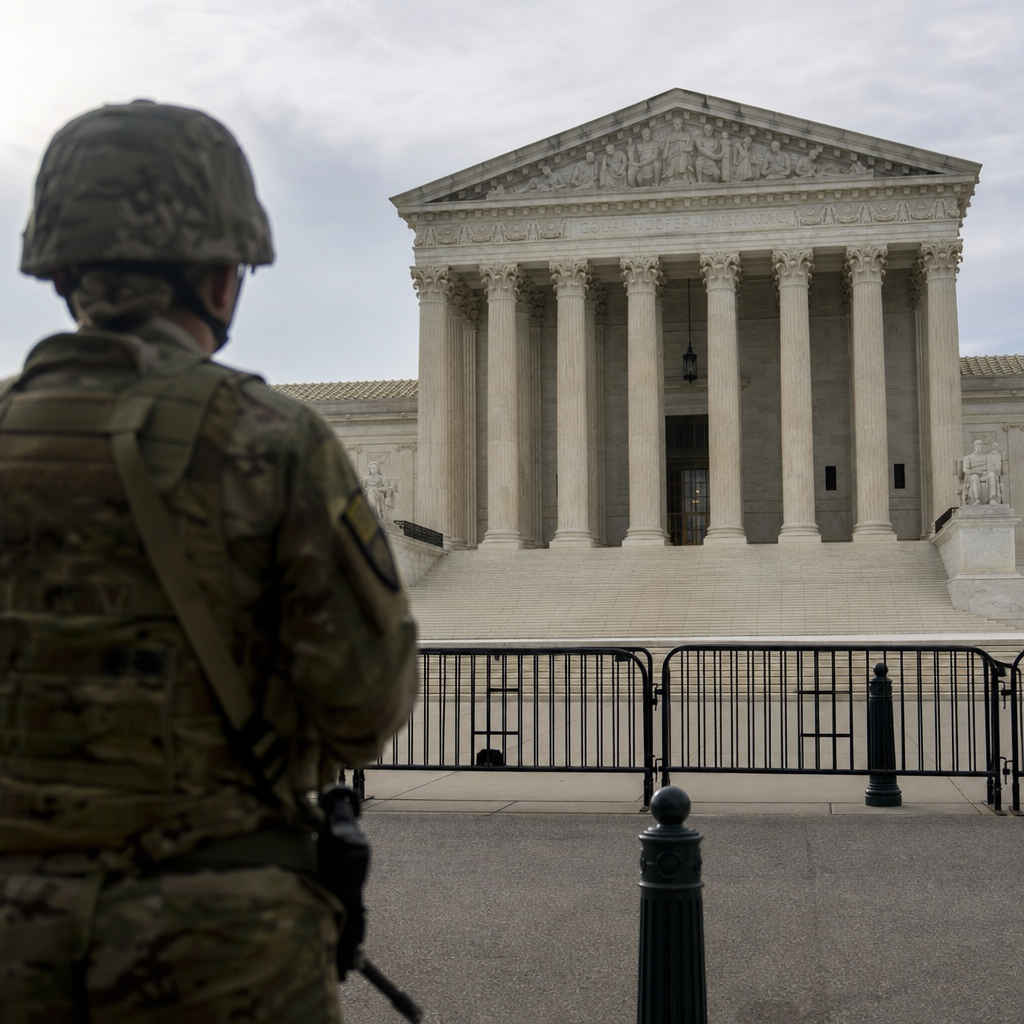
Habeas corpus is the legal mechanism that allows a person detained by the government to challenge the lawfulness of that detention before a judge, and in national security cases it becomes one of the most contested safeguards in constitutional government. In AP Government and Politics, the topic matters because it sits at the intersection of civil liberties, separation of powers, federal courts, executive power, war powers, and the tension between liberty and security. The Constitution protects the writ in Article I, Section 9, stating that it shall not be suspended unless rebellion or invasion requires it for public safety. That short clause has generated centuries of debate over who may suspend the writ, when detention is justified, and how much deference courts should give the president during crisis.
When I have taught and written about this area, students usually begin with a simple question: what does habeas corpus actually do? The answer is precise. It does not guarantee release, and it does not decide innocence or guilt. It guarantees judicial review of custody. A prisoner, or someone acting on the prisoner’s behalf, petitions a court to order the jailer to justify the detention. In ordinary criminal cases, habeas review can address unlawful imprisonment after conviction. In national security cases, the issue is often earlier and more fundamental: may the government hold someone at all, under what authority, and with what process?
National security cases are especially important because they test whether constitutional limits operate when the political branches claim emergency necessity. Governments facing war, terrorism, espionage, or insurrection often argue that speed, secrecy, and military expertise require broad detention authority. Courts, by contrast, are asked to preserve the rule of law without undermining legitimate defense needs. That conflict has appeared in the Civil War, World War II, the Cold War, and the post-9/11 era. For students building a hub understanding of the miscellaneous side of AP Government and Politics, habeas corpus provides a practical lens for major constitutional themes that reappear across the course.
Several key terms shape the discussion. The writ of habeas corpus is the court order requiring the custodian to produce the detainee and explain the legal basis for detention. Suspension means temporarily disabling access to the writ. Enemy combatant is a category used to describe individuals allegedly engaged in hostilities against the United States, though the term has evolved and has been contested. Military tribunal refers to a military court used in some wartime cases. Due process, from the Fifth and Fourteenth Amendments, concerns fair procedures and lawful deprivation of liberty. Jurisdiction asks whether a court has authority to hear a case, a central issue in detainee litigation involving offshore sites such as Guantanamo Bay.
Constitutional Foundations and Why the Suspension Clause Matters
The constitutional foundation starts with the Suspension Clause, which appears in Article I rather than Article II. That placement has long suggested that Congress, not the president acting alone, holds the power to suspend the writ, although practice in emergencies has sometimes moved faster than formal authorization. The framers inherited the concept from English law, where habeas corpus developed as a protection against arbitrary imprisonment by the Crown. In the American system, the writ became a structural safeguard as much as an individual right. It forces the executive to justify detention in a court of law, preserving judicial independence and checking unilateral power.
Why does this matter in national security cases? Because detention is one of the government’s most coercive powers. If officials can imprison people indefinitely by invoking security, constitutional liberty becomes fragile. At the same time, the government does have legitimate authority to detain enemy fighters during armed conflict to prevent their return to the battlefield. The legal problem is not whether detention can ever occur; it is how to distinguish lawful wartime detention from mistaken, overbroad, or abusive confinement. Habeas review is the mechanism that tests the government’s evidence, the scope of statutory authorization, and the constitutional floor beneath military and executive action.
Students should also connect habeas corpus to separation of powers. Congress defines and limits detention authority through statutes such as the Authorization for Use of Military Force of 2001 and jurisdiction-stripping provisions. The executive captures, classifies, and holds detainees, often relying on military and intelligence assessments. The judiciary decides whether those actions comply with statutes and the Constitution. National security litigation therefore becomes a live demonstration of checks and balances. A strong exam answer does not frame liberty and security as a simple either-or choice. Instead, it explains how institutions allocate power and how judicial review preserves accountability even during crisis.
Early National Security Precedents: Lincoln, the Civil War, and Ex parte Milligan
The Civil War produced the first major American crisis over suspension and military detention. In 1861, President Abraham Lincoln authorized suspension of habeas corpus along critical transportation routes as Confederate rebellion threatened Washington. Chief Justice Roger Taney, sitting as a circuit judge in Ex parte Merryman, argued that only Congress could suspend the writ. Lincoln did not accept Taney’s position in practice, and Congress later passed the Habeas Corpus Suspension Act of 1863. This episode is important because it showed how emergencies can outpace constitutional consensus and how branch conflict can persist even when national survival is at stake.
After the war, the Supreme Court set an enduring limit in Ex parte Milligan decided in 1866. Lambdin Milligan, a civilian in Indiana, had been tried by military commission for alleged disloyal activities even though civilian courts were open. The Court held that military tribunals could not replace civilian courts where regular courts were functioning. That rule remains central to AP Government because it rejects the idea that war automatically erases constitutional process. Milligan stands for a clear proposition: necessity has legal boundaries, and the military cannot simply assume judicial roles when civil institutions are available.
Milligan did not eliminate wartime detention, but it clarified an important distinction between active battle conditions and domestic civilian governance. In my experience, students understand the case best when they compare it to a simple principle: emergency powers expand government capacity, yet they do not create a blank check. Courts look at location, status, and institutional availability. Was the detainee a civilian? Were ordinary courts open? Was there a real battlefield necessity? Those questions continue to appear in later cases, even when the technology, enemy, and geography differ dramatically from the nineteenth century.
World War II and the Limits of Judicial Deference
World War II brought another set of national security cases, and they reveal both the strengths and weaknesses of judicial review. In Ex parte Quirin in 1942, the Supreme Court upheld the use of a military tribunal for German saboteurs, including one U.S. citizen, captured on American soil after entering by submarine. The Court distinguished unlawful enemy belligerents from ordinary civilians and accepted military jurisdiction. Quirin is often cited by the government when arguing that wartime status can justify military detention and trial outside the normal criminal process, especially for those linked directly to hostile operations.
Yet the same era also produced Korematsu v. United States in 1944, one of the most condemned decisions in constitutional law. The Court upheld the exclusion of Japanese Americans from designated military areas, validating a policy rooted in racial prejudice, unsupported assumptions, and sweeping collective suspicion. Although Korematsu was not a habeas case, it is indispensable in national security analysis because it demonstrates the danger of excessive judicial deference. Courts can fail when fear and wartime pressure distort judgment. For AP Government students, Korematsu is a warning that formal legality does not always equal justice, and later institutions may repudiate earlier rulings.
| Case | Year | Core Issue | Key Holding | Why It Matters |
|---|---|---|---|---|
| Ex parte Milligan | 1866 | Military trial of civilian | Military tribunals cannot replace open civilian courts | Sets limits on emergency military power |
| Ex parte Quirin | 1942 | Saboteurs and military commission | Military tribunal allowed for unlawful enemy belligerents | Supports wartime detention and trial authority |
| Hamdi v. Rumsfeld | 2004 | U.S. citizen held as enemy combatant | Detainee must receive notice and chance to contest status | Balances security power with due process |
| Rasul v. Bush | 2004 | Federal court jurisdiction over Guantanamo | Courts may hear detainee habeas petitions | Opens judicial review for offshore detention |
| Boumediene v. Bush | 2008 | Constitutional habeas rights at Guantanamo | Suspension Clause protects detainees there | Rejects inadequate substitute review |
The lesson from World War II is not that the judiciary should always second-guess military judgments in minute operational detail. Courts are not command centers. The stronger lesson is that deference must be disciplined. Judges should require lawful authorization, individualized evidence, and workable procedures to challenge mistakes. Broad claims that security demands unchecked power are exactly what habeas corpus is designed to test. That is why modern courts and scholars often read the wartime cases together rather than in isolation: Quirin shows recognized war powers, while Korematsu shows the constitutional risks when courts accept executive assertions too readily.
The Post-9/11 Cases That Reshaped Habeas Corpus
After the attacks of September 11, 2001, the United States detained hundreds of people in Afghanistan, Iraq, Guantanamo Bay, and elsewhere under the theory that the conflict against al Qaeda and associated forces justified long-term wartime detention. The Bush administration argued that Guantanamo, located in Cuba but controlled by the United States, sat outside the reach of federal courts. That position triggered a major line of Supreme Court cases. Rasul v. Bush in 2004 rejected the jurisdictional argument and held that federal courts could hear statutory habeas petitions from foreign nationals detained at Guantanamo.
Another major case that year, Hamdi v. Rumsfeld, involved Yaser Hamdi, a U.S. citizen captured in Afghanistan and held as an enemy combatant. The Court recognized that the 2001 Authorization for Use of Military Force allowed detention of individuals fighting against U.S. forces in the theater of war, but it also held that a citizen detainee must receive notice of the factual basis for classification and a meaningful opportunity to contest it before a neutral decision maker. Justice O’Connor’s line became famous: a state of war is not a blank check for the president when it comes to the rights of the nation’s citizens.
Congress then tried to restrict detainee litigation through the Detainee Treatment Act of 2005 and the Military Commissions Act of 2006. In Hamdan v. Rumsfeld in 2006, the Court struck down the president’s original military commissions because they lacked proper congressional authorization and failed to comply with the Uniform Code of Military Justice and Common Article 3 of the Geneva Conventions. Two years later, in Boumediene v. Bush, the Court held that the constitutional privilege of habeas corpus extended to Guantanamo detainees and that the review system Congress created was not an adequate substitute. Boumediene restored robust judicial review and remains the leading modern statement that practical control, not formal sovereignty alone, determines constitutional habeas reach.
How Courts Balance Liberty and Security in Practice
In practical terms, habeas review in national security cases asks three questions. First, what is the legal source of detention authority? Courts look to the Constitution, congressional statutes, and the international law of armed conflict. Second, who is the detainee? Citizen status matters, but it is not the only factor; courts also examine whether the person was part of or substantially supported enemy forces. Third, what process is required? The answer varies with context. Battlefield capture may justify streamlined procedures at first, but prolonged detention requires stronger opportunities to contest the government’s evidence.
Evidence rules also differ from ordinary criminal trials. Hearsay may be considered. Classified intelligence may require protective procedures. The government often argues that disclosing sources could jeopardize operations or human assets. Courts therefore face a difficult institutional task: allow enough secrecy to protect real security interests while preventing secrecy from becoming a shield for weak evidence. In habeas litigation arising from Guantanamo, district judges reviewed intelligence reports, chain-of-custody problems, and inconsistent witness statements with far more rigor than the political branches expected. Some detainees were ordered released after courts found the evidence unreliable or too attenuated.
There are real tradeoffs. Requiring full criminal trial protections in every wartime capture case could be unworkable and might not fit the law of armed conflict, which permits detention to prevent return to hostilities rather than to punish crime. On the other hand, indefinite detention without meaningful review invites error and abuse. The best constitutional approach has been a middle path: recognize military detention authority in genuine armed conflict, insist on congressional grounding, require neutral judicial review, and calibrate procedure to context without abandoning basic fairness. That balance is imperfect, but it reflects the enduring constitutional design better than either absolute executive discretion or absolute judicial control.
Why This Topic Matters for AP Government and Politics
For AP Government and Politics, habeas corpus and national security cases function as a hub topic because they connect doctrines students often study separately. They illustrate federalism less directly than other subjects, but they strongly illuminate constitutional structure, civil liberties, judicial review, and the policymaking relationship between Congress and the president. They also show how Supreme Court reasoning evolves across time. Milligan, Quirin, Hamdi, Hamdan, Rasul, and Boumediene are not isolated holdings to memorize; together they map the boundaries of detention power under pressure. That synthesis is what strong essays, short-answer responses, and multiple-choice analysis require.
The central takeaway is straightforward. Habeas corpus is the rule-of-law test for detention. In national security cases, it prevents the government from being the sole judge of its own imprisonment decisions. The Supreme Court has never held that security concerns are irrelevant, and it has never denied that wartime detention may be lawful. What it has insisted, especially in the modern era, is that detention must rest on valid authority and remain open to meaningful judicial challenge. If you are building a stronger AP Government foundation, use this topic to connect liberty, emergency power, and institutional checks into one coherent constitutional framework, then follow the linked subtopic articles to deepen each case and concept.
Frequently Asked Questions
What is habeas corpus, and why is it so important in national security cases?
Habeas corpus is a legal procedure that allows a person held by the government to ask a court to review whether that detention is lawful. The phrase is often described as a protection against arbitrary imprisonment because it prevents the executive branch from locking people up indefinitely without judicial oversight. In the U.S. constitutional system, that makes habeas corpus one of the core safeguards of liberty. The Constitution recognizes its importance in the Suspension Clause, which says the writ of habeas corpus shall not be suspended unless, in cases of rebellion or invasion, public safety may require it.
In national security cases, habeas corpus becomes especially important because the government often argues that urgent threats, military operations, intelligence concerns, or wartime conditions require broader detention powers. At the same time, critics worry that these same claims can be used to avoid accountability and weaken constitutional rights. That tension is exactly why the issue is so central in AP Government and Politics: it highlights the ongoing struggle between liberty and security, and it forces students to think about who gets to decide the limits of government power.
National security detentions can involve terrorism suspects, enemy combatants, noncitizens held abroad, or even U.S. citizens accused of aiding hostile forces. In these situations, habeas corpus serves as the mechanism that brings executive action before an independent judge. Without it, detention decisions could remain almost entirely in the hands of the president or military authorities. With it, courts can ask basic but essential questions: Who is being detained? Under what legal authority? What evidence supports detention? Has Congress authorized the action? Do constitutional protections apply? Those questions are what keep emergency powers from becoming unchecked powers.
Does the Constitution allow habeas corpus to be suspended during war or national emergencies?
Yes, but only under very limited circumstances. The Constitution does not treat habeas corpus as an ordinary privilege the government can set aside whenever it faces danger. Instead, the Suspension Clause creates a very high threshold: suspension is allowed only in cases of rebellion or invasion when public safety may require it. That wording matters because it suggests the framers viewed habeas corpus as a default constitutional safeguard, not a right that disappears simply because officials invoke national security.
One of the major constitutional debates is who has the power to suspend the writ. Because the Suspension Clause appears in Article I, which deals with legislative powers, many scholars and courts have argued that Congress, not the president acting alone, has the primary authority to suspend habeas corpus. This issue became especially significant during the Civil War, when President Abraham Lincoln authorized suspension and the conflict over executive versus legislative authority became highly visible. In modern national security cases, that historical debate still influences how courts and scholars evaluate claims of emergency power.
Importantly, war itself does not automatically suspend habeas corpus. The existence of armed conflict or a terrorism threat does not mean courts disappear or that detainees lose the ability to challenge their detention. In fact, many major Supreme Court cases after September 11 made clear that the government cannot simply rely on broad wartime rhetoric to avoid judicial review. For AP Government and Politics, this is a powerful example of separation of powers in action: even when the nation faces serious threats, constitutional structures continue to matter, and the judiciary often plays a key role in determining whether emergency measures are legally justified.
How has the Supreme Court ruled on habeas corpus in major national security cases?
The Supreme Court has repeatedly affirmed that national security concerns do not place detention decisions completely beyond judicial review. A leading example is Hamdi v. Rumsfeld (2004), in which the Court held that a U.S. citizen detained as an enemy combatant had the right to challenge that detention before a neutral decision-maker. The government argued that military necessity justified broad deference, but the Court rejected the idea that the executive branch alone could determine the legality of detention without meaningful process. The case is often remembered for reinforcing that a state of war is not a blank check for the president.
Another landmark case is Rasul v. Bush (2004), where the Court ruled that federal courts had jurisdiction to hear habeas petitions from detainees held at Guantanamo Bay. That decision was significant because the government had argued that Guantanamo was outside the reach of U.S. courts. The Court rejected that position, signaling that physical location alone could not be used to create a legal black hole where detention decisions escaped review. That ruling opened the door for detainees to challenge the basis of their confinement.
Boumediene v. Bush (2008) went even further. The Court held that detainees at Guantanamo had a constitutional right to seek habeas corpus and that Congress had not provided an adequate substitute through the review procedures it established. This case is especially important in AP Government because it demonstrates the judiciary checking both the political branches at once. Congress had tried to limit court review, and the executive had relied heavily on wartime detention authority, but the Supreme Court insisted that constitutional protections still applied. Together, these cases show that while the Court often recognizes the government’s legitimate security interests, it also insists that detention must remain subject to law, process, and judicial oversight.
How does habeas corpus connect to separation of powers and checks and balances?
Habeas corpus is one of the clearest examples of checks and balances in practice. In national security cases, the executive branch often claims the authority to detain individuals in order to protect the country. Congress may authorize military force, create detention rules, or attempt to restrict court jurisdiction. The judiciary then reviews whether those actions comply with the Constitution, federal statutes, and due process principles. Habeas corpus is the tool that allows courts to perform that reviewing function rather than leaving detention entirely to the political branches.
This matters because detention is one of the government’s most serious powers. If the executive branch could imprison people based solely on its own determination, with no independent review, the balance of power would shift dramatically. Habeas corpus helps prevent that by requiring the government to justify detention in legal terms before a judge. It does not mean courts run military operations or second-guess every security judgment. Instead, it means the judiciary retains the authority to ask whether the government is acting within constitutional and statutory limits.
For students of AP Government and Politics, this is a strong illustration of how institutions interact rather than operate in isolation. Congress can support or limit executive detention policies. The president can act quickly in response to threats, especially during war or emergencies. But the courts can still require legal accountability. Cases involving Guantanamo Bay, enemy combatants, and wartime detention all show that national security is not just about foreign policy or military strategy; it is also about constitutional design. Habeas corpus sits at the center of that design because it ensures that liberty claims can still be heard, even in the most politically charged circumstances.
Why is habeas corpus a major topic in AP Government and Politics when discussing civil liberties and national security?
Habeas corpus is a major AP Government topic because it brings together several foundational themes in one issue. First, it is a civil liberties question because it protects individuals from unlawful detention by the state. Second, it is a separation of powers question because it tests how far the president can go in the name of national defense and how strongly courts can respond. Third, it is a federal courts question because judges often decide whether detainees have access to judicial review and what procedures are constitutionally required. Few topics connect so directly to the structure of government and the protection of individual rights.
It is also important because it forces students to confront one of the most enduring dilemmas in American politics: how much liberty should be restricted in order to provide security? In periods of fear, governments often argue that extraordinary threats demand extraordinary powers. Sometimes the public agrees. But the constitutional system is built on the idea that rights should not depend entirely on the popularity of the person asserting them or the political climate of the moment. Habeas corpus reflects that principle by allowing even unpopular or dangerous suspects to demand that the government follow the law.
From an exam perspective, understanding habeas corpus helps students analyze court cases, explain constitutional clauses, compare institutional powers, and apply civil liberties concepts to real disputes. It also sharpens broader analytical skills. Students learn to distinguish between legitimate security needs and unconstitutional overreach, to identify when Congress or the president is acting within proper authority, and to evaluate how the judiciary protects rights while still recognizing national security concerns. In that sense, habeas corpus is not just a narrow legal term. It is a window into how constitutional democracy tries to preserve both safety and freedom at the same time.