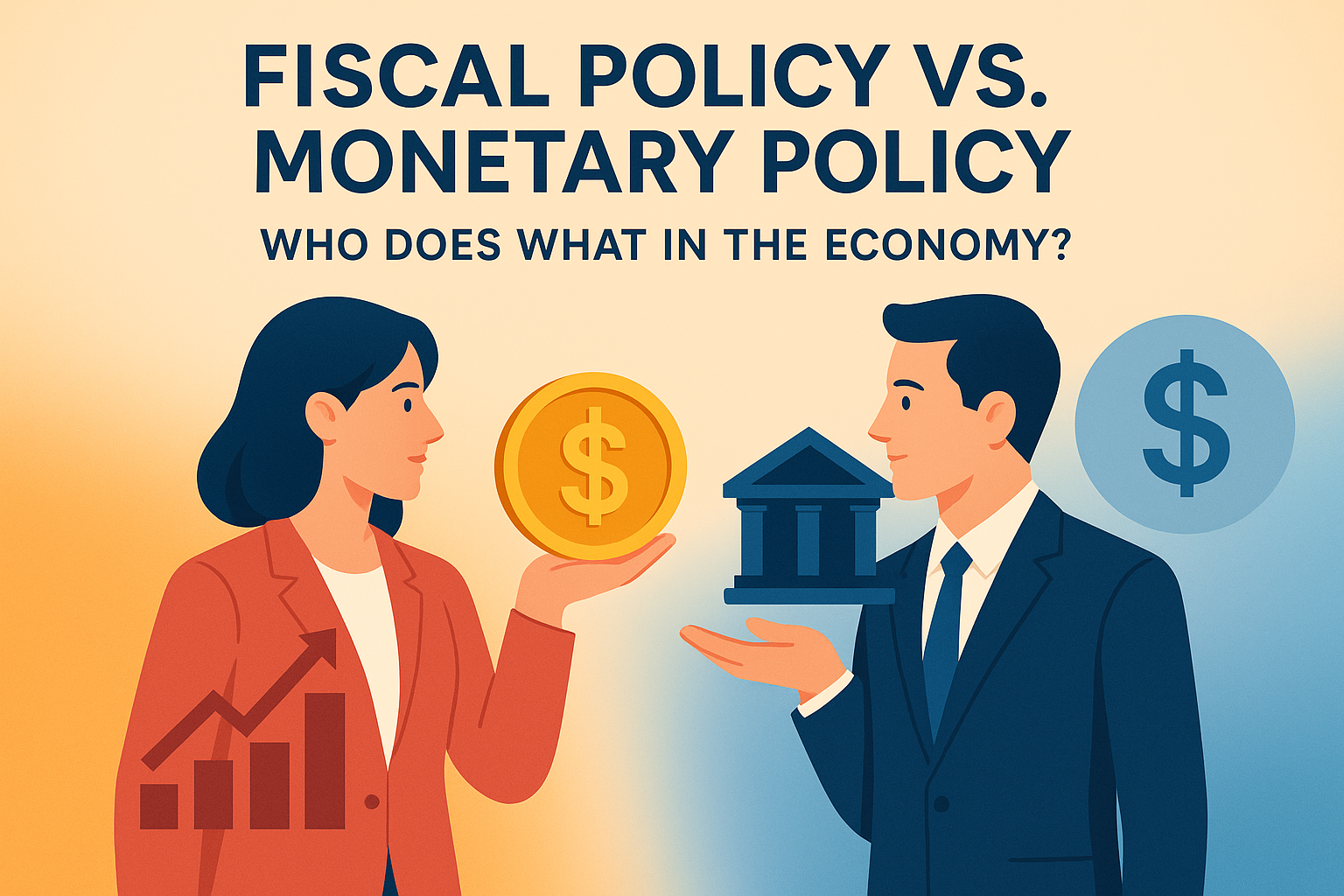
In the complex landscape of economic management, fiscal policy and monetary policy stand out as the primary tools wielded by governments and central banks to steer economies. These policies form the backbone of how economies manage growth, stabilize prices, and achieve full employment. Understanding these policies, their distinct roles, and their impacts on the economy is critical for businesses, policymakers, and even individuals planning their financial futures. This article delves into the workings of fiscal policy and monetary policy, explores their differences, and clarifies why they are essential for maintaining economic stability. By the end of this discussion, you will have a clear understanding of how these policies affect economic conditions and what it means for various stakeholders in society.
Fiscal policy refers to the strategies that governments use to influence a nation’s economic direction through taxation and spending decisions. The guiding principle behind fiscal policy is to adjust government revenues and expenditures to achieve economic objectives such as growth, employment, and inflation control. On the other hand, monetary policy involves the regulation of the money supply and interest rates by a central bank—like the Federal Reserve in the United States—to control inflation, manage employment levels, and stabilize the currency.
The interplay between fiscal and monetary policy is crucial because it dictates the overall effectiveness of economic governance. While fiscal policy provides governments the power to directly impact economic activity through public expenditure and tax adjustments, monetary policy allows central banks to modulate economic conditions indirectly by influencing credit availability and borrowing costs. Unraveling these policies illuminates the mechanisms that drive national and global economies and offers insights into how they can be leveraged for economic prosperity. Let’s unpack these complex topics to see why they truly matter today.
Fiscal Policy: Tools, Strategies, and Real-World Applications
Fiscal policy involves the government’s use of taxation and public spending as tools to influence the economy. When a government implements fiscal policy, it can focus on either stimulating economic growth or cooling down an overheated economy. Typically, this is achieved through changes in tax rates and public spending, which in turn affect aggregate demand.
For example, during a recession, a government might reduce taxes and increase public spending to stimulate demand. Lower taxes increase disposable income for consumers, leading to higher consumption, while increased public spending can directly boost employment and production. Conversely, to combat inflation, a government might raise taxes and cut back on spending to reduce demand.
An illuminating example of fiscal policy in action was the U.S. government’s response to the 2008 financial crisis. The government enacted the Economic Stimulus Act of 2008 and the American Recovery and Reinvestment Act of 2009, which together funneled nearly $1 trillion into the economy through tax rebates, infrastructure spending, and healthcare expansion. These actions aimed to jumpstart economic activity by putting more money in the hands of consumers and businesses.
These fiscal measures underscore the importance of timing and scale in applying fiscal policy. When effectively implemented, fiscal policy can lift economies out of recession, reduce unemployment, and control inflation. However, fiscal policy is not without its challenges, such as the risk of increased public debt and potential delays in implementation and effect.
Monetary Policy: Mechanisms, Effects, and Real-World Case Studies
Monetary policy refers to the processes by which a central bank, such as the European Central Bank or the Federal Reserve, controls the money supply, interest rates, and availability of credit. The main objectives of monetary policy include managing inflation, controlling unemployment, and maintaining currency stability.
Central banks employ various tools such as open market operations, discount rates, and reserve requirements to influence the economy. For instance, to curb high inflation, a central bank might raise interest rates. This makes borrowing more expensive, which can reduce spending and investment, thereby cooling demand throughout the economy. Conversely, to stimulate growth, a central bank might lower interest rates to encourage borrowing and investment.
An illustrative case of monetary policy was the U.S. Federal Reserve’s response to the 2008 financial crisis. In an unprecedented move, the Fed reduced its target interest rate to nearly zero and engaged in large-scale asset purchases, known as quantitative easing, to inject liquidity into the financial system. This aggressive use of monetary policy tools aimed to stabilize financial markets, promote lending, and support economic recovery.
The implementation of monetary policy must carefully navigate the economic climate, as overly tight measures can choke off growth, while excessively loose policies can lead to hyperinflation. Thus, a balanced approach is essential for achieving long-term economic stability.
Comparative Analysis: Fiscal Policy Versus Monetary Policy
While both fiscal and monetary policies aim to manage economic performance, they differ significantly in their methods, execution, and impacts. Fiscal policy is typically orchestrated by a nation’s government, while monetary policy is managed by its central bank. This separation of powers is crucial for maintaining the credibility and independence of economic policy decisions.
A key difference lies in the speed and precision with which these policies can be deployed. Monetary policy adjustments can be relatively swift, as central banks have the authority to change interest rates and other monetary tools with minimal legislative delay. In contrast, fiscal policy changes often require legislative approval, which can be time-consuming, potentially delaying their economic effects.
Moreover, the scope of their impact varies: fiscal policy directly alters government budgets and spending priorities, affecting specific sectors and regions, while monetary policy has a more generalized influence across credit markets and inflation.
Despite these differences, both policies must work in harmony to effectively manage the economy. During the COVID-19 pandemic, for example, many nations around the world implemented simultaneous fiscal stimulus packages and central bank interventions to mitigate economic fallout. These dual actions proved essential in providing a robust response to an unprecedented global challenge.
| Aspect | Fiscal Policy | Monetary Policy |
|---|---|---|
| Executor | Government | Central Bank |
| Main Tools | Taxation & Spending | Interest Rates & Money Supply |
| Implementation Speed | Slower, due to legislative processes | Faster, due to centralized decision making |
| Impact Scope | Directly on specific sectors | Broadly across the economy |
| Primary Goals | Economic Growth & Employment | Control Inflation & Stabilize Currency |
The Role of Central Banks in Coordinating Policies
Central banks are pivotal in ensuring the effectiveness and coordination of monetary and fiscal policies. They not only oversee monetary policy but also provide guidance and analyses that inform fiscal policy decisions. This role was prominent during recent global economic challenges, where central banks around the world took a proactive stance on communication and policy advisement to align national strategies with broader economic goals.
For instance, the European Central Bank often collaborates with member states to align fiscal measures with EU-wide monetary objectives. This coordination helps maximize the effectiveness of policy interventions, particularly during economic crises when swift, synchronized actions are vital.
Central banks also play a role in analyzing the long-term implications of fiscal and monetary policies, guiding governments on sustainable practices to prevent excessive borrowing and inflation. This ongoing assessment helps maintain overall economic health and stability.
Conclusion: Navigating Fiscal and Monetary Policies for Economic Well-being
Understanding the distinct yet complementary roles of fiscal and monetary policies is crucial for navigating the complexities of economic management. These powerful tools, when effectively utilized, can steer economies toward growth, stability, and resilience. Policymakers, businesses, and individuals must be aware of how these policies influence economic conditions to make informed decisions.
The key takeaway is the necessity of balance and timing in deploying fiscal and monetary policy. While fiscal policy can provide direct economic stimulus and support employment, monetary policy controls inflation and stabilizes currency. Together, they form a comprehensive approach to managing national economies.
For readers and stakeholders, staying informed about how these policies work and their implications is essential. As economic landscapes evolve, so too must our understanding and application of fiscal and monetary strategies. Whether you’re a policymaker, business owner, or individual planning your future, recognizing the roles these policies play is an empowering step toward economic security and growth.
Next steps include staying updated with economic news, engaging with advocacy or community groups that inform policy decisions, and considering how these policies affect your financial strategy or business operations. By remaining proactive and informed, you can better navigate the economic environment and leverage opportunities that arise from these pivotal policies.
Frequently Asked Questions
1. What is the main difference between fiscal policy and monetary policy?
The primary difference between fiscal policy and monetary policy lies in who implements them and the tools they use to influence the economy. Fiscal policy is handled by the government and focuses on adjusting spending levels and tax rates. Essentially, it’s the government’s strategy for tax revenue collection and spending, which can influence the economy’s demand and supply. For instance, if a government decides to reduce taxes, individuals have more take-home pay, increasing consumer spending, stimulating economic growth. Conversely, increasing taxes can have the opposite effect, slowing down the economy to curb inflation. Meanwhile, monetary policy is controlled by a country’s central bank. It’s all about managing the money supply and interest rates to achieve macroeconomic objectives such as controlling inflation, consumption, growth, and liquidity. For example, an increase in interest rates typically discourages borrowing and spending, cooling off an overheated economy, while lowering rates can do the opposite, encouraging investment and spending.
2. How does fiscal policy affect the average person?
Fiscal policy affects the average person mainly through changes in taxation and government spending decisions. For instance, when a government decides to implement tax cuts, individuals generally experience an increase in their disposable income, which can lead to increased consumer spending and savings. This change can improve economic conditions by boosting demand for goods and services, potentially leading to job creation and better employment rates. Government spending, such as investment in infrastructure, public services, or welfare programs, can also positively affect individuals by enhancing public goods and services and providing social safety nets. On the flip side, if a government increases taxes or cuts public spending to address a budget deficit, people might feel the pinch through reduced disposable income or less access to certain public services, potentially leading to slower economic growth and impacting individual financial stability.
3. What role does the central bank play in monetary policy?
The central bank is the pivotal institution that orchestrates and executes monetary policy. It operates to ensure economic stability and financial security by controlling money supply and setting interest rates. For example, in the United States, the Federal Reserve (often referred to simply as “the Fed”) is responsible for overseeing the country’s monetary system. The central bank manages inflation by adjusting interest rates; an increase in rates usually cools down spending and investment, curbing inflation, while a decrease stimulates borrowing and investing. They also control the money supply directly through operations that influence bank reserves and liquidity in the economy. Moreover, central banks often act as the lender of last resort to ensure stability in the banking system, which underpins everyday financial activities. In recent years, central banks have also taken on expanded roles, such as influencing financial market conditions through unconventional measures, like quantitative easing, to spur economic activity during periods of recession.
4. Can fiscal and monetary policies be used together? If so, how?
Yes, fiscal and monetary policies can certainly be used in tandem to achieve economic objectives more effectively. Together, they provide a powerful arsenal for stabilizing and growing an economy. For instance, in the face of economic recession, a government might opt to increase public spending and cut taxes (fiscal policy), while the central bank might lower interest rates or purchase government securities to inject liquidity into the economy (monetary policy). This combination can provide a robust stimulus that increases aggregate demand, encouraging business investment and consumer spending to jumpstart the economy. Conversely, if there’s overheating in the economy leading to inflation, the government might reduce its spending and increase taxes, while the central bank tightens the money supply by raising interest rates to cool down excess demand. These strategic moves, when aligned, can effectively balance economic growth and stability.
5. What challenges do policymakers face when implementing fiscal and monetary policies?
Implementing effective fiscal and monetary policies comes with several challenges. Policymakers must accurately read the economic conditions and predict the potential impact of their actions, which is incredibly complex due to the dynamic and interconnected nature of global markets. For fiscal policy, timing is a significant challenge. Government processes can be slow-moving, meaning that by the time new tax policies or spending measures are enacted, the economic situation might have already changed. Political considerations also play a significant role in fiscal policymaking, as government officials must balance economic imperatives with political agendas and public opinion. On the monetary policy front, central banks must carefully manage interest rates and monetary supply to prevent unpredictable inflation or deflation, which can destabilize the economy. There’s also the issue of alignment; fiscal and monetary policies must be well-coordinated to ensure they complement rather than counteract one another, which requires clear communication and cooperation between the government and central banks.