
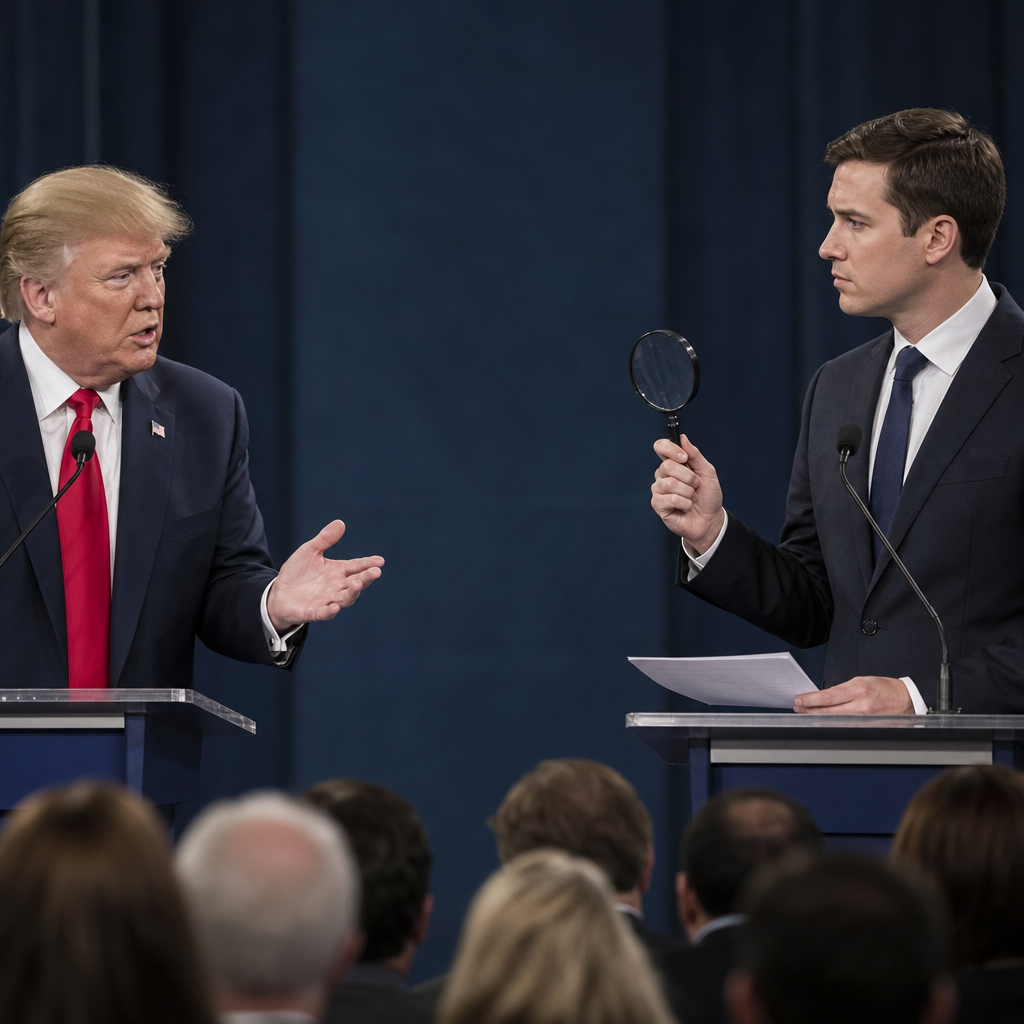
Fact-checking in politics sits at the intersection of journalism, democratic accountability, and political psychology. It is the practice of verifying public claims by candidates, officeholders, parties, campaigns, and media figures against evidence such as official records, legislation, transcripts, data sets, court filings, and expert consensus. In AP Government and Politics, fact-checking matters because students are asked not only to know institutions and processes, but also to evaluate how information shapes public opinion, participation, and policy outcomes. The central question is deceptively simple: when voters see a clear correction, do they actually revise what they believe?
The short answer is yes, sometimes, but not as much or as durably as many people hope. In my experience working with political communication materials and source verification, the strongest fact-checks can correct specific false statements, especially when the claim is concrete, recent, and tied to a trusted source. Yet political beliefs are rarely isolated facts. They are often connected to identity, party loyalty, ideology, media habits, and prior assumptions about government. That is why fact-checking can improve factual accuracy without fully changing broader attitudes about candidates, public policy, or institutions.
This topic matters because modern politics runs on repeated claims delivered at high speed through television, debates, campaign ads, podcasts, social platforms, and text messages. Falsehoods can spread before a newsroom, classroom, or election office has time to respond. Even when corrections appear, they compete with emotional narratives and partisan cues. For students, understanding fact-checking is essential to evaluating campaign rhetoric, presidential messaging, congressional debate, Supreme Court controversies, public trust, and federalism disputes. It also helps explain why democratic systems depend on credible intermediaries such as professional journalists, nonpartisan research organizations, independent courts, and transparent public records.
To answer whether fact-checking changes minds, it helps to separate three outcomes. First is factual belief: whether a person accepts that a statement is true or false. Second is attitude: whether a person changes how they feel about an issue or politician. Third is behavior: whether a person shares a post, donates, votes differently, or pressures representatives. Fact-checking tends to have its clearest effect on the first outcome, a weaker and less consistent effect on the second, and the smallest direct effect on the third. That pattern defines the debate and explains both the value and the limits of political fact-checking.
What Political Fact-Checking Actually Includes
Political fact-checking is broader than rating a debate quote as true or false. Professional fact-checkers review campaign advertisements, stump speeches, fundraising emails, social media posts, policy white papers, viral images, and procedural claims about how government works. Organizations such as PolitiFact, FactCheck.org, The Washington Post Fact Checker, Reuters Fact Check, and the Associated Press use transparent sourcing and publish explanations showing how they reached a conclusion. The best work does more than label a claim. It defines the terms, checks the context, and distinguishes between falsehood, exaggeration, cherry-picking, and reasonable interpretation.
Consider a common campaign statement: “Crime is at an all-time high.” A good fact-check asks several questions. What measure of crime is being used: violent crime, property crime, homicide, or reported offenses overall? What time frame matters? Are the numbers national, state, or local? What does the FBI’s Uniform Crime Reporting system or the National Crime Victimization Survey show? A short verdict without that context is less useful than a clear explanation that crime may have risen in one category after the pandemic but remains below peaks reached in the 1980s or 1990s. The distinction is not semantic; it directly changes how citizens interpret public safety policy.
Fact-checking also includes procedural and constitutional claims that often confuse students in AP Government and Politics. Politicians regularly misstate what executive orders can do, whether the Supreme Court “creates law,” how impeachment works, or who administers elections. Here, the correction is not only about one statement but about civic knowledge. When a governor says a federal agency “cannot regulate this issue at all,” a responsible fact-check compares the claim with statutory authority, judicial precedent, and administrative practice. This makes fact-checking part of civic education, not merely campaign coverage.
What Research Shows About Whether It Changes Minds
Research on misinformation and corrections shows a consistent but qualified pattern. Corrections can reduce misperceptions, especially when they are timely, specific, repeated, and easy to understand. Studies by political scientists and communication researchers have found that people often update factual beliefs after reading a clear correction, even when the false claim came from a politician they support. That is an important finding because it rejects the simplistic idea that corrections never work. They do work, but usually on narrower factual questions than journalists or reformers would like.
A useful way to frame the evidence is that factual revision is easier than identity revision. If a voter is told that a bill did not actually eliminate a program, they may accept that point after seeing the legislative text and a Congressional Budget Office summary. But that same voter may still believe the politician who made the false claim is fundamentally more trustworthy or shares their values. In other words, fact-checking can change what a person knows while barely changing what they feel. That gap explains why candidates can survive repeated factual corrections if supporters see them as fighting for the right side.
Researchers have also examined the so-called backfire effect, the idea that corrections make people believe falsehoods even more strongly. In public discussion, this concept became popular because it fit a wider story about polarization. But later research found that strong backfire is less common than once feared. People do not usually double down simply because they encountered a correction. The more typical result is partial updating, selective acceptance, or rapid forgetting. This is still a serious problem, but it is different from saying fact-checking is useless. The challenge is not that corrections always fail; it is that they often produce modest gains that can fade quickly.
| Outcome | Typical effect of fact-checking | Why the effect varies |
|---|---|---|
| Factual belief | Often improves accuracy | Works best with concrete claims and trusted evidence |
| Issue attitude | Sometimes shifts slightly | Attitudes are tied to ideology and group identity |
| Candidate evaluation | Usually limited change | Partisans excuse errors from their own side |
| Political behavior | Small direct effect | Voting and sharing are driven by many factors beyond facts |
Why Some Fact-Checks Work Better Than Others
The design of the correction matters. Effective fact-checks are specific, concise, and evidence-led. They quote the original claim accurately, state the verdict plainly, and show the source material. They avoid long detours and they do not repeat the falsehood so dramatically that readers remember the myth more than the correction. In newsroom practice, the strongest pieces often use a simple structure: claim, evidence, context, conclusion. That format helps readers who skim and helps teachers assign material that students can evaluate quickly.
Source credibility is just as important. People are more willing to accept corrections from institutions they view as independent and competent. A local election office may be more persuasive on voting procedures than a national commentator. A Congressional Research Service report may carry more weight on a separation-of-powers dispute than a campaign spokesperson. Courts, inspectors general, state auditors, and nonpartisan budget offices can all function as trusted reference points when their roles are explained clearly. Trust does not guarantee persuasion, but without trust, even accurate fact-checks struggle.
Timing also shapes impact. A correction delivered immediately after a false claim can prevent the falsehood from settling into memory. Once a narrative is repeated for days or weeks, it becomes harder to dislodge because people start to fit new information into an existing story. Repetition matters too. One fact-check may not be enough, especially if the original claim appears in multiple speeches, clips, and posts. I have seen the most effective corrections used across formats: a written article for depth, a short social post for speed, and a classroom or broadcast explanation for context.
Why Fact-Checking Often Fails to Fully Persuade
If evidence is available, why do so many voters remain unconvinced? The main reason is motivated reasoning. People process information in ways that protect their identities and prior commitments. A correction that threatens a partisan narrative can feel like an attack on one’s group rather than a neutral update. This does not mean voters are irrational in every sense; it means politics is social. Individuals ask not only, “Is this true?” but also, “Who is saying it, what side are they on, and what will accepting it imply about me?”
Media environment is another barrier. In a fragmented information system, many citizens do not encounter the correction at all. Others see it only after the false claim has spread widely through friendly channels. Algorithmic feeds reward engagement, and outrage often outperforms nuance. A misleading video clip can reach millions before a careful explainer catches up. Even then, some audiences consume politics mainly through personalities who frame every correction as biased. In that setting, the fact-check is not judged on evidence alone; it is filtered through a broader argument about media legitimacy.
There is also a memory problem. People tend to retain the gist of a dramatic claim while forgetting the qualifying details of the correction. For example, a candidate may say unemployment was “the worst ever” under an opponent. A fact-check may note that the claim is false, define the labor force rate, compare recession periods, and explain seasonal revisions. Days later, many readers remember only that unemployment was supposedly bad. This is why wording, repetition, and visual clarity matter so much in public corrections.
Real-World Examples from Campaigns, Debates, and Government
Presidential debates provide classic examples because they generate memorable lines and immediate fact-checking. When a candidate misstates tax rates, health insurance coverage, immigration numbers, or military spending, major newsrooms often publish live analyses within minutes. These checks help attentive viewers and classroom audiences sort rhetoric from record. Yet post-debate polling usually shows that impressions about strength, empathy, and confidence influence viewers more than single factual rulings. The debate format itself favors sharp claims over documented nuance, which limits how much real-time corrections can reshape overall evaluations.
Election administration is another area where fact-checking is vital and consequential. False claims about voting machines, mail ballots, registration rules, or certification procedures can reduce trust and discourage participation. Here, corrections from secretaries of state, county clerks, state courts, and the Cybersecurity and Infrastructure Security Agency can make a measurable difference because the claims involve concrete procedures and deadlines. When officials explain how ballots are verified, when results are unofficial, or why counts change as late ballots arrive, they can reduce confusion even among skeptical voters. These are high-stakes examples because factual misunderstanding can directly affect democratic legitimacy.
Policy debates show the limits more clearly. Consider arguments over inflation, border enforcement, student debt, gun legislation, or climate spending. Politicians often combine verifiable facts with value judgments. A fact-check can establish the size of an appropriation, the text of a regulation, or the historical trend in border encounters. It cannot settle whether a policy is fair, wise, constitutional, or worth its tradeoffs. That distinction is essential for AP Government and Politics students. Facts can constrain debate, but they do not eliminate ideology. Many public disagreements persist not because evidence is absent, but because citizens prioritize different goals.
How Students Should Evaluate Political Claims
For students, the best approach is disciplined verification rather than blind skepticism. Start by identifying the exact claim. Is it about a number, a quotation, a legal power, a court ruling, or a causal relationship? Then find the highest-quality primary source available: bill text from Congress.gov, Supreme Court opinions, Bureau of Labor Statistics data, Census Bureau tables, Federal Reserve reports, or state election guidance. After that, compare how reputable fact-checkers and major news organizations interpret the same material. If their conclusions differ, ask whether they are using different definitions, time frames, or baselines.
It also helps to watch for common political techniques. Cherry-picking selects a favorable starting point. False equivalence treats unequal cases as identical. Context stripping uses a real quote in a misleading way. Causal overclaiming assumes one event directly produced another without sufficient evidence. Once students can name these patterns, fact-checking becomes easier and class discussion becomes sharper. The goal is not cynicism. The goal is analytical citizenship: the ability to test claims against institutions, records, and established procedures.
As a hub for the AP Government and Politics misc subtopic, this page connects naturally to deeper articles on media bias, misinformation, campaign advertising, polling error, civic literacy, political participation, the presidency, Congress, the courts, federal bureaucracy, elections, and public opinion. The common thread is straightforward. Democracies need citizens who can distinguish argument from evidence and performance from proof. Fact-checking will not magically erase polarization, but it does raise the cost of deception and gives students a practical method for judging political claims. Use that method consistently: read carefully, verify primary sources, compare trusted analyses, and practice explaining the evidence in plain language.
Frequently Asked Questions
What is fact-checking in politics, and why does it matter in a democracy?
Fact-checking in politics is the process of testing public claims against verifiable evidence. That includes checking what candidates, elected officials, parties, campaigns, commentators, and influential media figures say about policy, voting records, laws, budgets, crime rates, election rules, and current events. Reliable fact-checking draws on primary and credible secondary sources such as legislation, government databases, court opinions, official transcripts, budget documents, inspector general reports, academic research, and established expert consensus. The goal is not simply to label statements as true or false, but to provide context, clarify what is misleading, and show citizens how to evaluate political communication more critically.
In a democracy, this matters because self-government depends on informed judgment. Voters are asked to make decisions about candidates, public policy, constitutional issues, and institutional performance. If public debate is flooded with inaccuracies, selective framing, or outright falsehoods, accountability becomes weaker. Fact-checking helps create a shared evidentiary baseline, even when people disagree about values or policy goals. For students in AP Government and Politics, this is especially important because the course asks them to analyze political behavior, institutions, media effects, and the relationship between citizens and government. Understanding fact-checking helps students move beyond memorizing structures and instead practice a core civic skill: evaluating the quality of political information before accepting or sharing it.
Does political fact-checking actually change people’s minds?
The short answer is: sometimes, but usually not as much as many people hope. Research in political psychology suggests that fact-checking can correct specific factual misunderstandings, especially when people are not strongly attached to the original claim, when the correction is clear and timely, and when the source is seen as credible. For example, a voter who is uncertain about whether a candidate supported a particular bill may adjust their view after seeing documentation from voting records or an official transcript. In that sense, fact-checking can improve factual accuracy and reduce confusion on specific issues.
However, changing broader political attitudes, partisan loyalties, or deeply rooted narratives is much harder. People often process political information through motivated reasoning, meaning they are more likely to accept information that supports their prior beliefs and dismiss information that threatens their identity or worldview. A correction might lead someone to acknowledge that one claim was inaccurate, while still leaving their overall support for a politician unchanged. That does not mean fact-checking is useless. It can still reduce the spread of false claims, shape media coverage, pressure public figures to be more careful, and help undecided or less partisan audiences. The better way to think about it is that fact-checking is one tool for improving public understanding, not a magic switch that instantly transforms opinion.
Why do people resist fact-checks even when the evidence is strong?
People resist fact-checks for several reasons, and most of them have less to do with intelligence than with identity, trust, and emotion. Politics is not only about facts; it is also about group membership, moral commitments, and social belonging. When a fact-check appears to challenge “our side,” some people experience it as a threat rather than as neutral information. That can trigger defensiveness, skepticism about the source, or a search for counterarguments. In highly polarized environments, citizens may assume that journalists, experts, or institutions are biased, which makes even well-documented corrections easier to dismiss.
Another reason is that misinformation often spreads in forms that are memorable, emotionally charged, and easy to repeat. A simple but inaccurate slogan can be more psychologically sticky than a careful explanation full of caveats. Social media amplifies this problem by rewarding speed, outrage, and shareability over nuance. Repetition also matters: once people hear a claim many times, it can feel familiar, and familiarity can be mistaken for truth. Effective fact-checking therefore has to do more than present evidence. It must explain clearly, provide context, avoid jargon, and account for how audiences actually consume political information. For AP Government and Politics students, this connects directly to themes like media effects, public opinion formation, political socialization, and the role of trust in democratic institutions.
What makes a political fact-check credible and useful?
A credible political fact-check is transparent, evidence-based, and precise about what is being evaluated. It should identify the exact claim, quote or paraphrase it accurately, and show readers the sources used to verify it. Strong fact-checks rely on original documents whenever possible, such as the text of a bill, official election returns, budget tables, agency reports, or verbatim transcripts. They also distinguish between different kinds of problems. Some claims are flatly false, while others are exaggerated, outdated, missing key context, or technically accurate but misleading in presentation. That distinction matters because political language is often crafted to exploit ambiguity.
Useful fact-checks also separate factual verification from opinion. They do not tell readers what values to hold; instead, they help readers understand whether a descriptive claim about the world is supported by evidence. A good fact-check will acknowledge complexity where complexity exists. For instance, a statement about the economy may depend on which time frame is used, how inflation is measured, or whether one is referring to national versus local trends. Rather than oversimplifying, the best fact-checks explain those details in accessible language. Readers should also be able to evaluate the checker: Who produced the piece? What methodology did they use? Do they link to sources? Do they correct errors openly? Those habits of transparency are central to building trust and are exactly the kind of analytical standards students should apply when assessing political information.
How should students and voters use fact-checking without becoming cynical about all political information?
The healthiest approach is to use fact-checking as part of a broader habit of evidence-based citizenship, not as a reason to assume that everyone is lying all the time. Cynicism can be just as damaging as gullibility because it encourages disengagement, apathy, and the belief that truth does not matter. Instead, students and voters should ask practical questions: What exactly is being claimed? Is the claim factual or interpretive? What evidence supports it? Does the source link to original documents? Are multiple reputable outlets or experts reaching similar conclusions? Is important context missing? This approach promotes informed skepticism rather than blanket distrust.
For AP Government and Politics students, this skill set is especially valuable because the course emphasizes analysis of institutions, political behavior, public policy, and the relationship between media and democracy. When students learn to fact-check claims about voter turnout, executive power, congressional action, civil liberties, polling, or Supreme Court decisions, they are practicing core disciplinary reasoning. For everyday voters, the same discipline improves civic decision-making. It helps people compare campaign rhetoric with governing records, detect manipulative framing, and avoid spreading misinformation in conversations or online. Fact-checking may not instantly erase polarization, but it strengthens democratic accountability by reminding citizens that public claims can and should be tested against evidence.