
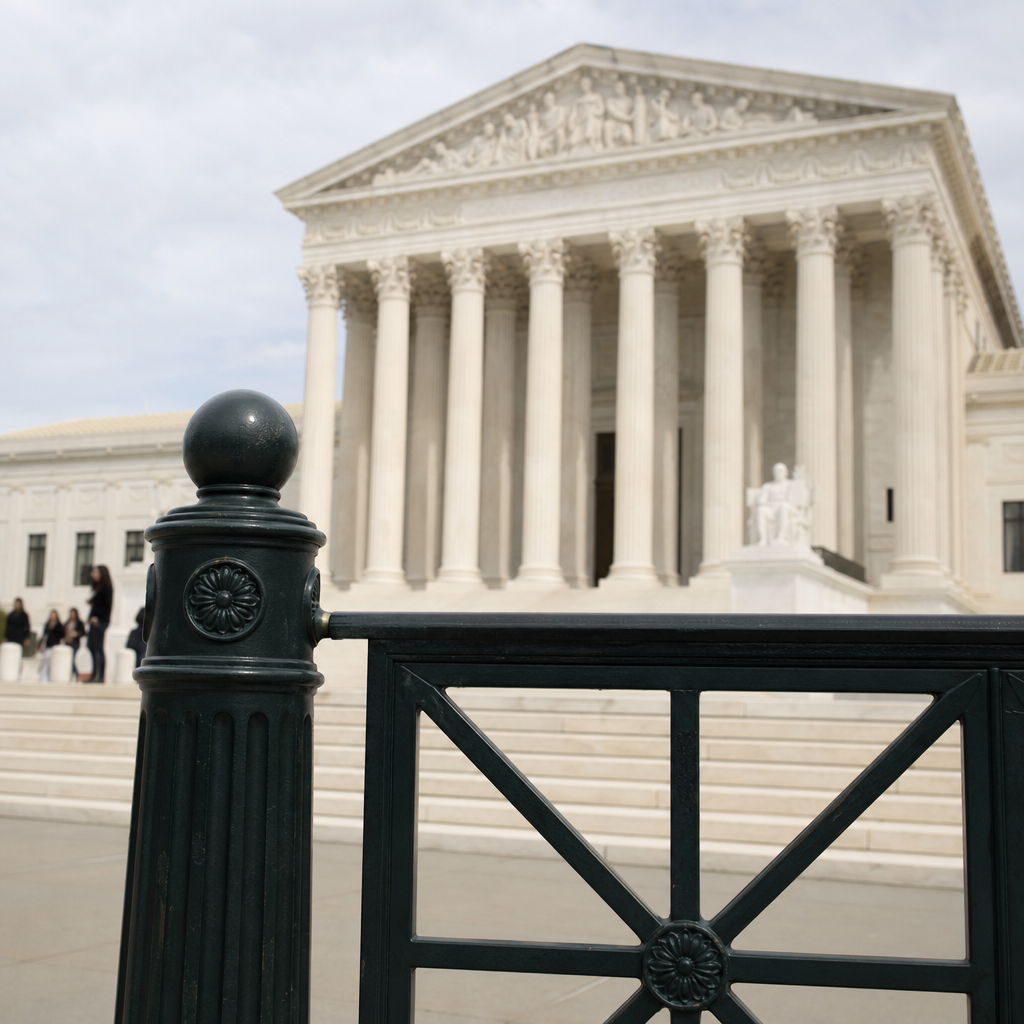
Executive privilege after U.S. v. Nixon refers to the president’s limited ability to withhold certain communications from Congress, courts, and the public after the Supreme Court’s 1974 decision made clear that confidentiality in the executive branch is real but not absolute. In AP Government and Politics, the concept matters because it sits at the intersection of separation of powers, checks and balances, rule of law, and the practical struggle between secrecy and accountability. I have taught students to start with the simplest definition: executive privilege is not written explicitly in the Constitution, but presidents have long claimed it as an implied power needed for candid advice, national security, and effective administration. The key change after U.S. v. Nixon is that courts gained a stronger framework for saying when that claim must yield.
The case arose during Watergate, when Special Prosecutor Leon Jaworski sought Oval Office tape recordings as evidence in criminal proceedings against presidential aides. President Richard Nixon argued that the judiciary could not force him to turn over confidential presidential communications. The Supreme Court rejected that sweeping position in a unanimous opinion. Chief Justice Warren Burger recognized a presumptive privilege for presidential communications, especially involving military, diplomatic, or sensitive national security matters, yet held that a generalized interest in confidentiality could not defeat a demonstrated, specific need for evidence in a criminal trial. That rule still anchors modern disputes. For students, lawyers, and anyone following congressional investigations or White House subpoenas, the decision explains why executive privilege survives, but only within constitutional limits.
Understanding the doctrine after U.S. v. Nixon helps make sense of later clashes involving presidents from Ronald Reagan to Joe Biden. It also clarifies related terms that are often confused on exams. Executive privilege is broader political shorthand. Presidential communications privilege is the more specific constitutional protection for direct presidential decision-making. Deliberative process privilege protects internal executive discussions but is weaker and more common in administrative law. State secrets privilege is different again, applying when disclosure would threaten national security. These distinctions matter because the strength of a claim often depends on what exactly is being withheld, who created it, and why another branch wants it. Once students see that executive privilege is really a family of confidentiality claims shaped by constitutional conflict, the post-Nixon landscape becomes much easier to analyze.
The Supreme Court’s rule in U.S. v. Nixon
U.S. v. Nixon, decided on July 24, 1974, did not abolish executive privilege. It constitutionalized it in a limited form. The Court accepted that Article II powers and the presidency’s unique institutional role justify some confidentiality. Presidents need frank discussions with advisers, and advisers need assurance that every recommendation will not instantly become public. In practice, anyone who has worked around executive agencies recognizes this point. Sensitive deliberations become less candid when participants expect political exposure or litigation discovery. The Court therefore acknowledged a presumptive privilege rooted in the separation of powers.
The crucial holding, however, was equally clear: the privilege is qualified, not absolute. When a criminal prosecution demonstrates a specific need for relevant evidence, the president’s generalized confidentiality interest usually loses. The Court ordered Nixon to produce the tapes for in camera review, meaning judicial examination in private to determine what had to be disclosed. That procedural feature matters because it shows how courts balance secrecy and accountability. They do not always demand public release first. They can inspect materials, separate privileged portions, and protect genuinely sensitive content while still enforcing subpoenas.
For AP Government purposes, the decision illustrates judicial review operating against the executive branch in a politically explosive setting. It also reinforces that no person, including the president, is above the law. Within weeks of the ruling and the release of the “smoking gun” tape, Nixon resigned on August 8, 1974. The case therefore became more than a technical dispute about evidence. It became a constitutional landmark demonstrating that legal process can penetrate the White House when criminal justice requires it.
What executive privilege protects after Nixon
After U.S. v. Nixon, executive privilege remained strongest when tied to core presidential functions. The classic category is presidential communications: conversations, memoranda, and advice involving the president and close White House advisers engaged in decision-making. Courts later treated this as more robust than ordinary agency confidentiality because the president’s constitutional role is unique. If the purpose is to preserve candid advice to the president, the claim has serious weight.
A second category often discussed in modern disputes is deliberative process privilege. This covers predecisional, advisory discussions inside executive agencies. It is meant to encourage honest internal debate before a policy is finalized. In my experience reviewing agency records requests, this privilege appears far more often than a direct presidential communications claim. It can protect draft memoranda, recommendations, and option papers. But it is weaker because it is generally a common-law or administrative privilege rather than the president’s own core constitutional shield.
National security and diplomatic communications also receive substantial protection. The Supreme Court in Nixon specifically signaled greater deference when military, diplomatic, or sensitive national security secrets are at issue. That does not mean automatic victory for the president, but it does mean courts and Congress usually proceed more cautiously. Practical examples include covert operations, intelligence sources and methods, war planning, or active diplomatic negotiations. In such settings, disclosure can create immediate institutional or even human harm.
What executive privilege does not protect as strongly is material sought for a compelling legal purpose when the claim is broad and unsupported. A president cannot simply stamp “confidential” on everything. Courts look at specificity, relevance, and the branch requesting the information. The more generalized the secrecy rationale, the more likely the claim will fail.
How later cases and controversies shaped the doctrine
Post-Nixon disputes refined the doctrine rather than replacing it. A major example is Nixon v. Administrator of General Services in 1977, where the Court upheld a federal law allowing government control over Nixon’s presidential materials. The decision recognized confidentiality interests but concluded that screening procedures and the special context of Watergate reduced the intrusion. The broader lesson is that former presidents retain some interest in confidential communications, yet that interest weakens once they leave office and must be weighed against institutional and public needs.
Another important case is In re Sealed Case (1997), often called the Espy case, from the D.C. Circuit. It drew a sharper distinction between presidential communications privilege and deliberative process privilege. The court held that presidential communications privilege covers communications directly involving the president and senior White House advisers in close operational proximity, while deliberative process privilege protects broader agency discussions but yields more easily. That framework is widely taught because it gives students a practical way to classify documents in hypotheticals.
Congressional investigations produced additional conflict. During the George W. Bush administration, disputes over the dismissal of U.S. attorneys led to litigation in Committee on the Judiciary v. Miers. The district court rejected the claim that senior presidential advisers were absolutely immune from congressional subpoenas. That issue concerned testimonial immunity more than document privilege, but the separation-of-powers lesson is similar: broad executive assertions often meet judicial skepticism when they block oversight entirely.
More recent fights involving the Trump and Biden administrations have centered on records, testimony, and the competing interests of incumbent and former presidents. The January 6 investigation highlighted a crucial post-Nixon point: a former president’s confidentiality interest is real but can be outweighed by the incumbent president’s judgment and by the government’s demonstrated need for information. The doctrine is therefore dynamic, but its center of gravity remains the same. Confidentiality exists to protect constitutional governance, not to create a personal shield against scrutiny.
How Congress, courts, and presidents test the limits
In practice, executive privilege disputes rarely begin with a final Supreme Court ruling. They usually unfold through negotiation, accommodation, and strategic delay. Congress may issue a subpoena for documents or testimony. The White House may respond by producing some materials, withholding others, and asserting privilege over defined categories. Courts often encourage the political branches to narrow their disagreement before judicial intervention. That pattern reflects constitutional reality: the system expects bargaining as well as litigation.
The strength of an executive privilege claim usually depends on four recurring questions. What kind of material is at issue? Why does another branch want it? Is there a specific demonstrated need, especially in a criminal case? And has the executive branch shown that disclosure would impair presidential decision-making or national security? These factors make the doctrine highly contextual, which is why blanket statements in essays often miss the mark.
| Scenario | Privilege Claim | Likely Strength | Why |
|---|---|---|---|
| Oval Office advice on military action | Presidential communications with national security concerns | Very strong | Core Article II function plus risk of serious harm from disclosure |
| Agency draft memo before a rule is finalized | Deliberative process privilege | Moderate | Encourages candid policy debate, but weaker than direct presidential advice |
| Evidence subpoenaed for a criminal trial | General executive privilege | Weak to moderate | U.S. v. Nixon requires production when need is specific and demonstrable |
| Congress seeks testimony from senior aide on oversight matter | Privilege plus claimed testimonial immunity | Contested | Negotiation common; courts have been skeptical of absolute immunity claims |
For students, this means the right answer is seldom “the president always wins” or “Congress always wins.” A better answer identifies the branch interests, the type of information, and the legal setting. Criminal proceedings create the greatest pressure on privilege. Oversight disputes with Congress often depend on bargaining power, public pressure, and timing. Requests from private litigants generally receive less deference than criminal subpoenas, but they can still succeed if the material is truly necessary and unavailable elsewhere.
Why the doctrine matters in AP Government and Politics
Executive privilege after U.S. v. Nixon is a model topic for AP Government because it connects foundational principles to current events. Separation of powers is not abstract when a president resists a subpoena, a committee alleges obstruction, or a judge orders records reviewed privately. Students can use the doctrine to explain how each branch checks the others without erasing their independence. The presidency needs confidentiality to function. Congress needs information to legislate and oversee. Courts need evidence to administer justice. The constitutional system works by forcing these needs into structured conflict.
This topic also helps with common FRQ and multiple-choice themes. If a prompt asks how informal powers shape the presidency, executive privilege is a strong example because it is not expressly listed in the Constitution yet has real institutional force. If a prompt asks how judicial decisions affect executive power, U.S. v. Nixon shows the Court defining and limiting a claimed presidential power. If a prompt asks about transparency and accountability, the case demonstrates why democratic trust depends on legal mechanisms capable of reaching the highest office.
Most important, the doctrine teaches nuance. Strong presidents are not presidents who win every secrecy dispute. Effective presidents preserve enough confidentiality to receive honest advice while recognizing that the legitimacy of executive power depends on lawful compliance when another branch has a superior constitutional claim. That balance is the enduring legacy of U.S. v. Nixon. To master this subtopic, connect the case to Watergate, distinguish the types of privilege, and analyze each controversy by asking who wants the information, for what purpose, and under what constitutional standard. If you are building your AP Government and Politics knowledge base, use this article as your hub, then move to related cases, presidential power, congressional oversight, and Supreme Court limits on executive authority.
Frequently Asked Questions
What did the Supreme Court decide in U.S. v. Nixon about executive privilege?
In United States v. Nixon (1974), the Supreme Court recognized that executive privilege does exist, but it also made clear that the privilege is not absolute. President Richard Nixon argued that he had a broad constitutional right to keep White House conversations confidential, especially communications involving presidential advisers. The Court agreed that some degree of confidentiality is important to the presidency because presidents need candid advice, honest internal debate, and private deliberation in order to govern effectively. That part of the decision confirmed that executive privilege has a legitimate constitutional foundation tied to the separation of powers.
At the same time, the Court rejected the idea that a president can use executive privilege as an unlimited shield in every circumstance. In the specific context of a criminal investigation, the justices ruled that a generalized interest in confidentiality must give way to the demonstrated need for evidence in the fair administration of justice. That is why Nixon was required to turn over the Watergate tapes. The key takeaway is that the Court balanced two important constitutional values: executive confidentiality on one side and the rule of law on the other. After U.S. v. Nixon, executive privilege remained real, but any claim of privilege became subject to judicial review and possible limitation when other constitutional interests are stronger.
Why is executive privilege considered limited after U.S. v. Nixon rather than unlimited?
Executive privilege is considered limited after U.S. v. Nixon because the Court refused to treat presidential confidentiality as a blanket power that overrides all other institutions. Before the decision, presidents had long asserted a right to keep some communications secret, but the exact constitutional boundaries were not clearly settled by the Supreme Court. The 1974 ruling provided a major clarification: the president does not get the final, unreviewable word simply by labeling something privileged. Instead, courts can examine the claim and weigh it against competing constitutional needs.
The decision especially emphasized that a broad, generalized claim of confidentiality is weaker than a specific, demonstrated need for evidence in a criminal proceeding. In other words, if the judiciary needs relevant information to ensure justice, the president cannot automatically refuse disclosure. This mattered enormously because it reinforced that the president is not above the law. It also showed that constitutional powers operate in relationship to one another, not in isolation. The executive branch has important prerogatives, but those prerogatives exist within a system of checks and balances.
For students of AP Government and Politics, this limitation is central because it illustrates how separation of powers works in practice. The presidency is powerful, but it is still constrained by the courts, Congress, and constitutional norms. U.S. v. Nixon therefore stands as a landmark case not because it destroyed executive privilege, but because it defined it as a qualified privilege that can be overcome under the right circumstances.
How does executive privilege after U.S. v. Nixon relate to checks and balances and separation of powers?
Executive privilege after U.S. v. Nixon is a classic example of both separation of powers and checks and balances at work. Separation of powers means that the legislative, executive, and judicial branches each have their own constitutional roles and areas of authority. Executive privilege grows out of that structure because the president needs some degree of confidentiality to perform executive functions effectively. Private discussions with advisers, national security planning, and internal policy deliberations often require secrecy if the executive branch is going to operate honestly and efficiently.
Checks and balances, however, mean that no branch can exercise power without limits. The Court’s decision in U.S. v. Nixon showed that the judiciary can check the executive when claims of secrecy interfere with the administration of justice. Rather than accepting the president’s assertion at face value, the Court reviewed the claim and concluded that the need for evidence in a criminal case outweighed a generalized confidentiality interest. That judicial intervention is one of the clearest demonstrations that constitutional checks are not merely theoretical; they can directly constrain presidential action.
The case also has implications for Congress. Although U.S. v. Nixon specifically involved a judicial subpoena, the logic of the case influenced later disputes over congressional oversight, investigations, and access to executive branch information. Presidents may still resist disclosure, especially when they believe legislative requests threaten executive independence, but they do so in the shadow of a precedent that rejects absolute secrecy. In AP Government terms, the case helps explain how branches compete, negotiate, and sometimes clash, while still operating under a constitutional framework designed to prevent concentrated, unchecked power.
Does U.S. v. Nixon mean presidents can never keep communications secret?
No. U.S. v. Nixon does not mean that presidents lose all ability to keep communications confidential. In fact, one of the most important parts of the decision is that the Court affirmed the legitimacy of executive confidentiality in principle. Presidents are still generally understood to have a strong interest in protecting sensitive communications, especially those involving military, diplomatic, or national security matters, as well as certain internal advisory discussions. The Court did not abolish executive privilege; it recognized it as a constitutional reality tied to the functioning of the executive branch.
What the case changed is the idea that presidential secrecy is automatic, complete, or beyond review. A president may claim executive privilege, but that claim can be challenged and evaluated in context. Courts may ask what kind of information is being withheld, why it is being withheld, and what competing constitutional interests are involved. The privilege tends to be stronger when the president can point to a specific and compelling need for secrecy, such as protecting national security or preserving the candor of high-level deliberations. It tends to be weaker when the claim is broad, unspecific, or appears designed to obstruct legal accountability.
That distinction is crucial. After U.S. v. Nixon, executive privilege survives as a qualified doctrine, not an absolute barrier. So presidents can still keep some communications secret, but they cannot assume that every assertion of privilege will prevail. The constitutional system requires balancing, and the judiciary may step in when secrecy conflicts with criminal process, legal obligations, or other essential constitutional functions.
Why is executive privilege after U.S. v. Nixon important for AP Government and Politics students to understand?
Executive privilege after U.S. v. Nixon is important for AP Government and Politics students because it brings together several core themes of the course in one doctrine. First, it highlights separation of powers by showing that the executive branch has its own institutional interests, including confidentiality in decision-making. Second, it illustrates checks and balances by demonstrating that the judiciary can limit presidential power when necessary. Third, it reinforces the rule of law by making clear that the president is not exempt from legal process simply because of office.
The topic also helps students see that constitutional government is not just about memorizing powers listed in the text of the Constitution. Many important doctrines, including executive privilege, are shaped by historical practice, political conflict, and Supreme Court interpretation. That makes U.S. v. Nixon especially valuable as a case study. It shows how an implied presidential power can be recognized by the Court and yet constrained at the same time. Students can use it to understand how American institutions negotiate competing principles such as effective leadership, transparency, accountability, and judicial fairness.
Just as importantly, the subject remains relevant far beyond the Watergate era. Modern presidents continue to assert executive privilege in disputes involving subpoenas, congressional oversight, internal communications, and investigations. That means the questions raised by U.S. v. Nixon are still alive in American politics: How much secrecy does a president need? When does confidentiality become obstruction? Who gets to decide? For AP Government students, understanding this doctrine provides a practical window into how constitutional principles operate in real political conflicts, where legal rules, institutional ambition, and public accountability all collide.