
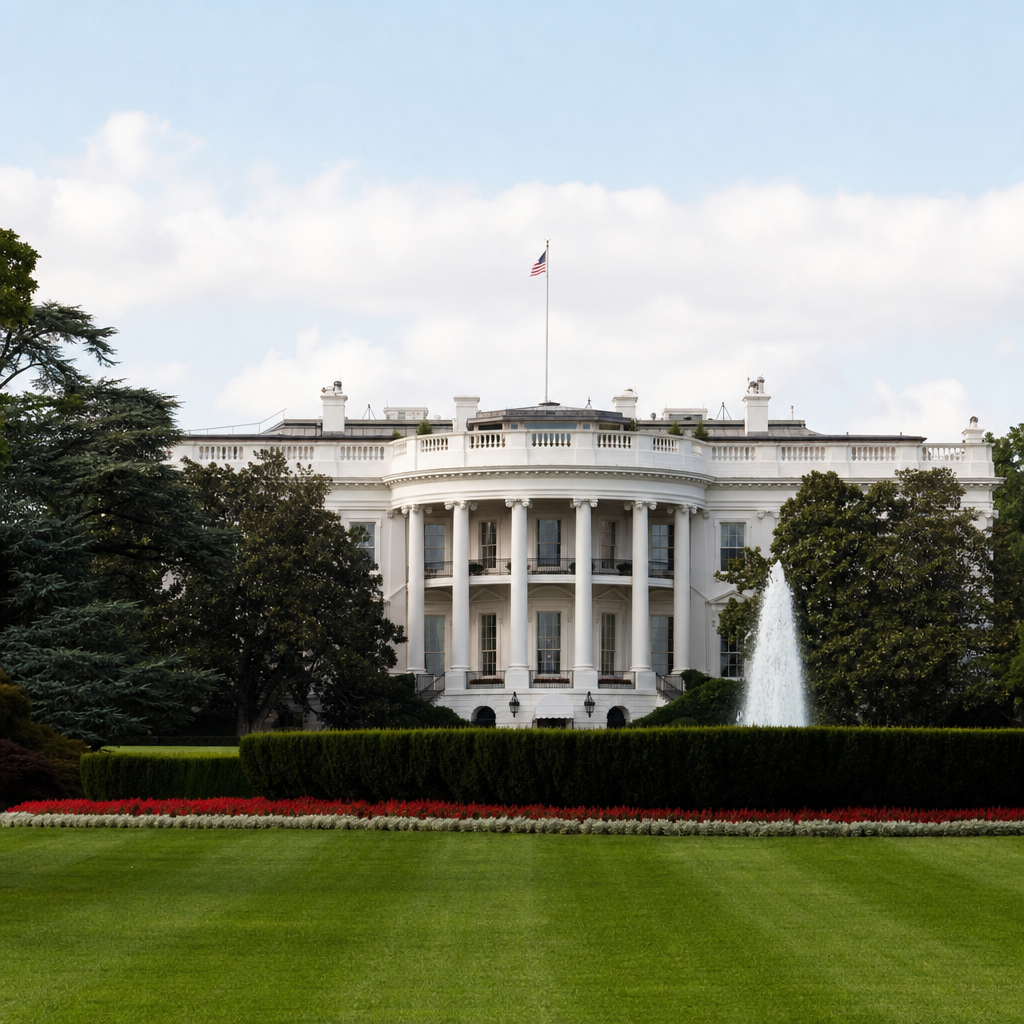
Executive branch ethics rules shape how power is used inside the White House, who may influence decisions, and what limits apply to officials entrusted with federal authority. In AP Government and Politics, this topic sits at the intersection of constitutional structure, public administration, and democratic accountability. The executive branch includes the president, vice president, White House staff, cabinet departments, independent agencies, and thousands of political appointees. Ethics rules are the standards, laws, and enforcement systems that govern conflicts of interest, gifts, financial disclosure, misuse of office, political activity, and post-employment conduct. They matter because presidential power is broad, often fast-moving, and difficult for the public to monitor in real time.
Having worked through executive ethics materials with students and policy staff, I have seen the same confusion repeatedly: many people assume ethics is mostly about personal morality. In practice, ethics rules are institutional guardrails. They do not ask whether an official is a good person; they ask whether the official’s judgment is compromised, whether the public can trust the process, and whether legal restrictions are being followed. That distinction is essential for understanding accountability inside the White House. Ethics systems are designed to prevent self-dealing, hidden influence, favoritism, and the appearance that public office is being used for private gain.
For students, this subject also explains a recurring tension in American government. The president heads a politically elected branch, yet that branch must also operate under administrative rules similar to those applied to career civil servants. White House advisers handle sensitive decisions on war, regulation, appointments, and enforcement priorities, but they do so under ethics obligations that come from statutes, regulations, executive orders, and norms. When those rules are weak, waived, or unevenly enforced, public trust declines. When they are clear and public, they help preserve legitimacy even during intense partisan conflict.
This hub article explains the major executive branch ethics rules, the institutions that enforce them, the controversies that test them, and the practical limits of ethics compliance at the highest level of government. It also links the topic to broader AP Government themes, including separation of powers, checks and balances, bureaucratic accountability, and civil liberties.
What executive branch ethics rules cover
Executive branch ethics rules govern several specific areas. First, conflict-of-interest rules bar officials from participating personally and substantially in matters that affect their own financial interests or those of certain close connections. The basic criminal conflict standard is found in 18 U.S.C. § 208, a core statute for appointed officials across the executive branch. Second, disclosure rules require senior officials to file financial reports so that ethics lawyers, watchdogs, Congress, and the public can identify possible conflicts. Third, gift rules limit what officials may accept from outside sources, especially prohibited sources seeking official action. Fourth, misuse-of-position rules prohibit using public office for private endorsement, private gain, or preferential treatment.
Other major rules address political activity, travel, nepotism, outside earned income, and lobbying after public service. White House employees are also subject to records rules, security clearance procedures, and rules on handling classified information, all of which connect indirectly to ethical governance. In day-to-day practice, ethics compliance often means screening meetings, recusing from decisions, divesting assets, setting up qualified diversified holdings, obtaining waivers where legally permitted, and documenting advice from agency ethics officials. Those steps are technical, but they are the machinery behind accountability.
A common AP exam question is whether the president is bound by all of the same ethics laws as executive branch employees. The answer is no. The president and vice president are exempt from the main criminal conflict-of-interest statute. That exemption exists because the Constitution vests executive power in nationally elected officers who cannot realistically recuse from all matters touching broad economic interests. Still, presidents are subject to financial disclosure laws, the Emoluments Clauses, campaign finance limits, criminal laws of general application, impeachment, public scrutiny, and political consequences. That mix creates a distinctive ethics regime at the top of the branch.
Who enforces ethics inside the White House
Ethics enforcement in the executive branch is decentralized. The Office of Government Ethics, usually called OGE, sets standards, reviews disclosures for many senior nominees, issues guidance, and oversees ethics programs across agencies. OGE is influential, but it does not function like a police department. It lacks broad direct enforcement power over the White House and depends heavily on agency ethics officials, inspectors general, and cooperation from the administration. Inside the White House, the Counsel to the President and designated ethics lawyers play major roles in advising staff and reviewing potential conflicts.
Other institutions matter just as much. The Department of Justice can investigate criminal conflicts, false statements, bribery, obstruction, or other offenses. Inspectors general investigate waste, fraud, abuse, and misconduct within agencies, though the White House itself does not have an inspector general in the same way cabinet departments do. Congress exercises oversight through hearings, subpoenas, appropriations, and confirmation power. The Office of Special Counsel enforces the Hatch Act, which restricts certain partisan political activities by executive branch employees. The National Archives and Records Administration enforces records preservation obligations under the Presidential Records Act, a key accountability measure for documenting official conduct.
In real administrations, enforcement often depends less on one dramatic prosecution than on constant preventive review. Before a senior appointee joins government, ethics officials examine assets, board memberships, consulting income, deferred compensation, and spousal holdings. During service, officials may be instructed to recuse from matters involving former clients or employers for a fixed period. After service, they face “revolving door” restrictions that limit lobbying or representational contacts back to the executive branch. These systems are strongest when lawyers have access, independence, and presidential backing.
Core categories of executive branch ethics restrictions
The easiest way to understand accountability inside the White House is to break ethics rules into operational categories. Each category answers a basic question the public would ask about power.
| Category | Main Rule | Why It Matters | Example |
|---|---|---|---|
| Conflicts of interest | Officials avoid participating in matters affecting covered financial interests | Prevents self-dealing | An appointee recuses from regulation affecting a company stock holding |
| Financial disclosure | Senior officials file public reports on assets, income, liabilities, and gifts | Allows screening and public scrutiny | Nominee disclosures reveal investments that require divestiture |
| Gift restrictions | Limits gifts from lobbyists, contractors, and other prohibited sources | Reduces undue influence | Staff cannot accept expensive event tickets from an interested party |
| Political activity | Hatch Act limits official authority used for partisan election activity | Separates governing from campaigning | An employee cannot use an official title to pressure campaign support |
| Misuse of office | No preferential treatment, endorsement, or private gain from public position | Protects integrity of office | A White House official cannot promote a relative’s business |
| Post-employment rules | Cooling-off periods restrict lobbying and representation after service | Addresses revolving door concerns | A former senior official cannot immediately lobby former agencies |
These categories overlap. A single controversy may involve disclosure, gifts, and misuse of office at once. That is why strong ethics programs use training, written counseling, screening lists, and mandatory certifications rather than relying only on after-the-fact punishment. Prevention is more effective than scandal management.
White House ethics in practice: recusals, divestitures, and waivers
Inside the White House, the most common ethics tools are recusals, divestitures, and waivers. A recusal means the official does not participate in a specific matter, meeting, decision, or communication because involvement would create a legal conflict or serious appearance problem. Divestiture means selling an asset that creates recurring conflicts, often paired with a certificate of divestiture that allows tax deferral under certain conditions. A waiver is written permission, allowed in limited circumstances, for an official to participate despite a potential conflict if legal standards are met and the government’s need outweighs the concern.
These tools sound straightforward, but implementation is difficult. I have seen ethics plans fail because the official did not understand how broad “particular matter” can be, or because staff scheduling systems did not flag restricted meetings. A former corporate lawyer may remember not to work on one company’s merger but overlook a broader regulatory issue that predictably affects a former client. A recusal is only effective if chiefs of staff, assistants, policy councils, and agency liaisons all know the boundaries. That is why ethics compliance is operational, not just legal.
Waivers are especially controversial. They can be legitimate when government needs expertise that is hard to replace, but they also invite criticism if they look like exceptions for well-connected insiders. Transparency matters. When waivers are public, observers can evaluate the rationale. When they are hidden or vaguely drafted, they undermine trust even if technically lawful.
Major controversies that define the debate
Several recurring controversies help explain why executive branch ethics rules remain politically salient. One is the role of business interests held by presidents or senior advisers. Because the president is exempt from the primary conflict statute, disputes often focus on whether financial entanglements create influence risks that the formal law does not fully address. The modern expectation that presidents release tax returns, for example, developed as a norm of transparency rather than a universal legal requirement. When that norm is rejected, accountability becomes harder because the public has less information.
A second controversy involves family members and nepotism. Federal anti-nepotism law limits appointing relatives to agencies, yet debates have persisted over White House advisory roles. Courts and executive lawyers have read the law in ways that leave some room for family service in the White House Office, but the ethical concern remains obvious: close family ties can blur lines between loyalty, access, and formal accountability. Even when lawful, such arrangements raise questions about candid advice and equal treatment.
A third controversy concerns the use of official resources for political messaging. The Hatch Act does not apply to the president and vice president, but it does apply to many executive branch employees. That creates a complicated environment in which campaign-style activity near official events may be legal for top elected officers but unlawful for staff who facilitate it in certain ways. Repeated Hatch Act findings in recent administrations show that enforcement often depends on norms and deterrence more than severe penalties.
Why this topic matters in AP Government and Politics
For AP Government and Politics, executive branch ethics rules are not isolated technicalities. They illustrate how constitutional design meets administrative reality. Congress creates many ethics statutes, executive agencies interpret and enforce them, courts resolve disputes over scope and constitutionality, and voters respond to scandals through elections. That makes ethics a strong example of checks and balances in action. It also demonstrates that informal norms can matter almost as much as formal law. Not every troubling act is illegal, and not every legal act is wise.
This topic also connects to core vocabulary students should know: bureaucratic discretion, oversight, rule of law, transparency, corruption, patronage, civil service, and executive privilege. When studying presidential power, students often focus on commander in chief authority, executive orders, and vetoes. Ethics rules add a different question: how should power be constrained inside the branch before it reaches the level of constitutional crisis? That is the practical value of this subtopic. It shows how government attempts to prevent abuse before impeachment, prosecution, or electoral backlash become necessary.
The central lesson is simple. Accountability inside the White House depends on more than one statute or one watchdog. It rests on disclosure, legal advice, documentation, recusals, oversight, records preservation, and a president willing to treat ethics compliance as part of governing rather than a public relations obstacle. When those pieces work together, executive action gains credibility. When they break down, even lawful decisions can appear suspect.
Use this hub as a starting point for deeper study of conflicts of interest, the Hatch Act, the Presidential Records Act, inspectors general, executive privilege, and congressional oversight. Mastering those connected topics will make executive branch ethics rules easier to analyze and much more relevant to real political events.
Frequently Asked Questions
What are executive branch ethics rules, and why do they matter inside the White House?
Executive branch ethics rules are the legal standards, regulations, disclosure requirements, and internal policies designed to guide how public officials use federal power. Inside the White House, these rules matter because top executive officials influence national policy, federal appointments, emergency response, diplomacy, enforcement priorities, and the daily operation of government. Ethics rules are meant to ensure that those decisions are made in the public interest rather than for private gain, political favoritism, or improper influence from lobbyists, donors, business partners, or family members. In practical terms, they address issues such as conflicts of interest, gifts, financial holdings, outside income, misuse of official position, nepotism concerns, and interactions with former employers or future employers.
For AP Government and Politics, this topic is important because it shows how constitutional power is limited not only by formal checks and balances, but also by administrative rules and norms of accountability. The Constitution creates the presidency, but ethics rules help regulate how presidential authority is exercised through a vast executive branch that includes White House aides, cabinet secretaries, agency heads, and political appointees. Without ethics standards, public confidence in executive decision-making would weaken, and the line between public service and personal advantage could easily blur. Ethics rules therefore serve a democratic purpose: they protect legitimacy, reinforce fairness, and help citizens trust that executive officials are acting on behalf of the nation rather than themselves or their associates.
Who is covered by executive branch ethics rules, and do those rules apply equally to everyone in the executive branch?
Executive branch ethics rules apply broadly, but not always identically, across the many people who work under presidential authority. Covered officials can include the president, vice president, senior White House advisers, cabinet members, ambassadors, political appointees, and career civil servants in executive departments and agencies. However, the exact source and scope of the rules can differ depending on the office involved. Many executive employees are subject to federal ethics statutes, the Standards of Ethical Conduct for Employees of the Executive Branch, financial disclosure laws, gift rules, conflict-of-interest restrictions, and agency-specific regulations. Senior officials often face stricter disclosure obligations because they are more likely to influence major policy and contracting decisions.
The president and vice president occupy a distinctive constitutional position. Some ethics laws that bind ordinary executive branch employees do not apply to them in exactly the same way because of separation-of-powers concerns and the unique status of elected constitutional officers. Even so, they remain subject to significant political, legal, and public accountability mechanisms, including financial disclosure requirements, records laws in certain contexts, scrutiny from Congress, media investigation, and voter judgment. White House staff and executive appointees, by contrast, are typically more directly governed by formal ethics rules administered through designated agency ethics officials and the U.S. Office of Government Ethics. So while ethics oversight is a system-wide feature of executive governance, it is not one-size-fits-all. Understanding those differences is key to understanding how accountability actually functions inside the White House and throughout the broader executive branch.
What is a conflict of interest in the executive branch, and how are officials expected to avoid it?
A conflict of interest arises when a government official’s personal financial interests, family relationships, business ties, or future employment prospects could improperly affect—or appear to affect—their official judgment. In the executive branch, this is one of the most important ethics concerns because executive officials routinely make decisions involving regulation, enforcement, contracts, grants, national security, and appointments. If an official owns stock in a company affected by a government action, communicates with a former employer on matters involving that employer, or participates in decisions that benefit a spouse’s business interests, the public may reasonably question whether that official is serving the country or serving private interests.
To prevent these situations, ethics rules require disclosure and, when necessary, recusal. Disclosure means reporting financial assets, liabilities, positions held outside government, and other relevant interests so ethics officials can identify risks. Recusal means stepping away from participation in a matter when personal ties create an ethics problem. In some cases, an official may need to divest assets, resign from outside roles, reject certain gifts, or sign an ethics agreement as a condition of service. These safeguards are especially important in the White House, where officials often come from law firms, corporations, think tanks, campaigns, or lobbying backgrounds and may continue to have extensive personal networks. Even when no clear legal violation exists, the appearance of a conflict can damage credibility. That is why modern executive ethics emphasizes not just actual impartiality, but visible impartiality. The goal is to preserve public trust by making sure official decisions are not compromised by private loyalties.
How are executive branch ethics rules enforced, and who holds White House officials accountable?
Enforcement happens through a mix of internal review, legal compliance systems, oversight institutions, and political accountability. Within the executive branch, ethics officers advise officials on recusals, financial disclosure, gift rules, post-employment restrictions, and conflicts of interest. The U.S. Office of Government Ethics plays a central coordinating role by issuing guidance, reviewing disclosure frameworks, and promoting consistent ethics practices across executive agencies. Inspectors general may investigate misconduct in departments and agencies, while the Department of Justice can become involved if criminal conflict-of-interest laws, bribery statutes, or false statement laws are implicated. In many cases, accountability begins with documentation: financial disclosure reports, ethics pledges, internal memos, and written recusals create a paper trail that can later be reviewed.
White House accountability also extends beyond internal executive mechanisms. Congress can conduct investigations, hold hearings, request records, and use its broader oversight power to examine alleged ethical misconduct. Journalists, watchdog organizations, and the public play a major role as well, especially because political and reputational consequences often matter even when formal penalties are limited or difficult to impose. For the highest-level officials, accountability may come through resignation, public criticism, legislative pressure, electoral consequences, or in extreme constitutional situations, impeachment processes. This layered system reflects a basic truth of American government: ethics enforcement is not solely a matter of criminal law. It also depends on transparency, institutional norms, interbranch oversight, and the expectation that those who wield public power must be answerable for how they use it.
Why is the study of executive branch ethics important in AP Government and Politics?
Executive branch ethics is a valuable AP Government and Politics topic because it connects abstract constitutional ideas to the real-world practice of governing. Students often learn that the executive branch enforces laws, manages the bureaucracy, negotiates with foreign governments, and directs national policy. Ethics rules show that these powers are not meant to operate without limits. Instead, they are shaped by institutional guardrails designed to reduce corruption, prevent abuse, and protect democratic legitimacy. This makes ethics a bridge topic linking constitutional structure, federal bureaucracy, separation of powers, civil service norms, and public trust.
Studying executive ethics also helps students think critically about how accountability works in a modern administrative state. The White House is not just one office occupied by one president; it is the center of a sprawling network of advisers, agencies, appointees, and decision-makers. Ethics rules matter because power today is often exercised through staff work, regulatory choices, access to decision-makers, and internal executive processes that are less visible than a bill becoming a law. By examining gifts, conflicts of interest, lobbying restrictions, disclosure rules, and oversight mechanisms, students can better understand how democratic systems try to control concentrated executive power. In that sense, ethics rules are not merely technical regulations. They are part of the broader constitutional effort to ensure that government authority remains accountable to the public it serves.