
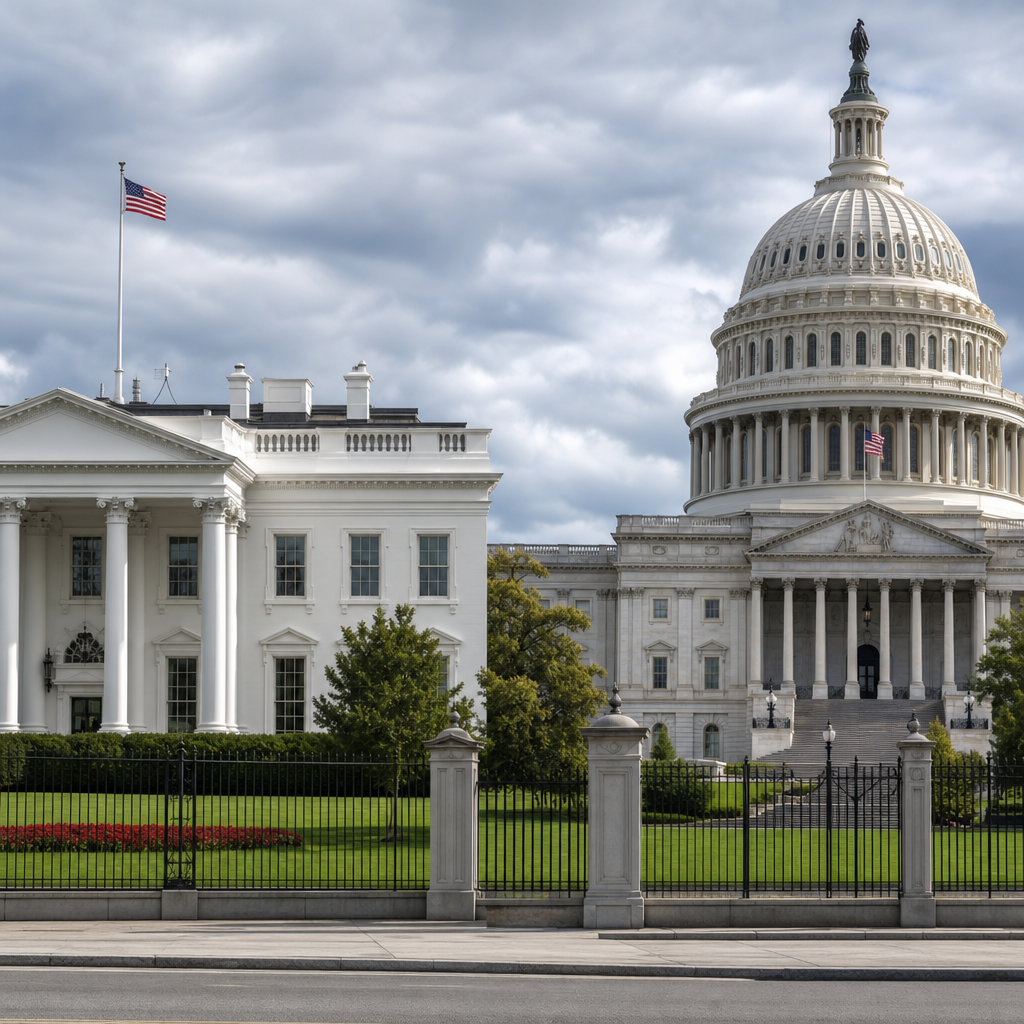
Executive agreements and treaties are two primary ways the United States makes foreign commitments, but they differ sharply in constitutional basis, approval process, legal durability, and political strategy. In AP Government and Politics, this distinction matters because it shows how power is shared and contested between the president, the Senate, Congress, and the courts. A treaty is a formal international agreement negotiated by the president and ratified by a two-thirds vote in the Senate under Article II of the Constitution. An executive agreement is an international agreement entered by the president without that supermajority treaty vote, often relying on existing statutory authority, prior treaties, or independent constitutional powers. In practice, modern U.S. foreign policy uses executive agreements far more often than treaties.
I have found that students often assume treaties are always stronger because they are named in the Constitution. That is only partly true. Treaties carry high formal status, but executive agreements can also be legally binding and politically significant. The difference is less about whether a commitment matters and more about how it is made, what domestic support it has, and how easily it can be changed. Understanding both paths helps explain debates over war powers, trade, climate policy, arms control, diplomatic recognition, and congressional oversight. It also connects directly to larger AP Government themes: separation of powers, checks and balances, federalism’s limited role in foreign affairs, and the practical expansion of presidential power in the twentieth and twenty-first centuries.
This hub article covers the core concepts students need for the broader miscellaneous foreign policy subtopic. It defines executive agreements and treaties, explains the constitutional framework, compares their legal effects, and shows why presidents choose one route over the other. It also highlights major examples, recurring Supreme Court principles, and the most common exam-level misunderstandings. If you can explain when each mechanism is used and what tradeoffs come with it, you can answer both conceptual and applied questions with confidence.
What a treaty is and how the process works
A treaty is the Constitution’s explicitly listed method for making major international agreements. Article II gives the president power to make treaties with the advice and consent of the Senate, provided two-thirds of senators present concur. In practical terms, the executive branch negotiates the text, usually through the State Department and other agencies, then the president submits it to the Senate. The Senate Foreign Relations Committee reviews it, hearings may be held, amendments or reservations may be proposed, and the full Senate votes. If approved, the president can ratify the treaty internationally.
The two-thirds requirement makes treaties difficult to secure, especially in polarized periods. That high threshold is intentional. It forces broad political support before the United States undertakes formal international obligations. I tell students to think of the treaty process as a built-in constitutional speed bump. It protects against unilateral commitments by a single president, but it also slows policy. The Treaty of Versailles is the classic example of the Senate blocking a president’s diplomatic vision. President Woodrow Wilson negotiated it after World War I, yet the Senate refused consent, and the United States never joined the League of Nations. That episode remains one of the clearest demonstrations of senatorial power in foreign affairs.
Treaties vary widely in subject matter. They may involve mutual defense, arms control, extradition, taxation, or human rights. Well-known examples include the North Atlantic Treaty creating NATO, the New START arms control treaty with Russia, and extradition treaties used in criminal justice cooperation. Once ratified, treaties become part of the “supreme Law of the Land” under Article VI, alongside the Constitution and federal statutes, though their domestic effect can depend on whether they are self-executing or require implementing legislation. That distinction matters because some treaties create enforceable domestic rules immediately, while others need Congress to pass laws before courts can apply them.
What an executive agreement is and why presidents use it
An executive agreement is an international agreement made without the Senate’s two-thirds treaty consent. That does not mean it is constitutionally baseless or informal by definition. Executive agreements rest on one of three foundations. First are congressional-executive agreements, authorized by statute or approved by a simple majority in both houses of Congress. Trade agreements often take this form. Second are agreements made pursuant to an existing treaty, where a prior ratified treaty authorizes later implementing arrangements. Third are sole executive agreements, which rely on the president’s own constitutional powers, such as recognition, diplomacy, or commander-in-chief authority, though that category is the most contested.
Presidents use executive agreements because they are faster, more flexible, and more politically achievable than treaties. In my experience reviewing foreign policy practice, this route dominates modern governance precisely because Senate supermajorities are rare. If a president can act through legislation already on the books, through delegated authority, or through inherent executive power, an executive agreement may accomplish the same diplomatic goal with fewer obstacles. During World War II, Franklin Roosevelt used executive arrangements extensively. In more recent decades, status of forces agreements, military basing arrangements, sanctions understandings, and many trade frameworks have followed this route.
The Iran nuclear deal, formally the Joint Comprehensive Plan of Action, is a useful modern example even though it was politically controversial and structured in a distinctive way. It was not ratified as a treaty. Instead, it operated through executive action, statutory sanctions authorities, and multilateral commitments. Because it lacked treaty status and rested heavily on presidential choices, a later president could withdraw more easily. That illustrates a central lesson: executive agreements can be powerful, but their durability often depends on continued political support, congressional buy-in, and the legal source behind them.
Key differences in approval, legal force, and durability
The clearest difference between treaties and executive agreements is the approval process. Treaties require Senate consent by a two-thirds vote. Executive agreements do not. But students should not stop there. The better comparison asks four questions: Who approves the agreement domestically? What legal authority supports it? Does it create binding international obligations? How easy is it to reverse? Those questions explain far more than labels alone.
| Feature | Treaty | Executive Agreement |
|---|---|---|
| Constitutional basis | Article II treaty clause | Statute, prior treaty, or presidential power |
| Domestic approval | Two-thirds of Senate present | No treaty vote; sometimes majority in both houses |
| Typical use | Major long-term commitments, defense, arms control | Trade, military operations, diplomacy, administration |
| Political durability | Usually stronger | Often easier to alter or end |
| Modern frequency | Less common | Much more common |
In international law, both treaties and executive agreements can bind the United States if validly concluded. Domestically, however, an agreement cannot override the Constitution, and conflicts with federal statutes raise complex questions. As a rule, Congress cannot be cut out where legislation is necessary to spend money, regulate commerce, impose criminal penalties, or change domestic law. That is why many major commitments require some legislative partnership even when they are not treaties. Durability follows structure. Agreements backed by statutes or broad bipartisan support usually last longer than those resting on narrow presidential discretion.
How the Constitution allocates foreign policy power
The Constitution does not give foreign affairs to one branch alone. The president negotiates, recognizes foreign governments, receives ambassadors, and serves as commander in chief. The Senate shares the treaty function. Congress regulates foreign commerce, appropriates money, declares war, raises and supports armies, and can structure or limit executive authority by statute. The courts resolve disputes over the scope of each branch’s power, although they often avoid direct intervention in politically sensitive diplomatic conflicts.
That shared design creates tension by design. The framers wanted energy in the executive but feared unchecked power. Over time, however, the presidency gained practical advantages: access to intelligence, control over diplomacy, speed in crises, and a national political platform. Executive agreements fit that broader trend. They are one reason scholars describe foreign affairs as an area of expansive presidential initiative constrained after the fact by Congress, funding limits, public opinion, and elections. For AP Government students, the critical point is not that the president “controls” foreign policy, but that the president often acts first while Congress decides whether to support, limit, or resist.
Youngstown Sheet & Tube Co. v. Sawyer, although not about an executive agreement, provides the most useful framework for analyzing presidential power. Justice Jackson’s concurrence described three zones: presidential power is strongest when supported by Congress, uncertain in a zone of twilight when Congress is silent, and weakest when the president acts against congressional will. That framework helps explain why congressional-executive agreements are usually more secure than sole executive agreements. It also helps students evaluate hypothetical exam scenarios without memorizing every case.
Supreme Court principles and landmark examples
Several cases show that executive agreements are constitutionally significant, not diplomatic shortcuts with no legal weight. In United States v. Belmont and United States v. Pink, the Supreme Court upheld executive agreements tied to presidential recognition of the Soviet government, emphasizing federal supremacy in foreign affairs. In Dames & Moore v. Regan, the Court approved executive action resolving claims with Iran, relying on a history of congressional acquiescence and statutory support. These decisions do not give presidents unlimited authority, but they confirm that valid executive agreements can have substantial domestic effect.
Treaties also generate major constitutional questions. Missouri v. Holland upheld a federal law implementing a treaty on migratory birds, suggesting that valid treaties can support legislation in areas otherwise difficult for Congress to reach. More recently, Medellín v. Texas limited automatic domestic enforcement of some international commitments, holding that not every treaty obligation is directly enforceable in state or federal courts without implementing legislation. That case is especially useful for AP students because it shows that even a ratified treaty may not operate domestically in the simple way many assume.
Historical examples bring the doctrine to life. The Senate approved the NATO treaty, locking in a long-term collective defense commitment with broad bipartisan support. By contrast, the Paris climate agreement was joined through executive action under existing authority rather than as an Article II treaty, making U.S. participation easier to enter and easier to exit. NAFTA was approved as a congressional-executive agreement, showing that major international economic arrangements can avoid the treaty route while still receiving extensive legislative approval. These examples demonstrate that form follows politics, substance, and constitutional fit.
Why this distinction matters for AP Government and Politics
On exams and in class discussions, executive agreements versus treaties is rarely just a vocabulary question. It is a test of institutional reasoning. You may be asked which branch has a check, why one president chose one method over another, or how a change in party control affects foreign commitments. The best answers connect process to consequences: treaties require broader consensus and are usually harder to unravel; executive agreements offer speed and flexibility but may be more vulnerable to reversal, litigation, or funding disputes.
This topic also serves as a hub for related miscellaneous foreign policy concepts. It links to war powers, because military commitments often involve non-treaty arrangements. It connects to congressional oversight, because hearings, appropriations riders, and confirmation politics influence implementation. It overlaps with federal bureaucracy, since the State Department, Defense Department, National Security Council, and U.S. Trade Representative help design and carry out agreements. It even touches public opinion and interest groups, since veterans’ organizations, business associations, human rights advocates, and environmental groups often lobby for or against specific commitments.
The most reliable study approach is to compare mechanisms, not memorize isolated facts. Ask: What is the source of authority? Which institution must approve? Is domestic legislation required? How durable is the commitment? If you can answer those four questions, you can analyze almost any example. For deeper review, move next to related subtopic pages on war powers, congressional foreign policy tools, the role of the State Department, and Supreme Court limits on executive power. Together, those articles build a complete understanding of how the United States makes and manages foreign commitments.
Executive agreements and treaties are not competing technicalities. They are two constitutional pathways that reveal how American government actually works under pressure. Treaties embody formal shared power between the president and the Senate, demanding supermajority support for major international commitments. Executive agreements reflect the modern need for speed, continuity, and practical flexibility, often drawing strength from statutes, prior treaties, or accepted presidential authority. Both can shape world events. Both can be binding. Both can become flashpoints in domestic politics.
The central takeaway is simple: the label does not tell the whole story. To evaluate a U.S. foreign commitment, look at approval, legal foundation, implementation, and durability. A treaty is usually harder to obtain and harder to undo. An executive agreement is usually easier to make and easier to revise, though some become highly stable when Congress supports them. That balance explains why presidents prefer executive agreements while the Constitution still preserves the treaty power for commitments requiring exceptional consensus.
As you study AP Government and Politics, use this article as your hub for the miscellaneous foreign policy category. Master the definitions, learn the leading examples, and connect each agreement type to separation of powers. Then continue with the related articles in this section so you can analyze foreign policy questions with the precision the exam rewards.
Frequently Asked Questions
What is the difference between an executive agreement and a treaty in U.S. government?
The main difference is how each type of foreign commitment is approved and where its authority comes from. A treaty is a formal international agreement negotiated by the president and then sent to the Senate for ratification. Under Article II of the Constitution, a treaty cannot take effect for the United States unless two-thirds of the senators present vote to approve it. That high threshold makes treaties important examples of shared foreign policy power between the executive branch and the Senate.
An executive agreement, by contrast, does not require a two-thirds Senate ratification vote. It is made by the president, often based on the president’s constitutional foreign affairs powers, authority delegated by Congress, or prior laws and treaties already in force. In practice, executive agreements are far more common than treaties because they are faster, more flexible, and politically easier to complete. In AP Government and Politics, this distinction is important because it shows that even though the president is the nation’s chief diplomat, foreign commitments are not made through one single constitutional path. Instead, the system reflects bargaining, institutional rivalry, and strategic choices about which process is most realistic and durable.
Why are executive agreements used so often instead of treaties?
Executive agreements are used frequently because they are much easier to finalize than treaties. Getting a treaty ratified requires a two-thirds vote in the Senate, which is a very demanding standard, especially in a polarized political environment. Even if a president negotiates a major international deal, it may fail if enough senators object to the substance, timing, or political consequences. Executive agreements allow presidents to act without facing that supermajority hurdle, making them a practical tool for diplomacy, military cooperation, trade administration, and routine international coordination.
There is also a strategic reason presidents prefer executive agreements: they give the executive branch more control over timing and negotiation. A president can move more quickly in response to world events and can often reassure foreign governments that the United States is prepared to act without waiting for a long and uncertain ratification battle. That said, convenience comes with tradeoffs. Because executive agreements usually rest on narrower legal foundations than treaties and may not carry the same level of bipartisan endorsement, they can be more vulnerable to revision, cancellation, or legal challenge. So while executive agreements are common because they are efficient, they may not always provide the same long-term stability or political legitimacy as a treaty.
Are treaties stronger or more permanent than executive agreements?
In general, treaties are often seen as more durable and politically weighty because they have gone through a formal constitutional approval process. When a treaty wins Senate ratification by a two-thirds vote, it usually signals broader national commitment and stronger bipartisan support. That can make treaties more credible to foreign governments, since they are backed not just by one president but by a substantial portion of the legislative branch as well. In domestic politics, treaties also carry recognized legal status under the Supremacy Clause, although their exact domestic effect can depend on whether they are considered self-executing or require implementing legislation.
Executive agreements can still be legally significant and binding, but they are often viewed as less secure over time. A future president may reverse or reinterpret an executive agreement more easily than a treaty, especially if the agreement was made primarily through presidential authority rather than through a statute passed by Congress. Courts may also examine the legal basis of an executive agreement more closely if disputes arise. So the best way to think about the difference is not simply that one is “real” and the other is not. Both can shape foreign policy in important ways. The key point is that treaties usually have a stronger constitutional pedigree and greater political durability, while executive agreements offer speed and flexibility but can be more fragile in practice.
What role do Congress and the Senate play in executive agreements versus treaties?
The Senate plays a direct and constitutionally explicit role in the treaty process. After the president negotiates a treaty, the Senate must give its advice and consent by a two-thirds vote. This means the Senate can approve, reject, delay, or demand reservations and conditions. As a result, treaties are a clear example of checks and balances in foreign policy. The president leads negotiation, but the Senate has the power to block final ratification, which prevents unilateral presidential control over the most formal international commitments.
With executive agreements, Congress and the Senate usually play a less direct role, but they are not necessarily irrelevant. Some executive agreements are authorized by statutes passed by Congress, which means Congress helps create the legal foundation for the agreement in advance. Others depend on congressional funding, implementing legislation, or continued political support to remain effective. Congress can also hold hearings, pass laws that limit or reshape presidential action, or refuse appropriations needed to carry out an agreement. In AP Government and Politics, this is a useful reminder that institutional power is often exercised indirectly. Even when the Senate does not cast a ratification vote, Congress still has tools to influence, constrain, or support presidential diplomacy.
Why does the distinction between executive agreements and treaties matter in AP Government and Politics?
This distinction matters because it illustrates one of the central themes of AP Government and Politics: constitutional power is shared, contested, and often shaped by political reality as much as by formal text. On paper, the Constitution gives the president major foreign policy responsibilities while also requiring Senate participation in treaties. In practice, presidents have expanded their use of executive agreements to avoid the difficulty of securing supermajority approval. That development shows how institutions adapt over time and how the presidency can gain practical influence even when formal constitutional rules remain the same.
It also matters because the comparison reveals the tension between effectiveness and accountability. Executive agreements can make government more responsive and efficient, especially in a fast-moving international environment. Treaties, however, demand broader consensus and therefore reflect a stronger measure of democratic legitimacy through institutional participation. Courts may also become involved when disputes arise over the legal status or constitutional validity of an agreement, adding a judicial dimension to the separation of powers. For students, the topic is valuable because it connects multiple core ideas at once: checks and balances, separation of powers, informal expansion of presidential authority, Senate oversight, and the ongoing struggle over who controls American foreign policy.