
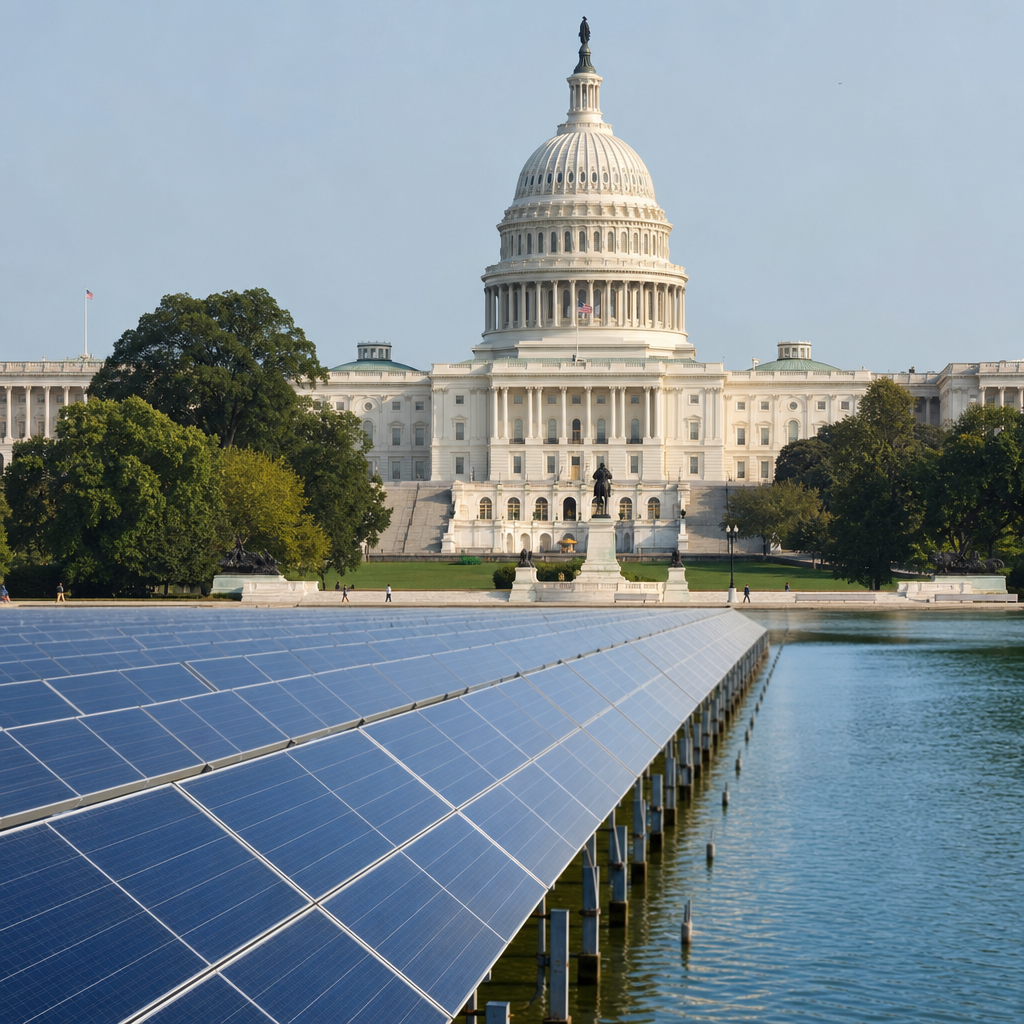
Energy policy and the administrative state are inseparable in modern American government because nearly every major decision about fuel production, electricity markets, pollution control, land use, and climate risk is implemented through agencies rather than Congress itself. In AP Government and Politics, energy policy refers to the laws, incentives, regulations, and public investments that shape how energy is produced, transported, priced, and consumed. The administrative state refers to the network of executive agencies, independent commissions, and specialized bureaucracies that write rules, issue permits, enforce statutes, and adjudicate disputes. If students want to understand how public power actually operates, this is one of the clearest case studies.
I have found that energy policy helps students move from abstract ideas about bureaucracy into concrete examples they already recognize: gas prices, power outages, pipeline fights, vehicle standards, wind farms, solar subsidies, and debates over climate change. These controversies are not governed by one simple law. They are handled by institutions such as the Environmental Protection Agency, Department of Energy, Federal Energy Regulatory Commission, Department of the Interior, Nuclear Regulatory Commission, and state public utility commissions. Congress sets broad goals, but agencies translate those goals into technical rules with real economic consequences. That makes energy a useful hub topic for studying delegation, rulemaking, federalism, judicial review, and interest group influence.
This subject matters because energy sits at the intersection of national security, economic growth, public health, environmental protection, and democratic accountability. Reliable energy underpins industry, transportation, hospitals, data centers, and household life. At the same time, energy production can create air pollution, water contamination, habitat loss, greenhouse gas emissions, and community conflict. Administrative agencies exist partly because these tradeoffs are technically complex and politically difficult. Legislators usually lack the time and expertise to decide emissions rates for power plants, methane leak standards for oil fields, or safety margins for nuclear waste storage. Agencies employ engineers, economists, lawyers, geologists, and scientists to make those decisions within statutory limits.
For AP Government students, this hub article covers the miscellaneous but essential pieces that tie the subtopic together: how agencies gain authority, how regulation works in practice, how courts shape agency power, why states matter, where interest groups intervene, and what recurring controversies define American energy governance. Understanding these mechanics makes later articles easier to place in context. It also clarifies a central truth of U.S. politics: policy is not made only when Congress votes. It is made every day through administrative interpretation, enforcement discretion, permit decisions, and procedural battles that determine what government can actually do.
How the Administrative State Governs Energy
Energy governance starts with delegation. Congress passes statutes such as the Clean Air Act, Clean Water Act, Federal Power Act, Natural Gas Act, Energy Policy Act, and National Environmental Policy Act, then assigns agencies the job of implementation. In practice, that means agencies define technical standards, collect data, evaluate environmental impacts, issue licenses, and police noncompliance. The EPA sets pollution limits affecting coal plants, refineries, and vehicles. FERC regulates interstate electricity transmission and wholesale power markets. The Department of the Interior manages leasing for oil, gas, coal, wind, and solar projects on federal lands and offshore areas. The DOE oversees research funding, strategic planning, grid modernization programs, and parts of the nuclear weapons and cleanup complex.
The administrative process follows recognizable steps. Agencies usually begin with statutory authority, technical analysis, and policy direction from the president. They draft proposed rules, publish them for notice and comment under the Administrative Procedure Act, review submissions from states, firms, environmental organizations, labor unions, utilities, and trade associations, then issue final rules. Agencies also produce guidance documents, environmental reviews, enforcement actions, and adjudications. In energy, procedure is not a side issue. A delayed environmental impact statement can stall a transmission line for years. A revised cost-benefit analysis can alter whether a methane rule survives judicial review. A permit condition imposed by a federal agency can reshape an entire project’s financing.
Students often ask why Congress does not simply legislate more precisely. The answer is that energy systems are too dynamic and technical for fully detailed statutes. Grid reliability standards must respond to extreme weather, cybersecurity threats, and changing generation mixes. Vehicle emissions rules require testing protocols, fleet calculations, and engineering assumptions. Nuclear licensing involves probabilistic risk assessment, emergency planning zones, and waste storage compliance. Agencies can revise regulations more quickly than Congress can rewrite statutes, but that flexibility also creates democratic concerns. Critics argue that agencies accumulate too much policymaking power, especially when statutory language is broad or outdated. Supporters respond that specialized governance is necessary in sectors where mistakes can cause blackouts, explosions, contamination, or severe public health harms.
Major Agencies and Their Core Energy Roles
Each major institution handles a different piece of the energy system, and confusion usually comes from overlapping authority. FERC is central to interstate electricity and natural gas infrastructure. It approves interstate natural gas pipelines, oversees wholesale electricity markets run by regional transmission organizations, and enforces reliability standards through the North American Electric Reliability Corporation framework. During periods of grid stress, FERC decisions on transmission cost allocation, capacity markets, and interconnection queues can determine whether new wind, solar, battery, or gas projects get built quickly enough to meet demand. In recent years, interconnection backlogs have become a national bottleneck, with thousands of gigawatts of proposed resources waiting for study and approval.
The EPA shapes energy through environmental regulation rather than energy planning itself. Power plant greenhouse gas rules, mercury and air toxics standards, ozone rules, methane limits, fuel economy coordination, and permitting requirements all influence what energy sources remain economically viable. The Department of the Interior affects supply by deciding access to federal lands and offshore waters, while the Bureau of Land Management and Bureau of Ocean Energy Management handle leasing and permitting. The Nuclear Regulatory Commission licenses reactors and ensures radiological safety. State public utility commissions regulate retail rates and often decide whether utilities can recover the cost of new plants, transmission upgrades, or grid hardening investments. That is why federal policy can encourage a project while state regulators still block its economics.
| Institution | Primary Energy Role | Practical Example |
|---|---|---|
| EPA | Pollution and emissions regulation | Methane rules affecting oil and gas operations |
| FERC | Interstate power and gas regulation | Approving pipelines and transmission policies |
| DOE | Research, strategy, grants, grid programs | Funding battery manufacturing and grid modernization |
| Interior | Federal land and offshore energy leasing | Offshore wind lease auctions |
| NRC | Nuclear licensing and safety oversight | Reactor license renewal decisions |
| State utility commissions | Retail regulation and utility cost recovery | Approving customer rate increases for grid upgrades |
These institutions do not act in isolation. I have seen projects move forward technically but fail politically because one agency cleared a hurdle while another imposed a separate one. A transmission line may need federal land approval, state siting approval, environmental review, consultation on endangered species, and regional market integration. A refinery expansion can satisfy one set of standards yet be delayed by another permit dispute. That layered structure is a defining feature of the administrative state. It increases oversight and specialization, but it also creates fragmentation, delay, and multiple points for litigation and lobbying.
Rulemaking, Expertise, and the Politics of Implementation
Rulemaking is where broad political conflict becomes enforceable policy. In energy, the most consequential fights often turn on technical questions that appear narrow but carry enormous downstream effects. How should agencies calculate the social cost of carbon? What baseline should be used for measuring methane emissions? Which generation resources count as clean under a tax credit or state portfolio standard? How should reliability be balanced against decarbonization goals? These are administrative questions, yet they shape billions of dollars in investment. When agencies answer them, they are not merely managing details; they are setting the operating rules of the energy economy.
Expertise gives agencies an advantage over legislatures, but expertise does not eliminate politics. Career staff may bring deep knowledge in engineering, economics, environmental science, and administrative law, while political appointees bring presidential priorities. In one administration, agencies may emphasize rapid permitting for fossil fuel infrastructure, expanded leasing, and limits on regulatory burdens. In another, the same agencies may prioritize emissions reductions, environmental justice screening, and incentives for clean energy deployment. The legal authority may be similar, yet implementation can shift dramatically because discretion is built into timelines, enforcement choices, waiver decisions, settlement terms, and interpretive guidance.
For AP Government, this is a textbook example of bureaucratic discretion. Agencies are constrained by statutes, appropriations, court decisions, and public comment records, but they still make judgment calls. Those calls are often defended through cost-benefit analysis, risk assessment, and administrative findings. The Office of Information and Regulatory Affairs, within the Office of Management and Budget, reviews major federal rules and can significantly shape them before release. That review process matters in energy because a regulation affecting power plants, pipelines, or vehicles can have economy-wide implications. Students should understand that implementation is not the quiet phase after lawmaking. It is frequently the decisive phase.
Federalism and the State-Federal Divide in Energy Policy
Energy policy is one of the best examples of cooperative and conflictual federalism operating at the same time. The federal government regulates interstate commerce, national emissions standards, federal lands, and wholesale electricity markets, but states retain major authority over retail electricity rates, utility resource planning, local land use, and in many cases environmental permitting. That means a state can adopt ambitious renewable portfolio standards, energy efficiency mandates, building codes, and zero-emission vehicle policies while still operating within a broader federal framework. California has been especially influential because its vehicle emissions waivers under federal law often shape national auto market behavior. Texas, by contrast, illustrates the power of state-level market design and grid governance through ERCOT’s largely intrastate system.
The state-federal divide becomes visible during disputes over pipelines, transmission corridors, offshore wind siting, and coal plant retirement. States may support federal climate goals but resist local transmission lines. Rural counties may welcome tax revenue from wind development while opposing solar land conversion. Governors may sue federal agencies over leasing restrictions or emissions rules. States also function as policy laboratories. Renewable portfolio standards, community solar programs, energy storage targets, and performance-based utility regulation often begin at the state level before influencing national debate. The administrative state therefore includes not just Washington agencies but a multilayered network of state regulators, environmental departments, and utility commissions that implement policy daily.
From a constitutional perspective, energy governance raises recurring questions about preemption, commandeering, and delegated authority. Courts must decide whether federal statutes displace state rules, whether agency action exceeds congressional authorization, and whether state programs improperly interfere with interstate markets. Students do not need every doctrinal detail, but they should grasp the pattern: energy policy is fragmented by design, and that fragmentation both protects local control and complicates national coordination.
Courts, Interest Groups, and Recurring Administrative Conflicts
No energy policy hub is complete without the judiciary and organized interests. Agencies rarely get the last word. Utilities, oil and gas companies, renewable developers, environmental organizations, state attorneys general, labor unions, consumer advocates, and tribal governments all use litigation and lobbying to shape outcomes. In my experience, even when a rule seems technically complete, stakeholders immediately ask three practical questions: Can it survive in court, can it be financed, and can it be implemented on schedule? Those questions often matter more than the press release announcing the policy.
The Supreme Court has become especially important in defining agency authority. Cases on administrative deference, major questions, federalism, and environmental regulation have narrowed how aggressively agencies can interpret old statutes to address new problems. The Court’s 2022 decision in West Virginia v. EPA, for example, limited the EPA’s ability to use a broad reading of the Clean Air Act to force generation shifting across the power sector without clear congressional authorization. That decision did not eliminate federal climate regulation, but it signaled that agencies need stronger statutory grounding for transformative rules. The result is a more contested administrative environment where legal drafting, evidentiary records, and procedural rigor are crucial.
Interest groups operate throughout the process, not just in litigation. Industry associations comment on proposed rules, fund studies, meet with regulators, and press Congress to revise statutes. Environmental groups supply technical critiques, mobilize public participation, and sue over permits or inadequate environmental review. Consumer advocates scrutinize utility rate cases because infrastructure spending ultimately lands on customer bills. Tribes and local communities raise treaty rights, environmental justice, and land use concerns that agencies must address. This pressure can improve decisions by surfacing information agencies might miss, but it can also slow urgent infrastructure projects. That tension defines many current debates over transmission expansion, domestic mining for critical minerals, liquefied natural gas exports, and nuclear development.
Why This Topic Anchors AP Government and Politics Study
Energy policy and the administrative state anchor AP Government and Politics because they connect nearly every major course concept to a visible policy arena. Separation of powers appears when Congress delegates, presidents direct agencies, and courts review rules. Federalism appears when state utility commissions, governors, and federal regulators share authority. Civil society appears through interest groups, public comment campaigns, and organized litigation. Public policy appears in its clearest real-world form: competing values translated into institutions, procedures, and outcomes. Students who can explain how an emissions standard, pipeline permit, grid rule, or tax incentive moves through government are demonstrating genuine political understanding, not just memorization.
The main takeaway is simple. Energy policy is not governed by one actor or one election. It is produced through an administrative system that turns broad statutory language into daily operating rules for the economy. That system relies on expertise, but it is also shaped by politics, courts, federalism, and organized interests. If you are building a strong foundation in AP Government and Politics, use this topic as a hub: trace the agencies, learn the procedures, follow the lawsuits, and compare federal and state roles. Do that, and the administrative state stops looking abstract and starts looking like the machinery of government in action.
Frequently Asked Questions
What does “energy policy and the administrative state” mean in AP Government and Politics?
In AP Government and Politics, “energy policy” refers to the mix of laws, incentives, regulations, taxes, subsidies, and public investments that shape how energy is produced, transported, sold, and used in the United States. That includes decisions about oil and gas drilling, coal production, pipelines, electric grids, nuclear power, renewable energy, fuel economy standards, pollution limits, and climate-related programs. The “administrative state” refers to the network of federal agencies, departments, commissions, and regulatory bodies that carry out and enforce those policies. In practice, this means Congress may pass broad statutes such as the Clean Air Act or the Federal Power Act, but agencies like the Environmental Protection Agency, the Department of Energy, the Federal Energy Regulatory Commission, and the Department of the Interior translate those statutes into detailed rules, permits, enforcement actions, and technical standards.
The two concepts are closely connected because modern energy policy is too complex to be managed entirely through direct congressional action. Energy markets involve engineering, environmental science, public health, interstate commerce, national security, and long-term infrastructure planning. Congress typically sets the framework, but agencies make the day-to-day decisions that determine how policy actually works. For students, this is an important example of how the federal bureaucracy operates in real life: elected officials create broad goals, while administrators, experts, and regulators implement them. Understanding this relationship helps explain why debates over energy policy are often also debates over executive power, agency expertise, and the proper role of unelected officials in American government.
Why do federal agencies play such a large role in energy policy instead of Congress making all the decisions directly?
Federal agencies play a central role because energy policy requires continuous oversight, technical expertise, and rapid responses to changing conditions. Congress is designed to legislate broadly, deliberate publicly, and represent political constituencies, but it is not structured to manage the fine details of pipeline safety standards, electric transmission rates, offshore leasing rules, refinery emissions controls, or grid reliability requirements. Those issues demand specialized knowledge and constant administration. Agencies are created to fill that gap. They employ scientists, economists, engineers, lawyers, and policy specialists who can interpret statutes, gather evidence, write regulations, issue permits, inspect facilities, and enforce compliance over time.
Another reason agencies dominate this area is that energy systems are deeply interconnected across states and sectors. Electricity markets span regions, pollution crosses state borders, fuel prices affect inflation and national security, and land-use decisions often involve federal property or federal environmental review. Agencies can coordinate across these overlapping areas in ways Congress usually cannot do in real time. They also have the authority to update rules as technology changes. For example, new developments in solar power, battery storage, methane monitoring, carbon capture, or electric vehicles may require policy adjustments that would be difficult to handle through new legislation every time.
This large agency role is also rooted in how Congress writes statutes. Lawmakers often pass broad laws that outline goals—such as cleaner air, reliable electricity, or secure fuel supplies—while delegating implementation to administrative bodies. That delegation is one of the defining characteristics of the administrative state. Critics argue this gives too much policymaking power to unelected officials, while supporters say it is the only practical way to govern a modern, technologically advanced economy. In energy policy, that tension is especially visible because agency decisions can have major economic, environmental, and political consequences.
Which federal agencies are most important in U.S. energy policy, and what do they do?
Several federal agencies are especially important, and each has a distinct role. The Department of Energy, or DOE, is central to national energy strategy, research, innovation, and long-term planning. It supports energy technology development, oversees national laboratories, manages parts of the nuclear infrastructure, and helps shape policy around efficiency, grid modernization, and energy security. The Environmental Protection Agency, or EPA, influences energy policy by regulating air pollution, greenhouse gas emissions, hazardous waste, water pollution, and other environmental impacts tied to energy production and use. Even though EPA is not an “energy agency” in the narrow sense, its rules can strongly affect coal plants, oil refineries, vehicle standards, and methane emissions from oil and gas operations.
The Federal Energy Regulatory Commission, or FERC, plays a major role in interstate electricity and natural gas markets. It regulates interstate transmission, approves certain energy infrastructure projects, and oversees wholesale electricity market rules. Because electricity reliability and transmission access are foundational to the entire power sector, FERC decisions have major downstream effects on utilities, consumers, and renewable energy developers. The Department of the Interior also matters greatly because it manages federal lands and offshore areas where energy development often occurs. Through agencies such as the Bureau of Land Management and the Bureau of Ocean Energy Management, Interior controls leasing, permitting, and land-use decisions that shape oil, gas, coal, wind, and solar development on federal property.
Other agencies matter as well. The Department of Transportation helps regulate pipeline and hazardous materials safety. The Nuclear Regulatory Commission oversees nuclear power plant safety and licensing. The Securities and Exchange Commission can influence climate-related corporate disclosures. The Department of Agriculture supports rural energy and biofuel programs. Together, these institutions show how energy policy is dispersed across the administrative state rather than housed in one single office. That fragmentation can make policymaking more complicated, but it also reflects how broad energy policy really is: it touches the economy, the environment, transportation, defense, land management, and consumer protection all at once.
How does the administrative state shape major energy debates such as fossil fuels, renewable energy, and climate change?
The administrative state shapes these debates by determining how broad political goals become enforceable policy. On fossil fuels, agencies decide where drilling or mining may occur, what permits are required, how pipelines are reviewed, what pollution controls apply, and how companies must handle methane leaks, wastewater, and reclamation. On renewable energy, agencies influence tax credit implementation, transmission approvals, leasing for offshore wind or solar development on federal lands, and technical standards for connecting new power sources to the grid. On climate change, agencies are often responsible for translating statutory authority into emissions rules, efficiency standards, environmental reviews, and risk assessments.
This means the most important policy fights often happen inside administrative processes rather than only in Congress. Proposed rules are published, public comments are submitted, industries lobby regulators, advocacy groups challenge agency actions, and courts review whether agencies acted within the law. As a result, energy policy becomes a continuous process of rulemaking, implementation, litigation, and revision. A presidential election can shift the direction of these policies significantly because a new administration appoints different agency leaders and sets different regulatory priorities. One administration may emphasize domestic fossil fuel production and streamlined permitting, while another may prioritize emissions reductions, environmental justice, and accelerated clean energy deployment.
For students, this illustrates why the administrative state is so politically important. Agencies do not just “carry out” policy in a passive way; they actively define the practical meaning of national priorities. The balance between fossil fuel development, renewable investment, affordable electricity, and climate regulation often turns on administrative interpretation. That is why energy policy debates frequently involve questions about statutory authority, expertise, executive discretion, and judicial oversight. In modern government, agencies are often the arena where the real substance of energy conflict is worked out.
Why is energy policy through the administrative state controversial?
It is controversial because it raises a fundamental constitutional and democratic question: how much power should unelected agencies have in shaping major national policy? Supporters of the administrative state argue that energy policy is too technical, fast-moving, and complex to be governed solely through detailed congressional statutes. They believe agencies are necessary because experts can create workable standards, respond to new technologies, protect public health, and manage complicated systems like electricity markets and environmental permitting. From this perspective, delegated authority is practical and essential. Without it, government would struggle to regulate emissions, maintain grid reliability, approve infrastructure, or address new energy challenges in a timely way.
Critics, however, argue that agencies can become too powerful and insufficiently accountable to voters. Because energy regulations can affect jobs, prices, investment, and regional economies, opponents often say major decisions should be made more directly by Congress rather than by regulators. They also worry that agencies may stretch old statutes to cover new problems, especially in climate policy, where Congress has often been gridlocked. This leads to legal disputes over whether agencies are faithfully implementing law or effectively making new law on their own. Courts therefore play a major role in checking agency action, and recent judicial decisions have increased scrutiny of expansive administrative claims of authority.
The controversy is also political because energy policy creates clear winners and losers. Rules that benefit renewable energy may impose costs on some fossil fuel industries. Stricter environmental regulation may reduce pollution but increase compliance costs. Faster permitting may encourage infrastructure growth but raise concerns about local communities or ecosystems. Since agencies make many of these calls, battles over the administrative state are really battles over whose interests will prevail and how government power should be exercised. That is why energy policy is one of the clearest examples of how bureaucracy, presidential leadership, congressional delegation, and judicial review all intersect in American politics.