
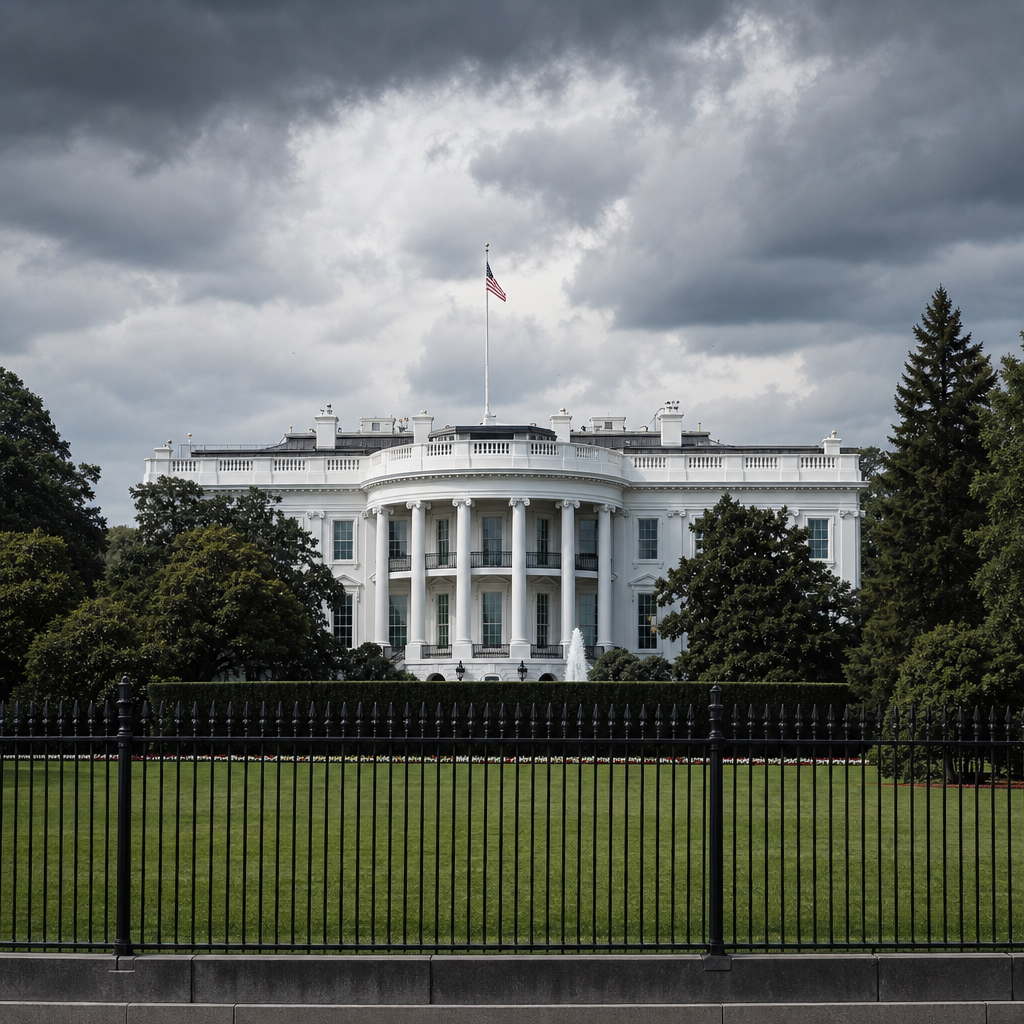
Emergency powers and the presidency sit at the center of one of the hardest questions in American government: how much authority should one person hold when the country faces war, rebellion, terrorism, pandemic disease, cyberattacks, or economic collapse? In AP Government and Politics, emergency powers refer to the expanded practical authority presidents often claim during crises, while the presidency means the constitutional office created in Article II. The issue matters because emergencies test constitutional limits, civil liberties, federalism, Congress’s lawmaking role, and the courts’ willingness to check executive action. I have taught this topic through court cases, statutes, and recent events, and students usually discover the same core truth: presidents rarely receive unlimited legal power, but in real time they often act first and force the other branches to respond later. Understanding where those powers come from, how they are constrained, and why they expand in moments of fear is essential for evaluating presidential leadership and preserving democratic accountability.
What Counts as an Emergency, and Where Do Presidential Powers Come From?
The Constitution never provides a single, detailed emergency powers clause for the president. Instead, presidential authority in crises is assembled from several sources: Article II’s vesting of executive power, the commander in chief clause, statutory delegations from Congress, implied powers recognized through practice, and judicial precedent. An emergency, in practical terms, is a situation demanding immediate national action beyond routine administration. That can include military attacks, insurrection, natural disasters, financial shocks, public health threats, or disruptions to critical infrastructure. The legal question is not simply whether a crisis exists, but whether the president has constitutional or statutory authority for the specific action taken.
Congress has created much of the modern emergency presidency through laws such as the National Emergencies Act of 1976, the Stafford Act for disaster response, the Defense Production Act, the International Emergency Economic Powers Act, and multiple surveillance and homeland security statutes. These laws matter because they unlock specific tools after a president formally declares an emergency. In other words, declarations alone do not create magical powers; they activate authorities already written into law. That distinction is central in AP Government: the president is powerful during emergencies largely because Congress has chosen, over decades, to delegate discretion.
How Presidents Have Used Emergency Power in Practice
History shows that presidents push hardest during danger, and their actions often become precedents for successors. Abraham Lincoln suspended habeas corpus during the Civil War, expanded the military rapidly, and took actions before Congress assembled, arguing that preserving the Union justified extraordinary measures. Franklin D. Roosevelt responded to the Great Depression with aggressive economic experimentation and, during World War II, authorized broad wartime controls. George W. Bush asserted sweeping national security powers after the September 11 attacks, including military detention and expanded surveillance. Donald Trump used emergency authority to redirect military construction funds for border barrier projects after Congress refused full appropriations. Joe Biden relied on emergency and public health frameworks during the COVID-19 era, though courts limited some measures.
These examples show a pattern I emphasize when teaching this unit: emergency powers are rarely fixed. They evolve through claims, resistance, and institutional bargaining. A president usually acts under a mix of constitutional language, statutory permission, and political momentum. The broader the public fear and the weaker the immediate opposition, the more room the presidency tends to gain. Yet the long-term legality of those actions often depends on whether Congress ratifies them and whether courts decide they fit within existing law.
The Constitutional Limits: Congress, Courts, Federalism, and Rights
Presidents cannot lawfully do anything they want simply by saying the nation faces a crisis. Congress controls appropriations, can narrow delegated powers, conducts oversight, and may terminate some emergencies by statute. The Senate also plays a role in appointments and treaties, shaping the executive branch’s capacity. Courts review executive actions for constitutional and statutory compliance, although they often move slowly and may defer somewhat in military or foreign affairs matters. States retain police powers, especially in public health and local emergency management, which means federal presidential authority does not automatically erase state authority.
Individual rights create additional boundaries. The First Amendment protects speech, press, religion, assembly, and petition even in tense periods. The Fourth Amendment constrains searches and seizures, though surveillance disputes often arise when national security is invoked. Due process under the Fifth and Fourteenth Amendments limits detention and punishment without lawful procedures. Equal protection principles matter when emergency actions target groups unevenly. In practice, rights can be restricted more during wartime or severe crises, but restrictions still require legal justification. That is why constitutional analysis asks not just whether an emergency is real, but whether the government’s response is necessary, authorized, and proportionate.
Key Supreme Court Cases Students Should Know
Several cases define how far a president can go. In Youngstown Sheet & Tube Co. v. Sawyer (1952), the Court struck down President Truman’s attempt to seize steel mills during the Korean War. Truman argued a strike would harm national defense, but the Court held he lacked statutory or constitutional authority. Justice Robert Jackson’s concurring opinion became the leading framework: presidential power is strongest when acting with Congress, uncertain in a “zone of twilight” when Congress is silent, and weakest when defying congressional will. That test appears constantly in emergency power analysis.
In Korematsu v. United States (1944), the Court notoriously upheld the wartime exclusion of Japanese Americans, illustrating how fear can distort constitutional judgment. Although later repudiated, the case remains a warning about deference in emergencies. In Hamdi v. Rumsfeld (2004), the Court recognized that the government could detain a U.S. citizen captured in conflict as an enemy combatant, but held that due process still required a meaningful chance to contest detention. In Trump v. Hawaii (2018), the Court upheld a travel restriction tied to immigration and national security statutes, showing that broad delegations from Congress can strengthen presidential action. Together, these cases reveal the recurring balance between necessity and legality.
Statutory Emergency Powers and What They Actually Allow
Modern presidents often rely more on statutes than on vague constitutional claims. The National Emergencies Act requires the president to specify which statutory powers are being activated and provides a framework for reporting and renewal. The International Emergency Economic Powers Act allows regulation of financial transactions and sanctions after declaring a national emergency tied to an unusual foreign threat. That law has been used extensively against hostile states, terrorist networks, narcotics traffickers, and cyber actors. The Stafford Act supports federal disaster assistance, while the Defense Production Act allows the government to prioritize contracts and mobilize industrial capacity for national defense and emergency needs.
These statutes are powerful because they convert broad national concerns into concrete administrative tools. I have found students understand this best when they see that emergency power often means agencies acting under prewritten legal authority, not a president improvising from scratch. Still, delegation creates risks. Congress may write standards loosely, agencies may interpret them aggressively, and emergencies may last for years. That can normalize extraordinary governance. The practical result is a presidency with substantial crisis capacity, but one that depends heavily on legislative design and judicial tolerance.
| Source of power | What it can permit | Main limit |
|---|---|---|
| Article II commander in chief role | Direct military operations and respond rapidly to attacks | Congress controls war funding and can regulate armed forces |
| National Emergencies Act | Activate specific statutory authorities after declaration | Only powers already granted by Congress become available |
| International Emergency Economic Powers Act | Impose sanctions and block transactions involving foreign threats | Must involve a qualifying external threat and follow statutory procedures |
| Stafford Act | Coordinate federal disaster relief and assistance | Usually depends on formal findings and cooperation with states |
| Defense Production Act | Prioritize production and contracts for emergency needs | Use must fit statutory purposes and funding constraints |
War Powers, National Security, and the Problem of Speed
The most controversial emergency claims arise in war and national security because presidents can act faster than Congress. Article II makes the president commander in chief, but Article I gives Congress the power to declare war, raise armies, provide rules for the military, and fund operations. The modern United States has often engaged in military action without formal declarations of war, relying instead on authorizations for use of military force, treaty commitments, or claimed defensive authority. The War Powers Resolution of 1973 tried to restrain unilateral presidential war making by requiring consultation and reporting and by setting timelines for ending hostilities absent congressional authorization, but presidents of both parties have treated it as constitutionally problematic or politically negotiable.
Speed is the president’s strongest institutional advantage. Missile strikes, hostage rescues, cyber responses, and troop deployments can occur before Congress has the practical ability to deliberate. That reality does not erase constitutional limits, but it does shift leverage toward the executive. Once forces are engaged, Congress may hesitate to cut funds or appear unsupportive. This is why emergency power debates often concern not just legal text, but timing. The branch that can move first can shape the facts on the ground and force later review on executive terms.
Domestic Emergencies, Public Health, and Economic Crises
Not all emergencies involve war. Presidents also confront hurricanes, wildfires, disease outbreaks, energy shortages, supply chain disruptions, banking instability, and major cyber incidents. In these settings, the federal role is often shared with states. Governors usually possess primary police powers over quarantine, business restrictions, and local emergency management, while the president coordinates national resources, interstate strategy, and federal agencies. During COVID-19, for example, presidents used public health declarations, procurement authority, vaccine logistics, travel restrictions, and workplace policies, but many contested rules depended on statutory interpretation and were challenged in court.
Economic emergencies raise another set of questions. Can a president freeze assets, stabilize markets, or redirect funds? Often yes, if Congress has granted authority. But fiscal policy remains deeply tied to congressional appropriations and taxation powers. The lesson for AP Government students is straightforward: in domestic emergencies, presidential influence can be enormous, yet it remains uneven. Some tools are broad, especially in sanctions and procurement. Others are narrow, especially where Congress has spoken clearly or where state authority is strongest.
How to Evaluate Presidential Emergency Actions in AP Government
A strong analysis asks five questions. First, what is the claimed source of authority: the Constitution, a statute, inherent executive power, or some combination? Second, has Congress supported, limited, or rejected the action? Third, what rights or structural principles are affected, including due process, free expression, federalism, and separation of powers? Fourth, what does Supreme Court precedent suggest, especially under the Jackson framework from Youngstown? Fifth, what are the practical consequences if the action becomes a precedent for future presidents?
This framework helps explain why the answer to “How far can a president go?” is never simply “very far” or “not far at all.” A president can move quickly, command agencies, frame the public narrative, and exploit broad delegations. But the president cannot reliably suspend the Constitution, spend money Congress has refused to appropriate without lawful authority, or ignore judicial rulings indefinitely. The outer boundary is a moving line shaped by statutes, institutions, and public tolerance. For students building this subtopic hub, that is the unifying idea across every miscellaneous emergency powers case, statute, and debate.
Emergency powers reveal the presidency at its most consequential and most dangerous. Crises demand speed, coordination, and national leadership, which is why the office accumulates influence when fear is high and time is short. Yet the American system was designed to resist unchecked rule. The Constitution divides war, spending, lawmaking, and rights protection across institutions precisely because emergencies create temptations to overreach. The best way to understand presidential power is to separate rhetoric from legal authority: a declaration does not equal unlimited control, and bold action is not automatically lawful.
The clearest takeaway is that presidential emergency power is real, substantial, and often necessary, but it is strongest when backed by Congress and weakest when it contradicts statute or infringes core liberties without clear justification. Supreme Court cases, especially Youngstown, show that context matters. So do statutes like the National Emergencies Act, the Stafford Act, the Defense Production Act, and the International Emergency Economic Powers Act. If you are studying AP Government and Politics, use this article as your hub, then connect each crisis to its source of authority, its constitutional limits, and its long-term precedent. That approach will help you judge not just what presidents claim they can do, but what the law actually allows.
Frequently Asked Questions
What are emergency powers, and does the Constitution explicitly give them to the president?
Emergency powers are the expanded practical powers presidents often claim or exercise during moments of national crisis, such as war, invasion, rebellion, terrorist attacks, pandemics, cyber emergencies, or severe economic disruption. In AP Government and Politics, the idea usually refers less to one single constitutional clause and more to the way presidential authority can grow when the country demands fast action. The Constitution does not contain a neat, comprehensive list labeled “emergency powers.” Instead, presidents point to a combination of Article II powers, statutory authority granted by Congress, and historical precedent. For example, presidents rely on their role as commander in chief, their duty to “take Care that the Laws be faithfully executed,” and laws passed by Congress that authorize special actions in times of national emergency.
That said, the Constitution was designed to prevent unlimited executive rule. Even in emergencies, the president is not supposed to become a temporary monarch. Congress still has lawmaking power, control over appropriations, and authority to declare war, while the courts can review executive actions for constitutionality. This is why emergency powers are so controversial: they often arise in moments when speed seems essential, but constitutional government depends on limits, procedures, and checks. In practice, the presidency tends to become stronger during crises because the executive branch can act quickly and speak with one voice. But legally, emergency powers are strongest when they are tied to either clear constitutional authority or explicit congressional authorization.
How far can a president legally go during a national emergency?
A president can go quite far during a genuine emergency, but not without limits. The most important legal principle is that emergency powers do not erase the Constitution. Presidents may act rapidly to protect national security, deploy executive agencies, direct military operations already authorized by law, restrict certain activities under existing statutes, and respond to urgent threats when Congress cannot act immediately. However, the president cannot simply suspend the Constitution, cancel elections at will, ignore court orders, or permanently seize powers assigned to Congress. Emergency action may be broad, but it is not automatically unlimited.
A useful framework comes from the Supreme Court and from Justice Robert Jackson’s famous concurrence in the Steel Seizure Case, Youngstown Sheet & Tube Co. v. Sawyer (1952). Jackson explained that presidential power is strongest when the president acts with express or implied authorization from Congress, weaker when Congress is silent, and weakest when the president acts against the will of Congress. That framework matters because it shows that the legality of emergency action often depends on whether Congress has approved, tolerated, or rejected it. For example, a president acting under a statute passed by Congress usually has stronger legal footing than a president claiming inherent authority alone.
In practical terms, a president may respond decisively to immediate threats, but the farther an action goes from defense and law execution into lawmaking, rights restriction, or domestic control, the more constitutional scrutiny it faces. Courts often give the executive some deference in real emergencies, especially in foreign affairs and military matters, but that deference is not a blank check. The legal system asks hard questions: Is there a statutory basis? Is the action temporary or open-ended? Does it violate individual rights? Did Congress authorize it? Is there judicial review? Those questions help determine how far a president can actually go.
What are some major historical examples of presidents using emergency powers?
American history is full of major examples, and each one shows both the necessity and danger of executive power in crisis. During the Civil War, Abraham Lincoln took some of the most dramatic emergency actions in U.S. history. He suspended habeas corpus in certain areas, expanded the military, and acted aggressively to preserve the Union. Supporters argued that the rebellion required immediate action to save the government itself. Critics warned that civil liberties and constitutional procedures were being stretched. Lincoln’s presidency is often used as a classic example of emergency leadership that was forceful, controversial, and difficult to separate from the survival of the nation.
Franklin D. Roosevelt also dramatically expanded presidential action during the Great Depression and World War II. In the Depression, the federal government took unprecedented steps to stabilize banks, regulate the economy, and provide relief. During World War II, executive power grew even further. The most infamous example was the internment of Japanese Americans, a policy now widely regarded as a grave violation of civil liberties, even though it was upheld by the Supreme Court at the time in Korematsu v. United States (1944). That case remains a warning that fear and wartime pressure can produce serious constitutional failures.
In the Cold War and post-9/11 eras, presidents again asserted broad emergency authority. Harry Truman attempted to seize steel mills during the Korean War to prevent a strike from disrupting production, but the Supreme Court rejected that move in Youngstown. After the September 11 attacks, President George W. Bush used military force, detention policies, surveillance programs, and national security claims to respond to terrorism. Some measures were upheld, while others were limited by Congress or the courts. More recently, presidents have used emergency declarations for border security, public health responses, and sanctions against foreign threats. These examples show that emergencies repeatedly strengthen the presidency, but they also show that public opinion, Congress, and the judiciary can push back when executive action goes too far.
How do Congress and the courts check presidential emergency powers?
Congress and the courts are the two most important institutional checks on presidential emergency power, although both often respond more slowly than the executive branch. Congress can limit emergency authority by passing laws, refusing to pass authorizing legislation, restricting funding, holding oversight hearings, demanding reports from executive agencies, and, in extreme cases, pursuing impeachment. Because many emergency powers come from statutes rather than directly from the Constitution, Congress can shape the scope of those powers by writing narrower laws, adding time limits, requiring consultation, or mandating periodic review. Congress can also repeal or amend emergency-related statutes if it believes presidents are abusing them.
The courts provide another crucial check by reviewing executive actions when lawsuits are filed. Judges can decide whether a president has exceeded statutory authority, violated constitutional rights, or ignored procedural requirements. Court review is especially important when emergency actions affect free speech, due process, detention, privacy, property rights, or federalism. At the same time, the judiciary sometimes moves cautiously in crises, especially in matters involving national security or foreign affairs. Courts may defer to the executive when the facts are uncertain or the threat seems immediate, but that deference has limits. Cases like Youngstown show that the Supreme Court can and does reject presidential claims of inherent emergency authority.
Still, checks only work when institutions are willing to use them. Congress may hesitate if the president is popular or if lawmakers fear being blamed for weakening a crisis response. Courts can only rule on cases that reach them, often after significant action has already taken place. That is why emergency powers are such a powerful constitutional issue: the formal checks exist, but in the early moments of crisis, the presidency often has the advantage of speed, visibility, and control over information. The long-term balance depends on whether the other branches reassert their authority once the immediate danger begins to pass.
Why are emergency powers such an important topic in AP Government and Politics?
Emergency powers matter in AP Government and Politics because they bring together several core themes of the course: separation of powers, checks and balances, civil liberties, constitutional interpretation, and the growth of executive power. They force students to ask one of the most difficult questions in American government: how can a democracy respond quickly to danger without undermining the constitutional system it is trying to protect? In normal times, limits on power are easier to defend. In emergencies, citizens often want decisive action, and that pressure can shift real authority toward the president. Understanding that tension is essential to understanding the modern presidency.
This topic also helps students distinguish between formal constitutional powers and practical political power. The Constitution gives the president important responsibilities, but many of the strongest emergency actions come from the interaction of law, precedent, public fear, congressional delegation, and the president’s role as national leader. That makes emergency powers a perfect example of how government operates not just on paper, but in real life. Students can see how historical events reshape institutions and how judicial decisions influence future presidential behavior.
Most importantly, studying emergency powers shows why constitutional democracy depends on both effective leadership and meaningful limits. A president may need flexibility to respond to war, terrorism, disease, or cyber threats, but unchecked power can threaten liberty, due process, and representative government. AP Government emphasizes that the presidency is strongest when it acts within a constitutional system, not above it. Emergency powers are therefore not just a topic about crisis management; they are a test of whether the American system can preserve both security and freedom at the same time.