
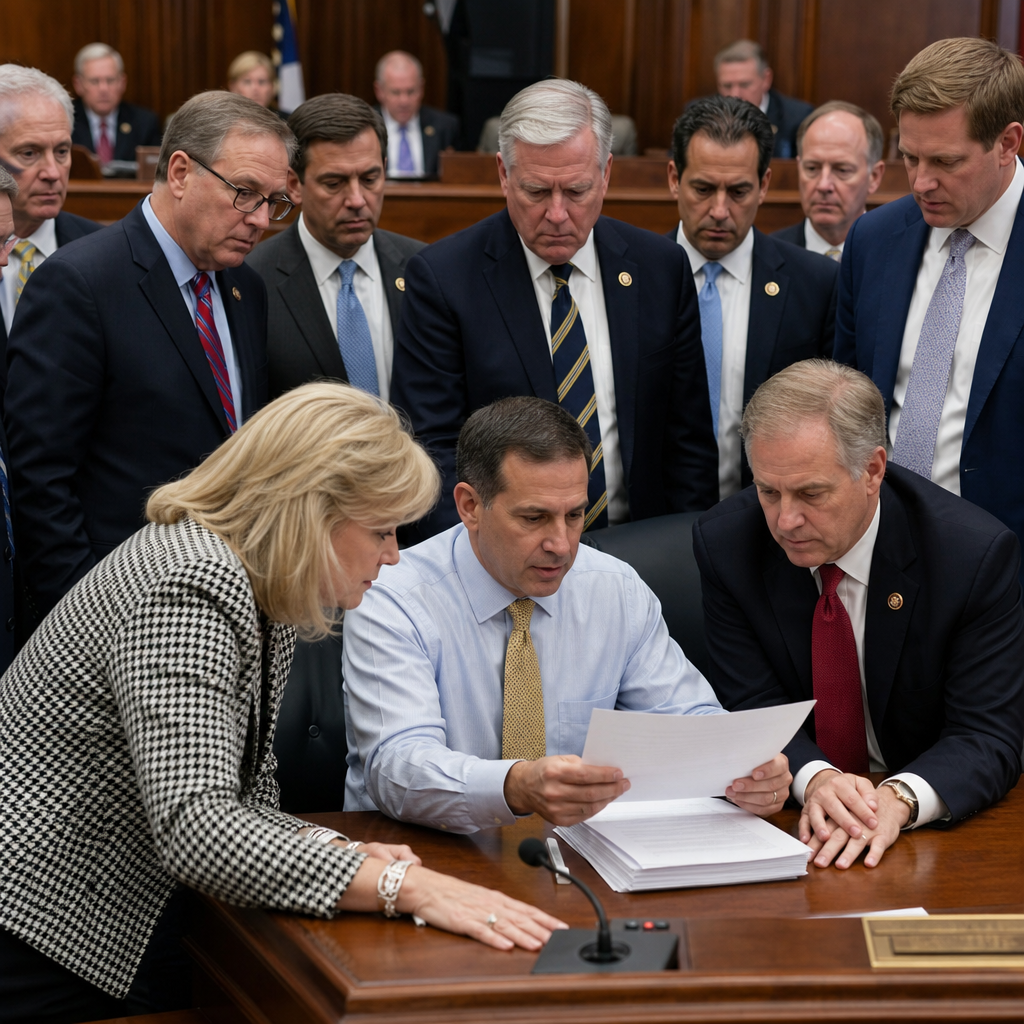
Discharge petitions are one of the House of Representatives’ rarest and most revealing procedural tools because they let a majority of members force a bill out of committee and onto the floor even when committee leaders or party leadership would rather keep it bottled up. In AP Government and Politics, a discharge petition matters because it shows how formal rules can redistribute agenda power, limit gatekeeping, and create an alternate path for legislation when ordinary committee consideration stalls. The key term is simple: a discharge petition is a written petition signed by an absolute majority of House members, currently 218, to discharge a committee from further consideration of a bill or resolution. If the petition succeeds and the waiting periods expire, the House can bring the measure to the floor despite resistance from the committee chair, the Rules Committee, or party leaders.
I have found that students understand Congress better when they stop viewing it as a smooth textbook pipeline and start seeing it as a battlefield over agenda control. Most bills never die in dramatic floor votes. They die quietly in committee, in subcommittee, or in leadership offices that decide what gets time and attention. A discharge petition exists precisely because the House recognizes that concentrated power can become a bottleneck. It is a safety valve, but an intentionally difficult one.
This topic also matters beyond exam preparation. Discharge petitions reveal the tension between majority rule and party organization, between individual members and institutional hierarchy, and between transparency and strategic delay. They show that House procedure is not just administrative detail. Procedure decides outcomes. If a majority can bypass committee leaders, then committee chairs are powerful but not absolute. If members almost never use the tool successfully, then leadership control is still dominant in practice. Understanding that difference between formal possibility and political reality is essential for analyzing Congress accurately.
For students using this page as a hub within AP Government and Politics, the broader “miscellaneous” category includes procedural concepts that tie together representation, lawmaking, parties, and institutional design. Discharge petitions connect directly to committee systems, House rules, the role of the Speaker, party caucuses, and the difference between decentralized and centralized congressional power. They also illuminate why the House, unlike the Senate, relies so heavily on structured procedure. If you understand discharge petitions, you understand something central about who really sets the House agenda.
What a discharge petition is and how the process works
A discharge petition is authorized under House Rule XV, and its operation is more technical than the one-sentence definition suggests. In most cases, a bill is referred to a standing committee after introduction. If that committee does not report the bill after the required waiting period, members may file a motion to discharge. The petition is then placed at the clerk’s desk, where members sign publicly. Since reforms in the 1990s, signatures are no longer secret; they are published, which changed the political incentives around signing because leaders, interest groups, and constituents can track who supports the effort.
The standard threshold is 218 signatures, a majority of the full House, not merely a majority of those present and voting. That is a high bar because vacancies, absences, and party discipline all matter. If a petition reaches 218 and ripens under House rules, supporters can move to discharge the committee from the bill. In many cases, the petition is used not just to free a bill but to bring up a special rule from the Rules Committee that provides for floor consideration of the target measure. That route is often more practical because the House runs on special rules, and simply discharging a bill without a mechanism for debate and amendment may not solve the scheduling problem.
The process includes waiting periods that make quick action difficult. A bill generally must sit in committee for at least 30 legislative days before it is eligible, and a discharge motion on a special rule must meet its own timing requirements. Once ripe, the motion can be called up on designated days, traditionally the second and fourth Mondays of a month. These procedural hurdles are not accidental. They preserve committee jurisdiction and make discharge a remedy of last resort rather than a routine alternative.
In plain terms, the House built a fire escape but locked it behind several doors. A majority can use it, but only if members are willing to sign publicly, wait patiently, and confront their own party’s leadership. That is why the rule is important constitutionally and institutionally even though successful discharge petitions are uncommon.
Why committee leaders can block bills in the first place
To understand why discharge petitions exist, you have to understand committee gatekeeping. House committees are where most legislative work is screened, revised, and often stopped. Chairs decide whether hearings occur, whether subcommittees act, and whether a markup proceeds. Even when chairs are not acting alone, they operate within a hierarchy shaped by the majority party, the Speaker, and the Rules Committee. In practical terms, if committee leaders do not want a bill moving, the bill often goes nowhere.
This power is not merely obstruction for its own sake. Committees exist because Congress is too large and too busy to consider every proposal on the floor. Specialization matters. Members on Agriculture, Armed Services, Energy and Commerce, or Ways and Means build expertise, consult stakeholders, and draft more detailed legislation than the full chamber could manage efficiently. Gatekeeping filters unserious proposals and preserves time for bills with broader support. From that perspective, committee control is a feature, not a flaw.
But there is an obvious tradeoff. Gatekeeping can protect expertise, yet it can also protect incumbents, party brands, or factional priorities against the wishes of a chamber majority. I have seen students assume that if 218 House members support a bill, the bill will naturally receive a vote. The House does not work that way. Agenda control lets leaders prevent majority coalitions from expressing themselves openly. A discharge petition is one of the few devices that challenges that reality.
The politics become sharper when the majority within the House differs from the majority within the majority party. A bipartisan coalition may exist for a moderate immigration proposal, campaign finance change, or ethics reform, but party leaders may prefer not to divide their caucus or expose members to difficult votes. In that setting, committee inaction can become a strategic decision. The discharge petition gives rank-and-file members a mechanism to test whether the hidden majority is real.
Why discharge petitions rarely succeed
Discharge petitions are hard to complete because the members most likely to agree with the underlying bill are often the same members least willing to defy leadership publicly. Signing a petition sends a signal. It tells the Speaker, committee chair, whip operation, donors, activists, and local media that the member is helping to bypass normal channels. Even when the bill is popular, many representatives prefer private pressure over a visible procedural rebellion.
Another obstacle is timing. The waiting periods built into House procedure give leaders time to negotiate, threaten, delay, or offer substitute paths. Sometimes leadership will schedule a floor vote on a modified bill to drain support from the petition. Sometimes leaders will persuade just enough majority-party members not to sign. In close cases, even one or two defections can kill the effort.
| Barrier | Why it matters | Practical effect |
|---|---|---|
| 218-signature threshold | Requires an absolute House majority | Supporters need broad bipartisan backing or major party dissent |
| Public signatures | Leaders can identify defectors immediately | Members face party pressure and electoral risk |
| Waiting periods | Petitions cannot move instantly | Leadership gains time to negotiate or counteract |
| Floor scheduling limits | Discharge motions arise only under set conditions | Even successful petitions take procedural patience |
| Alternative leadership action | Leaders can offer competing bills or rules | Support for discharge can evaporate before final action |
There is also a collective-action problem. Many members want the policy result without being among the first signers. Early signers take the most political heat. Later signers can join only after momentum is obvious. That dynamic slows petitions and often stops them before they become credible. For AP Government and Politics, this is a useful example of how rational individual behavior can undermine group outcomes even when a majority preference exists.
Successful petitions are therefore newsworthy precisely because they are unusual. Their rarity should not be misread as irrelevance. A weapon does not need frequent use to shape behavior. The mere possibility of discharge can pressure leaders to negotiate, schedule votes, or revise bills before a petition reaches 218.
Historical examples and what they show about House power
Several well-known discharge petition episodes help explain how the device operates in real politics. One classic example is campaign finance reform in 2002, when supporters of the Bipartisan Campaign Reform Act used a discharge petition strategy to overcome resistance and secure floor consideration. The issue had cross-party appeal, but leadership reluctance created a bottleneck. The petition demonstrated that a coalition could form outside normal leadership channels when public pressure was strong and the policy had broad salience.
Another important case involved the McCain-Feingold era generally, showing that discharge works best when reformers can frame the issue as one leadership is suppressing unfairly. Public visibility matters. Members are more likely to sign when they can justify the move as protecting democracy, ethics, or a popular national demand rather than merely embarrassing their party.
More recent efforts have involved immigration, especially proposals tied to Deferred Action for Childhood Arrivals recipients. In 2018, moderate Republicans and Democrats pursued a discharge petition to force immigration votes after leadership hesitation. The effort gained attention because it exposed the gap between the preferences of a bipartisan center and the priorities of party leaders. Although the strategy became tangled in competing rules and leadership countermeasures, it offered a near-perfect case study in agenda control. The fight was not just over immigration policy. It was over who gets to decide what the House votes on.
These episodes show a pattern I have seen repeatedly in congressional procedure: discharge petitions do not emerge on routine technical bills. They emerge on issues where leadership fears internal division, where the public can understand the stakes, and where members think blocked action is itself politically costly. In other words, the petition is less a normal legislative lane than a constitutional pressure point inside the House.
What students should connect to broader AP Government concepts
Discharge petitions belong in the wider study of congressional structure, political parties, and separation of powers. First, they illustrate the difference between formal rules and practical politics. Formally, a House majority can seize some agenda power from committees. Practically, party organization makes that difficult. This distinction appears across AP Government, from presidential powers to judicial review to federalism. Institutions are defined not only by written authority but by norms, incentives, and strategic behavior.
Second, discharge petitions highlight the role of political parties in Congress. Modern House parties are stronger than they were during many earlier periods, especially because leaders control committee assignments, fundraising networks, messaging opportunities, and procedural access. When parties are polarized, crossing leadership becomes costlier. That helps explain why discharge is rarer in some modern contexts even though the rule still exists.
Third, the topic connects to representation. A member who signs a discharge petition may be acting as a trustee, using independent judgment to force a vote believed to be in the public interest, or as a delegate, responding to intense district demand for action. Often it is both. The petition therefore offers a concrete way to discuss how representatives balance constituency interests, party loyalty, and institutional responsibility.
Finally, this procedure reinforces a core lesson about the House itself: it is majoritarian in theory but leadership-driven in operation. The House can act quickly when leaders want action because rules are centralized. The same centralization can suppress issues that would pass if brought to the floor. Discharge petitions are one of the clearest exceptions, and that is exactly why they deserve a place in any serious AP Government and Politics study plan.
Discharge petitions show that control of Congress is never just about winning elections; it is also about controlling procedure. They allow House members to bypass committee leaders, but only through a demanding process that requires patience, public commitment, and a real majority coalition. That makes them both democratic and difficult. They preserve the principle that no committee should permanently bury legislation supported by most of the chamber, yet they also protect the committee system from constant end runs.
The most important takeaway is straightforward. A discharge petition is a House mechanism for overcoming committee or leadership gatekeeping, and its significance lies less in frequent success than in what it reveals about agenda power. If you want to understand why some bills never receive a vote, why parties work so hard to maintain discipline, and why procedural rules matter as much as ideology, start here. In AP Government and Politics, this concept ties together committees, parties, representation, rules, and institutional conflict in one compact example.
Use this page as a hub for the broader miscellaneous side of congressional procedure. Review committee structure, House Rules Committee authority, the role of the Speaker, caucus politics, and the legislative process alongside discharge petitions. When you can explain not only what a discharge petition is but why it is so rarely successful, you are thinking about Congress the way political scientists and experienced lawmakers do.
Frequently Asked Questions
What is a discharge petition in the House of Representatives?
A discharge petition is a formal procedural device in the U.S. House of Representatives that allows a majority of members to force a bill out of committee and bring it closer to floor consideration, even if the committee chair or party leadership does not want the measure to move forward. In practical terms, it is a way for rank-and-file members to challenge the normal gatekeeping power of committees. Under the regular legislative process, committees decide whether to hold hearings, mark up a bill, or simply leave it untouched. A discharge petition creates an alternate route when that ordinary path is blocked.
What makes discharge petitions especially important in AP Government and Politics is that they show how formal House rules can redistribute power within the institution. Normally, committees and leaders have major influence over the agenda because they can delay or prevent action on legislation. A successful discharge petition weakens that control by giving a majority of members the ability to act collectively. Even though discharge petitions are rare and difficult to complete, they are revealing because they highlight the constant tension in the House between leadership control, committee authority, party discipline, and majority rule.
How does the discharge petition process actually work?
The process is intentionally difficult, which is one reason discharge petitions are uncommon. Generally, a bill must first be referred to a committee and remain there for a required period before a discharge petition can be filed. Once the petition is available, House members may sign it publicly. If the petition gathers signatures from an absolute majority of the full House, currently 218 members if there are no vacancies, the House can move toward discharging the committee from further consideration of the bill.
Even then, the process does not mean the bill instantly becomes law or automatically passes. It simply clears a key obstacle by removing the bill from committee control and setting up the possibility of floor action. Additional procedural steps usually follow, including scheduling considerations and debate under House rules. The high signature threshold matters because it requires broad support, not just among a faction, but across enough members to overcome committee resistance. The public nature of signatures also adds political pressure, since members must openly decide whether to side with leadership and committee chairs or with those trying to force the bill forward.
Why are discharge petitions considered so rare and politically significant?
Discharge petitions are rare because they require members to take a visible stand against the normal power structure of the House. In most cases, majority-party members are reluctant to embarrass their own leadership or committee chairs, especially when party unity is valued. Signing a discharge petition can be seen as a challenge to leadership’s control over the agenda, and members may worry about political consequences such as losing favors, support, or influence within the party. That political cost keeps many petitions from succeeding, even when a bill has considerable public support.
They are politically significant because they expose the gap between formal legislative support and agenda control. A proposal may have enough backing from a majority of House members, yet still fail to move through the normal process if leaders or committees refuse to act. A discharge petition becomes important in exactly those moments, because it demonstrates that procedural rules can either protect gatekeepers or empower the broader membership. For students of government, this makes discharge petitions a powerful example of how institutions are shaped not only by elections and ideology, but also by rules about who gets to decide what reaches the floor.
How do discharge petitions limit committee gatekeeping and leadership power?
Committees are central to the House because they screen legislation, develop expertise, and decide which bills receive serious attention. This gives committee chairs and party leaders substantial agenda-setting power. If they oppose a bill, they can often prevent it from advancing simply by refusing to schedule it or report it out. A discharge petition limits that gatekeeping function by creating a formal mechanism for bypassing the committee stage. Instead of waiting for a chair to act, members can attempt to build a majority coalition on their own.
This does not eliminate leadership power altogether, but it does show that leadership control is not absolute. The House is structured so that authority is usually concentrated in leaders and committees for efficiency and party coordination, yet discharge petitions preserve a democratic safety valve. They remind observers that a determined majority can sometimes override bottlenecks built into the system. In AP Government terms, this is a clear example of how procedural rules affect policymaking outcomes: rules can either reinforce centralized control or provide alternate channels that broaden participation in agenda setting.
Why is the discharge petition important for understanding AP Government and legislative politics?
The discharge petition matters in AP Government because it captures several core themes of congressional politics in one procedure. First, it illustrates the difference between formal powers and practical powers. Formally, any member can introduce a bill, but in practice most bills depend on committee and leadership support to advance. The discharge petition shows that House rules sometimes give members a way around those barriers. Second, it highlights the role of institutions and procedures in shaping outcomes. Legislative success is not determined only by public opinion or partisan majorities; it also depends on who controls the agenda and what procedural options exist.
It is also useful because it reveals how Congress balances efficiency with representation. Committees and leaders help organize the legislative process, but too much gatekeeping can block bills supported by a majority. The discharge petition exists as a corrective mechanism, even if it is difficult to use. For students, that makes it a strong example of checks within the House itself. It demonstrates that conflict in Congress is not just between Democrats and Republicans or between Congress and the president, but also within the chamber over who gets to decide which ideas receive a vote. That makes discharge petitions one of the most revealing procedural tools for understanding legislative power, institutional design, and the real-world limits of party leadership.