
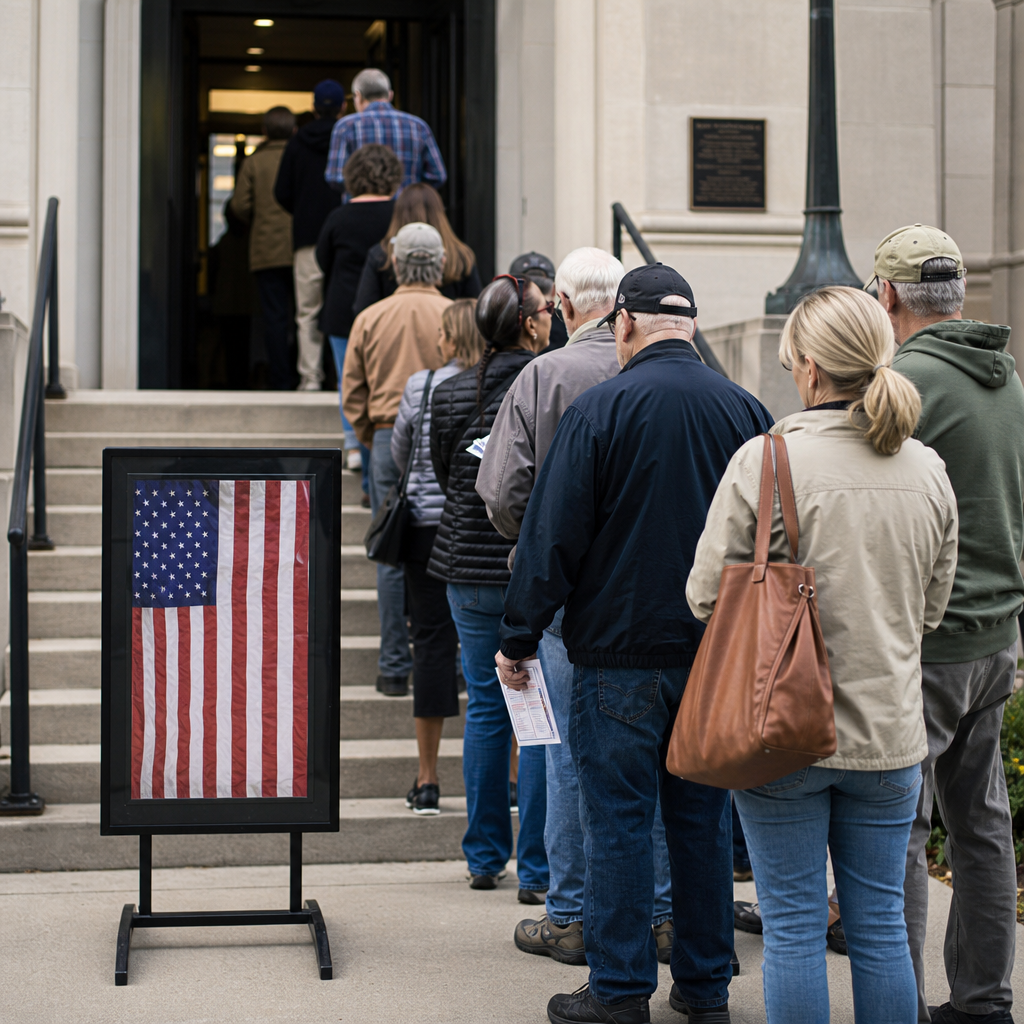
Direct democracy in the states gives citizens a way to shape public policy without waiting for legislatures to act. In AP Government and Politics, this topic usually centers on three mechanisms: initiatives, referendums, and recalls. Together, they form the core of state-level direct democracy, a system in which voters participate more directly in lawmaking and accountability. Unlike representative democracy, where elected officials make most decisions, direct democracy lets the electorate propose laws, approve or reject measures, and remove certain officeholders before a term ends.
These tools matter because states are laboratories of democracy. Rules for ballot access, campaign finance, signature collection, and election administration vary widely, so direct democracy in the states looks different from California, to Colorado, to Michigan, to Florida. I have worked through ballot measure language, state constitutional provisions, and election procedure manuals, and one lesson is consistent: the details determine whether these powers expand participation or mainly reward well-funded organizations. For students, understanding the mechanics is essential because exam questions often connect these processes to federalism, participation, political parties, interest groups, and public opinion.
An initiative is a process that allows citizens to place a proposed statute or constitutional amendment on the ballot, usually by collecting a required number of signatures. A referendum is a vote on a law already passed by a legislature, or on a constitutional amendment the legislature sends to voters. A recall is an election procedure used to remove an elected official before the end of the official’s term. Each process grew from Progressive Era reforms of the late nineteenth and early twentieth centuries, when reformers argued that party machines, railroad interests, and urban political bosses held too much influence over legislatures.
Today, direct democracy remains significant because it can bypass legislative gridlock, force debate on neglected issues, and create a direct record of voter preferences. At the same time, it can produce long ballots, expensive campaigns, and complicated statutes that voters may not fully understand. The best way to study this topic is to see how each device works, why states adopted it, what constitutional limits apply, and what tradeoffs appear in practice.
How initiatives work and why states use them
The initiative process begins when citizens or organized groups draft a proposal. In some states, they can propose ordinary statutes; in others, they can also propose constitutional amendments. The proposed measure must satisfy state rules on subject matter, wording, and form. Supporters then gather signatures from registered voters, often within a fixed deadline and sometimes with geographic distribution requirements so one metro area cannot dominate the process. If election officials verify enough valid signatures, the measure qualifies for the ballot.
There are two main types of initiatives. A direct initiative goes straight to voters once signatures are certified. An indirect initiative goes first to the state legislature, which may adopt the measure, reject it, or place an alternative on the ballot. States use initiatives because they create an avenue for agenda setting outside party leadership and committee chairs. In practice, they are most powerful in western states, especially California, Oregon, Colorado, and Arizona, where Progressive reform was strongest.
Real-world examples show both the promise and the complications. California’s Proposition 13 in 1978 capped property taxes and transformed state and local finance for decades. Supporters viewed it as tax relief and voter control; critics argued it constrained public services and made budgeting less flexible. In 2016, several states used initiatives to address marijuana legalization after Congress and many state legislatures moved slowly. In 2022 and 2023, abortion rights and voting policy measures demonstrated how initiatives can bring high-salience national issues to state ballots when legislatures are polarized.
Campaigns around initiatives resemble candidate campaigns in one important way: money matters. Signature gathering is often professionalized, with paid circulators used to meet high thresholds. Advertising, legal review, polling, and message testing all raise costs. As a result, business groups, unions, advocacy organizations, and wealthy donors often dominate initiative politics. That does not make initiatives meaningless, but it does mean access is unequal. The process can amplify citizen voice, yet it rarely functions as a purely grassroots exercise.
Referendums: legislative referrals and popular checks on government
A referendum asks voters to approve or reject a policy decision. The term covers two major forms. A legislative referendum, sometimes called a referral, occurs when a legislature places a measure on the ballot. This is common for constitutional amendments because many state constitutions require voter ratification. A popular referendum, where allowed, lets citizens petition to suspend and place a recently enacted law before voters for approval or rejection. In plain terms, initiatives propose something new, while referendums usually review something government has already done.
Referendums serve as a democratic check. Legislatures may use them when an issue is especially consequential, politically risky, or constitutionally required. Citizens may use popular referendums when they believe lawmakers acted out of step with public opinion. I have seen students confuse referendums with initiatives because both end at the ballot box. The simpler distinction is this: the origin point differs. If voters launch the proposal, it is generally an initiative. If lawmakers pass it first, or citizens challenge a law already passed, it is a referendum.
State examples clarify the difference. Many states require voter approval for constitutional amendments, bond issues, or tax limitations. In Nevada and other states, legislatively referred constitutional amendments appear regularly. In Maine, citizens have used the people’s veto, a form of popular referendum, to challenge enacted laws. These votes can legitimize major institutional changes because they show direct voter consent, but they can also reduce complex policy choices to campaign slogans.
Ballot wording is especially important in referendums. Neutral, accurate summaries matter because a few sentences may shape millions of votes. Courts sometimes review titles and summaries for bias or confusion. Election administrators also publish voter guides explaining fiscal effects and legal changes. Those materials are not minor details. Research on ballot measure behavior shows many voters rely heavily on cues such as official titles, endorsements, party positions, newspaper editorials, and perceived fiscal consequences when deciding how to vote.
Recalls: removing elected officials before the next election
A recall is the most dramatic direct democracy tool because it targets an officeholder rather than a policy. Citizens circulate a petition seeking a special election on whether an elected official should remain in office. If enough valid signatures are gathered, a recall election is scheduled. Some states require recall supporters to allege specific misconduct; others allow recall for political dissatisfaction alone. This distinction matters because it shapes whether recall is treated as an accountability mechanism or as an extension of ordinary electoral competition.
The most widely known modern example is the 2003 California recall of Governor Gray Davis. Voters first decided whether to remove him, then selected a replacement, resulting in Arnold Schwarzenegger becoming governor. In 2021, California held another gubernatorial recall, but Governor Gavin Newsom survived. Wisconsin’s 2012 recall election involving Governor Scott Walker also became a major national story, driven by conflict over public-sector unions and collective bargaining. These cases show that recalls often emerge during intense partisan conflict rather than only after corruption scandals.
Supporters argue recalls deter unresponsive or unethical conduct and give voters a remedy between regular elections. Critics respond that recalls can destabilize government, empower well-organized minority factions, and turn every controversial decision into a removal campaign. In administrative terms, recalls are costly. States must verify signatures, prepare ballots, and conduct special elections on compressed timelines. Politically, recalls can reward name recognition and media attention more than careful evaluation of governing performance.
Not every state allows recalls, and those that do often limit them to state or local offices. Rules differ on signature thresholds, filing windows, and replacement methods. Some states hold a separate election to choose a successor if the recall succeeds; others combine the questions. Those procedural choices affect strategy. A low threshold makes recalls easier to trigger, while a replacement ballot with many candidates can allow a successor to win with only a plurality.
Key differences, strengths, and limitations across the states
The three mechanisms overlap, but they are not interchangeable. Initiatives let voters propose policy. Referendums let voters approve or reject measures tied to legislative action. Recalls let voters remove officials. For AP Government and Politics, it helps to compare them by purpose, trigger, and likely consequence.
| Mechanism | Primary purpose | Who starts it | Typical result |
|---|---|---|---|
| Initiative | Propose a new law or amendment | Citizens through petitions | Ballot vote on new policy |
| Referendum | Approve or reject an existing proposal or law | Legislature or citizens challenging a law | Ballot vote on ratification or repeal |
| Recall | Remove an elected official before term end | Citizens through petitions | Special election on removal, often replacement too |
The strongest argument for direct democracy is responsiveness. When legislatures are insulated by gerrymandering, party discipline, or interest-group pressure, ballot processes can put issues before voters directly. That is why minimum wage increases, ethics reforms, redistricting commissions, term limits, and criminal justice changes often appear through ballot measures. In several states, voters approved Medicaid expansion by initiative even after state officials resisted. The ballot route gave a clear statewide answer when representative institutions were deadlocked.
The strongest criticism is that ballot politics can oversimplify policy. Constitutional amendments adopted by initiative may lock detailed fiscal or regulatory rules into a hard-to-change legal text. Voters may support appealing goals without seeing implementation costs. Signature requirements can be manipulated, misinformation can spread quickly, and courts may later strike down parts of measures that conflict with federal law or state constitutional protections. Direct democracy is therefore powerful, but it is not automatically better than representative lawmaking.
Why this topic matters in AP Government and Politics
Direct democracy in the states connects to multiple core course themes. It illustrates federalism because most of these procedures exist at the state level rather than the national level. The U.S. Constitution provides no national initiative or recall process, so states decide whether to adopt them and how to regulate them. The topic also highlights political participation. Petition signing, campaign volunteering, donor networks, turnout mobilization, and issue framing all show how citizens engage beyond voting in candidate elections.
It also intersects with pluralism and interest-group politics. Organized interests often write ballot language, fund signature drives, and shape media narratives. That does not invalidate public participation, but it does remind students that institutions structure power. Judicial review matters too. State supreme courts regularly decide whether ballot summaries are fair, whether proposals violate single-subject rules, and whether approved measures conflict with superior legal authority. On an exam, a question may ask students to compare direct and representative democracy, explain a state example, or evaluate whether ballot measures expand democratic responsiveness.
The best study approach is to learn the definitions cleanly, know one or two examples for each device, and remember the tradeoff: more direct voter control can increase accountability, but it can also increase campaign spending, complexity, and volatility. If you are building out your AP Government and Politics notes, use this page as your hub, then connect it to state government, political participation, civil society, and federalism topics. Mastering initiatives, referendums, and recalls gives you a sharper understanding of how democracy functions beyond Congress and presidential elections.
Direct democracy in the states is not a side topic. It is a practical window into how citizens, parties, courts, and interest groups compete to define public policy. Initiatives allow voters to propose laws, referendums let voters review government decisions, and recalls let voters remove officials before the next regular election. Together, they show that democratic design is not fixed; it is built through rules about access, thresholds, wording, timing, and oversight.
The central benefit of studying these mechanisms is clarity. You can see exactly how public opinion becomes policy, why some reforms spread state by state, and where democratic participation runs into institutional limits. Keep this hub article as your starting point, then review state examples and landmark ballot measures so you can explain not just what direct democracy is, but how it works in real political life.
Frequently Asked Questions
What is direct democracy in the states, and how is it different from representative democracy?
Direct democracy in the states refers to processes that allow citizens to take a more active role in public decision-making rather than relying entirely on elected lawmakers. In a representative democracy, voters choose officials to make laws and policy decisions on their behalf. By contrast, direct democracy gives the electorate tools to propose laws, approve or reject measures, and in some cases remove public officials before the end of their terms. At the state level, the three main mechanisms most often discussed in AP Government and Politics are initiatives, referendums, and recalls.
This matters because it changes how public policy can be made. If state legislators are unwilling to address an issue, citizens in many states can organize, gather signatures, and place a proposal on the ballot themselves through the initiative process. If lawmakers pass a controversial measure, voters may be able to approve or overturn it through a referendum. If an elected official loses public trust, a recall election may give voters the chance to remove that official early. These mechanisms make state government more responsive in some situations, but they also raise questions about voter knowledge, campaign spending, and whether complicated policy issues should be decided in a yes-or-no election format.
What is an initiative, and how does the initiative process usually work?
An initiative is a procedure that allows citizens to propose a new law or, in some states, a constitutional amendment and put it directly before voters. This is one of the clearest examples of direct democracy because the proposal does not have to begin in the legislature. Instead, citizens, advocacy groups, or interest groups draft a measure and then try to qualify it for the ballot by collecting a required number of signatures from registered voters. If enough valid signatures are gathered by the deadline, the initiative appears on the statewide ballot for voters to approve or reject.
While the exact rules vary by state, the process usually includes several steps. First, the proposal must be written in a form that meets state legal requirements. Next, supporters submit the measure to state officials for review, and a title or summary may be prepared. Then comes signature collection, which is often the most difficult and expensive stage. States typically require signatures equal to a percentage of the votes cast in a previous election, often for governor or another statewide office. After the signatures are verified, the measure qualifies for the ballot. During the campaign, supporters and opponents try to persuade voters through advertising, public messaging, debates, and endorsements. On Election Day, the public votes directly on the proposal.
Initiatives are often praised because they let citizens bypass legislative inaction and place important issues before the people. At the same time, critics point out that the process can be dominated by well-funded organizations that can afford professional signature gatherers and large media campaigns. As a result, initiatives expand public participation, but they do not always guarantee equal political influence.
How is a referendum different from an initiative?
A referendum is a ballot measure submitted to voters for approval or rejection, but unlike an initiative, it usually involves a law or policy that has already been proposed or passed through another route. In simple terms, an initiative starts with the people, while a referendum asks the people to vote on a measure that is being referred to them. That referral may come from the legislature, or in some states from citizens seeking to challenge a law that lawmakers have already enacted.
There are two common forms of referendums discussed in state politics. A legislative referendum happens when the state legislature places a proposed law, bond issue, or constitutional amendment on the ballot for voter approval. In many states, constitutional amendments require this step. A popular referendum, sometimes called a veto referendum, allows citizens to collect signatures to force a public vote on a law passed by the legislature. If the referendum qualifies, voters can decide whether the law should take effect or be rejected.
Referendums are important because they add a public check on government action. They can increase legitimacy by ensuring that major decisions have direct voter support. However, they also share some of the same challenges as initiatives. Ballot language can be confusing, campaign spending can shape public opinion, and voters may be asked to decide highly technical policy issues with limited time and information. Even so, referendums remain a key part of direct democracy because they connect lawmaking more directly to popular consent.
What is a recall election, and why is it considered a tool of accountability?
A recall is a process that allows voters to remove an elected official from office before that official’s term ends. It is considered a direct democracy mechanism because it places the decision directly in the hands of the electorate rather than waiting for the next regular election. Recalls are most common at the state and local levels, and the rules vary significantly from one state to another. Some states allow recalls for many elected offices, including governors, while others do not permit them at all.
The recall process generally begins when citizens file a petition and gather signatures from a required number of voters within a set period of time. If enough valid signatures are collected, a recall election is scheduled. Depending on state law, voters may be asked first whether the official should be removed and, in some systems, who should replace the official if the recall succeeds. This makes recall elections both a judgment on performance and, potentially, a rapid transfer of political power.
Supporters view recalls as a powerful accountability tool. They argue that if an elected official becomes corrupt, ineffective, unresponsive, or deeply unpopular, voters should not be forced to wait years for the next election. Critics, however, argue that recalls can be used for partisan reasons and may undermine stability by turning every unpopular decision into a campaign for removal. In that sense, recalls highlight a central tension in democratic government: balancing responsiveness to public opinion with the need for elected officials to govern without constant political upheaval.
What are the major advantages and disadvantages of initiatives, referendums, and recalls in state government?
The major advantage of these direct democracy tools is that they give citizens a more immediate voice in government. Initiatives allow voters to raise issues that legislatures avoid, referendums let the public review important policy decisions, and recalls give voters a way to respond to officials who have lost public confidence. Together, these mechanisms can increase political participation, encourage civic engagement, and make state governments more responsive to public demands. They are especially significant in states where voters want a stronger role in shaping policy outcomes rather than leaving all decisions to elected representatives.
These mechanisms also have educational and democratic value. They can force public debate on major issues, draw attention to policy choices, and remind both citizens and elected officials that political authority ultimately comes from the people. In AP Government terms, they demonstrate how federalism allows states to serve as laboratories of democracy, experimenting with different levels of citizen involvement in governance.
At the same time, there are clear disadvantages. Ballot measures often reduce complex policy questions to simple yes-or-no choices, which can make nuanced decision-making difficult. Wealthy interests can have an outsized influence by funding signature drives and advertising campaigns. Voters may face long ballots with technical language that is hard to interpret, leading to confusion or low-information voting. Recalls can also be used strategically for partisan gain rather than in response to genuine misconduct. For these reasons, initiatives, referendums, and recalls are best understood as powerful but imperfect tools. They expand democratic participation, but they also reveal the practical limits of asking voters to decide major policy questions directly.