
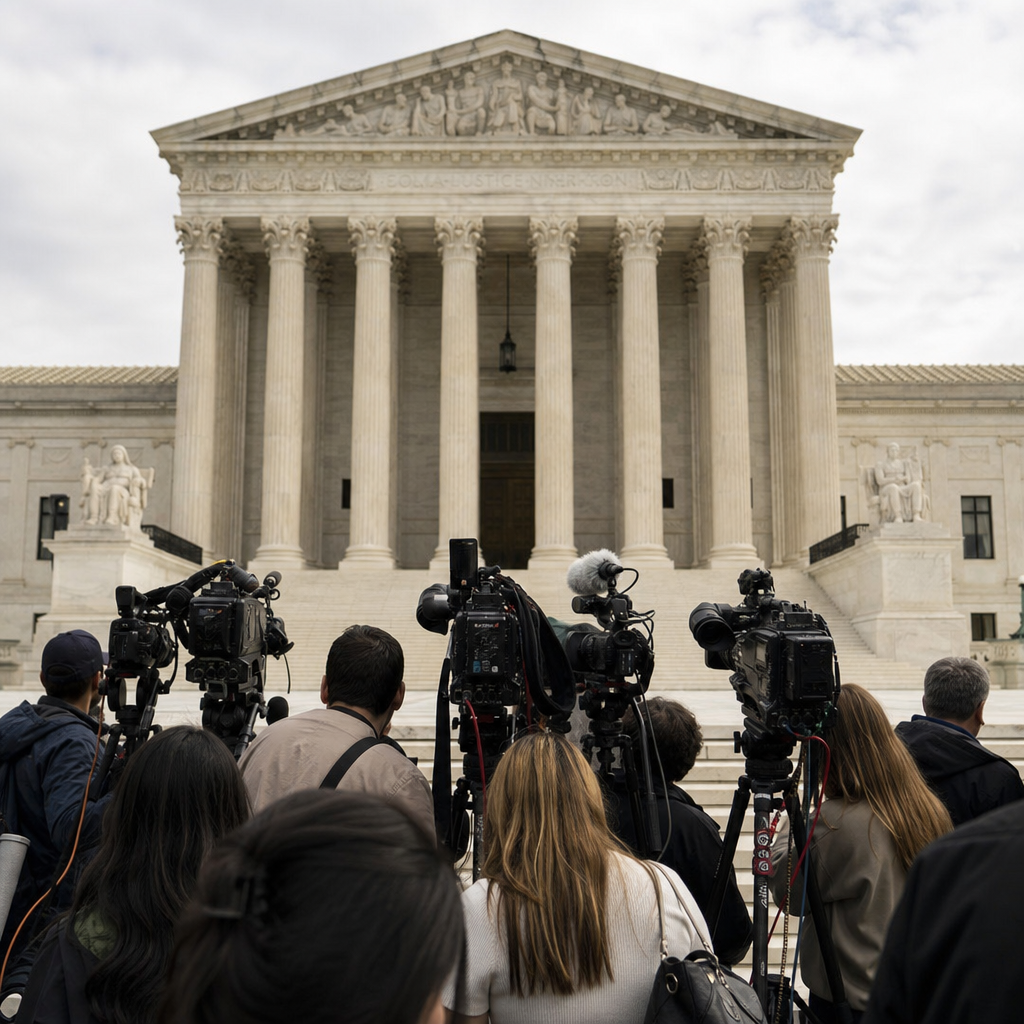
Defamation law sits at the intersection of free speech, democratic accountability, and personal reputation, and no case defines that intersection more clearly than New York Times v. Sullivan. In AP Government and Politics, students encounter the First Amendment as both a shield for expression and a source of conflict when speech harms real people. Defamation of public figures is the part of that story that explains why criticism of officials, campaigns, media coverage, protests, and political advertising receives unusually strong constitutional protection. The central rule from Sullivan, decided by the Supreme Court in 1964, is that a public official who sues for libel must prove “actual malice,” meaning the speaker knew a statement was false or acted with reckless disregard for whether it was false. That standard later expanded to many public figures, not just officeholders.
Understanding why New York Times v. Sullivan still matters requires defining a few terms precisely. Defamation is a false statement of fact that injures reputation. Libel is written defamation; slander is spoken defamation. A public official is generally a government employee with substantial responsibility over public affairs. A public figure may be someone widely known or someone who voluntarily enters a public controversy to influence its outcome. Actual malice does not mean spite, anger, or personal hostility. In practice, it is a demanding constitutional rule about the defendant’s state of mind regarding truth or falsity. I have found that students often confuse careless reporting with actual malice; the Court has repeatedly said negligence alone is not enough.
This doctrine matters because self-government depends on uninhibited debate about those who exercise power and those who seek to shape public opinion. During the civil rights movement, southern officials used libel suits to punish national newspapers for reporting on segregation and police abuse. Without strong constitutional limits, expensive lawsuits can silence criticism even when the underlying reporting concerns matters of urgent public importance. That is why this topic belongs at the center of AP Government and Politics, not at the margins. It connects judicial review, federalism, civil rights, press freedom, campaign speech, and the role of the Supreme Court in setting national rules for democracy. It also remains current as social media, podcasts, cable commentary, and viral misinformation test old principles in new formats.
The Case and Its Constitutional Rule
New York Times v. Sullivan began with a full-page advertisement in the New York Times titled “Heed Their Rising Voices,” which criticized officials in Montgomery, Alabama, for their treatment of civil rights protesters. Some details in the ad were inaccurate. L.B. Sullivan, a city commissioner who supervised the police, was not named directly, but he claimed the ad defamed him and won a large verdict under Alabama law. The Supreme Court reversed unanimously. Justice William Brennan wrote that debate on public issues should be “uninhibited, robust, and wide-open,” and may include “vehement, caustic, and sometimes unpleasantly sharp attacks” on government and public officials.
The constitutional innovation was the actual malice rule. Before Sullivan, many state libel laws made it easier for public officials to recover damages, creating a serious chilling effect on press criticism. The Court held that the First and Fourteenth Amendments require more breathing space for error in public debate. To win, a public official must prove by clear and convincing evidence that the false statement was made with knowledge of falsity or reckless disregard for the truth. Clear and convincing evidence is a heightened burden of proof, stronger than the usual civil standard. Reckless disregard means the publisher in fact entertained serious doubts about the truth or had a high degree of awareness of probable falsity.
That rule did not create a license to lie. Plaintiffs can still win, and some do, but the Constitution demands proof of more than factual inaccuracy and more than poor journalism. In later cases, the Court extended similar protections to “public figures,” including people who command public attention or insert themselves into public controversies. For AP Government students, the key takeaway is simple: the Court elevated free discussion of public affairs above the ordinary state-law interest in protecting reputation, while preserving a path for recovery in truly culpable cases.
How the Standard Expanded Beyond Officials
After Sullivan, the Court had to decide who counts as a public figure and what standard applies to private individuals. In Curtis Publishing Co. v. Butts and Associated Press v. Walker in 1967, the Court extended the actual malice requirement to certain public figures. Later, in Gertz v. Robert Welch, Inc. in 1974, the Court drew a sharper line: private individuals receive greater protection because they have less access to channels of communication and did not usually assume the risk of public scrutiny. States may set their own standards for private-figure defamation, so long as they do not impose liability without fault. However, presumed and punitive damages generally require actual malice.
Gertz also helped explain two kinds of public figures. An all-purpose public figure is famous enough to be considered public for most contexts, such as a major celebrity. A limited-purpose public figure becomes public only for a specific controversy by voluntarily trying to influence its outcome. That distinction matters in modern litigation. A local activist, business executive, or university researcher may not be famous in general, yet still be treated as a public figure in disputes tied to a public controversy they entered prominently.
In practice, courts look closely at role, access, and voluntariness. Did the person seek media attention? Did they speak publicly to shape debate? Were they already central to the controversy before the defamatory statement? Those questions make this area doctrinally rich and sometimes unpredictable. They also explain why the issue keeps returning in cases involving political commentators, election workers, public health experts, and online personalities whose influence may be substantial but irregular.
Why the Rule Protects Democracy
The strongest argument for Sullivan is democratic necessity. Citizens cannot evaluate leaders if criticism of official conduct carries crushing legal risk. Investigative reporting often develops quickly, from imperfect sources, under pressure, and in adversarial conditions. If every factual mistake about public affairs could trigger liability, publishers would avoid hard stories about corruption, police misconduct, campaign finance, and abuse of power. I have seen this principle resonate most when students compare a routine private dispute with reporting on government misconduct; the public value of the latter is unmistakably higher.
The civil rights context proves the point. Southern officials relied on libel law to deter northern media from covering segregation. The legal threat was not just the final verdict but the burden of defending multiple cases in hostile jurisdictions. The Court recognized that speech can be chilled long before judgment is entered. That insight remains relevant in the age of strategic lawsuits, coordinated harassment, and online pile-ons, where process itself can be punitive.
There is also a structural reason the rule matters. Public officials and major public figures typically have better opportunities to respond than ordinary citizens. They can hold press conferences, post on social media, appear on television, and mobilize supporters. The Constitution does not assume they are powerless. By contrast, private individuals generally have fewer tools to repair reputational harm. That asymmetry helps justify stronger protection for speech about public figures while allowing states to provide more room for recovery by private plaintiffs.
What Counts as Actual Malice in Real Cases
Actual malice is difficult to prove because it asks what the defendant actually believed at the time of publication. Courts therefore rely on circumstantial evidence. Notes, emails, source warnings, contradictory documents, deliberate avoidance of obvious facts, and fabricated quotations can all matter. Failure to investigate, standing alone, usually is not enough. But purposeful avoidance may be. If a reporter possesses documents showing a claim is probably false and publishes anyway without checking, that can support actual malice. If an editor invents a quote or knowingly alters a recording, the case becomes much stronger for the plaintiff.
Several later decisions sharpened the standard. In St. Amant v. Thompson (1968), the Court said reckless disregard is not measured by whether a reasonably prudent person would have published; there must be sufficient evidence that the defendant in fact had serious doubts about the truth. In Harte-Hanks Communications v. Connaughton (1989), the Court found actual malice where a newspaper ignored obvious reasons to doubt a key witness and failed to interview another witness who could confirm or deny the accusation. That case is useful because it shows the rule is demanding, not impossible.
| Issue | Not Enough for Actual Malice | May Support Actual Malice |
|---|---|---|
| Investigation | Simple carelessness or rushed reporting | Deliberately avoiding known contradictory evidence |
| Source Reliability | Using a weak source without more proof of doubt | Relying on a source the publisher knows is lying |
| Editing | Minor errors or imprecise wording | Inventing quotes or materially altering facts |
| State of Mind | Hostility toward the plaintiff | Knowledge of falsity or serious subjective doubts |
This distinction is central for exam writing and civic understanding. Hatred is not actual malice. Bias is not actual malice. Even sensationalism is not necessarily actual malice. The constitutional question is narrower and more exacting: did the defendant know the statement was false, or strongly suspect it was false, and publish anyway?
Modern Media, Social Platforms, and New Pressures
Sullivan was decided in a newspaper era, but its logic governs digital communication as well. Today, defamatory statements about public figures spread through livestreams, reposts, newsletters, podcasts, and video clips before professional fact-checking catches up. That speed increases both the risk of reputational harm and the importance of constitutional breathing space. Courts still distinguish between statements of fact and protected opinion, but online speech often blurs the line through irony, memes, and implication. Even so, labels do not control. Calling something an “opinion” does not protect a false assertion of verifiable fact.
Recent high-profile defamation cases show both sides of the doctrine. Public figures still face a high bar, yet media organizations and commentators can be liable when evidence shows they aired claims they knew were false or probably false. Litigation involving election misinformation has underscored how internal messages, editorial warnings, and documented doubts can become decisive. At the same time, many angry plaintiffs lose because they cannot bridge the gap between inaccuracy and actual malice. That is exactly how the system is designed to work.
For students, one modern lesson is that institutional process matters. Newsrooms that preserve notes, follow verification protocols, consult legal review, and correct errors promptly are better positioned both ethically and legally. Individuals posting online rarely have those safeguards. Still, constitutional standards do not disappear because a speaker is independent, partisan, or digital-first. The same core inquiry applies across formats.
Criticisms, Challenges, and Why the Case Endures
Sullivan has critics across the ideological spectrum. Some argue the standard gives media companies and influential speakers too much protection and leaves victims of falsehood with too little recourse. Others say the public-figure doctrine has become too expansive in a media environment where notoriety can be thrust upon someone overnight. A few Supreme Court justices have openly questioned whether the doctrine should be reconsidered, suggesting it lacks firm grounding in the original meaning of the Constitution.
Those criticisms deserve attention, but the alternatives are worse. Lowering the standard for speech about public officials would invite retaliatory suits, especially in polarized environments where officeholders attack unfavorable coverage as fake or defamatory. Replacing actual malice with negligence for public-figure plaintiffs would predictably chill investigative journalism, local reporting, and nonprofit watchdog work. The people harmed first would not be only large national outlets; they would be smaller publishers, freelancers, student journalists, and citizens commenting on public affairs with limited legal budgets.
The enduring strength of Sullivan is that it recognizes a hard truth about democracy: open debate produces mistakes, but fear-driven silence is more dangerous than error. The Constitution therefore accepts some false statements as the price of protecting criticism of power, while still allowing recovery in cases of knowing or reckless falsehood. For AP Government and Politics, that is the lasting lesson. New York Times v. Sullivan still matters because it preserves the space citizens, journalists, advocates, and even opponents need to challenge those who govern. If you are building a strong foundation in civil liberties, start with this case, then connect it to later rulings on public figures, prior restraint, symbolic speech, and campaign-era media conflict.
Frequently Asked Questions
What did New York Times v. Sullivan actually decide, and why is it so important in defamation law?
New York Times v. Sullivan, decided by the U.S. Supreme Court in 1964, established one of the most important constitutional rules in modern defamation law: when a public official sues for libel over statements about their official conduct, they cannot win simply by proving the statement was false and damaging. Instead, they must prove “actual malice,” meaning the statement was published with knowledge that it was false or with reckless disregard for whether it was true or false. That rule dramatically changed the legal landscape because it recognized that open debate about government and public affairs must be protected, even when speakers make mistakes.
The case arose during the civil rights movement, when criticism of public officials in the South was often met with defamation lawsuits designed to intimidate newspapers and activists. The Supreme Court understood that if every factual error in political criticism could lead to crushing liability, speakers would stay silent, and the public would lose access to vigorous debate. By constitutionalizing defamation law through the First Amendment, the Court made clear that freedom of speech and freedom of the press require “breathing space.” In practical terms, Sullivan still matters because it protects journalists, advocacy groups, protest movements, editorial writers, and ordinary citizens who speak out about powerful people and public issues. Without it, the legal risks of criticizing officials and other prominent figures would be much greater, and democratic accountability would be weaker.
What does “actual malice” mean, and why is it harder to prove than ordinary negligence?
In everyday language, “malice” sounds like spite, hostility, or personal ill will. In defamation law, however, “actual malice” is a technical constitutional standard. It does not mean the speaker hated the person they wrote about. It means the plaintiff must show that the defendant either knew the statement was false when publishing it or acted with reckless disregard for the truth. Reckless disregard is not just carelessness, sloppy reporting, or failure to investigate. It means the publisher had serious doubts about the truth of the statement and published it anyway, or purposefully avoided the truth in a way that shows a high degree of awareness of probable falsity.
That makes actual malice much harder to prove than negligence, which generally asks whether someone failed to use reasonable care. A journalist can make an honest mistake, rely on a source that later turns out to be wrong, or misunderstand a fast-moving situation without meeting the actual malice standard. The Constitution tolerates those errors in the context of public debate because the alternative could chill speech on matters of public concern. Courts want to avoid a legal system where fear of being sued causes the press and the public to self-censor. For AP Government and Politics students, this distinction is crucial: the First Amendment often protects even flawed speech when the subject is public life, because democratic debate depends on room for error as well as room for truth.
Who counts as a public figure, and how is that different from a private person in a defamation case?
Not everyone who appears in the news is automatically treated the same under defamation law. Courts generally divide plaintiffs into categories such as public officials, all-purpose public figures, limited-purpose public figures, and private individuals. Public officials are government actors whose positions invite public scrutiny, such as police chiefs, mayors, governors, and other officials involved in public affairs. All-purpose public figures are people with pervasive fame or influence, like major celebrities or nationally known business leaders. Limited-purpose public figures are individuals who voluntarily inject themselves into a particular public controversy and become prominent in that issue, even if they are not famous in every part of their lives.
This distinction matters because public officials and public figures usually must prove actual malice, while private individuals often face a lower burden under state law, such as negligence, at least for compensatory damages. The reason is rooted in constitutional balancing. Public figures usually have greater access to media or public platforms to rebut false statements, and they often assume a greater risk of scrutiny by stepping into public controversy. Private individuals, by contrast, are considered more vulnerable to reputational harm and less able to defend themselves in public. Sullivan and later cases reflect the idea that the law should provide more breathing room when speech concerns people who shape public debate, while offering somewhat greater protection to ordinary people who did not seek the spotlight.
Why does New York Times v. Sullivan still matter today in an era of social media, political ads, and nonstop commentary?
Sullivan remains highly relevant because the modern public sphere is faster, louder, and more decentralized than ever. Political accusations no longer appear only in newspapers and broadcast reports; they spread through social media posts, podcasts, livestreams, online videos, campaign ads, blogs, and viral clips. In that environment, false statements can travel quickly, but so can criticism, investigative reporting, and citizen commentary that hold powerful actors accountable. The actual malice rule continues to shape how courts evaluate defamation claims involving politicians, commentators, advocacy organizations, and media outlets. It helps preserve a zone of constitutional protection for contentious speech about elections, protests, policing, public health, and other issues at the heart of self-government.
At the same time, Sullivan matters because it is under renewed debate. Some judges, scholars, and public figures argue that the rule is too protective and makes it too difficult for public figures to recover for reputational harm in a digital age full of misinformation. Others respond that weakening Sullivan would invite strategic lawsuits against critics and investigative reporters, especially by powerful plaintiffs with money and influence. That debate shows exactly why the case endures: it forces Americans to confront a central constitutional question. How much error should a democracy tolerate in order to protect robust criticism of those who wield power? Sullivan’s answer is that the risk of some false statements is less dangerous than a system in which fear of liability suppresses speech on public affairs.
How should students understand the balance between free speech and protecting reputation when discussing defamation of public figures?
Students should begin with the basic insight that both interests are real and important. Reputation matters because false accusations can damage careers, relationships, and public trust. At the same time, free speech matters because democratic government depends on the ability of people to criticize officials, challenge dominant narratives, expose misconduct, and debate public policy without constant fear of punishment. Defamation law is where those values collide. Sullivan does not say reputation is unimportant; it says that when the plaintiff is a public official or public figure and the speech concerns public matters, the Constitution requires a higher threshold before liability can be imposed.
That balance reflects a broader principle in American constitutional law: the First Amendment does not protect only calm, polished, perfectly accurate speech. It also protects sharp criticism, heated political rhetoric, investigative reporting based on incomplete information, and debate that may contain factual error but is not knowingly or recklessly false. For students in AP Government and Politics, this doctrine is a concrete example of how constitutional rights often involve tradeoffs. A legal system that made it easy for public officials to sue critics might better protect reputation in some cases, but it could also shield abuse of power from exposure. Sullivan still matters because it teaches that democracy requires tolerance for some mistaken speech in order to preserve fearless speech. That principle remains essential when evaluating media coverage, campaign messaging, protest movements, and public accusations in a constitutional system built on open debate.