
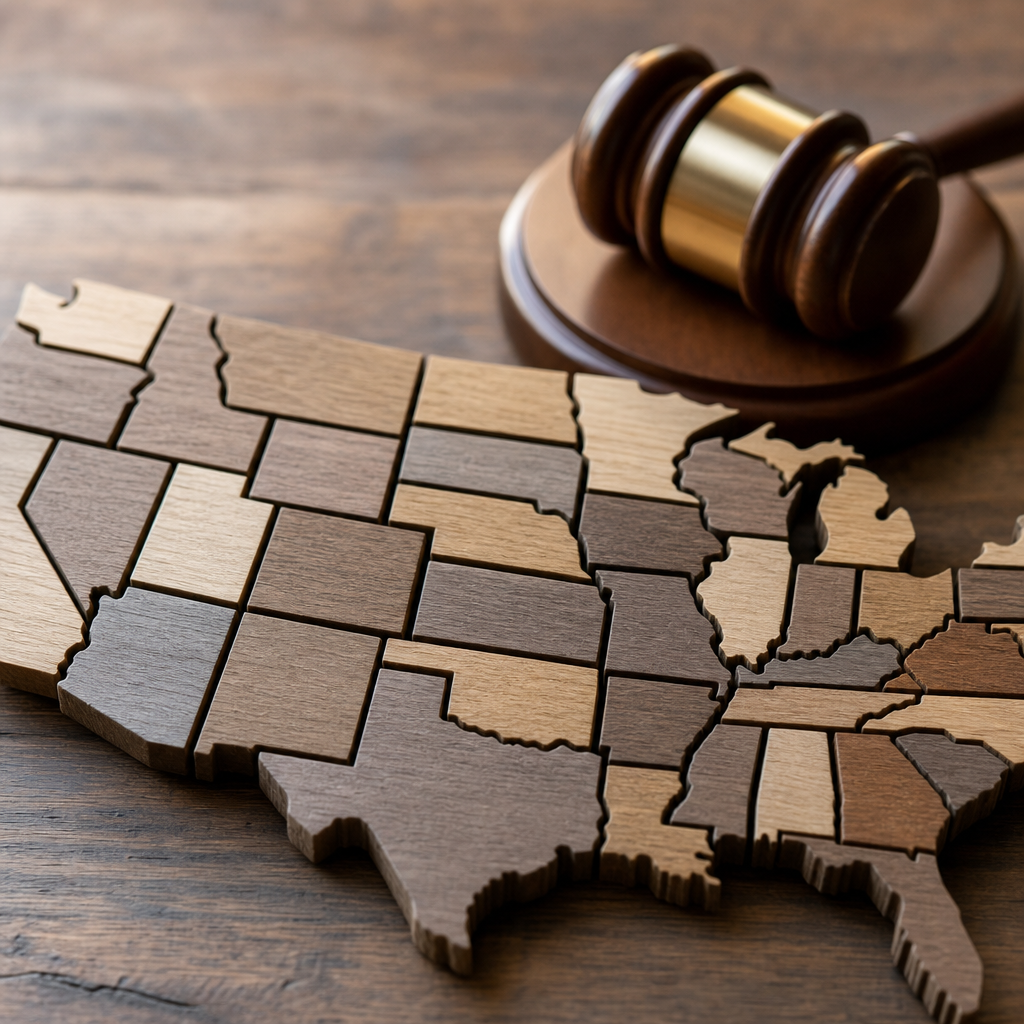
Data privacy policy in the United States is fragmented because power is divided across federal and state governments, industries are regulated by separate statutes, and courts, agencies, and lawmakers have never agreed on one national standard. In practical terms, “data privacy” means the rules that govern how organizations collect, use, share, secure, retain, and delete personal information. A “policy” can refer to legislation, agency rulemaking, court doctrine, or company compliance programs. The United States matters in this debate because it is home to many of the world’s largest technology, finance, health, and advertising firms, yet it still lacks a single comprehensive federal privacy law comparable to the European Union’s General Data Protection Regulation.
I have worked with privacy compliance teams that had to map one customer dataset against state consumer privacy laws, federal sector rules, contractual obligations, and cybersecurity standards at the same time. That is the daily reality behind the word fragmented. A hospital worries about HIPAA, a bank about the Gramm-Leach-Bliley Act, a school about FERPA, a children’s app about COPPA, and a retailer selling to California residents about the California Consumer Privacy Act and its later amendments. Each framework defines personal data differently, grants different rights, and assigns different enforcement powers.
This fragmentation matters for AP Government and Politics because privacy policy reveals how American federalism, separation of powers, lobbying, and constitutional values operate in real life. It also sits at the center of broader questions covered in this subtopic hub: surveillance, consumer protection, platform governance, administrative power, federal preemption, and civil liberties. Students studying miscellaneous public policy issues often encounter privacy as a case where institutions overlap rather than produce a clean national answer. Understanding why the system is so divided helps explain not only privacy law, but also how American government makes policy under pressure from technology, markets, and public opinion.
Federalism is the first source of fragmentation
The clearest reason for fragmented U.S. privacy policy is federalism. States possess general police powers, while the federal government acts through enumerated powers such as regulating interstate commerce. That structure encourages states to legislate when Congress does not. California moved first with broad consumer privacy rights. Virginia, Colorado, Connecticut, Utah, Texas, Oregon, Montana, and others followed with their own statutes, definitions, exemptions, cure periods, and enforcement mechanisms. The result is not fifty identical copies. It is a patchwork.
For example, one state may define “sale” of personal data broadly enough to cover ad-tech disclosures, while another focuses on monetary exchange. Some state laws give consumers a right to opt out of profiling tied to significant decisions. Others emphasize targeted advertising and data sharing. Sensitive data categories also vary. In implementation, businesses create state-specific notices, geolocation logic, and rights-request workflows because one uniform process may not satisfy every jurisdiction. This is a classic federalism outcome: policy innovation, followed by inconsistency.
Congress could reduce fragmentation through preemption, but that has been politically difficult. A strong federal law might wipe out tougher state rules, which many state officials oppose. A weaker law layered on top of state statutes could add another compliance tier rather than simplify anything. That conflict between national uniformity and state autonomy is one of the central themes in American politics, and privacy policy displays it vividly.
Sector-based law created separate privacy silos
The United States built privacy law by sector rather than through one comprehensive statute. Instead of starting with a general right covering all personal data, lawmakers addressed specific contexts where harm seemed urgent. Health information became regulated through HIPAA. Financial data through the Gramm-Leach-Bliley Act and the Fair Credit Reporting Act. Children’s data through COPPA. Educational records through FERPA. Communications privacy through the Electronic Communications Privacy Act. Video rental records through the Video Privacy Protection Act. Driver data through the Driver’s Privacy Protection Act.
This approach solved immediate problems, but it produced uneven protection. The same person can receive strong privacy protections from one organization and weak protections from another based entirely on industry category. A medical record held by a hospital is tightly regulated, but similar wellness information collected by a fitness app may fall outside HIPAA. Bank account information triggers financial privacy duties, while comparable behavioral data in retail loyalty programs may be governed mostly by state consumer law and unfair or deceptive practices standards.
In compliance practice, sector rules often overlap without aligning. A university health clinic may touch FERPA, HIPAA, state breach notification law, and vendor contract requirements. A fintech company may face banking guidance, state privacy law, anti-money-laundering recordkeeping, and Federal Trade Commission expectations. Fragmentation persists because each sector has its own political history, regulator, and risk model. Once those silos exist, they are hard to replace with one horizontal framework.
Different institutions regulate privacy in different ways
Privacy policy in the United States is not made by Congress alone. It is shaped by the Federal Trade Commission, Department of Health and Human Services, Consumer Financial Protection Bureau, Federal Communications Commission, state attorneys general, state privacy agencies, and courts. Each institution uses different legal tools. Congress passes statutes. Agencies issue rules, guidance, and enforcement actions. Courts interpret standing, consent, harm, and constitutional limits. State legislatures revise rights and remedies. This multi-institution process guarantees complexity.
The Federal Trade Commission has been especially important because it uses its authority over unfair or deceptive acts or practices to police privacy failures. If a company promises not to share data and then shares it, that can be deception. If it exposes sensitive data through poor security, that can be unfairness. Over decades, FTC consent orders effectively created a common law of privacy and data security, but case-by-case enforcement is not the same as a comprehensive code. It fills gaps without eliminating them.
Courts add another layer. Federal standing doctrine after cases such as Spokeo and TransUnion has affected who can sue over privacy harms in federal court. State courts may interpret similar injuries differently. Constitutional doctrine also distinguishes state action from private conduct, limiting how directly constitutional privacy rights apply to companies. When agencies, legislatures, and courts all move on separate timelines, fragmentation is the predictable result.
Constitutional values pull policy in competing directions
American privacy policy is fragmented partly because it sits between competing constitutional commitments. Citizens want protection from surveillance and misuse of personal information, but lawmakers also defend free speech, innovation, property rights, law enforcement powers, and limited government. Data is not just a consumer issue; it is also speech, commerce, evidence, and infrastructure. That makes broad consensus difficult.
First Amendment concerns arise when laws restrict the collection, publication, or transfer of information. Courts have treated some data flows as protected expression, especially where truthful information is involved. At the same time, the Fourth Amendment shapes expectations about government searches, not private-sector tracking. The Constitution therefore offers partial privacy protection, but not a full blueprint for commercial data governance. That gap invites statutes, and statutes differ because political actors prioritize values differently.
National security further complicates the picture. Intelligence collection, law enforcement access, and cybersecurity programs often expand government interest in data retention and sharing. Civil libertarians push back, citing risks of mission creep and disproportionate surveillance. Businesses may support privacy in consumer markets while cooperating with legal process and security mandates. In legislative negotiations, these value conflicts rarely disappear. They become carve-outs, exceptions, and special procedures, which deepen fragmentation instead of resolving it.
Business models and lobbying shape the patchwork
Privacy law develops in the shadow of business incentives. The modern digital economy relies heavily on data-driven advertising, personalization, fraud prevention, analytics, and machine learning. Large firms rarely oppose privacy in principle; they oppose rules that disrupt profitable data flows or create liability without clear standards. Industry groups often prefer one federal law, but usually only if it preempts stricter state rules and limits private lawsuits. Consumer advocates typically want stronger rights, data minimization, and meaningful enforcement. Those positions are hard to reconcile.
In my experience, legislative language often reflects this tug-of-war in very technical ways. Definitions of “consent,” “sale,” “share,” “service provider,” “processor,” and “sensitive personal information” determine whether a company must redesign products or simply update notice language. Lobbying therefore concentrates on definitions, exemptions, and enforcement triggers, not just headline principles. Small wording changes can preserve an ad-tech model, shield employee data, exempt nonprofit institutions, or narrow algorithmic accountability requirements.
The result is a set of compromises shaped by sector influence and local politics. California’s stronger regime reflects both consumer advocacy and its role as a major technology regulator. Other states have favored more business-friendly approaches. Congress remains divided because a national bill would redistribute compliance costs and competitive advantages across industries. Fragmentation persists because many powerful actors can live with the patchwork, even while publicly criticizing it.
How the current patchwork works in practice
For students and researchers using this miscellaneous policy hub, the easiest way to understand fragmentation is to see how different laws answer basic questions differently: who is covered, what counts as personal data, what rights exist, and who enforces the rule.
| Framework | Main focus | Who it covers | Key rights or duties | Primary enforcement |
|---|---|---|---|---|
| HIPAA | Health information | Covered entities and business associates | Use and disclosure limits, security safeguards, access rights | HHS Office for Civil Rights |
| GLBA | Financial privacy | Financial institutions | Privacy notices, safeguards, limits on sharing | Federal banking regulators, FTC, CFPB |
| COPPA | Children under 13 | Sites and services directed to children | Parental notice and verifiable consent | FTC and state attorneys general |
| CCPA/CPRA | Consumer data broadly | Qualifying businesses handling California residents’ data | Access, deletion, correction, opt-out, sensitive data protections | California Privacy Protection Agency and attorney general |
This table shows why “U.S. privacy law” is not one thing. Coverage depends on sector, age, geography, and business structure. Enforcement may come from a federal agency, a state regulator, or both. Some laws emphasize notice and choice; others impose security, purpose limitation, or contractual controls. That variation is exactly why the system feels disjointed to consumers and expensive to organizations.
What fragmentation means for citizens, government, and exams
For ordinary people, fragmented privacy policy means rights are uneven and often hard to exercise. A resident of one state may be able to opt out of targeted advertising, while a resident of another state cannot. A patient may have clear rights to obtain medical records, yet little visibility into how a consumer app profiles behavior. Privacy notices are inconsistent because legal obligations are inconsistent. This weakens trust and makes informed consent less realistic than policymakers often assume.
For government, fragmentation means duplicated enforcement and recurring policy fights over preemption, agency authority, and private rights of action. State attorneys general have become major privacy actors because they can move faster than Congress. Agencies develop expertise, but their jurisdiction is bounded. Courts then decide whether plaintiffs have standing, whether rules exceed statutory authority, and whether state laws conflict with federal regimes. In AP Government terms, privacy is a vivid example of shared power producing both responsiveness and inefficiency.
For students, this topic connects to multiple core concepts. Federalism explains why states innovate. Bureaucracy explains how agencies fill statutory gaps. Interest groups explain why bills stall or narrow. Civil liberties explain why surveillance and data governance provoke constitutional debate. If you are building out notes for the broader miscellaneous section of AP Government and Politics, treat privacy policy as a hub issue that links technology, markets, rights, and institutions. The practical lesson is simple: U.S. data privacy policy is fragmented because American government itself is fragmented. Follow this subtopic hub into related articles on surveillance, consumer protection, administrative agencies, and state versus federal power to see how the same structural tensions appear across modern public policy.
Frequently Asked Questions
Why is data privacy policy in the United States so fragmented?
The short answer is that the United States never built a single, comprehensive national privacy law. Instead, privacy rules developed in pieces over time, shaped by the country’s federal system, industry-specific regulation, and case-by-case legal traditions. Power is split between the federal government and the states, so both levels can create rules affecting personal information. That means organizations often face overlapping obligations from Congress, federal agencies, state legislatures, state attorneys general, and courts.
Another major reason is that U.S. privacy law grew sector by sector rather than through one unified framework. Health information is governed differently from financial data, student records, children’s data, employment data, and telecommunications information. Laws such as HIPAA, GLBA, FERPA, COPPA, and the Fair Credit Reporting Act were written to address particular risks in particular industries, not to create a universal privacy code. As a result, what counts as protected data, what duties apply, and what enforcement mechanisms exist can vary dramatically depending on who is collecting the data and why.
Fragmentation is also reinforced by institutional disagreement. Lawmakers, regulators, courts, businesses, and advocates have not consistently agreed on what privacy should prioritize: consumer control, civil rights, cybersecurity, innovation, competition, or national security. Because there has been no stable consensus on a single national standard, the legal landscape has continued to evolve in a patchwork. In practice, “data privacy policy” in the United States includes legislation, agency rules, court decisions, and internal company compliance programs, all operating at once and not always in harmony.
What does “data privacy policy” actually mean in the U.S. context?
In the United States, “data privacy policy” is broader than many people assume. It does not refer only to a website privacy notice or a company’s public-facing statement. At a practical level, it means the full set of rules governing how organizations collect, use, share, store, secure, retain, and delete personal information. That includes legal requirements imposed by statutes and regulations, but it also includes enforcement guidance, court interpretations, and internal operational policies that companies adopt to stay compliant.
For example, a privacy policy in the legislative sense may come from a federal or state statute telling companies when consent is required, what disclosures must be made, or when individuals can access or delete their information. In the regulatory sense, it may come from agency rulemaking or enforcement, where an agency interprets unfair or deceptive practices, sets security expectations, or defines how sensitive data must be handled. In the judicial sense, privacy policy can also be shaped by court doctrine, including decisions about standing, damages, wiretapping, biometric privacy, or constitutional limits on government access to data.
On top of that, companies create their own compliance policies to translate legal obligations into actual business processes. Those internal policies may cover data mapping, vendor management, retention schedules, employee access controls, incident response, and deletion protocols. So when people say U.S. data privacy policy is fragmented, they mean the entire governance structure is fragmented: the source of the rule, the scope of the rule, and the way the rule is enforced all vary depending on the context.
How do federal and state governments contribute to the patchwork of privacy laws?
Federalism is one of the biggest reasons U.S. privacy policy looks inconsistent. The federal government can regulate privacy in certain areas, especially where interstate commerce or national standards are involved, but states retain broad authority to regulate businesses and protect residents within their borders. This creates a layered system in which federal law may cover some topics, partially preempt state laws in some circumstances, and leave many other issues for states to handle on their own.
States have become especially active because Congress has not enacted a single nationwide consumer privacy law that fully covers the field. As a result, states have moved ahead with their own comprehensive privacy statutes, data breach notification laws, biometric laws, health data rules, and consumer rights frameworks. California is the most influential example, but many other states have adopted their own approaches with different definitions, exemptions, enforcement models, and consumer rights. A business operating nationally may have to compare multiple state laws to decide when to offer access rights, opt-outs, corrections, appeals, or special treatment for sensitive information.
This dual structure means companies often ask not just, “What does U.S. law require?” but “Which U.S. law, in which state, for which category of data, and for which type of entity?” Sometimes federal law sets a floor; sometimes it overrides state law in limited ways; sometimes state law goes further. The result is a compliance environment where geography matters, and where privacy obligations can change depending on where a consumer lives, where the business operates, and what type of data is involved.
Why doesn’t the United States have one national privacy standard like some other countries?
There is no single reason, but several forces have prevented a unified national standard from emerging. Politically, Congress has struggled for years to agree on core design questions: whether federal law should override stronger state protections, whether individuals should be able to sue directly, how to treat small businesses, whether employee and business-to-business data should be covered, and how privacy law should address targeted advertising, artificial intelligence, and data brokers. Even when there is broad agreement that privacy protections should improve, these structural disagreements often stop legislation from crossing the finish line.
Historically, the United States also approached privacy differently from jurisdictions that adopted omnibus frameworks. Rather than treating privacy as one comprehensive regulatory domain from the start, U.S. lawmakers responded to specific harms as they arose. That produced focused laws for health care, finance, children, credit reporting, and other sectors, but not a general law for all personal data processing. Courts and agencies then filled in gaps through consumer protection, tort law, constitutional law, and enforcement actions, which further deepened the layered and decentralized character of the system.
There is also a policy debate about flexibility versus uniformity. Some stakeholders argue that a national standard would simplify compliance and give consumers clearer rights. Others worry that a federal law could weaken stronger state laws or fail to adapt quickly to new technologies and local concerns. Until lawmakers agree not only that there should be a federal standard, but also what it should contain and whether it should preempt state innovation, fragmentation is likely to continue.
What does this fragmented privacy system mean for businesses and consumers in practice?
For businesses, fragmentation means privacy compliance is rarely a one-document exercise. Organizations need to understand what data they collect, where it comes from, why they use it, how long they keep it, who they share it with, and which laws apply to each use case. A company may need one set of controls for health-related information, another for financial data, another for children’s data, and still another for state consumer privacy rights. It may also need to watch guidance from agencies, litigation trends in the courts, and updates from multiple state legislatures. That creates operational complexity, legal uncertainty, and significant compliance costs.
For consumers, the fragmented system can be confusing and uneven. People may have strong rights in one state and limited rights in another. They may be able to opt out of certain data uses with one company but not another, depending on the company’s industry, size, or legal obligations. Even the meaning of “personal information” or “sensitive data” can differ across laws. In other words, a person’s privacy protection in the United States often depends on context rather than on one universal baseline.
At the same time, fragmentation has produced both innovation and inconsistency. States can act quickly to address emerging risks, and agencies can target harmful practices without waiting for Congress. But the downside is a system that is harder to navigate, harder to explain, and harder to enforce uniformly. That is why the debate over U.S. privacy reform remains so active: the current patchwork reflects the country’s legal structure and history, but it also leaves many businesses and consumers wanting greater clarity, consistency, and predictability.