
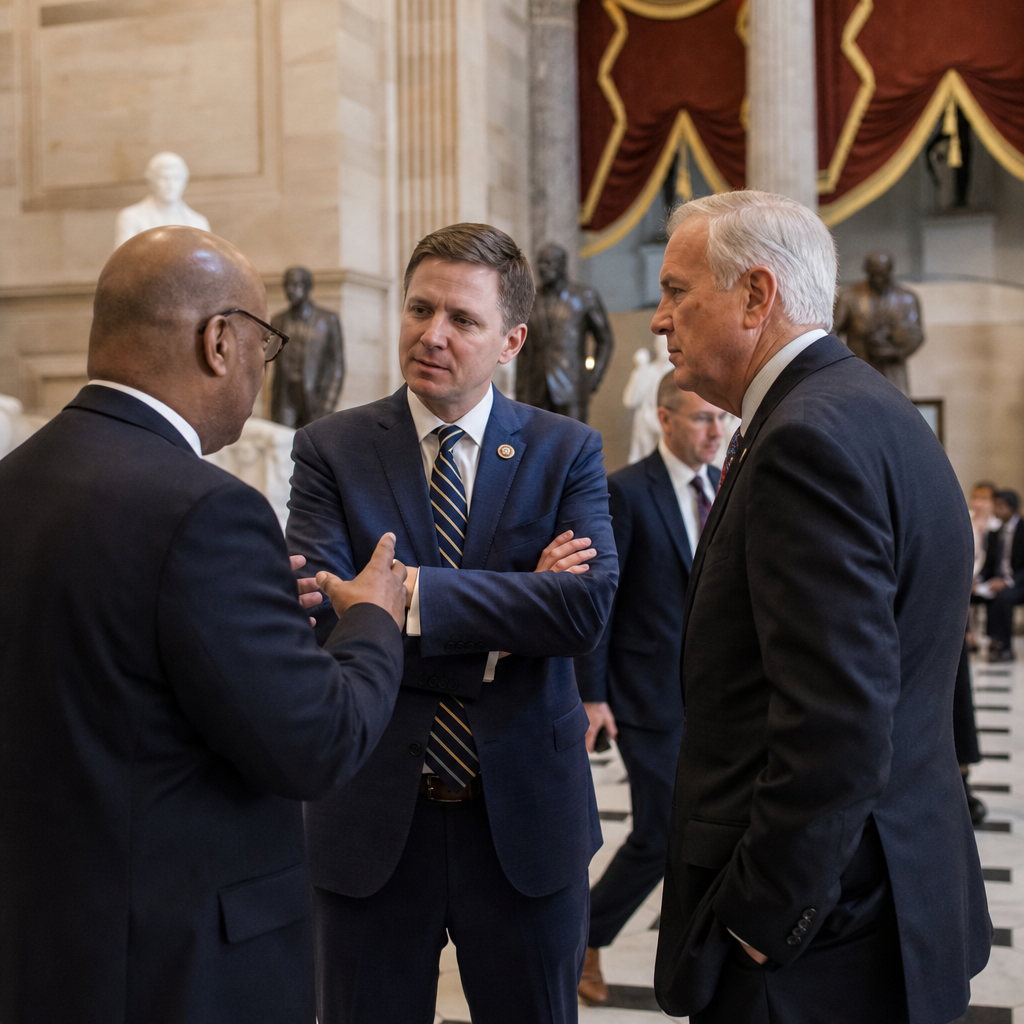
Congressional caucuses are one of the least understood but most influential parts of the United States Congress. In plain terms, a congressional caucus is a group of lawmakers who organize around a shared interest, identity, ideology, region, industry, or policy goal. Some caucuses are formal party organizations inside the House or Senate, while many others are informal issue groups that meet, coordinate messaging, build coalitions, and push legislation. For students in AP Government and Politics, caucuses matter because they show how power actually works beyond the neat diagram of House, Senate, president, and courts. They connect members across committees, across states, and sometimes across party lines, shaping agendas in ways the Constitution never mentions.
When I have explained Capitol Hill to students and first-time policy staff, caucuses are often the missing piece that makes everything click. A bill does not move only because a committee chair likes it. It moves because a network forms around it: members recruit cosponsors, outside groups supply research, staff draft talking points, and caucus meetings create a place to align strategy. That is why caucuses are sometimes called the hidden networks of Capitol Hill. They are not hidden because they are secret. Many are public, have websites, publish member lists, and hold events. They are hidden because casual observers focus on floor votes and televised hearings, while much of the real relationship-building happens in smaller, quieter venues.
Understanding congressional caucuses also helps clarify several key political science terms. A caucus can mean a meeting of party members to choose leaders or strategy, but in Congress it often refers to a member organization. The Congressional Member Organization, or CMO, is the House term for many issue-based caucuses. In the Senate, informal working groups operate under different rules and often with less formal recognition. A caucus is not the same as a committee. Committees have jurisdiction, can hold official hearings, and mark up bills. Caucuses generally do not have formal legislative authority. Their strength comes from coordination, expertise, signaling, and coalition pressure.
This matters for anyone studying how representation works in American government. Caucuses give members more ways to represent constituents. A lawmaker from a farm district may join the Congressional Rural Caucus, a member with many veterans may work through veterans-focused groups, and Black, Hispanic, Asian Pacific American, women’s, or LGBTQ+ caucuses may elevate concerns that traditional power structures have historically overlooked. At the same time, caucuses can fragment Congress, reinforce ideological camps, and amplify interest-group influence. To understand modern lawmaking, oversight, and party conflict, you need to understand caucuses.
What congressional caucuses are and how they function
The simplest way to think about a congressional caucus is as an organized network of members with a common purpose. That purpose may be broad, such as promoting bipartisan problem-solving, or highly specific, such as advancing kidney disease research, protecting the Great Lakes, or strengthening ties with a foreign ally. In practice, caucuses serve five main functions: information sharing, agenda setting, coalition building, member signaling, and constituent representation. Members join because caucuses give them issue expertise, relationships, and visibility that committee assignments alone cannot provide.
Most caucuses are voluntary. A member signs on, attends briefings or events, receives policy memos, and may lend their name to letters, press conferences, and legislative pushes. Some caucuses are bipartisan by design, which can make them attractive in an era of polarization. Others are ideological or party-centered, such as the House Freedom Caucus or the Congressional Progressive Caucus, and they use collective action to influence leadership negotiations. In those cases, a caucus can become a voting bloc. When a bloc is large enough or strategically located, it can shape budget deals, leadership elections, and major bills.
Staff involvement is crucial. On Capitol Hill, member offices rely heavily on legislative assistants, legislative directors, communications staff, and committee aides. Caucus activity often runs through these staff networks. A health caucus, for example, may host a briefing with the Centers for Disease Control and Prevention, patient advocates, and researchers from the National Institutes of Health. Staff leave with data, draft amendments, and a list of offices to contact. None of that guarantees a bill becomes law, but it increases the chances that an issue gets airtime and policy attention.
Caucuses also create shortcuts in a crowded institution. Congress deals with thousands of bills and a relentless stream of constituent demands. Members cannot master every topic. A caucus helps them identify trusted colleagues and shared priorities. If a freshman member wants to learn about semiconductor supply chains, wildfire management, or maternal health, joining a relevant caucus is one of the fastest ways to get oriented. That is why caucuses are often more practical than they appear from the outside.
Types of caucuses in Congress
Not all caucuses are alike, and the differences matter. Party caucuses are the formal organizations that structure internal party life. In the House, Democrats and Republicans use caucus or conference meetings to choose leaders, coordinate messaging, and debate strategy. Issue caucuses focus on public policy areas such as climate, national security, addiction recovery, or small business. Identity-based caucuses organize lawmakers around shared backgrounds or communities, including the Congressional Black Caucus, Congressional Hispanic Caucus, and Congressional Asian Pacific American Caucus. Regional caucuses unite members with geographic interests, such as western water policy or coastal resilience. Finally, ideological caucuses seek to move their party or the chamber in a preferred direction.
These categories often overlap. The Congressional Black Caucus is identity-based, but it is also a major policy actor with legislative priorities and messaging power. The House Freedom Caucus is ideological, but it also affects party leadership and procedural strategy. The Problem Solvers Caucus defines itself around bipartisan dealmaking, yet its influence depends on ideological moderation and strategic leverage. In other words, a caucus is best understood not by its label alone but by how it uses membership, media attention, and legislative timing.
| Type of caucus | Main purpose | Typical example | How it influences Congress |
|---|---|---|---|
| Party | Organize members within a party | House Democratic Caucus | Selects leaders, coordinates agenda, shapes messaging |
| Ideological | Advance a political philosophy | Congressional Progressive Caucus | Acts as a voting bloc, pressures leadership, proposes policy frameworks |
| Identity-based | Represent communities and shared experiences | Congressional Black Caucus | Elevates underrepresented issues and influences appointments and priorities |
| Issue-based | Promote a specific policy area | Congressional Diabetes Caucus | Educates members, builds cosponsorship, supports oversight and funding |
| Regional | Defend geographic interests | Northeast-Midwest Congressional Coalition | Coordinates on transportation, environment, and regional development |
For AP Government and Politics, this variety is important because it reveals that representation in Congress is layered. Members represent districts, parties, committees, and often caucuses at the same time. Those loyalties can align, but they can also conflict. A member may face pressure from party leaders, committee chairs, a district industry, and an ideological caucus all at once. Studying caucuses makes those cross-pressures visible.
How caucuses influence legislation, oversight, and party leadership
Caucuses influence legislation mainly by organizing attention. They identify policy demands, convert them into talking points and draft text, then build a coalition large enough to matter. This often starts before the public sees anything. A caucus may circulate a dear colleague letter, ask members to cosponsor a bill, or request report language in an appropriations package. In budget politics, language inserted into a committee report can be nearly as important as statutory text because agencies and stakeholders read it closely.
Real-world examples show how this works. The Congressional Black Caucus has historically pushed voting rights, criminal justice reform, environmental justice, and health equity issues onto the national agenda. The Congressional Progressive Caucus has used its size to negotiate over social spending and climate provisions. The House Freedom Caucus has repeatedly shaped government funding fights by signaling that it may withhold support unless leadership changes course. Even when such caucuses do not win every demand, they change the bargaining range. Leadership must count their members, anticipate defections, and design compromises around them.
Oversight is another area where caucuses matter. While only committees hold official hearings, caucus members often coordinate questions, spotlight neglected problems, and pressure agencies through letters and briefings. A veterans caucus may call attention to delays in health services. A cybersecurity caucus may elevate concerns about federal network vulnerabilities and critical infrastructure risks. These interventions can affect inspector general reviews, Government Accountability Office studies, and future committee agendas. In that sense, caucuses are feeders into formal oversight.
Leadership politics can be even more significant. In a narrowly divided House, a small caucus can become pivotal. If a bloc withholds votes for speaker or threatens to oppose a rule, it gains negotiating leverage. That leverage may produce rules changes, committee assignments, or policy promises. I have seen staff treat caucus math almost like whip math, especially during high-stakes votes. The numbers do not just indicate preferences; they signal whether leadership has room to maneuver. That is why caucuses, though unofficial in many cases, can wield very official power.
Benefits, criticisms, and what students should watch for
The strongest argument for congressional caucuses is that they improve representation and expertise. Congress is too large and policy problems are too specialized for members to rely only on party labels and committees. Caucuses help legislators learn, coordinate, and speak for communities that might otherwise be sidelined. They also create openings for bipartisan work. Some of the most constructive Hill activity happens in issue caucuses where members share a practical concern even if they disagree on larger ideology.
There are, however, real criticisms. Some caucuses exist mostly on paper. Others become vehicles for symbolism rather than lawmaking. Because caucuses often work closely with advocacy groups, businesses, and nonprofits, critics worry about access and influence. House rules generally restrict CMOs from having separate office space or accepting certain support, but outside groups can still shape caucus agendas through events, research, and coalition campaigns. Students should therefore ask a basic question: who benefits when a caucus highlights an issue, and who is supplying the information?
Another limitation is that caucuses cannot replace institutional authority. A caucus may generate momentum, yet a hostile committee chair, a closed rule, Senate filibuster dynamics, or presidential opposition can stop legislation. In polarized periods, bipartisan issue caucuses may produce strong analysis but little statutory change. Conversely, ideological caucuses may gain attention precisely because polarization gives disciplined blocs more leverage. The result is a paradox: caucuses can make Congress more responsive and more fragmented at the same time.
For AP Government and Politics students, the best way to analyze caucuses is to connect them to larger course concepts. They illustrate linkage institutions by connecting citizens, groups, and lawmakers. They reveal how informal structures shape formal institutions. They show descriptive representation and substantive representation in action. They also help explain why political outcomes are not determined solely by constitutional design. If you want to understand how Congress actually works, follow the caucuses, the staff networks behind them, and the coalitions they build.
Congressional caucuses are hidden networks only if you stop at the surface of American government. Once you look closely, they are everywhere: in policy rollouts, leadership fights, oversight campaigns, and the daily work of representation. They do not replace parties, committees, or elections, but they connect all three. A caucus can educate members, amplify neglected voices, organize issue coalitions, and sometimes force national leaders to negotiate. It can also narrow debate, mirror polarization, or give well-organized interests another route into the policymaking process. That balance is exactly why caucuses deserve serious study.
The key takeaway is simple. To understand Congress, do not look only at formal powers. Look at the networks that turn preferences into pressure. Ask which caucuses matter on an issue, who belongs to them, what resources they bring, and whether they can act as a voting bloc or an information hub. Those questions will tell you far more about legislative reality than a civics chart alone. For a strong AP Government and Politics foundation, use this article as your starting hub, then keep tracing how caucuses interact with committees, parties, interest groups, and elections across the broader subject.
Frequently Asked Questions
What is a congressional caucus, and how is it different from a political party?
A congressional caucus is a group of members of Congress who organize around a shared interest, policy goal, identity, geographic concern, or ideological viewpoint. Unlike the major political parties, which structure leadership, committee assignments, and floor strategy across Congress, caucuses are usually narrower and more specialized. They can focus on issues such as agriculture, climate policy, veterans’ affairs, small business, regional economic development, or the interests of particular communities. Some caucuses are formal and long-standing, while others are informal coalitions that meet as needed to coordinate strategy and messaging.
The key difference is that political parties are the main organizing institutions of Congress, while caucuses operate within and alongside those party structures. A Democrat and a Republican may oppose each other on most broad party issues but still work together in the same caucus if they represent similar districts or care about the same policy area. In that way, caucuses often create cross-party networks that do not fit neatly into the usual partisan picture. For students of AP Government and politics, caucuses are important because they show that influence in Congress does not come only from party leaders or committees. A great deal of coordination happens through these less visible groups.
Why are congressional caucuses considered so influential if many people know very little about them?
Congressional caucuses are influential because they help lawmakers organize power around specific issues before legislation ever reaches the spotlight. They give members a place to share information, build expertise, coordinate talking points, and develop a common strategy. When several lawmakers act together through a caucus, they can amplify an issue that might otherwise receive little attention from party leaders or committee chairs. In practical terms, caucuses can shape hearings, attract media coverage, pressure congressional leadership, and help gather support for bills and amendments.
They are often described as “hidden networks” because much of their work happens behind the scenes. A caucus may hold briefings with experts, circulate policy memos, meet with advocacy groups, or quietly persuade colleagues to support a proposal. These activities do not always make headlines, but they can affect how members think about an issue and how legislative coalitions are built. In some cases, a caucus helps turn a niche concern into a national legislative priority. Their influence comes less from formal constitutional power and more from organization, relationships, issue specialization, and the ability to unite members who might otherwise act alone.
Are all congressional caucuses bipartisan, or do some operate along party and ideological lines?
Not all congressional caucuses are bipartisan. Some are intentionally bipartisan and are designed to bring together members from both parties around a shared concern, such as infrastructure, public health, or regional development. These caucuses can be especially important in a polarized political environment because they create spaces for cooperation that are separate from broader party conflict. Bipartisan caucuses often help members find common ground, build trust, and advance legislation that has a better chance of surviving the legislative process.
At the same time, many caucuses are clearly partisan or ideological. Some exist within a single party to push that party in a more conservative, progressive, moderate, or issue-focused direction. These groups can influence internal party debates, leadership decisions, and the content of legislation. In that sense, caucuses may either bridge partisan divides or reinforce them, depending on their purpose and membership. This is one reason caucuses are so important to understand: they reflect the many layers of political identity in Congress. Lawmakers are not just Democrats or Republicans; they also belong to policy, regional, and ideological networks that shape how they govern.
How do congressional caucuses affect the lawmaking process if they are not the same as committees?
Caucuses do not usually have the formal authority that committees possess. They generally cannot directly mark up bills, issue official committee reports, or control whether legislation reaches the floor. Those powers belong to committees and congressional leadership. However, caucuses still play a major role in lawmaking by influencing what ideas gain traction, which members become advocates for a bill, and how support is organized across Congress. They often act as incubators for legislation, where members test ideas, gather cosponsors, and refine policy goals before formal committee action begins.
For example, a caucus may help educate its members on a problem, invite experts to explain policy options, and create a shared agenda. Members of that caucus can then introduce legislation, lobby committee chairs, rally outside support, and coordinate public messaging. If a caucus includes lawmakers with committee positions or close ties to leadership, its influence can become even stronger. In this way, caucuses affect the pipeline of lawmaking. They may not formally control the process, but they often help determine which issues enter it with momentum. For students, this is a useful reminder that congressional power is not exercised only through the most visible institutions. Informal networks can matter just as much as formal rules.
Why should students in AP Government and politics care about congressional caucuses?
Students should care about congressional caucuses because they reveal how Congress actually works beyond the textbook basics. AP Government often emphasizes constitutional powers, formal institutions, party leadership, and the committee system. All of those are essential, but caucuses add another layer that helps explain real-world political behavior. They show that lawmakers build alliances in multiple ways, not just through party membership. A representative may be influenced by ideology, constituency needs, committee assignments, demographic identity, or regional interests, and caucuses often bring those factors together.
Understanding caucuses also helps students think more critically about representation and policymaking. Caucuses can give a voice to communities or issues that might otherwise be overlooked in a large and complex legislature. They can foster bipartisan problem-solving, but they can also intensify ideological conflict. They illustrate how informal institutions shape outcomes even when they are not named in the Constitution. For anyone studying American government, that is a valuable lesson: politics is not only about official titles and formal procedures, but also about networks, coalition-building, and strategic cooperation. Congressional caucuses are a clear example of how hidden structures can have very visible effects on public policy.