
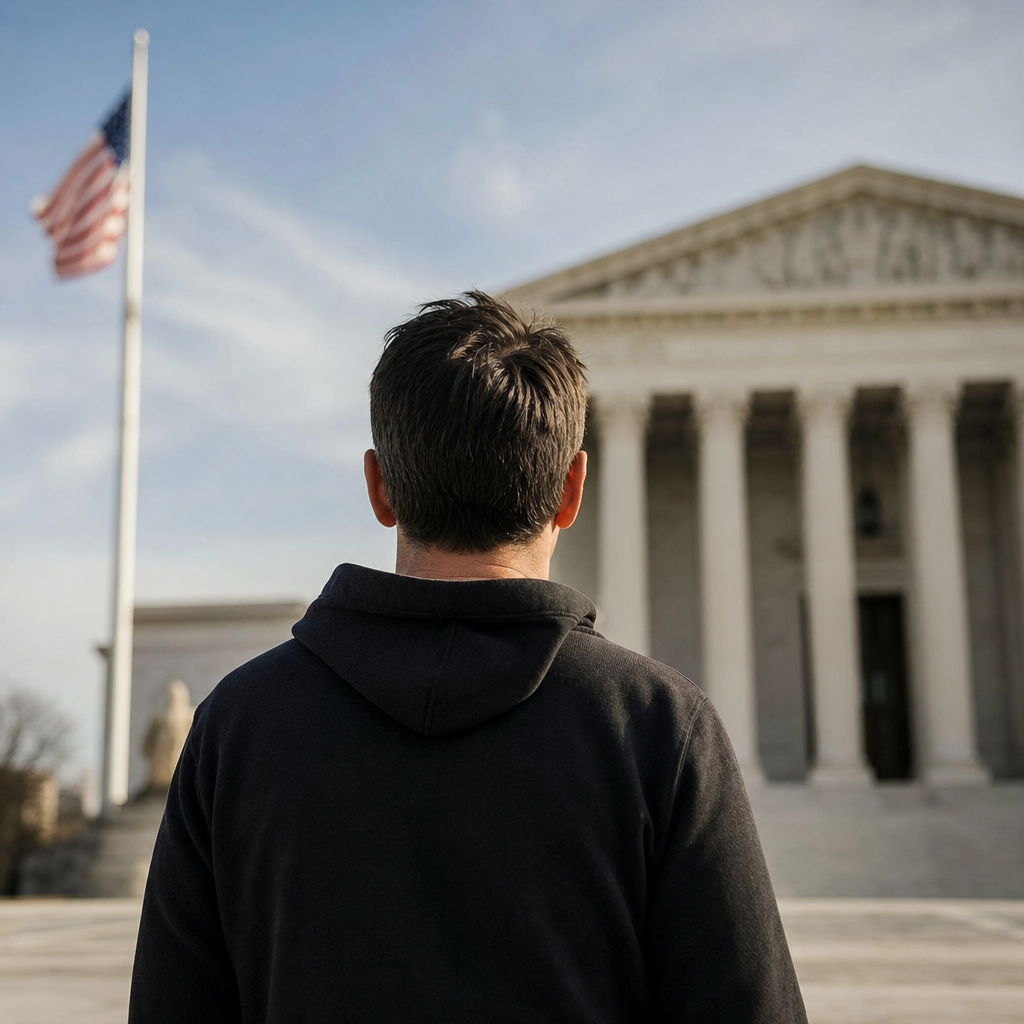
Compelled speech doctrine limits the government’s power to make people say, display, or endorse a message they would not choose on their own. In constitutional law, the rule usually arises under the First Amendment, which protects not only the right to speak but also the right to refrain from speaking. For students in AP Government and Politics, this topic matters because it sits at the intersection of civil liberties, public policy, education, religion, campaign law, labor law, and anti-discrimination disputes. I have taught this issue through landmark cases because it gives students a practical way to understand how the Supreme Court balances individual conscience against governmental interests. The doctrine is not absolute, and that nuance is where most exam questions live.
At its core, compelled speech doctrine asks a direct question: when does a law, school rule, licensing requirement, or public mandate cross the line from regulating conduct into forcing expression? Courts distinguish between compelled ideological speech, compelled factual disclosure, government speech, and conditions attached to professional or commercial activity. That distinction is crucial. A state generally cannot force a student to salute the flag, a motorist to display a motto, or a private group to carry a message that alters its expressive purpose. But the government can often require truthful factual disclosures in limited settings, such as ingredient labels, securities filings, or warnings tied to health and safety. Understanding those categories helps students see why some mandates are struck down while others survive.
This hub article covers the major ideas, cases, tests, and recurring controversies that define compelled speech doctrine in AP Government and Politics. It also works as a foundation for related subtopics including symbolic speech, student rights, freedom of association, campaign finance disclosures, religious liberty, labor unions, and public employee speech. If you can explain why West Virginia State Board of Education v. Barnette, Wooley v. Maynard, Rumsfeld v. FAIR, Janus v. AFSCME, and 303 Creative LLC v. Elenis came out the way they did, you understand the modern constitutional landscape well enough to connect doctrine to current events and likely AP exam prompts.
What the compelled speech doctrine protects
The compelled speech doctrine protects individuals and private entities from being forced by the state to voice, adopt, host, or affirm a message they reject. The strongest protection applies when the government compels ideological or political expression. The leading case is Barnette (1943), where the Supreme Court held that public schools could not force students to salute the flag and recite the Pledge of Allegiance. Justice Robert Jackson’s opinion remains one of the most quoted in First Amendment law because it framed freedom of mind as central to constitutional democracy. The Court declared that no official may prescribe what shall be orthodox in politics, nationalism, religion, or matters of opinion and force citizens to confess that belief by word or act.
That principle later extended beyond schools. In Wooley v. Maynard (1977), New Hampshire required drivers to display the state motto “Live Free or Die” on license plates. The Court ruled that the state could not use private citizens as “mobile billboards” for an ideological message. This is a classic compelled speech case because the government was not merely regulating traffic administration; it was requiring a visible expression linked to identity and belief. For AP students, the key takeaway is that the First Amendment protects both the speaker and the non-speaker. Silence, refusal, and disassociation can all be constitutionally meaningful acts.
Compelled speech also overlaps with freedom of association. If a private group exists to express a viewpoint, forcing it to include unwanted expression can change the group’s message. That is why disputes involving parade organizers, advocacy groups, and creative professionals often raise both speech and association arguments. On an exam, it is smart to identify whether the government is compelling actual words, requiring symbolic endorsement, or forcing a private speaker to include another person’s message.
Landmark Supreme Court cases every AP Government student should know
The doctrine is easiest to learn through cases, because each case defines a category. Barnette established that students in public schools cannot be forced into patriotic rituals. Wooley established that individuals cannot be required to display an ideological slogan on private property used in public, such as a car. Miami Herald v. Tornillo (1974) held that a newspaper could not be forced to publish replies from political candidates it criticized. That case is often taught as a press freedom case, but it is equally important for compelled speech because editorial judgment is itself protected expression.
Hurley v. Irish-American Gay, Lesbian and Bisexual Group of Boston (1995) involved private parade organizers who did not want to include a group carrying a message the organizers did not wish to convey. The Court sided with the organizers, emphasizing that a private speaker may choose the content of its own expression. In contrast, Rumsfeld v. FAIR (2006) upheld a federal law requiring law schools receiving certain funds to give military recruiters campus access equal to other employers. The Court reasoned that the law regulated conduct, not speech, and any speech burden was incidental. That distinction between forced access and forced endorsement appears constantly in modern disputes.
Later cases pushed the doctrine into labor and public accommodations. Janus v. AFSCME (2018) held that public-sector employees could not be compelled to subsidize union speech through agency fees, because collective bargaining in the public sector involves matters of public concern. National Institute of Family and Life Advocates v. Becerra (2018) struck down California requirements that certain pregnancy centers provide notices about state-funded abortion services, with the Court rejecting a broad “professional speech” exception. Most recently, 303 Creative LLC v. Elenis (2023) held that Colorado could not compel a website designer to create custom wedding sites celebrating same-sex marriages if doing so would require speech she opposed. Whether one agrees with the outcomes or not, these cases define the current map of the doctrine.
How courts analyze compelled speech claims
Courts do not apply one mechanical formula in every compelled speech case, but several recurring questions guide the analysis. First, is the law targeting expression or conduct? If the government is requiring words, symbols, pledges, disclaimers, editorial inclusion, or expressive design, the burden on speech is obvious. If the law regulates behavior and any communication burden is secondary, as in recruiter access rules, the claim is weaker. Second, is the message ideological, political, religious, or moral? Compelling that kind of message is highly suspect. Third, is the speaker private, or is the government itself speaking? The government has greater freedom to choose its own message when it is the speaker.
Another key question is whether the requirement is factual and uncontroversial. In commercial settings, courts have sometimes allowed mandatory disclosures that are reasonably related to preventing deception. Nutrition labels, securities disclosures, and country-of-origin labels are often defended on that ground, though the exact standard can vary by context and circuit. The closer the requirement gets to contested moral or political messaging, the more likely it is to face serious constitutional difficulty. The Court’s modern cases show that labels framed as neutral can still fail if they force a private speaker to advertise a government-preferred viewpoint.
| Question | If answer is yes | Typical result |
|---|---|---|
| Does the law compel ideological or political expression? | Strong First Amendment concern | Often struck down |
| Does it regulate conduct rather than message? | Speech claim is weaker | Often upheld |
| Is the government itself the speaker? | Government may control message | Usually upheld |
| Is the disclosure factual and tied to deception or safety? | Lower constitutional concern | Sometimes upheld |
| Would compliance alter a private speaker’s expressive identity? | Association and speech both implicated | Often scrutinized closely |
For AP Government and Politics, the best exam strategy is to explain the government’s interest and then identify why that interest is or is not sufficient. Schools may seek unity, states may seek efficient administration, and legislatures may seek equal access or consumer protection. Those goals can be legitimate. The constitutional problem arises when the state chooses means that conscript a private person’s mind or message rather than regulate conduct through neutral rules.
Compelled speech in schools, workplaces, and the digital economy
Schools remain the classic setting because Barnette is so central to civics education. Public schools can teach patriotism, assign civics content, and require students to learn about national symbols. What they cannot do is require students to affirm belief. That distinction matters in broader classroom controversies. A school may require academic work demonstrating understanding of ideas, but it must be careful before forcing students to personally endorse controversial views. Courts often separate curricular evaluation from ideological compulsion, and the facts matter: graded analysis is different from a compelled pledge.
In workplaces, compelled speech disputes appear in public employment, union funding, harassment training, and licensing rules. Public employees have some speech protections, but the government also acts as an employer and can regulate official duties more than it can regulate citizens generally. After Janus, states cannot automatically deduct public-sector agency fees from nonconsenting workers to support union speech. At the same time, ordinary workplace rules requiring employees to communicate job-related information are generally valid because they regulate professional responsibilities rather than ideology. In practice, the hard cases involve mixed speech: when a required statement is partly operational and partly moralized.
The digital economy has made compelled speech disputes more visible. Website designers, app developers, social media platforms, and online marketplaces all curate communication. When anti-discrimination law, content moderation mandates, or platform regulations affect that curation, litigants often argue over whether the law compels speech or merely regulates commercial conduct. I have found that students understand this best through examples. A bakery selling a standard shelf product is different from a designer writing custom wedding copy. A platform carrying user posts may claim editorial discretion more like a newspaper, while a payment processor looks more like infrastructure. Modern cases rarely turn on labels alone; they turn on how expressive the service actually is.
Major limits, controversies, and AP exam connections
Compelled speech doctrine has limits, and ignoring them leads to weak analysis. The government can speak for itself. It can issue its own slogans, run public health campaigns, choose monuments for public parks, and set official curriculum standards. It can also require many factual disclosures tied to health, safety, and fraud prevention. Airline safety instructions, SEC filings, surgeon general warnings, and calorie labels do not automatically become unconstitutional simply because someone would rather stay silent. Courts examine whether those rules are narrowly tied to legitimate regulation or whether they pressure a private actor to spread a contested viewpoint.
The doctrine is also controversial because it intersects with anti-discrimination law. Supporters of broad civil rights enforcement argue that businesses open to the public should not evade equal-service requirements by calling their conduct “expression.” Supporters of stronger speech protection argue that artists, writers, and designers cannot be forced to create customized messages celebrating events or beliefs they reject. The constitutional line is unsettled at the margins. That is why case comparisons matter so much. Rumsfeld v. FAIR upheld equal access for recruiters because schools were not forced to endorse military policy. 303 Creative protected a custom designer because the Court saw the product itself as original expression.
For AP exam writing, connect compelled speech to broader constitutional themes. Link it to selective incorporation through the Fourteenth Amendment, to free exercise and establishment disputes when conscience is religious, to associational rights when groups control membership and message, and to campaign finance when mandatory disclosures are challenged. Be ready to define the doctrine in one sentence, name at least two landmark cases, and explain why the Court treats compelled ideology more harshly than compelled factual disclosure. If you can make those distinctions clearly and support them with case facts, you will handle most multiple-choice questions, FRQs, and class discussions with confidence.
Compelled speech doctrine teaches one of the most important lessons in constitutional government: liberty includes the right not to be turned into a mouthpiece for the state. The doctrine protects students refusing patriotic rituals, drivers rejecting ideological slogans, newspapers defending editorial control, workers resisting forced subsidy of public advocacy, and creators objecting to government-mandated messages. Across these contexts, the consistent principle is that democratic government may persuade, educate, regulate conduct, and speak in its own voice, but it cannot usually force private citizens to carry its preferred ideas as their own.
For AP Government and Politics, this topic works best when treated as a hub connecting many civil-liberties doctrines rather than as an isolated rule. It links directly to symbolic speech, student speech, free association, religion, public employment, labor law, campaign regulation, and the boundary between commercial activity and expression. The most reliable way to master it is to organize the doctrine by categories: ideological compulsion, factual disclosure, government speech, and conduct regulation with incidental expressive effects. Then attach landmark cases to each category and compare the Court’s reasoning. That method mirrors how strong FRQ responses and effective class discussions are built.
The main benefit of understanding compelled speech doctrine is that it sharpens constitutional analysis in current events. When a new law requires a statement, label, pledge, notice, access policy, or expressive service, you can ask the right questions immediately: who is speaking, what message is involved, is the message factual or ideological, and is the state regulating conduct or commandeering expression? Use this article as your starting point, then move to the related cases and subtopics in AP Government and Politics so you can turn a difficult doctrine into a clear, usable framework.
Frequently Asked Questions
What is the compelled speech doctrine, and why is it important in First Amendment law?
The compelled speech doctrine is the constitutional principle that the government generally cannot force a person, business, schoolchild, worker, or organization to say, display, adopt, or endorse a message they do not wish to express. It comes from the First Amendment’s protection of freedom of speech, which includes not only the right to speak but also the right to remain silent. In other words, free speech is not meaningful if the state can dictate what citizens must affirm.
This doctrine matters because many government policies do not censor speech directly; instead, they require speech. A law may order someone to salute a flag, recite a pledge, carry a slogan, fund a message, post a notice, or provide a statement written by the government. The compelled speech doctrine asks whether that requirement improperly turns private individuals into instruments for the state’s preferred message. That is why it is so important in constitutional law: it protects personal conscience, ideological independence, and the principle that the government cannot manufacture public agreement by force.
For AP Government and Politics students, the topic is especially important because it connects core civil liberties to real policy disputes. Questions about schools, religion, campaign disclosures, union fees, professional licensing, and anti-discrimination laws often involve the line between regulating conduct and compelling expression. Understanding the doctrine helps students see that the First Amendment is not just about stopping the government from punishing speech; it is also about stopping the government from commanding speech.
What are the most important Supreme Court cases on compelled speech doctrine?
Several Supreme Court cases form the foundation of compelled speech doctrine. One of the most famous is West Virginia State Board of Education v. Barnette (1943), in which the Court held that public school students could not be forced to salute the flag and recite the Pledge of Allegiance. The decision is a landmark because it strongly affirmed that government officials cannot prescribe what shall be orthodox in politics, nationalism, religion, or other matters of opinion. Barnette is often the starting point for understanding the right not to speak.
Another key case is Wooley v. Maynard (1977). In that case, the Court ruled that New Hampshire could not require a person to display the state motto, “Live Free or Die,” on a license plate if doing so would make the driver a mobile billboard for an ideological message. The state could require license plates for identification, but it could not force citizens to use their private property to spread a viewpoint they rejected. This case is important because it shows that compelled speech doctrine applies not only to spoken words but also to symbols and displays.
More recent cases show how the doctrine applies in modern settings. In Janus v. AFSCME (2018), the Court held that public-sector workers generally could not be required to pay union agency fees that supported union speech, because forcing financial support for speech can also raise First Amendment concerns. In National Institute of Family and Life Advocates v. Becerra (2018), often called NIFLA, the Court struck down parts of a California law requiring certain clinics to provide government-drafted notices, emphasizing that states may not casually force private speakers to deliver official messages. At the same time, cases involving disclosure rules, commercial regulation, and professional conduct show that not every required statement is unconstitutional. The Court often distinguishes between ideological compulsion, which is highly suspect, and factual, noncontroversial disclosures in regulated settings, which may be easier for the government to defend.
How do courts decide whether a government requirement is unconstitutional compelled speech?
Courts usually begin by asking whether the government is truly compelling expression, or whether it is merely regulating conduct with only an incidental effect on speech. That distinction matters. If the law requires a person to affirm a belief, display a slogan, or communicate a government-approved message, the First Amendment concern is strong. If the law mainly regulates behavior, such as health and safety practices or commercial transactions, the government has more room to act even if some speech is involved. Much of compelled speech litigation turns on that threshold question.
If courts find that speech is being compelled, they then examine the nature of the message and the context. Ideological, political, or moral messages usually receive the strongest constitutional protection because forcing someone to endorse those ideas threatens freedom of conscience most directly. Courts also ask whether the speech is attributed to the private speaker. If an ordinary observer would think the message reflects the individual’s own beliefs, the constitutional problem becomes more serious. By contrast, if the government is clearly speaking for itself, the issue may be analyzed differently under the government speech doctrine.
Another major question is the level of scrutiny. In many compelled speech cases involving ideology or viewpoint, courts apply very demanding review, often requiring the government to show a powerful justification and a narrow fit between the law and that interest. But in some areas, especially commercial speech and mandatory factual disclosures, the analysis can be more forgiving. For example, certain truthful and noncontroversial disclosures related to preventing deception may be upheld. Even then, the government cannot impose burdensome, misleading, or ideological scripts simply by labeling them “disclosures.” Overall, the key inquiry is whether the state is informing the public through legitimate regulation or conscripting private speakers into carrying its message.
How does compelled speech doctrine apply in schools, workplaces, and business settings?
In schools, compelled speech issues often arise because public education is run by the government, yet students do not lose all First Amendment rights at the schoolhouse gate. The clearest example is Barnette, where the Court protected students from being forced to salute the flag and recite the Pledge. That principle reflects a broader constitutional rule: schools may teach civic values and require coursework, but they cannot require students to personally affirm beliefs as a condition of attendance. At the same time, schools retain significant authority over curriculum, classroom assignments, and school-sponsored activities, so the exact boundary depends on whether students are being educated about ideas or forced to profess them.
In workplaces, compelled speech questions often appear in public employment and labor law. Public employees retain First Amendment rights, but the government also has powers as an employer that it does not have as a sovereign regulating the public at large. That means some job-related speech requirements may be lawful if they are tied to official duties, public accountability, or effective operations. Still, the state cannot use employment rules as a broad excuse to force workers to support ideological causes. The union-fee issue in Janus is a major example of the Court treating mandatory financial support for advocacy as a serious First Amendment problem.
In business settings, the doctrine becomes more complex because governments frequently require disclosures, warnings, labels, and notices. Some of these rules are clearly constitutional, especially when they require accurate factual information about prices, ingredients, risks, or terms of service. But when the required message becomes controversial, value-laden, or disconnected from a genuine regulatory need, compelled speech concerns grow stronger. This is why disputes involving wedding services, pregnancy centers, professional licensing, and online platforms can be difficult. Courts must decide whether the law is regulating commercial conduct, preventing deception, or instead forcing private parties to communicate a moral or political message they would not otherwise convey.
Are there limits or exceptions to compelled speech doctrine, especially in anti-discrimination and disclosure law?
Yes. The compelled speech doctrine is powerful, but it is not absolute. The government can often require speech in limited circumstances, especially when it is demanding factual, nonmisleading information as part of economic regulation or when the requirement is closely tied to administering a legal system. For example, campaign finance disclosure laws, professional disclosures, food and drug labeling, securities rules, and consumer protection notices may survive constitutional review if they are carefully designed and not ideological in nature. Courts recognize that modern government cannot function without some mandatory reporting and disclosure.
Anti-discrimination law creates one of the hardest constitutional tensions. Public accommodation laws generally regulate discriminatory conduct in the marketplace, and businesses usually cannot avoid those laws by claiming a speech right. But if a law is applied to force a person engaged in expressive activity to create custom speech celebrating or endorsing a message they reject, the compelled speech doctrine may become relevant. The challenge for courts is to distinguish between refusing equal service because of a customer’s status, which anti-discrimination law strongly prohibits, and objecting to being compelled to create or affirm a specific message, which the First Amendment may protect. This area remains highly debated and fact-specific.
Another important limit involves the distinction between government speech and private speech. The government is free to promote its own policies, slogans, and programs using its own voice. What it generally cannot do is require private citizens to serve as unwilling mouthpieces for that speech. That distinction explains why some government messaging programs are lawful while others are not. For students, the big takeaway is that compelled speech doctrine does not block every regulation involving words. Instead, it requires courts to ask a deeper constitutional question: is the government informing, regulating, or administering a program, or is it coercing private people to carry a message as their own?