
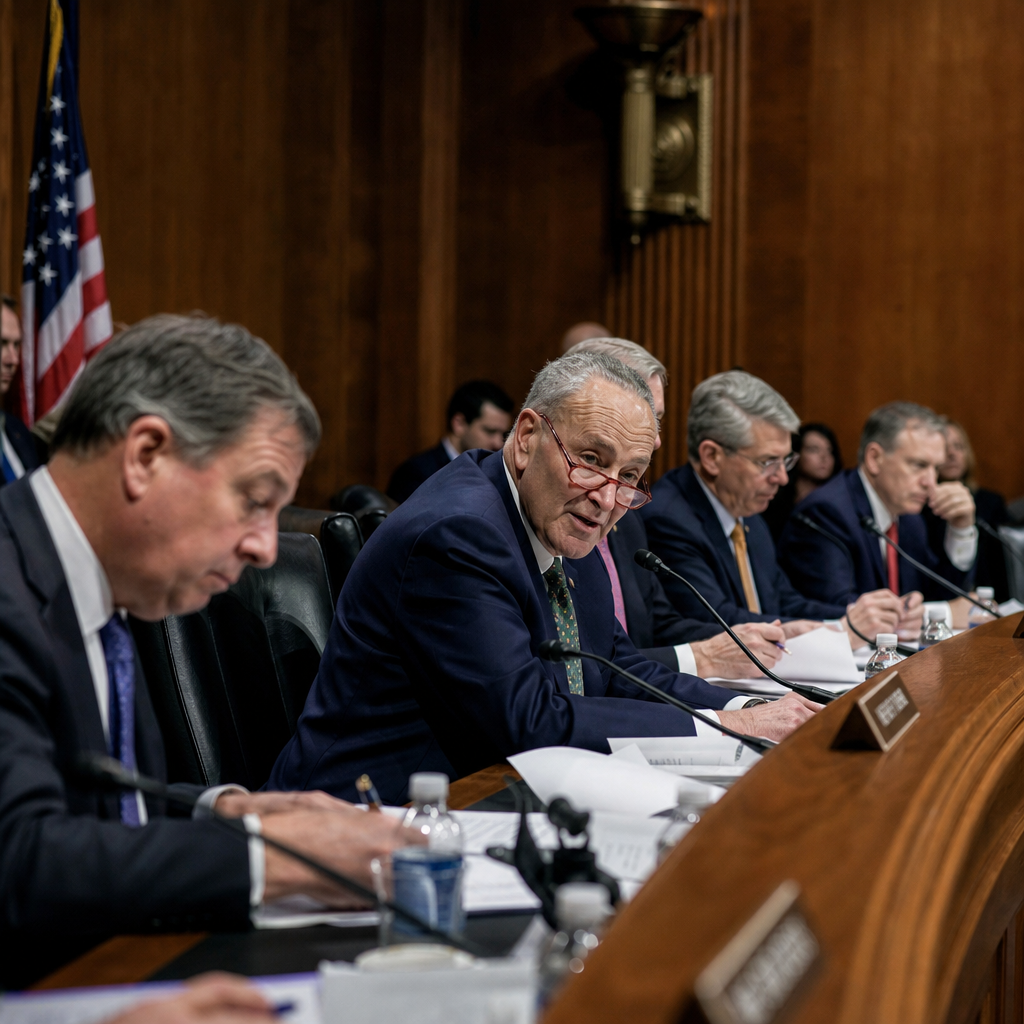
Committee chairs and seniority shape much of what Congress actually does, even when public attention focuses on floor votes, presidential speeches, or party leaders. In practical terms, power in Congress is distributed through formal rules, informal norms, and the strategic control of committee agendas. A committee chair is the member who leads a standing, select, or joint committee, manages hearings, influences which bills receive attention, and often serves as the committee’s public face. Seniority is the length of continuous service a member has in a chamber or on a committee, and for much of congressional history it was the main route to leadership. Understanding committee chairs and seniority matters because these mechanisms determine which issues advance, who writes the first draft of legislation, and how rank-and-file lawmakers can build influence over time.
In AP Government and Politics, this topic sits at the center of several bigger themes: congressional organization, representation, policymaking, and the balance between party government and institutional tradition. Students often learn that Congress is decentralized, but that phrase only becomes meaningful when you see how committee assignments, subcommittee jurisdictions, and chair authority divide power into many smaller centers. I have found that once students compare the textbook image of Congress with the daily work of committees, they understand why some bills never move, why oversight can be vigorous or weak, and why lawmakers fight so hard for certain assignments. Chairs can schedule hearings, request testimony from agencies, shepherd markups, and coordinate with party leaders. Senior members, meanwhile, gain procedural knowledge, donor networks, relationships with interest groups, and credibility with colleagues.
The key point is that seniority is no longer an automatic conveyor belt to power, but it remains one of the strongest currencies in Congress. Today, party caucuses, steering committees, ideological loyalty, fundraising, diversity goals, and media skill also influence who gets valuable positions. Still, lawmakers with long service usually hold structural advantages because they know committee rules, understand jurisdictional boundaries, and have built trust within their conference. This article serves as a hub for the broader “Misc” area within AP Government and Politics by explaining how committee chairs are chosen, how seniority operates in the House and Senate, how reforms changed the old system, and how power is distributed in modern Congress through committees, parties, and personal expertise.
What Committee Chairs Actually Do
A committee chair is not just a ceremonial leader. In both the House and Senate, committee chairs exercise gatekeeping power, meaning they can shape whether a proposal gets studied, amended, delayed, or quietly ignored. Chairs preside over meetings, set hearing agendas, decide which witnesses to invite, and often coordinate staff work on bill text, oversight memos, and reports. In a markup session, where members debate and amend legislation line by line, the chair’s control of recognition and sequencing can influence outcomes before a bill ever reaches the floor. If a chair is committed to a policy area, that committee can become a major engine of lawmaking. If a chair is indifferent or hostile, even popular ideas can stall.
Jurisdiction matters here. The House Ways and Means Committee handles taxation, tariffs, and major revenue issues. The Senate Judiciary Committee reviews judicial nominations and many legal questions. The House Rules Committee, though not a typical policy committee, is powerful because it determines how many major bills will be debated on the floor and which amendments will be allowed. A skilled chair uses jurisdiction to build expertise and bargaining power. For example, a chair overseeing agriculture, armed services, or appropriations can influence both policy details and the flow of federal money. That attracts lobbyists, executive branch officials, advocacy groups, and fellow lawmakers seeking access.
Chairs also lead oversight, one of Congress’s core constitutional responsibilities. Oversight includes investigations, agency performance reviews, audits, and hearings on implementation failures. When a committee chair aggressively examines an executive agency, the committee can expose waste, fraud, abuse, or policy mismanagement. When oversight is weak, agencies may face less pressure to justify decisions. This is why committee leadership affects not only legislation but also administrative accountability. In my experience reviewing congressional hearing records with students, the difference between an active chair and a passive chair is obvious in the number of hearings held, the specificity of questioning, and the follow-through after public testimony.
How Seniority Works in the House and Senate
Seniority is the accumulation of time served, but in Congress it functions as more than a calendar count. Members gain influence through chamber service, committee tenure, and party standing. Historically, the seniority system gave the longest-serving majority-party member on a committee the chair almost automatically. That norm was especially strong in the mid-twentieth century, when committee government often overshadowed party leadership. Seniority rewarded patience, encouraged institutional loyalty, and gave members a clear career ladder. It also protected members from constant leadership pressure, since advancement depended less on pleasing party leaders and more on surviving reelection.
The House and Senate use seniority differently because the chambers are structured differently. House members serve two-year terms, face more frequent elections, and operate in a larger body with stricter rules and stronger party leadership. Senate terms last six years, the chamber is smaller, and individual senators generally have more room to build personal influence. In both chambers, however, senior members tend to get better office space, more prestigious committee assignments, and stronger claims to subcommittee gavels. Seniority is also relevant when more than one member wants the same committee seat or leadership role.
Yet seniority has limits. Continuous service can be interrupted by electoral defeat, retirement, or switching chambers. Committee seniority may differ from chamber seniority if a member joins a committee later. Party ratios matter as well. A senior legislator in the minority party cannot chair a standing committee, though they may become ranking member, the top minority-party position. That role still matters because ranking members help shape minority strategy, negotiate amendments, and present alternative arguments during hearings and markups. For AP Government and Politics, the important takeaway is that seniority remains influential because it lowers uncertainty. Colleagues know what an experienced member understands, how they negotiate, and whether they can manage a committee’s workload.
How the Selection Process Changed Over Time
The classic seniority system came under heavy criticism in the twentieth century, especially when entrenched chairs used their authority to block legislation favored by party majorities. Southern Democrats, protected by one-party districts and long reelection streaks, often held key chairs in the House during the civil rights era. Some used committee control to slow or prevent civil rights bills despite national party shifts. That history exposed the downside of rigid seniority: it could empower lawmakers whose views no longer reflected the median voter, the party caucus, or even the chamber itself.
Reform accelerated in the 1970s. House Democrats reduced the automatic nature of seniority by allowing the caucus to challenge chairs. Subcommittees gained more visibility, recorded votes became more common, and reforms opened committee proceedings to greater public scrutiny. The Legislative Reorganization Act of 1970 strengthened transparency and staff capacity, while later party changes increased leadership influence over assignments. Republicans, after gaining House control in 1994, imposed term limits on committee chairs, generally six years, to prevent permanent baronies. Democrats have used somewhat different internal rules at different times, but both parties now consider loyalty, competence, messaging ability, and fundraising alongside seniority.
| Period | Main Basis for Chair Selection | Effect on Power Distribution |
|---|---|---|
| Pre-1970s | Strong automatic seniority norms | Committees and long-serving chairs held major independent power |
| 1970s reforms | Seniority still mattered, but caucuses gained more control | Power became less insulated and more responsive to party coalitions |
| 1990s to present | Seniority plus party leadership, fundraising, ideology, and term limits | Power is shared among chairs, party leaders, and caucus institutions |
Modern selection is therefore hybrid rather than purely seniority-based. In both chambers, party steering committees, caucus votes, and leadership preferences can elevate one member over another. Legislators who communicate well on television, raise campaign funds for colleagues, or closely align with party priorities may leap ahead of a more senior competitor. At the same time, parties rarely ignore seniority completely because experience matters. Running a large committee requires knowledge of procedure, policy detail, staff management, and interbranch negotiation. The result is a system where seniority opens doors, but it does not lock in outcomes the way it once did.
Why Committees Distribute Power So Effectively
Congress could, in theory, write legislation mainly through party leaders and floor action. In practice, committees remain essential because they solve information and workload problems. Thousands of bills are introduced in each Congress. No chamber could debate all of them in detail without smaller units specializing in taxation, defense, health, energy, foreign affairs, transportation, and dozens of other fields. Committees gather expertise, monitor agencies, and draft legislative language that most members do not have time to produce independently. This specialization distributes power by giving some members influence over narrow but important jurisdictions.
That distribution has real consequences. A member on Appropriations can influence spending details. A member on Energy and Commerce may shape health policy, telecommunications rules, or environmental regulation. A member on Foreign Affairs or Foreign Relations can become central to sanctions, military assistance, and treaty debates. Chairs sit at the top of these policy networks. They work with committee counsels, legislative directors, Congressional Budget Office estimates, Government Accountability Office reports, and executive branch liaisons. Because information is power, committees become the places where complex policy is translated into legislative text.
Committee power also creates multiple access points for representation. Constituents from a farm district may want their representative on Agriculture. A coastal state may value Commerce, Transportation, or Armed Services assignments. Urban districts may prioritize Financial Services or Education and the Workforce. Members seek these posts not only for prestige but because committee jurisdiction can deliver policy benefits to their states or districts. This is one reason committee assignments are politically sensitive: they affect both national lawmaking and local representation.
Party Leadership, Caucuses, and the Limits of Chair Power
Even powerful chairs do not rule alone. Modern Congress features stronger party leadership than the old committee-dominated era. In the House, the Speaker, majority leader, minority leader, and party steering committees shape the legislative agenda and often influence who receives prized assignments. The House Rules Committee can structure debate in ways that help leadership manage the floor, limiting amendments and protecting delicate bargains. In the Senate, unanimous consent agreements, holds, and filibuster politics make power more diffuse, but party leaders still coordinate floor strategy and committee priorities.
This means chair power depends on alignment with party goals. A chair who resists the leadership may find that their bill never gets floor time, their requests are ignored, or their authority is challenged within the caucus. Conversely, a chair working closely with leaders can move major legislation more effectively. Recent Congresses have shown both patterns. Budget reconciliation bills, debt ceiling negotiations, and high-profile investigative hearings often reveal an ongoing bargaining process among chairs, leaders, rank-and-file members, and the White House. Committee authority remains real, but it operates inside a larger partisan framework.
Caucus politics matter too. Ideological blocs such as the House Freedom Caucus or the Congressional Progressive Caucus can pressure leaders and chairs from different directions. A chair may have seniority and formal jurisdiction yet still need votes from members who demand changes. That dynamic is important for AP Government because it shows that institutions are not static. Formal rules tell only part of the story; informal coalition-building often decides who actually exercises power.
What Students Should Remember About Committee Chairs and Seniority
The clearest way to understand power in Congress is to think of it as layered rather than concentrated. Committee chairs control agendas within their jurisdictions. Senior members enjoy advantages because they accumulate expertise, relationships, and procedural credibility. Party leaders coordinate chamber-wide strategy. Rank-and-file members still matter when margins are narrow or factions are organized. No single rule explains congressional power by itself. Instead, Congress distributes authority across committees, parties, caucuses, and individual lawmakers, creating a system that is flexible but often slow.
For exams and class discussions, remember several durable points. First, committee chairs are key gatekeepers in lawmaking and oversight. Second, seniority historically determined chairs more automatically than it does today. Third, reforms since the 1970s reduced the independence of chairs and increased party influence. Fourth, seniority still matters because experience and tenure provide real strategic advantages. Fifth, committee assignments connect national policymaking to district and state interests, which is why members compete for them so intensely. These ideas link directly to broader AP Government themes such as representation, institutional design, policymaking, and checks on executive power.
If you are building out your AP Government and Politics understanding, use this article as a hub for related topics: standing committees, conference committees, party leadership, congressional oversight, House and Senate differences, and the legislative process from bill introduction to presidential action. Mastering committee chairs and seniority makes the rest of Congress easier to understand because it reveals where decisions are shaped before the public ever sees a final vote. Review a few recent committee hearings, note who sets the agenda, and you will see congressional power in action.
Frequently Asked Questions
What does a committee chair actually do in Congress?
A committee chair is one of the most influential members in Congress because committees are where much of the real legislative work happens. The chair leads the committee’s operations, presides over hearings and markups, helps set the agenda, and decides which issues receive sustained attention and which do not. In practical terms, that means a chair can determine whether a bill gets a hearing, whether experts or executive branch officials are called to testify, and how aggressively the committee investigates a topic. Even when party leaders dominate headlines, committee chairs often shape the substance of legislation before it ever reaches the House or Senate floor.
Chairs also play a major role in oversight. They can launch inquiries into federal agencies, request documents, call witnesses, and frame public debates through hearings. Because committees specialize in particular policy areas such as agriculture, defense, finance, or the judiciary, chairs often become some of the chamber’s most knowledgeable lawmakers on those subjects. That expertise gives them additional leverage with colleagues, lobbyists, executive agencies, and the media. So while a chair does not control Congress alone, the position carries significant authority over both lawmaking and oversight within the committee’s jurisdiction.
How does seniority affect who becomes a committee chair?
Seniority has long been one of the most important factors in distributing power in Congress. Traditionally, the member of the majority party with the longest continuous service on a committee often had the strongest claim to chairmanship. This system was valued because it created predictable advancement, rewarded experience, and reduced open competition among members. A senior member usually has years of policy knowledge, relationships with colleagues, and familiarity with committee procedure, all of which can make the committee more effective and stable.
That said, seniority is not an absolute rule. Over time, both parties have created internal processes that allow them to consider additional factors, including loyalty to party leadership, fundraising ability, ideological fit, legislative skill, and public profile. In some cases, a more senior member may be passed over if party leaders believe that person is ineffective, controversial, or out of step with the caucus. In the modern Congress, seniority still matters a great deal, but it often operates alongside party politics rather than above it. In other words, experience opens doors, but leadership support and internal caucus decisions frequently determine who actually gets the gavel.
Why are committee chairs so powerful if party leaders also control Congress?
Party leaders and committee chairs exercise different kinds of power. Party leaders, such as the Speaker of the House or the Senate majority leader, focus on chamber-wide strategy: scheduling floor action, managing party messaging, negotiating major legislative packages, and trying to keep members united. Committee chairs, by contrast, usually control a narrower but deeper sphere. They shape the details of policy inside their committee, influence what proposals are developed, and often decide how legislation is amended before it reaches the floor. This gives them immense influence over the content of laws, not just their timing.
That division matters because most legislation begins in committee. If a chair does not move a bill, the proposal can stall regardless of its public popularity. If a chair favors an issue, the committee can hold hearings, produce reports, build momentum, and turn a broad political idea into detailed statutory language. Chairs also help mediate between rank-and-file members, interest groups, agencies, and leadership. So even in periods when party leadership is strong, committee chairs remain central because they control specialized policy pipelines. Their power is often less visible than leadership power, but it is frequently more consequential for what ends up in the final text of legislation.
Has the role of seniority and committee chairs changed over time?
Yes, significantly. In earlier eras of congressional history, especially in the mid-20th century, seniority was often the dominant principle for selecting chairs, and committee leaders could operate with considerable independence from party leadership. This gave long-serving members enormous authority and sometimes allowed committee chairs to act almost like autonomous power centers within Congress. They could block legislation, shape committee priorities with little interference, and maintain control for many years simply by virtue of tenure.
Over the past several decades, however, reforms and partisan polarization have altered that balance. Party caucuses have imposed more limits on committee chairs, including term limits in some cases, closer leadership oversight, and more structured processes for assigning gavels. As political parties became more ideologically unified and electorally competitive, party leaders gained incentives to centralize decision-making and coordinate legislative strategy more tightly. Even so, seniority did not disappear. It still provides a path to influence and remains a respected norm, especially because experience matters in complex policy areas. The modern system is best understood as a hybrid: chairs still matter, seniority still matters, but both now operate within a more leadership-driven and partisan congressional environment.
How do committee chairs and seniority affect which bills become law?
Committee chairs and seniority affect legislation at nearly every stage before a bill ever receives a final vote. A chair can decide whether to schedule hearings, invite supportive or skeptical witnesses, direct staff to draft language, and organize markups where the text is revised line by line. Those choices shape whether a bill appears serious and ready for action or remains politically symbolic. Senior members, especially those in leadership positions on committees, also tend to know how to navigate the process, build coalitions, and negotiate compromises that give a proposal a better chance of survival.
Just as important, committee power includes the power to delay or ignore. Many bills die not because they are defeated on the floor, but because they never advance out of committee. A chair who opposes a proposal can effectively keep it off the agenda, while a supportive chair can use the committee’s prestige and procedural tools to move it forward. Seniority strengthens this dynamic because longer-serving lawmakers often have stronger relationships, better procedural knowledge, and greater credibility with colleagues and stakeholders. The result is that congressional power is not distributed evenly among all members. It is concentrated in positions, especially committee chairs and senior members, that control attention, procedure, and expertise. That is why understanding Congress requires looking beyond floor votes and public speeches to the quieter but decisive work of committees.