
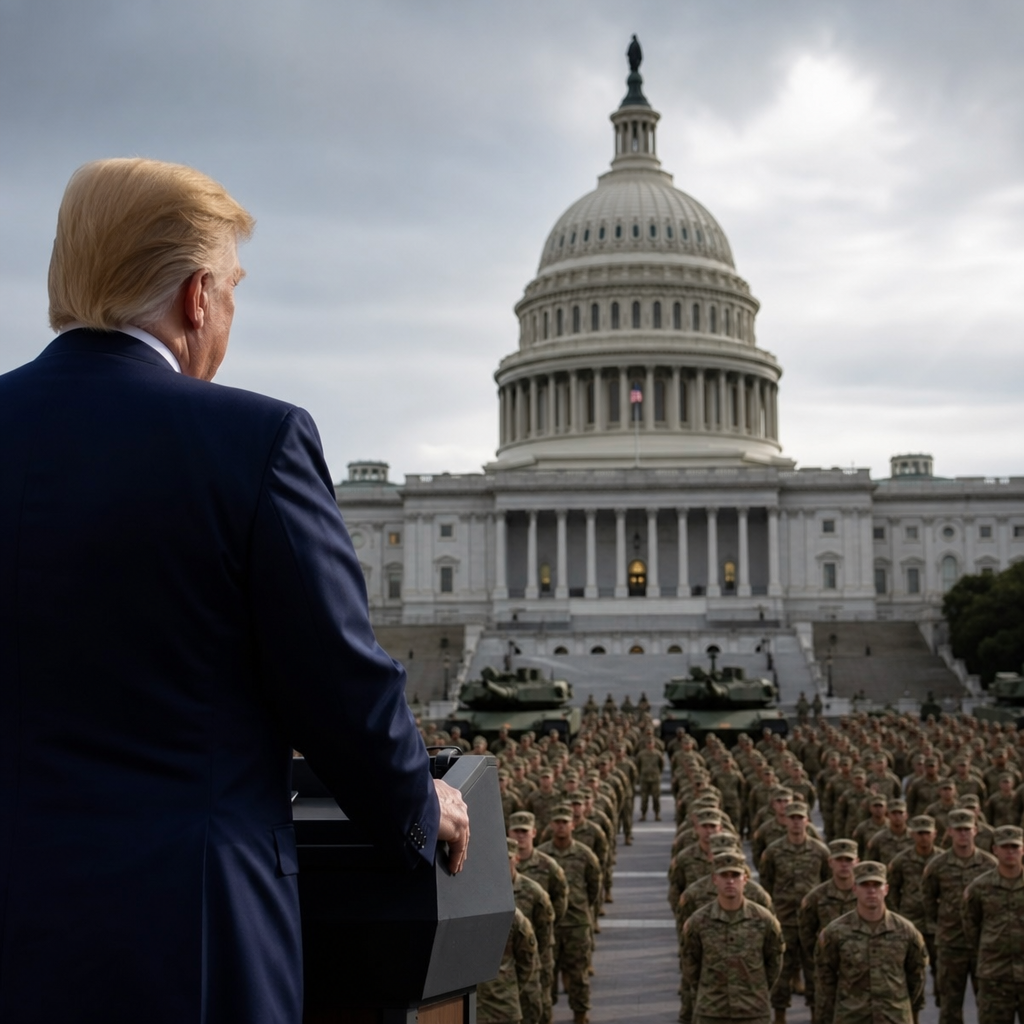
The struggle over who controls military action in the United States sits at the center of constitutional government. The president is commander in chief, yet Congress declares war, raises armies, funds operations, and writes many of the rules that govern force. For AP Government and Politics students, this question matters because it connects constitutional design, separation of powers, federal law, elections, civil liberties, and foreign policy in one recurring dispute. It is not just a historical debate. It shapes decisions about airstrikes, troop deployments, intelligence missions, emergency responses, and long wars that continue without formal declarations.
At its core, the issue is about war powers: the legal and practical authority to initiate, direct, limit, and end military action. The Constitution divides those powers intentionally. Article II names the president commander in chief of the armed forces, giving the executive operational control over troops once force is authorized or otherwise lawfully used. Article I gives Congress the power to declare war, raise and support armies, provide and maintain a navy, regulate the armed forces, call forth the militia, and control appropriations. In plain terms, the president commands the military, but Congress creates, structures, and finances the military while retaining the power to authorize major conflicts.
In practice, the answer is not either-or. Presidents usually act first in crises because military decisions often require speed, secrecy, and unity of command. Congress, however, can authorize force, restrict it, investigate it, or defund it. Over two centuries, presidents have expanded unilateral action, especially since World War II, while Congress has often responded after the fact. Understanding who controls military action therefore requires looking at constitutional text, Supreme Court guidance, statutory law, and historical examples. Once those pieces are put together, the clearest conclusion emerges: the president leads military operations, but Congress retains substantial legal power to start, shape, and stop them, especially through authorization and funding.
Constitutional Design: Why the Framers Split Military Power
The framers did not want a king who could drag the country into war on personal ambition. They had lived under British imperial power and associated concentrated war authority with executive abuse. That is why the Constitution divides military authority instead of placing it in one branch. James Madison argued that executive power is most interested in war and most prone to it, so the Constitution placed the decision to move from peace to war largely in the legislature. The Declare War Clause was designed to ensure deliberation before launching major hostilities.
At the same time, the framers understood that armed forces cannot operate by committee. Once military action begins, someone must direct strategy, issue orders, respond to battlefield developments, and coordinate commanders. That is the function of the commander in chief clause. It does not clearly grant the president unlimited power to start wars, but it plainly gives the president supreme command over military operations. In my experience teaching constitutional structure, students grasp this best when phrased simply: Congress decides whether the nation enters significant war; the president decides how the military fights it.
Congress’s powers go beyond declarations of war. The Army Appropriations Clause limits army funding to two years, forcing repeated legislative review. Congress also writes the Uniform Code of Military Justice, confirms senior officials, and can organize forces through statutes such as the National Security Act of 1947. These provisions show that military control was always meant to be shared. The Constitution creates tension on purpose, because friction slows reckless decisions while preserving operational effectiveness.
What the President Can Do as Commander in Chief
The president’s strongest military powers are practical rather than textual. As commander in chief, the president commands troops, deploys forces already stationed abroad, directs military campaigns, gathers intelligence through the executive branch, and responds to sudden attacks. Presidents also control diplomacy, which often overlaps with military action. When a crisis unfolds in hours rather than weeks, presidents have the institutional advantage. They receive classified briefings, have access to the National Security Council, and can issue immediate orders through the chain of command.
That practical advantage has allowed presidents to initiate many uses of force without formal declarations of war. Harry Truman sent U.S. forces to Korea in 1950 under a United Nations framework. Ronald Reagan ordered military action in Grenada in 1983. Bill Clinton used airpower in Kosovo in 1999. Barack Obama approved operations in Libya in 2011. More recently, presidents have ordered strikes against terrorist targets and foreign militias with little prior congressional debate. In each case, the executive branch relied on a mix of commander in chief authority, prior statutes, treaty commitments, or claimed national interests.
Still, presidential power has limits. The president cannot create money for wars, cannot legally ignore statutes governing the military, and cannot permanently sustain major combat if Congress refuses authorization or funding. The most powerful modern presidency still depends on congressional tolerance. When students ask whether the president can declare war, the precise answer is no. Presidents can use force, sometimes extensively, but a formal declaration belongs to Congress alone.
What Congress Controls: Authorization, Funding, Oversight, and Rules
Congress controls military action most clearly through four levers: authorization, appropriations, oversight, and regulation. Authorization means giving legal permission for hostilities, usually through a declaration of war or an Authorization for Use of Military Force, commonly called an AUMF. Funding means paying for troops, weapons, fuel, logistics, veterans’ support, and intelligence systems. Oversight includes hearings, subpoenas, reporting requirements, and investigations into strategy or legality. Regulation includes setting rules for detention, military justice, surveillance boundaries, and command structure.
These levers are powerful because war is expensive and continuous. The Department of Defense operates on congressional appropriations, and even a popular president cannot maintain long-term operations without appropriated funds. Congress used this power during the Vietnam era by restricting funds for combat in Southeast Asia. It has also attached conditions to military spending, such as reporting requirements for deployments and equipment transfers. In committee work, members can pressure the executive branch by demanding legal justifications, casualty estimates, and exit strategies.
| Congressional Tool | What It Does | Example |
|---|---|---|
| Declaration of War | Formally recognizes a state of war | World War II declarations after Pearl Harbor |
| AUMF | Authorizes specific military force short of declaration | 2001 AUMF against those responsible for 9/11 |
| Appropriations | Funds or limits military operations | Vietnam-era restrictions on combat funding |
| Oversight Hearings | Examines strategy, legality, and outcomes | Senate hearings on Iraq and Afghanistan |
| Statutory Regulation | Sets legal rules for armed forces and operations | War Powers Resolution reporting requirements |
Congress does not always use these tools aggressively. Political incentives matter. Members may avoid difficult votes on war, preferring presidents to bear responsibility. That reluctance has helped expand executive initiative. But the constitutional tools remain real, and when Congress acts with unity, it can sharply influence military policy.
The War Powers Resolution and the Modern Legal Framework
The most important modern statute in this area is the War Powers Resolution of 1973, passed over President Richard Nixon’s veto after frustration with the Vietnam War. Its purpose was to reclaim legislative authority after years of presidential escalation. The law requires the president to consult with Congress before introducing U.S. forces into hostilities or imminent hostilities whenever possible, report to Congress within forty-eight hours after doing so, and terminate the use of forces within sixty days, with a possible thirty-day withdrawal period, unless Congress declares war, authorizes force, extends the period, or cannot meet because of an attack on the United States.
On paper, the resolution appears to limit unilateral presidential war making. In practice, its effectiveness has been mixed. Presidents of both parties have often filed reports “consistent with” rather than “pursuant to” the law, signaling that they do not concede its constitutionality. Executives have also disputed whether certain operations count as “hostilities.” During the 2011 Libya intervention, the Obama administration argued that the limited nature of U.S. involvement meant the sixty-day clock did not apply in the usual way, a position many members of Congress rejected.
Even with these disputes, the resolution matters because it structures debate. It creates reporting expectations, gives Congress legal language for oversight, and reminds the public that military action should not be open-ended by default. AP Government students should understand it as a partial check, not a complete solution. It narrowed some executive arguments while leaving enough ambiguity for presidents to continue acting first in many situations.
Historical Examples Show How Power Shifts in Practice
History demonstrates that control over military action depends on context. In World War II, Congress clearly exercised its constitutional role by issuing formal declarations after Pearl Harbor. That is the textbook model of shared war powers: Congress authorized, and the president commanded. Korea broke that pattern. Truman treated the conflict as a police action under United Nations authority, not a declared war. That move set a major precedent for modern presidential initiative.
Vietnam revealed the danger of vague authorization. Congress passed the Gulf of Tonkin Resolution in 1964, which presidents used broadly to justify escalation. As the war dragged on, Congress and the public turned against it, leading to funding restrictions and eventually the War Powers Resolution. After the September 11 attacks, Congress passed the 2001 AUMF almost unanimously. Its language was aimed at those responsible for the attacks, but successive administrations used it for military operations across multiple countries against associated forces. The 2002 Iraq AUMF similarly extended beyond its initial political moment.
These examples show a consistent pattern I have seen in constitutional analysis: Congress often grants authority broadly during emergencies, then struggles to regain control once military commitments deepen. The result is a modern system in which presidents enjoy wide room to maneuver unless Congress is willing to vote clearly, repeatedly, and publicly to narrow that room.
The Courts Usually Avoid the Core Fight
Many students expect the Supreme Court to settle disputes over military action, but courts usually avoid the core separation-of-powers fight. Judges often treat war powers cases as political questions, dismiss them for lack of standing, or decide them on narrow procedural grounds. That does not mean courts are irrelevant. They can decide cases involving detention, military tribunals, civil liberties, and the rights of citizens and noncitizens during conflict. Cases such as Youngstown Sheet & Tube Co. v. Sawyer, Hamdi v. Rumsfeld, Hamdan v. Rumsfeld, and Boumediene v. Bush all shaped the boundaries of executive action.
Youngstown is especially important even though it was not a battlefield case. In 1952, the Court ruled that Truman could not seize steel mills during the Korean War without congressional authorization. Justice Robert Jackson’s concurrence created the best-known framework for analyzing executive power: presidential authority is strongest when the president acts with Congress, weaker in areas of silence, and weakest when the president acts against congressional will. That framework still guides war powers analysis.
Because courts rarely resolve initiation-of-force disputes directly, the real contest usually remains political. Congress and the president must struggle through legislation, funding, public opinion, and elections. That is messy, but it reflects the constitutional system as designed.
Who Controls Military Action Today?
The most accurate answer is that both branches control military action, but they control different parts of it and do so with unequal speed. The president controls immediate operational decisions and can often begin limited military action without waiting for Congress. Congress controls long-term legitimacy, legal authorization, and the resources that sustain war. If Congress is passive, presidents dominate. If Congress is organized and willing to use funding and statutory limits, the balance shifts back toward the legislature.
For AP Government and Politics, the key takeaway is that constitutional power and political power are not identical. Legally, Congress has enormous authority over war. Politically, the president often has the initiative. That gap explains why debates over airstrikes, troop levels, drone operations, and emergency deployments keep returning. The Constitution did not create a simple hierarchy; it created a contest. Understanding that contest helps explain past wars, current conflicts, and future debates over national security.
If you are building your AP Government and Politics understanding, use this article as your hub for the broader military power topic. Focus on the constitutional clauses, the War Powers Resolution, major historical examples, and Jackson’s Youngstown framework. Those four anchors will let you analyze almost any question about commander in chief power versus congressional control with precision and confidence.
Frequently Asked Questions
1. Who has the constitutional power to control military action: the president or Congress?
The Constitution divides military authority between both branches, which is exactly why conflicts over war powers happen so often. The president is named commander in chief of the armed forces in Article II, which means the president directs military operations, responds to immediate threats, and oversees strategy once forces are in action. Congress, however, holds major Article I powers that are just as important: it can declare war, raise and support armies, provide and maintain a navy, regulate the armed forces, approve military budgets, and make laws that shape how force is used. In practice, this creates a system of shared power rather than clear presidential or congressional control.
For AP Government and Politics students, the key idea is separation of powers. The framers did not want one person to have unchecked authority over war, but they also did not want the nation paralyzed during emergencies. So they split the war powers. The result is a constitutional design that encourages bargaining, conflict, and political interpretation. Presidents often argue that their commander-in-chief role gives them flexibility to act quickly, especially in crises. Congress often argues that democratic accountability requires legislative approval for sustained military action. The answer, then, is not simply “the president” or “Congress.” The better answer is that both control military action in different ways, and the balance between them depends on law, politics, public opinion, and events on the ground.
2. If Congress has the power to declare war, why have presidents sent troops into combat without formal declarations of war?
Formal declarations of war have become rare, but military action has not. Since World War II, presidents of both parties have repeatedly used armed force without asking Congress for a formal declaration of war. That has happened because modern conflicts often unfold quickly, involve limited objectives, or are framed as police actions, interventions, counterterrorism campaigns, peacekeeping efforts, or responses to emergencies rather than traditional full-scale wars. Presidents usually justify these actions by pointing to their constitutional duty as commander in chief, their responsibility to protect U.S. citizens and interests, existing statutes, treaty commitments, or authorizations passed by Congress that fall short of a formal declaration of war.
This pattern shows the difference between constitutional text and constitutional practice. Congress still possesses powerful tools, but it has often chosen to authorize force indirectly, tolerate presidential action, or respond after troops are already deployed. Examples from U.S. history illustrate this shift. The Korean War was fought without a formal declaration. The Vietnam conflict expanded through congressional resolutions rather than a declaration of war. More recent military actions have often relied on Authorizations for Use of Military Force, or AUMFs, which give the president permission to act against specific enemies or under certain conditions. So while the declaration power remains in the Constitution, actual practice has moved toward broader presidential initiative, especially when Congress is politically divided or reluctant to take a clear public vote before military action begins.
3. What is the War Powers Resolution, and did it actually limit presidential war-making power?
The War Powers Resolution of 1973 was Congress’s attempt to reclaim authority after years of frustration over presidential military actions, especially during the Vietnam era. Passed over President Nixon’s veto, the law requires the president to notify Congress within 48 hours of introducing U.S. armed forces into hostilities or situations where hostilities appear likely. It also says that military involvement must end within 60 days, with a possible 30-day withdrawal period, unless Congress declares war, gives specific authorization, or is physically unable to meet because of an attack on the United States. The basic purpose was to prevent presidents from sustaining military operations for long periods without congressional approval.
Whether it truly limited presidents is much more complicated. On paper, it strengthened Congress by setting procedures and deadlines. In practice, presidents have often treated it as unconstitutional or have complied only partially, usually reporting military deployments “consistent with” rather than “pursuant to” the resolution. That wording signals that presidents do not want to concede that Congress can restrict their commander-in-chief powers in this way. Congress, meanwhile, has not always enforced the law aggressively. It can use hearings, legislation, funding restrictions, or public pressure, but those steps require political will. As a result, the War Powers Resolution matters as a symbol of congressional resistance and as a framework for debate, but it has not fully settled the struggle. For students, this is a good example of how institutions may have legal powers on paper yet still depend on political incentives and institutional courage to make those powers effective.
4. How does Congress influence military action if the president is already commanding troops?
Congress has several powerful ways to shape military action even after a president has begun using force. The most important is the power of the purse. Congress funds the military, appropriates money for operations, and can attach conditions to spending. If lawmakers want to support, limit, or end a conflict, budget decisions become one of their strongest tools. Congress also passes defense authorization bills, confirms key officials, holds oversight hearings, demands reports from executive agencies, and writes rules governing detention, surveillance, military justice, intelligence activity, and the broader legal framework of national security policy.
Congress also influences war through politics, not just law. Members can rally public opinion, investigate executive decisions, and create pressure that changes the direction of policy even without passing a direct prohibition. If a war becomes unpopular, congressional opposition can weaken presidential leverage. Elections matter too. Voters can reward or punish presidents and members of Congress based on military decisions, which means war powers are closely connected to democratic accountability. In AP Government terms, this shows how checks and balances operate in real life. Congress does not need to command troops in the field to shape military action. It can authorize, restrict, investigate, delay, redefine, or defund what the executive branch is doing. That makes military control not just a question of battlefield command, but of lawmaking, budgeting, oversight, and public legitimacy.
5. Why is the debate over commander-in-chief power versus congressional war powers so important in U.S. government?
This debate matters because it touches nearly every major principle in constitutional government. At the most basic level, it asks how a democracy should make decisions about war, violence, and national security. Military action can cost lives, reshape foreign policy, expand government power, affect civil liberties, and commit the country to conflicts that last for years. Because the stakes are so high, the Constitution does not place the entire decision in one set of hands. Instead, it creates tension between energy in the executive branch and accountability in the legislative branch. That tension is not a flaw. It is part of the design.
For students, this issue is especially important because it connects multiple AP Government themes at once. It highlights separation of powers, checks and balances, federal law, the role of the courts, public opinion, elections, and the ongoing interpretation of the Constitution. It also shows that many of the biggest constitutional disputes are not neatly resolved once and for all. Instead, they evolve through historical experience, congressional action, presidential practice, Supreme Court decisions, and changing threats abroad. Questions about troop deployments, counterterrorism, emergency powers, and military intervention all turn into deeper questions about who decides, under what authority, and with what limits. That is why the commander-in-chief versus Congress debate remains one of the most important and enduring controversies in American government.