
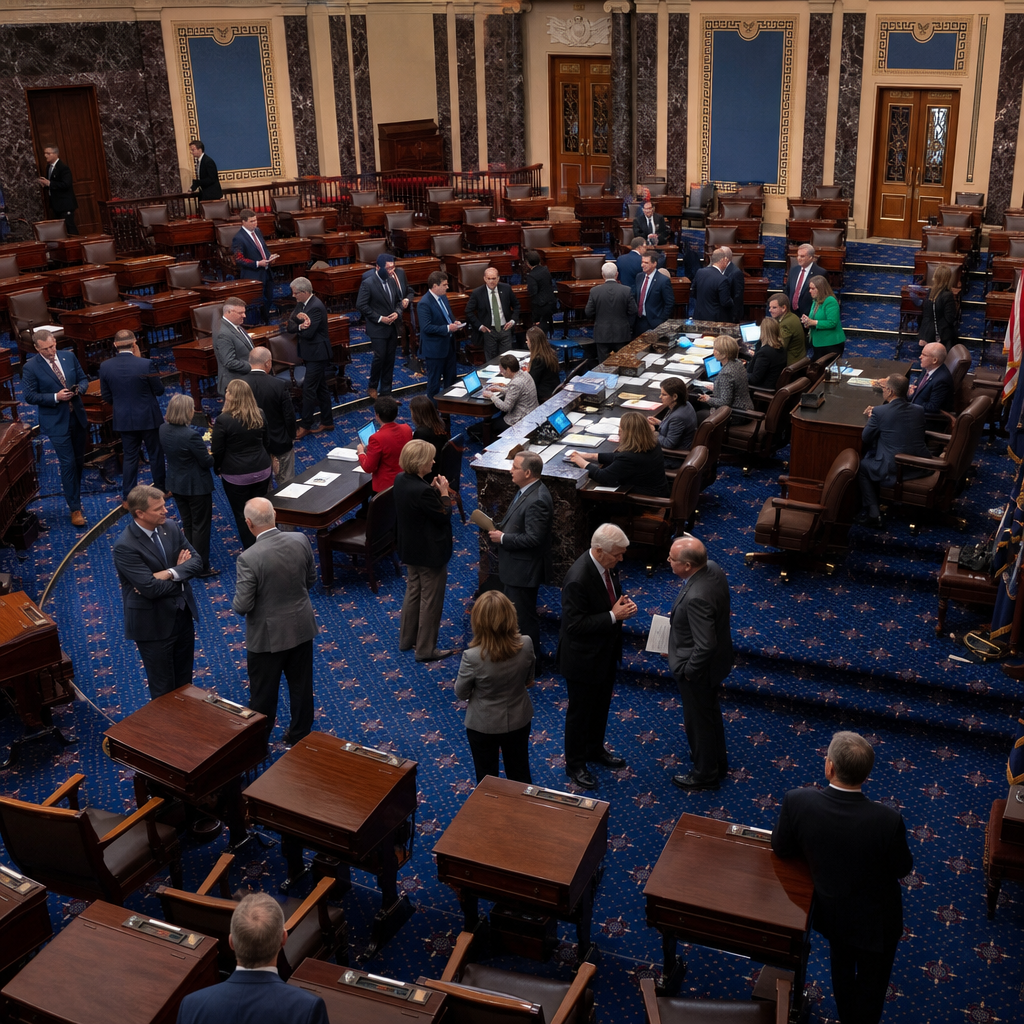
Cloture is the formal Senate procedure used to end debate and move a matter toward a final vote, and understanding it is essential to understanding how the modern United States Senate actually works. In AP Government and Politics, students often learn that the House runs by majority rule while the Senate protects extended debate, but that summary is incomplete without cloture, the rule that limits delay. I have taught this topic by walking students through actual Senate votes, because the term seems technical until you see how often it shapes nominations, legislation, and public controversy. At its core, cloture is a motion to cut off debate. Today, most Senate business requires sixty votes to invoke cloture, though there are important exceptions for nominations and budget reconciliation. That single fact explains why a chamber with one hundred members can feel as though it operates on a supermajority threshold even though the Constitution does not generally require one for passing ordinary laws.
The key terms around cloture matter. Debate in the Senate is the period during which senators can speak, offer amendments, or otherwise delay action. A filibuster is the use or threat of extended debate to block or postpone a vote. Unanimous consent is an agreement that speeds procedure when no senator objects. Cloture is the mechanism, created by Senate Rule XXII, that allows the chamber to stop debate despite objections. The procedure matters because the Senate is designed to move more slowly than the House, and cloture is the point where minority rights and majority power collide. For students, journalists, and voters, cloture is not a side issue. It is often the hinge between policy proposal and actual law, between presidential nomination and confirmation, and between symbolic politics and institutional power.
What Cloture Means and Why the Senate Uses It
Cloture means a Senate vote to limit further debate on a pending matter. If the Senate invokes cloture, debate does not instantly disappear, but it becomes capped under Rule XXII. That cap prevents a determined minority from talking indefinitely or using procedural delay forever. In plain terms, cloture is the Senate’s off-ramp from endless discussion. Without it, the chamber would struggle to reach final votes on contested issues. With it, the Senate preserves the tradition of broad debate while still retaining a formal way to act.
The procedure emerged from a real problem. For much of its history, the Senate prized unlimited debate and had no straightforward way to force an end to it. In 1917, after senators blocked action related to President Woodrow Wilson’s arming of merchant ships during World War I, pressure grew for reform. The Senate adopted Rule XXII, creating cloture. Originally, invoking cloture required a two-thirds vote of senators present and voting. In 1975, after years of criticism that the threshold was too high, the Senate lowered the requirement for most matters to three-fifths of the full Senate, usually sixty votes. That change did not eliminate obstruction, but it made cutting off debate more achievable.
From experience reviewing Senate records with students, the most common misunderstanding is that cloture and the filibuster are identical. They are related, not identical. The filibuster is the tactic of prolonged debate or threatened prolonged debate. Cloture is the response. Another misunderstanding is that senators must always stand and speak for hours, as in classic films. In the modern Senate, many filibusters are “silent” or “virtual.” A senator or party signals that it will not agree to end debate, and leaders then need the votes for cloture before bringing a matter to final passage. That is why cloture votes have become such a visible part of Senate politics.
How the Cloture Process Works Step by Step
The cloture process follows defined procedural steps. First, at least sixteen senators must sign a cloture motion. That filing requirement ensures that one senator alone cannot trigger the process casually. Once filed, the motion does not come to an immediate vote. Under Senate rules, the cloture vote occurs on the second day the Senate is in session after the motion is presented. This delay gives senators time to negotiate, assess support, and decide whether further debate is worthwhile.
When the vote occurs, the threshold depends on the matter before the Senate. For most legislation, three-fifths of the full Senate must vote yes, which means sixty votes if there are no vacancies. For proposals to change Senate rules, the requirement is two-thirds of senators present and voting. If cloture fails, debate can continue and the minority retains leverage. If cloture succeeds, post-cloture limits apply. Senators generally have up to thirty additional hours of debate on most matters, and amendments must satisfy germaneness requirements. Those limits matter because they narrow opportunities for delay and force the chamber toward a final disposition.
In practice, majority leaders often file cloture not only to defeat obstruction but also to structure the floor schedule. I have seen students assume cloture is used only in dramatic standoffs, yet routine Senate management now regularly involves cloture filings because unanimous consent is harder to obtain in a polarized chamber. Leaders may file cloture on a bill, a nomination, or even the motion to proceed to a bill. Each use reflects the same basic reality: when consent fails, formal procedure takes over.
| Senate situation | What cloture does | Typical threshold | Practical effect |
|---|---|---|---|
| Ordinary legislation | Limits debate under Rule XXII | Three-fifths of full Senate | Usually requires sixty votes to move toward passage |
| Executive or judicial nominations | Ends debate on the nomination | Simple majority | Allows confirmation without a sixty-vote hurdle |
| Supreme Court nominations | Ends debate on the nomination | Simple majority | Reflects the 2017 rule change for the Court |
| Senate rule changes | Cuts off debate on changing rules | Two-thirds present and voting | Makes formal rules changes especially difficult |
Cloture, the Filibuster, and the Shift to Modern Senate Warfare
To understand cloture fully, you need to understand how the filibuster evolved. The classic talking filibuster, in which senators physically hold the floor, still exists in theory, but the modern Senate more often operates through threatened delay. As polarization increased, party leaders began assuming that many controversial matters would need cloture. That changed the Senate’s baseline from majority rule with occasional obstruction to a chamber where sixty votes are often needed just to move ahead. Scholars and practitioners have described this as a de facto supermajoritarian Senate.
Historical numbers make the shift clear. In the mid-twentieth century, cloture motions were relatively rare. By the late twentieth and early twenty-first centuries, they surged dramatically. That rise does not mean senators suddenly started giving endless speeches more often. It means the threat of prolonged debate became institutionalized. Instead of dramatic floor performances, obstruction increasingly happened through procedural signals, holds, and refusal to grant unanimous consent. In my own work explaining Senate procedure, this is the moment when students realize that rules can change politics without changing the Constitution.
Cloture also shapes bargaining. A minority party with more than forty-one senators can often block cloture on legislation, forcing the majority to compromise, narrow a bill, or abandon it. That leverage can protect minority viewpoints, but it can also encourage gridlock. Supporters of the filibuster argue that the Senate was designed to cool public passions and force broader consensus. Critics respond that routine cloture battles paralyze government and give a determined minority veto power over widely supported measures. Both arguments contain truth. The real institutional question is how much obstruction a deliberative chamber should permit before deliberation becomes dysfunction.
Major Rule Changes and the So-Called Nuclear Option
Although Rule XXII still governs cloture, its application to nominations has changed sharply. In 2013, the Senate majority used a procedural maneuver often called the nuclear option to reinterpret Senate precedent so that executive branch nominations and lower federal court nominations could end debate by a simple majority rather than sixty votes. In 2017, the Senate extended that approach to Supreme Court nominations. Those moves did not abolish cloture. They changed the number of votes required to invoke it on those categories.
The effect was immediate and substantial. Before 2013, a minority could block many nominees by preventing sixty votes for cloture. After the rule change, nominees needed only a simple majority to end debate and proceed. This altered the confirmation process for cabinet officials, agency heads, and judges. After 2017, the same principle applied to Supreme Court nominees. As a result, the Senate preserved the sixty-vote cloture hurdle mainly for ordinary legislation, while nominations moved closer to straightforward majority control.
These rule changes show an important principle of Senate politics: procedure is power. Many public debates focus on ideology or campaign promises, but institutional outcomes often turn on vote thresholds and precedents. I emphasize this because AP Government students are expected to connect formal rules with political consequences. When a Senate majority cannot pass major legislation because it lacks sixty votes, but can still confirm judges with fifty-one, that is not a contradiction. It is the product of different cloture standards after recent procedural changes.
When Cloture Matters Most: Laws, Nominations, and Budget Fights
Cloture matters most when the stakes are high and party margins are narrow. On major legislation, cloture can determine whether a bill ever reaches final passage. A party may control the Senate with fifty-one or fifty-two seats and still fail to enact its agenda because it cannot assemble sixty votes. Civil rights legislation, health care reform debates, immigration proposals, voting rights bills, and gun policy measures have all been shaped by the cloture threshold. Sometimes the majority negotiates bipartisan support. Sometimes it turns to alternative procedures, especially budget reconciliation, which is not subject to the filibuster and therefore does not require sixty votes to end debate.
Nominations present a different pattern. Since the rule changes, cloture on nominees usually reflects partisan majority strength rather than supermajority bargaining. This has accelerated judicial confirmations and made Senate control even more consequential during presidential terms. For example, when one party controls both the presidency and the Senate, it can generally confirm executive officials and judges without minority support, provided it remains united. That outcome has long-term effects because federal judges serve for life and shape constitutional interpretation for decades.
Budget fights reveal another layer. Reconciliation bills, used for tax and spending measures with direct budgetary effects, bypass the sixty-vote cloture hurdle. That is why major fiscal packages are often designed to fit reconciliation rules enforced by the Senate parliamentarian under the Byrd Rule. In practical terms, if a policy can qualify for reconciliation, the majority may avoid a cloture battle entirely. If it cannot, sixty votes usually remain the path for legislation. This distinction explains why some large policy changes move through the Senate while others stall despite majority support.
Why Cloture Is a Core AP Government Concept
For AP Government and Politics, cloture sits at the intersection of institutions, political behavior, and public policy. It illustrates how congressional rules shape lawmaking just as much as elections do. It also helps students compare the House and Senate accurately. The House Rules Committee often structures debate tightly, making majority control more direct. The Senate, by contrast, gives individual senators and minorities greater procedural leverage, with cloture acting as the main check on unlimited delay.
Cloture also connects to broader themes in this Misc section of AP Government and Politics. It links to separation of powers because Senate confirmation authority affects presidents and courts. It links to federal policymaking because many proposals succeed or fail at the cloture stage. It links to political parties because party unity often determines whether leaders can even attempt floor action. And it links to democratic theory because the Senate’s procedures raise a basic question: should a national legislature prioritize simple majority rule or minority rights in debate?
The clearest takeaway is this: cloture is not just a procedural term to memorize. It is one of the Senate’s central power tools. If you want to understand why some bills die, why nominations move faster than legislation, and why Senate elections can have outsized consequences, start with cloture. Review Rule XXII, track actual cloture votes, and connect thresholds to outcomes. That habit will make every other Senate topic easier to understand and will strengthen your command of AP Government and Politics as a whole.
Frequently Asked Questions
What is cloture in the Senate, and why does it matter so much?
Cloture is the formal procedure the United States Senate uses to end debate on a bill, nomination, or other matter and move the chamber closer to a final vote. In simple terms, it is the Senate’s main tool for stopping unlimited discussion and delay. That matters because the Senate is designed differently from the House of Representatives. The House usually operates with strict time limits and majority control over debate, while the Senate has traditionally allowed much more open-ended discussion. Without cloture, a determined minority of senators could keep debate going and prevent the Senate from acting at all.
Understanding cloture is essential because it helps explain how the modern Senate really functions. Many students first hear about the filibuster, the practice of prolonging debate or threatening prolonged debate to block action. But filibuster and cloture are closely connected. If a filibuster is the delaying tactic, cloture is the Senate’s response to that delay. In practice, cloture has become one of the most important procedural votes in the chamber, often determining whether the Senate can move forward on major legislation, judicial nominations, executive appointments, and controversial national issues.
Cloture also matters because it shows that Senate decision-making is not based only on a simple majority. Even when more senators support a proposal than oppose it, that proposal may stall unless supporters can gather enough votes to cut off debate. That is why cloture votes often receive intense political attention. They reveal whether a majority can actually govern in a chamber built to give minorities leverage. For AP Government and Politics students, cloture is a key concept because it connects abstract ideas about majority rule, minority rights, and institutional design to the real mechanics of lawmaking.
How many votes are needed to invoke cloture, and has that rule changed over time?
For most legislation in today’s Senate, invoking cloture requires three-fifths of the full Senate, which is normally 60 votes if all 100 seats are filled. That is the number most people associate with cloture because it is the standard threshold for ending debate on ordinary bills and many other legislative matters. Once 60 senators vote for cloture, debate is limited and the Senate can move toward final consideration rather than allowing debate to continue indefinitely.
However, the rule has changed significantly over time. When the Senate first adopted a formal cloture rule in 1917, it required a two-thirds vote of senators present and voting. That was a very high bar and made cloture difficult to achieve. In 1975, the Senate lowered the threshold for most matters to three-fifths of the full Senate, creating the modern 60-vote standard. That reform was intended to make it somewhat easier for the Senate to overcome obstruction while still preserving the chamber’s tradition of extended debate.
There are also important exceptions. In recent years, the Senate changed its interpretation of the rules for many nominations. Cloture on most presidential nominations, including executive branch appointments and lower federal court judges, now requires only a simple majority. In 2017, that simple-majority standard was extended to Supreme Court nominations as well. As a result, the 60-vote threshold still matters greatly for most legislation, but not for most nominations. This distinction is extremely important for students and readers because it shows that “the Senate needs 60 votes” is not universally true. Whether cloture requires 60 votes or a simple majority depends on the type of business before the chamber and on how Senate precedent has evolved.
What happens after the Senate invokes cloture?
Once the Senate invokes cloture, debate does not end instantly in the sense that the chamber moves straight to a final vote that same moment. Instead, cloture places firm limits on further debate. Under Senate rules, there is a capped period of additional consideration, and senators must work within those restrictions. This is important because cloture is best understood not as a magic switch that completely shuts off discussion, but as a procedural mechanism that prevents endless delay and creates a structured path toward a vote.
After cloture is invoked, senators face tighter limits on speaking time, and not all amendments or procedural maneuvers remain available. The purpose is to keep the matter moving. Eventually, after the post-cloture time is used or yielded back, the Senate proceeds to the final vote on the underlying question. That could mean passage or rejection of a bill, confirmation or rejection of a nominee, or some other final action depending on what the Senate is considering.
In practical terms, invoking cloture is often the decisive step because it signals that supporters have overcome the main procedural obstacle. If a measure reaches cloture, it usually has a strong chance of reaching a final vote. Still, cloture itself is not final passage. A senator could vote to end debate but still vote against the bill or nomination on the merits. That distinction is worth emphasizing in any explanation of Senate procedure. Cloture is about whether debate should continue, not necessarily about whether the underlying proposal deserves approval. For that reason, cloture votes are procedural votes with major political consequences, and they often reveal how Senate leaders build coalitions just to get to the point where the chamber can actually decide.
How is cloture related to the filibuster?
Cloture and the filibuster are two sides of the same Senate process. A filibuster is an effort to delay or block Senate action by extending debate or threatening to do so. Cloture is the formal method used to stop that delay. When people say a bill was “filibustered,” they often mean that opponents prevented the Senate from moving ahead unless supporters could gather enough votes for cloture. In modern practice, the mere threat of prolonged debate can be enough to force a cloture vote, even without the dramatic image of a senator speaking endlessly on the floor.
This relationship is one reason cloture is so central to understanding the Senate. The chamber is often described as a place that protects minority rights, and the filibuster is one of the clearest examples of that protection. But cloture shows the limit of those rights. The Senate does not give a minority unlimited power in every circumstance. Instead, it creates a procedural contest: can the minority sustain delay, or can the majority and its allies assemble the required number of votes to end debate?
That dynamic shapes modern politics in profound ways. It affects what legislation reaches the floor, how bills are negotiated, and whether bipartisan compromise becomes necessary. Supporters of the filibuster often argue that it encourages deliberation and prevents narrow majorities from acting too quickly. Critics argue that it allows obstruction and makes governing far more difficult. Cloture sits at the center of that debate because it is the mechanism that decides whether the Senate remains in prolonged debate or moves to action. For students trying to understand real Senate behavior, it is not enough to memorize definitions. The key is seeing that cloture is what turns the abstract idea of “extended debate” into a concrete struggle over votes, timing, and power.
Why do AP Government students and general readers need to understand cloture to understand the modern Senate?
Cloture is essential because it reveals that the modern Senate cannot be understood through simple slogans alone. Students are often taught that the House follows majority rule while the Senate protects debate and minority rights. That basic comparison is useful, but it leaves out a crucial reality: the Senate has formal procedures for limiting delay, and cloture is the most important one. Without cloture, explanations of the Senate are incomplete and sometimes misleading, because they suggest endless debate exists without any structured way to stop it.
For AP Government students especially, cloture connects multiple course concepts at once. It illustrates how formal rules shape political outcomes, how institutions distribute power, how minorities can exercise influence, and how majorities still need procedural strategies to govern. It also helps students interpret real-world events. When news coverage says a bill “failed to clear the Senate” or that senators “did not have the 60 votes needed to advance legislation,” that is usually a cloture story. Knowing the term allows students to move beyond surface-level reporting and understand what actually happened procedurally.
More broadly, cloture helps explain why the Senate often moves slowly, why broad coalitions matter, and why procedural votes can be just as important as final passage votes. It teaches an important lesson about American government: political outcomes depend not only on who supports a policy, but also on the rules that determine when and how decisions can be made. That is why teachers often use real Senate votes to explain cloture. Once students see actual roll calls and notice that the fight over ending debate can be separate from the fight over the bill itself, the Senate starts to make much more sense. Cloture is not just a vocabulary term. It is one of the clearest windows into how power, procedure, and strategy interact in the United States Senate.