
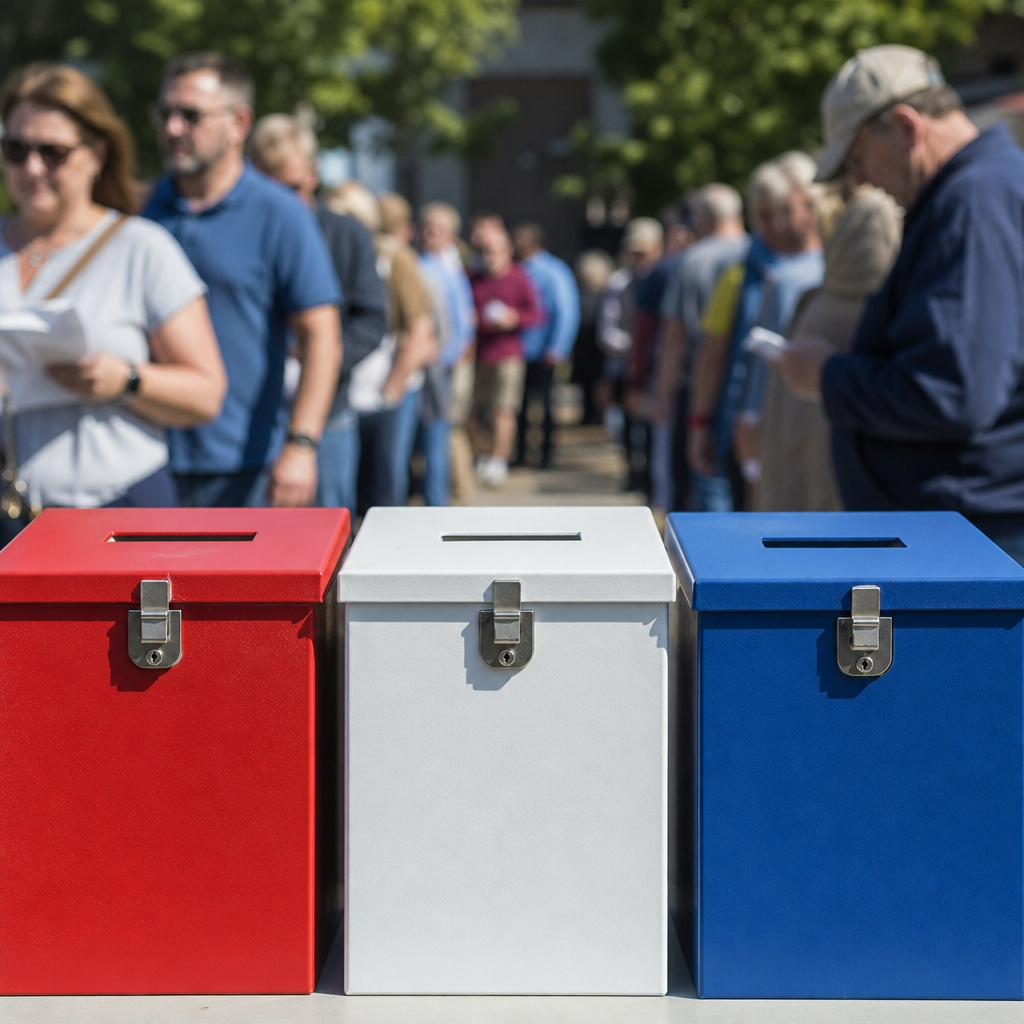
Primary elections shape who appears on the general-election ballot, and the rules behind them often determine which voters have influence, which candidates gain traction, and how representative the final choices feel. In AP Government and Politics, understanding closed primaries, open primaries, and top-two primaries is essential because these systems connect parties, voters, federalism, and democratic participation in one practical topic. A primary is an election used to choose party nominees or narrow the field before the general election. A closed primary limits participation to voters registered with a party. An open primary allows voters who are not tied to one party, and in some states even voters registered with another party, to select which party’s primary to enter. A top-two primary places all candidates on one ballot, regardless of party, and the two highest vote-getters advance to the general election.
These differences matter because election rules are not neutral. After working through state election systems and helping students compare ballot access laws, I have seen that a small rule change can alter turnout, campaign strategy, and ideological incentives. Primaries affect whether parties control nominations tightly or whether independent voters play a larger role. They can encourage candidates to appeal to loyal party activists, to moderate swing voters, or to broad coalitions across party lines. They also shape how well the system reflects majoritarian goals, minority viewpoints, and local political culture. For students, this subject appears in questions about political parties, linkage institutions, participation, and state variation. For citizens, it helps answer a basic question: who really chooses the candidates before November arrives?
What closed, open, and top-two primaries mean
A closed primary is the most party-centered model. Only voters registered with a party may participate in that party’s nomination contest. If a voter is registered Republican, that voter cannot cast a ballot in the Democratic primary, and an independent voter usually cannot vote in either party’s primary. Parties favor closed primaries because they protect their associational rights and allow committed members to select nominees. In practice, this system can give more influence to regular party voters, who tend to be more ideological and more informed about internal party debates.
An open primary gives voters more flexibility. The exact rules vary by state, which is important in AP Government because election administration is decentralized. In some open systems, a voter does not register by party and simply chooses one party ballot on primary day. In others, unaffiliated voters may choose a party primary, while registered party members must stay within their own party. The central idea is that participation is less restricted by party registration. Supporters argue that open primaries increase access, especially for independents, who make up a large and growing share of the electorate in many states.
A top-two primary, sometimes called a nonpartisan blanket primary, changes the structure more dramatically. All candidates for an office appear on the same primary ballot, and all voters choose from that single list. Party labels may appear, but the state is not running separate Democratic and Republican nomination contests. Instead, the two candidates with the most votes advance to the general election, even if both belong to the same party. California and Washington are the classic examples. This model shifts the primary from party nomination to candidate winnowing and can produce general-election contests that do not mirror the two-party balance voters expect.
How each system works in practice
The operational differences show why these systems produce different outcomes. In a closed primary, the first administrative step is party registration. States set deadlines for changing registration, sometimes weeks before Election Day. That means a voter who wants to influence a competitive primary must plan ahead. Campaigns in closed-primary states spend time identifying registered partisans and mobilizing them through canvassing, text banking, direct mail, and voter-file targeting tools such as VAN for Democrats or i360 for Republicans. Because turnout is often lower than in general elections, a campaign with disciplined supporters can gain a major advantage.
Open primaries require a different campaign approach. Candidates still care about loyal party voters, but they also court independents and less habitual participants. Messaging often broadens. A candidate may emphasize electability, bipartisan appeal, or practical governance rather than only ideological purity. Election officials must also explain clearly that a voter may choose only one party’s ballot. A frequent misconception is that open primaries let voters cast ballots in multiple party contests. They do not. A voter selects one primary to participate in for that election cycle.
Top-two primaries alter incentives even further because every voter sees the same candidate list. Campaigns often compete for first and second place rather than for a formal party nomination. In districts dominated by one party, the decisive contest may occur in the primary, and the general election may feature two Democrats or two Republicans. That happened in several California congressional and statewide races after the state adopted the system through Proposition 14 in 2010. Candidates must think strategically about vote splitting. If several candidates from one party divide their base, a rival party with fewer total supporters can still secure a top-two spot.
| Primary system | Who can vote | Ballot structure | Main advantage | Main criticism |
|---|---|---|---|---|
| Closed primary | Registered party members only | Separate party ballots | Protects party control over nominations | Excludes independents and may reward ideological voters |
| Open primary | Voters may choose one party’s primary, depending on state rules | Usually separate party ballots selected on election day | Expands participation and flexibility | Can weaken party gatekeeping and create strategic voting concerns |
| Top-two primary | All voters participate in one shared primary | Single ballot with all candidates | Encourages broad appeal and can elevate moderates | May shut minor parties out of the general election |
Why parties and voters disagree about the best system
The argument over primary systems comes down to competing democratic values. Political parties are private associations with public functions. They recruit candidates, organize coalitions, and provide cues to voters. From that perspective, parties argue they should have the right to choose their own nominees through a closed process. The Supreme Court has recognized party associational rights in cases involving primary rules, especially when states imposed structures parties opposed. A closed primary can therefore be defended as a way to preserve party identity and prevent nonmembers from influencing internal decisions.
Voters who favor open primaries usually start from a different principle: public elections funded by taxpayers should not exclude independent citizens. That argument has force because primaries frequently decide the real winner in heavily Democratic or heavily Republican districts. If the meaningful election occurs before November, excluding unaffiliated voters can look undemocratic. Open primary supporters also argue that broader participation reduces the influence of the most ideological activists. In my experience reviewing turnout and precinct results, there is some truth to that claim, but it is not automatic. Candidate quality, media environment, and district composition still matter more than one procedural rule alone.
Top-two advocates present a structural critique of both party-run models. They argue that when candidates only need to satisfy partisan primary voters, officeholders become less responsive to the median voter. A top-two primary is supposed to push candidates toward wider coalitions because every voter participates from the start. Yet critics respond that this system can actually limit choice in November, especially for third parties. A Libertarian, Green, or independent candidate may appear on the primary ballot but fail to reach the general election even with meaningful support. So the tradeoff is clear: broader initial participation may come at the cost of reduced ideological diversity on the final ballot.
Effects on turnout, moderation, and representation
One of the most common questions is whether open or top-two primaries create more moderate politics. The evidence is mixed. Political scientists have found that institutions matter, but their effects are usually modest compared with polarization driven by geography, media sorting, donor networks, and nationalized party conflict. Still, primary rules shape margins. Closed primaries can empower high-propensity party voters who hold stronger issue positions. In safe districts, that may encourage candidates to move left or right to secure nomination. Open and top-two systems can create incentives to speak to a broader electorate, especially in suburban or competitive areas.
Turnout is another major issue. Open systems usually lower participation barriers because independents do not need to re-register in advance. That can increase involvement, particularly among younger voters or less consistent voters who dislike party labels. Top-two systems also simplify the ballot from the voter’s perspective by placing everyone on one list. However, turnout gains are not guaranteed. Primary elections still happen at times when public attention is lower, and many voters remain unsure why primaries matter. Election administration, voter education, competitive races, and vote-by-mail rules often affect turnout as much as the primary format itself.
Representation involves both fairness and outcomes. Closed primaries may better represent party members, but not the broader public. Open primaries may better include independents, but critics say they blur party accountability. Top-two systems may reward coalition-building, yet they can produce same-party general elections that leave some voters feeling unrepresented. Washington State offers a useful example: in some districts, top-two races have featured candidates from the same party who differ meaningfully on style or ideology, giving voters nuanced choices. In other settings, however, the absence of a major-party alternative in November can depress enthusiasm and confuse voters accustomed to a traditional partisan matchup.
Legal background and state examples students should know
State primary systems are shaped by law, party rules, and court decisions. In California Democratic Party v. Jones (2000), the Supreme Court struck down California’s blanket primary, where voters could choose candidates from different parties for different offices on the same ballot. The Court held that forcing parties to let nonmembers help choose nominees violated associational rights. That ruling matters because it explains why top-two systems were redesigned as nonpartisan qualifying elections rather than party nomination contests. In other words, the state could create a broad winnowing election, but it could not compel parties to accept nominees chosen through a fully open blanket process they rejected.
California and Washington use top-two systems, while Louisiana uses a related but distinct approach often called a majority runoff or “jungle primary” structure for some elections, where all candidates appear together and a candidate can win outright if receiving a majority. Many states use some form of closed or open primary, but labels can be misleading. States may classify themselves as open, semi-closed, or semi-open depending on whether unaffiliated voters may participate and whether party members can cross over. For AP exam purposes, the key point is not memorizing every state but understanding that federalism creates substantial variation in election rules.
These examples also show why reforms produce unintended effects. After adopting top-two primaries, California saw some races where two Democrats advanced from heavily Democratic districts, leaving Republican voters without a same-party option in the general election. At the same time, some business-friendly Democrats and more pragmatic Republicans argued the system rewarded candidates able to reach beyond base voters. In closed-primary states such as New York, party registration deadlines and organizational strength often make party insiders especially influential. In open-primary states, candidates may invest more in broad name recognition and cross-partisan messaging. The mechanics of the system shape political behavior long before votes are counted.
How to compare these systems in AP Government essays and classwork
When writing about closed primaries versus open primaries versus top-two primaries, begin with a clear definition, then connect the system to a constitutional or political principle. Closed primaries link to party organization and freedom of association. Open primaries connect to participation and inclusiveness. Top-two primaries connect to electoral reform, candidate incentives, and ballot structure. Strong essays also explain that primary rules are state-level choices, illustrating federalism in action. If a prompt asks about polarization, avoid claiming that one reform single-handedly fixes it. A better argument is that primary design can influence incentives at the margins while broader national forces still drive most partisan conflict.
Use concrete examples whenever possible. Mention California and Washington for top-two. Reference the Supreme Court’s concern for party associational rights. Note that independents are central to debates over open primaries because they may be excluded in closed systems despite paying taxes and living under the same elected officials. If comparing systems, discuss tradeoffs directly. Closed primaries protect party control but limit participation. Open primaries broaden access but may weaken party gatekeeping. Top-two primaries encourage broad coalition strategies but can squeeze minor parties out of the general election. That balanced framing shows analytical control rather than simple advocacy.
This hub article should also guide deeper study across the broader AP Government and Politics “Misc” category. Related concepts include caucuses versus primaries, party realignment, ballot access laws, campaign strategy, voter turnout, third parties, and the role of state election officials. If you are building notes, create links between this topic and legislative representation, media effects, and political efficacy. Primaries are not a narrow procedural detail. They are an entry point into how institutions filter public opinion into actual governing choices.
Closed primaries, open primaries, and top-two primaries each answer the same democratic question in a different way: who should help decide which candidates reach the general election? Closed primaries give that power mainly to party members. Open primaries expand access, especially for independents. Top-two primaries replace party nomination contests with a single qualifying election in which the two strongest candidates advance. None of these systems is perfect. Each reflects a different balance among party rights, voter inclusion, moderation, accountability, and electoral competition.
For AP Government and Politics, the main takeaway is that primary systems are a practical example of how institutions shape political behavior. They influence campaign strategy, turnout, ideological incentives, and the menu of choices voters ultimately see in November. They also demonstrate federalism because states adopt different rules and produce different political outcomes. If you understand the definitions, the tradeoffs, the legal background, and the state examples, you can explain this topic clearly in multiple-choice questions, short responses, and argumentative essays.
Use this article as your hub for the “Misc” side of AP Government election rules, then branch into related topics such as caucuses, runoff elections, party organization, and ballot access. The more you connect primary structures to broader course themes, the easier the entire unit becomes.
Frequently Asked Questions
What is the difference between a closed primary, an open primary, and a top-two primary?
A closed primary is a system in which only voters registered with a political party can participate in that party’s primary election. For example, a registered Democrat would vote in the Democratic primary, and a registered Republican would vote in the Republican primary, while unaffiliated or independent voters may be excluded unless state law provides an exception. This structure gives political parties greater control over who helps choose their nominees and is often defended as a way to preserve party identity and ensure that committed party members select candidates who represent the party’s principles.
An open primary works differently. In an open primary, voters do not always have to be registered members of a party in advance in order to participate in that party’s nominating contest. Depending on the state, voters may choose on primary day which party’s primary to vote in, although they usually can vote in only one party’s primary at a time. Supporters argue that this broadens participation and allows independents to have a voice in a critical stage of the election process. Critics, however, worry that it may weaken party cohesion or allow strategic crossover voting.
A top-two primary, sometimes called a nonpartisan blanket primary, changes the process more dramatically. In this system, all candidates for an office appear on the same primary ballot regardless of party affiliation, and all voters can choose among them. The two candidates who receive the most votes advance to the general election, even if they belong to the same political party. Unlike closed and open primaries, which are mainly about how parties choose nominees, the top-two system is centered on narrowing the field to the two strongest candidates overall. This can reshape campaign strategy, voter incentives, and even the partisan makeup of the general-election ballot.
How do these primary systems affect voter participation and influence?
Primary systems can significantly affect who participates and whose preferences matter most. In a closed primary, the most direct influence belongs to registered party members. Because only party affiliates can usually vote, the system strengthens the role of people who have made a formal commitment to a party. That can make the electorate in the primary more ideologically consistent, but it can also leave out independent voters, who make up a substantial share of the electorate in many states. As a result, some citizens may have no say in the most meaningful stage of candidate selection, especially in heavily one-party areas where the primary effectively determines the eventual winner.
Open primaries generally expand access. Voters who do not want to formally join a party, or who prefer flexibility from one election cycle to another, can still take part in choosing candidates. This can increase participation among independents and moderates and may produce nominees who appeal to a broader range of voters. At the same time, because voters are not always limited to a party with which they are registered, open primaries can lead to debates about whether the people selecting a party’s nominee truly represent that party’s base.
Top-two primaries broaden participation in a different way. Every voter sees the same pool of candidates, and every vote counts toward determining the two finalists. This can make the election feel more inclusive because all voters, regardless of party, participate in the same contest from the beginning. However, the distribution of influence can become more complicated. In districts dominated by one party, the general election may feature two candidates from that same party, giving minority-party voters a limited ideological range in November. Still, those voters had an equal chance to participate in the primary, which is one reason supporters say the top-two format better reflects the full electorate rather than only party insiders.
Why do political parties and states prefer different primary systems?
States and parties often prefer different primary systems because they are trying to achieve different goals. Political parties are private organizations with strong interests in maintaining their identity, promoting loyal candidates, and controlling the message attached to their label. From that perspective, closed primaries are attractive because they allow party members to choose nominees without outside interference. Parties may argue that if candidates will represent the party in the general election, then party members should have the main voice in deciding who those candidates are.
States, by contrast, are often focused on broader democratic concerns such as turnout, fairness, accessibility, and administrative simplicity. A state may support open or top-two primaries because those systems can include more voters, particularly independents who do not want to register with a party. In AP Government terms, this reflects the role of federalism: states have substantial authority over election administration, which means they can design different rules based on their own political cultures, legal traditions, and reform movements.
There are also strategic and historical reasons for these preferences. Some states adopt open primaries because they believe more inclusive rules will reduce polarization or encourage centrist candidates. Others use top-two systems to weaken strict party control and create more competition in the general election. Meanwhile, parties may resist those reforms if they believe such systems dilute their ability to nominate candidates who align with party priorities. The tension between party rights and voter access is one of the most important reasons primary systems vary so much across the country.
How can primary systems influence the kinds of candidates who advance to the general election?
The design of a primary system can shape candidate behavior long before voters cast ballots. In a closed primary, candidates often focus heavily on appealing to party loyalists, because those are the voters who will decide the nomination. That can reward candidates who take clearer ideological positions and energize the party base. In some cases, this creates pressure to move away from the political center during the primary, even if the candidate later tries to appeal to a wider audience in the general election.
In an open primary, candidates may need to build a coalition that includes both committed party members and independent voters. This can encourage broader messaging and a more moderate tone, especially in competitive states where independents can play a decisive role. However, the exact impact depends on the state’s political environment. If a party’s loyal voters still dominate turnout, the results may look similar to those in a closed primary. The rules matter, but so do turnout patterns, media attention, campaign resources, and district partisanship.
Top-two primaries can produce even more unusual outcomes. Because all candidates compete in one contest, candidates are not simply trying to become their party’s nominee; they are trying to finish in the top two overall. That can lead to crowded fields where candidates from the same party split votes, sometimes allowing a less expected candidate to advance. It can also produce general elections between two Democrats or two Republicans in strongly partisan districts or states. Supporters argue that this can reward candidates with broader appeal and reduce the influence of narrow party bases. Critics respond that it can confuse voters, disadvantage minor parties, and still fail to eliminate polarization. The key point is that primary rules shape incentives, and incentives shape the kinds of candidates voters ultimately see on the ballot.
Why is understanding primary systems important in AP Government and Politics?
Primary systems are important in AP Government and Politics because they connect several major course themes in one practical example. First, they show how political parties operate in the United States. Parties are not mentioned directly in the Constitution, yet they play a central role in organizing elections, recruiting candidates, and structuring voter choices. Studying primaries helps explain how parties translate public support into official nominations and why internal party rules can have major public consequences.
Second, primaries highlight democratic participation and representation. The type of primary a state uses affects who gets to participate, whose voices count at an early and influential stage, and whether the final ballot reflects a narrow partisan base or a broader electorate. This makes primaries a useful way to think about turnout, political efficacy, voter access, and the debate over whether elections should prioritize party autonomy or wider public inclusion.
Third, primary systems are a strong example of federalism in action. Because states control many aspects of election administration, the United States does not use one uniform primary model. Instead, different states adopt different systems, producing real-world comparisons that students can analyze. Finally, primaries matter because they affect governance itself. The candidates who survive the primary process can shape legislative behavior, party polarization, and the choices available in the general election. In other words, understanding closed, open, and top-two primaries is not just about memorizing election vocabulary; it is about understanding how institutions shape political outcomes in American democracy.