
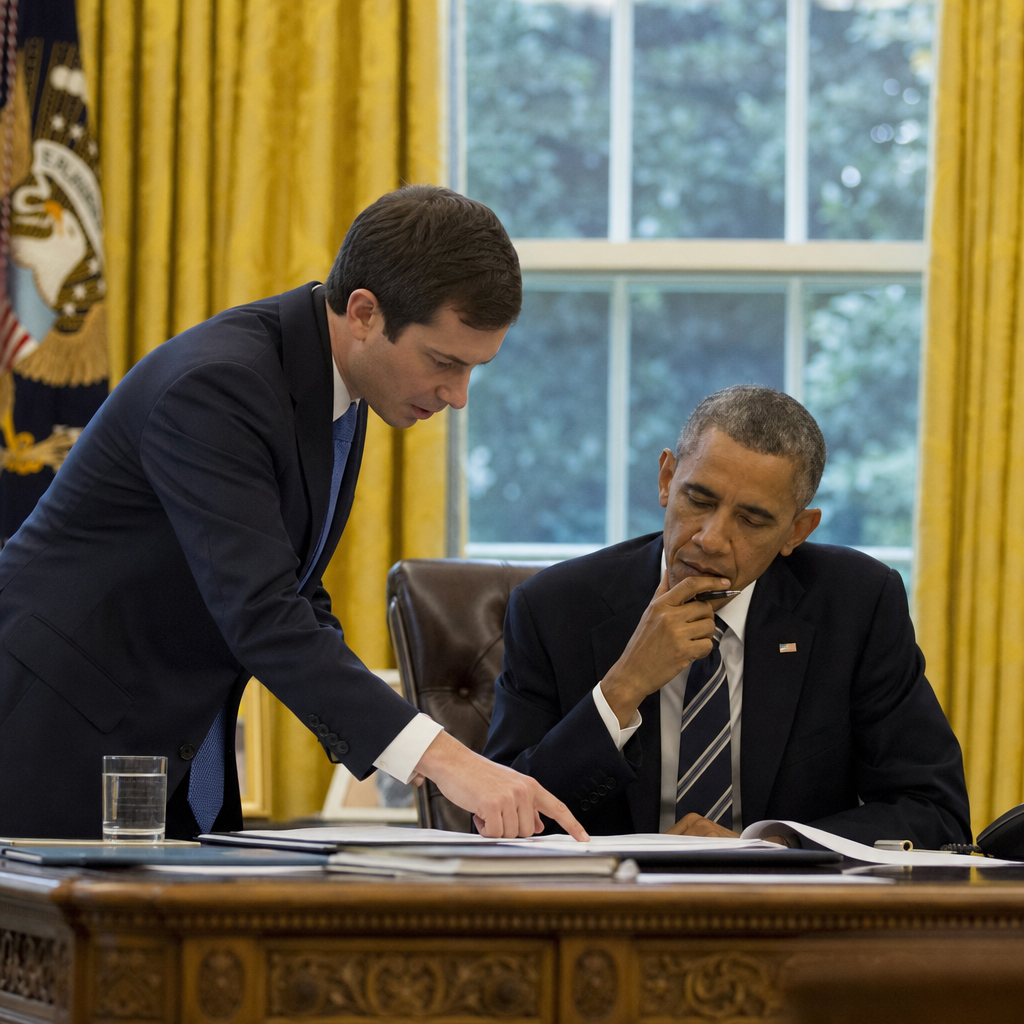
The chief of staff is one of the most influential jobs in American government, yet it is held by someone voters never see on a ballot. In Washington, state capitals, city halls, and even congressional offices, this unelected adviser often decides what reaches the elected leader, which priorities move first, and how a political operation turns promises into action. Understanding chief of staff power matters because it reveals how modern government actually functions behind formal titles and constitutional diagrams.
A chief of staff is typically the top manager and strategic adviser for an elected executive or legislative leader. In the White House, the chief of staff coordinates access to the president, disciplines the policy process, manages senior staff, and often acts as an internal gatekeeper. Similar roles exist for governors, mayors, agency heads, and legislative leaders, though the exact authority varies. The key idea is straightforward: this person converts political goals into organized work. In AP Government and Politics, that makes the office important for studying institutions, bureaucracy, executive leadership, informal power, and the gap between legal authority and practical influence.
I have seen this role described as merely administrative, but that misses the point. The chief of staff can shape agendas without signing laws, influence appointments without standing for confirmation, and affect negotiations without appearing at the podium. Because the position sits at the intersection of policy, politics, media, scheduling, and personnel, it becomes a force multiplier. For students using this page as a hub for broader “miscellaneous” topics in AP Government and Politics, the chief of staff is a useful case study in how informal institutions guide formal ones, how presidential management affects outcomes, and why democratic accountability is more complicated than election results alone.
What a chief of staff actually does
The simplest answer is that a chief of staff manages time, information, and people. Time is power in government, and the chief usually controls the schedule. If an issue gets ten minutes in the Oval Office or on a governor’s daily briefing, it has a chance to move. If it does not, it stalls. Information is also power. Chiefs decide which memos are ripe for decision, which disputes need elevation, and which competing viewpoints should be presented together. On personnel, they supervise staff structure, reduce overlap, and make sure political appointees and career officials are working toward the same priorities.
That practical control turns into strategic influence. A strong chief of staff sets decision rules: who must be consulted, when legal review is required, how policy options are framed, and what deadlines departments must meet. In the White House, chiefs have historically coordinated with the Office of Management and Budget, the National Security Council, the Domestic Policy Council, and the Office of Legislative Affairs to keep policy from splintering into isolated silos. In a mayor’s office, the equivalent work might involve aligning transportation, police, housing, and communications teams around a common agenda. The title sounds managerial, but the consequences are deeply political.
The role also includes triage. Governments face more demands than any elected leader can personally process, so the chief filters crises from distractions. During a natural disaster, for example, a governor’s chief of staff may shift the entire office into emergency mode, reorder meetings, connect the governor with emergency management officials, and coordinate with federal agencies such as FEMA. In calmer periods, the same chief may focus on legislation, appointments, or long-term strategic messaging. This flexibility explains why experienced elected officials rely heavily on the office.
Why unelected power can be so significant
The chief of staff matters because modern governance is too complex for a single elected official to manage alone. Presidents oversee a vast executive branch with millions of employees and a constant stream of domestic, military, economic, legal, and diplomatic decisions. Governors and mayors face similar coordination problems on a smaller scale. In that environment, the ability to organize process can be as consequential as the authority to make final decisions. An unelected official with process control can shape outcomes by structuring the menu of choices.
That does not mean the chief replaces the elected leader. Final legal authority still belongs to the president, governor, mayor, or legislative leader. But anyone who has worked around executive offices knows that the way options are presented changes the decision itself. A memo with two narrow choices leads to a different result than a briefing with five alternatives and clear tradeoffs. A meeting that includes agency experts produces different judgments than one dominated by political staff. Chiefs influence all of that, which is why historians often evaluate administrations partly through the strengths and weaknesses of their chiefs of staff.
Power also grows from trust. Elected leaders need someone who can deliver bad news, settle staff conflict, and enforce discipline. Cabinet secretaries may have their own policy agendas. Political advisers may focus on polling. Communications teams may prioritize optics. The chief of staff is supposed to integrate these perspectives and protect the principal’s time and credibility. In practice, that trusted role can make the chief the closest thing to a second center of gravity inside an administration.
The White House model: gatekeeper, broker, and enforcer
The modern White House chief of staff emerged as the presidency expanded in the twentieth century, especially after the Brownlow Committee’s 1937 conclusion that the president needed more help. The Executive Office of the President created a professional staff system, and over time the chief of staff became the person who made that system run. Some presidents prefer a hierarchical model with a strong gatekeeper; others choose a more open structure. Either way, the chief usually brokers disputes among aides and prevents unmanaged access from overwhelming the president.
Historical examples show the range of the role. H. R. Haldeman under Richard Nixon ran a tightly controlled system. James Baker under Ronald Reagan is often cited as a highly effective chief who balanced policy, politics, and process during an administration with powerful personalities. Leon Panetta helped restore order in Bill Clinton’s White House after an undisciplined start. Andrew Card managed process in George W. Bush’s White House during the early 2000s, including after the September 11 attacks. These chiefs did not all share the same ideology, but they shared one trait: they made presidential decision-making manageable.
When the system breaks down, the costs are visible. Weak process can produce policy surprises, internal leaks, mixed messaging, and rushed decisions. Students often focus on constitutional powers such as vetoes and executive orders, but internal management explains whether those powers are used effectively. A chief of staff who cannot coordinate lawyers, policy experts, and communicators may leave an administration legally vulnerable or politically incoherent. That is why this role belongs in any serious AP Government and Politics discussion of the presidency.
How chiefs of staff shape policy without voting
Chiefs of staff rarely cast decisive public votes, yet they influence what gets voted on, announced, negotiated, or delayed. First, they shape agenda setting. If infrastructure, immigration, or education appears repeatedly in senior staff meetings, those issues become administratively real. Second, they manage sequencing. Passing a major bill often requires months of groundwork: stakeholder outreach, fiscal scoring, legal review, coalition building, and message testing. The chief ensures these steps happen in the right order. Third, they allocate internal attention. A president who spends three weeks focused on debt ceiling talks is not spending those weeks on another legislative push.
Policy influence also appears in interagency coordination. Suppose a White House wants stricter environmental rules. The Environmental Protection Agency may support an aggressive standard, the Department of Energy may worry about grid reliability, the Council of Economic Advisers may model inflation effects, and political staff may flag regional backlash. The chief of staff can require a principals meeting, define the decision memo, and insist that competing analyses appear side by side. That is not symbolic. It determines whether the elected leader sees a balanced recommendation or a one-sided push.
| Function | How the chief of staff uses it | Why it matters politically |
|---|---|---|
| Scheduling | Controls meetings, travel, and briefing time | Signals which issues are urgent and which are sidelined |
| Information flow | Filters memos, drafts options, frames disputes | Shapes the leader’s understanding of choices |
| Personnel management | Supervises senior staff and coordinates offices | Reduces turf wars and aligns teams behind goals |
| Legislative strategy | Works with whip counts, negotiations, and timing | Improves odds that proposals become law |
| Crisis response | Reorders priorities and convenes decision makers fast | Can prevent confusion during emergencies |
Accountability, democracy, and criticism of the role
The strongest criticism is obvious: the chief of staff exercises major influence without direct electoral legitimacy. That tension is real. In a democratic system, citizens expect visible accountability, yet key decisions may be shaped by someone they did not elect and may barely know. Critics worry that gatekeeping can become insulation, shielding leaders from dissenting views, outside experts, or inconvenient facts. In extreme cases, a chief may become so dominant that access narrows and the administration starts to confuse loyalty with competence.
Still, eliminating the role would not remove unelected influence. It would likely disperse power to less coordinated advisers, donors, consultants, and informal confidants. The better question is how to keep the office effective while preserving accountability. Healthy administrations use clear lines of responsibility, documented decision processes, strong legal review, inspector general oversight where applicable, congressional oversight, press scrutiny, and internal disagreement before final decisions. Good chiefs do not suppress debate; they structure it. The aim is not secrecy for its own sake but disciplined governance.
Another criticism is that chiefs can prioritize political protection over public interest. That risk is genuine, especially close to elections. But it is not unique to chiefs of staff; it is a recurring feature of democratic politics. The practical safeguard is transparency where possible and a culture where policy, legal, and political perspectives are all represented. In my experience, the most effective chiefs are not the loudest or most controlling. They are the ones who know when to open the room, when to force a choice, and when to tell the elected leader that the current plan will fail.
Why this topic belongs in AP Government and Politics
As a hub topic under AP Government and Politics, the chief of staff connects multiple units students often study separately. It links the presidency to bureaucracy because executive leadership depends on administrative coordination. It connects institutions to behavior because informal norms can matter as much as formal rules. It also supports analysis of federalism when comparing White House, governor, and mayoral chiefs, and it sharpens thinking about civil liberties and accountability when gatekeeping affects transparency, media access, and public oversight.
This topic also helps students answer a common exam-level question: why do outcomes in government differ from what constitutional text alone would predict? The answer is that institutions operate through people, routines, incentives, and information systems. Chiefs of staff sit at the center of those systems. If you are building out your study of miscellaneous AP Government topics, use this article as a starting point for related subjects such as executive privilege, the cabinet, White House staff, independent agencies, party leadership, congressional staff, and the role of advisers in national security and domestic policy. Follow those links in your broader study plan, because together they show how public power is organized in real life.
The main lesson is simple. The chief of staff matters because government runs on more than elections and formal titles. This unelected role organizes access, discipline, information, and execution, making it one of the clearest examples of informal power in American politics. When the office works well, leaders make better decisions faster and with fewer self-inflicted errors. When it works poorly, confusion spreads across policy, messaging, and management. To understand how American government actually operates, keep the chief of staff on your radar and use this hub to explore the wider network of institutions and advisers that shape political outcomes every day.
Frequently Asked Questions
What does a chief of staff actually do in government?
A chief of staff is often the central manager of an elected official’s office, but the role goes far beyond scheduling meetings or supervising staff. In practice, the chief of staff helps decide how the office runs, which issues get immediate attention, and how the leader’s political and policy goals are translated into action. This person usually manages the flow of information, meaning they help determine what briefs, proposals, warnings, and opportunities reach the elected official and in what form. That gatekeeping function alone gives the job enormous practical influence.
In many government settings, the chief of staff also coordinates between policy advisers, communications staff, legal counsel, legislative teams, agency officials, and political allies. If a governor wants to push a housing plan, a mayor wants to respond to a public safety crisis, or a member of Congress wants to move a bill, the chief of staff is often the one aligning the people and processes needed to make that happen. The title may not appear in a constitution, but the role exists because modern government is too complex for one elected official to manage alone. A strong chief of staff turns broad promises into operational plans, keeps competing priorities from colliding, and ensures the office can function at a high level every day.
Why is the chief of staff considered so powerful even though the position is unelected?
The chief of staff is powerful because influence in government is not limited to formal authority. Much of real power comes from proximity, trust, access, and control over process. A chief of staff is typically one of the few people who can speak to the elected leader constantly, candidly, and across every major issue. That closeness matters. When leaders are overloaded with decisions, the person who organizes options, frames tradeoffs, and recommends timing can shape outcomes in a profound way.
Another reason the role matters is that chiefs of staff often control prioritization. Government offices face more demands than they can possibly handle at once: legislative fights, crisis response, media pressure, personnel problems, constituent concerns, and long-term policy goals. The chief of staff helps decide what moves first and what waits. They may not cast votes or sign laws, but they influence the agenda that elected officials act on. In that sense, they can affect not only daily operations but the larger direction of an administration or office.
The role is also powerful because the chief of staff often becomes the internal enforcer of discipline. Staff know that if they want a meeting, a memo reviewed, a speech approved, or a policy advanced, they usually need the chief’s support. Outside stakeholders understand this too. Lobbyists, legislators, donors, advocates, and agency heads frequently view the chief of staff as a key decision-maker because gaining that person’s trust can determine whether an idea gets traction or stalls. The job is unelected, but its power comes from being the nerve center where information, strategy, and access converge.
How does a chief of staff influence policy without being the person who signs the law or executive order?
Policy influence often happens long before a bill is signed or an executive action is announced. Chiefs of staff shape policy by controlling the decision-making environment around the elected official. They help decide which proposals are mature enough to present, which experts are in the room, which objections are resolved in advance, and how choices are framed. A proposal described as politically risky and administratively difficult will be received differently from the same proposal presented as urgent, achievable, and publicly popular. The chief of staff often has a major hand in that framing.
They also influence policy through sequencing. Timing in government is critical. A policy may be sound in theory but impossible to advance during a budget fight, a scandal, or a national emergency. Chiefs of staff assess bandwidth, coalition strength, media conditions, and institutional constraints to determine when an issue can move. That can mean accelerating a priority, slowing it down, or folding it into a broader strategy. Because elected officials rarely have the time to personally manage every tactical detail, the chief’s judgment on timing can determine whether a policy succeeds, fails, or never fully emerges.
In addition, chiefs of staff frequently broker compromise among competing factions. Policy teams may want the strongest possible version of a proposal, communications teams may worry about public reaction, legal teams may flag risks, and legislative teams may say the votes are not there. The chief of staff often mediates those competing pressures and produces a workable path forward. That behind-the-scenes negotiation does not produce headlines, but it is one of the main ways public policy is actually made in modern government.
Is chief of staff power a threat to democracy, or is it a necessary part of governing?
It can be both a democratic concern and a governing necessity, which is why the role deserves serious attention rather than simplistic criticism. On one hand, there is a legitimate accountability issue. Voters elect presidents, governors, mayors, and legislators, not their chiefs of staff. Yet the chief may influence access, messaging, staffing, legislative strategy, and policy execution in ways the public rarely sees. When too much power becomes concentrated in an unelected aide, especially without transparency or internal checks, it can create the feeling that government is being shaped by someone outside direct democratic accountability.
On the other hand, modern government could hardly function without a role like this. Elected leaders face an overwhelming volume of information, conflicting demands, and institutional complexity. Someone has to organize the office, filter noise from substance, coordinate personnel, and keep the leader focused on strategic priorities. That work is not optional. Without a strong chief of staff or equivalent manager, many offices become chaotic, reactive, and less effective. In that sense, the role supports democracy by helping elected officials carry out the responsibilities voters gave them.
The real issue is not whether chiefs of staff should exist, but how their influence is structured and constrained. Healthy governance depends on clear ethics rules, transparent procedures, strong inspectors general where applicable, legislative oversight, professional staff input, and leaders who remain actively engaged in final decisions. A chief of staff is most constructive when acting as an organizer, strategist, and honest broker—not as a substitute elected official operating in the shadows.
Does chief of staff power look the same in the White House, Congress, state government, and city hall?
No. The role exists across many levels of government, but its shape and reach vary significantly depending on the institution, the elected official, and the political environment. In the White House, the chief of staff is often one of the most powerful figures in the federal government because the presidency sits atop an enormous executive branch and constant national decision-making. A White House chief of staff can influence access to the president, the pace of policy development, coordination across agencies, and crisis management on a scale unmatched elsewhere.
In Congress, chiefs of staff usually have a different kind of power. They often manage the member’s entire office operation, advise on legislative priorities, oversee staff, handle political relationships, and make sure constituent services, communications, and policy work all align with the lawmaker’s goals. They are less likely to command a giant executive apparatus, but they can still be extremely influential because they help determine how the member spends time, what bills get attention, and how the office navigates leadership, committees, and interest groups.
At the state and local level, the role can be even more varied. A governor’s chief of staff may function much like a scaled-down White House chief, coordinating agencies and overseeing major policy initiatives. A mayor’s chief of staff may be deeply involved in operational governance, especially in cities where urgent issues like policing, housing, transportation, and budgeting collide daily. In smaller offices, the chief of staff may wear multiple hats at once: policy adviser, political strategist, senior manager, and crisis coordinator. What stays consistent across all these settings is the basic source of the role’s influence: controlling process, managing priorities, and serving as the trusted intermediary between the elected leader and everyone else trying to reach them.