
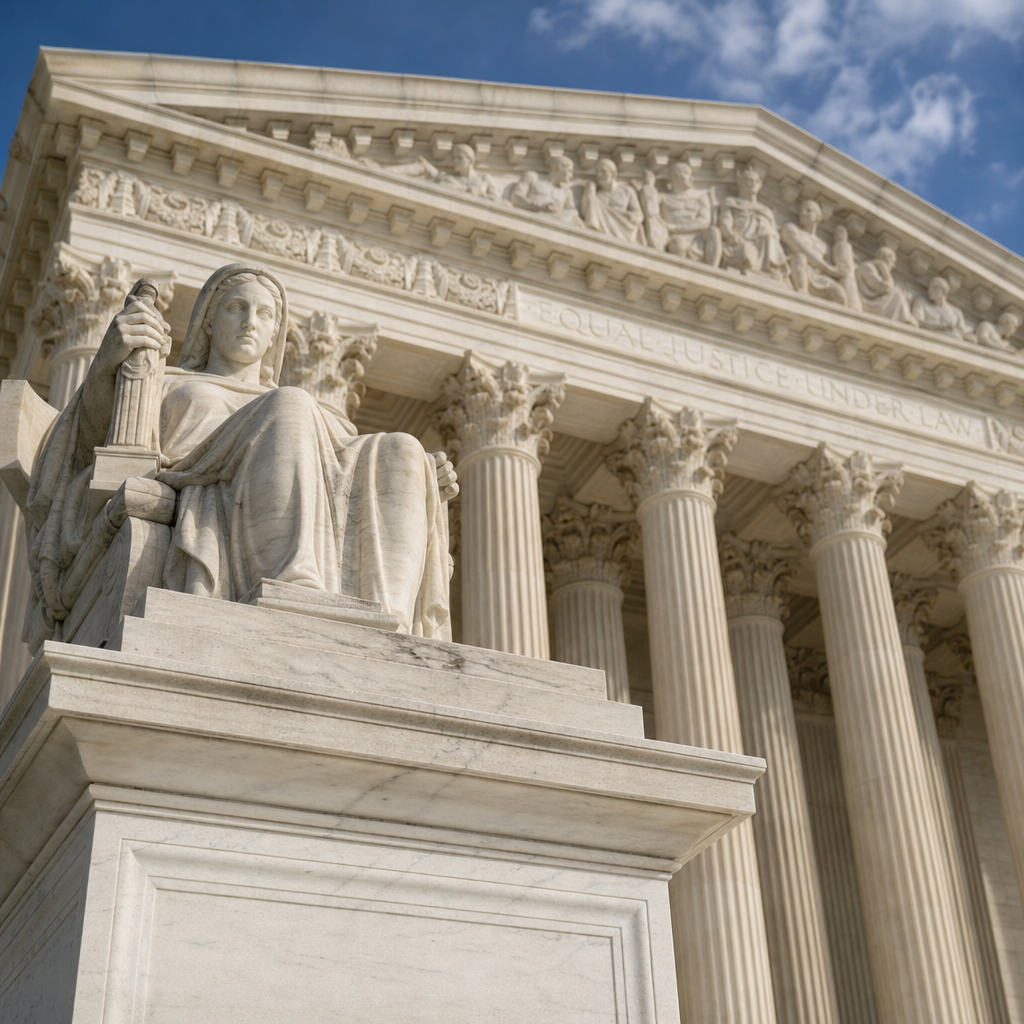
Certiorari is the formal process the U.S. Supreme Court uses to decide which appeals it will hear, and understanding it is essential for anyone studying AP Government and Politics because it explains how a court with limited time shapes national law. Students often learn the Court through famous rulings, but the more revealing story starts earlier, when the justices choose a few dozen disputes from thousands of petitions filed each term. That selection power matters because the Supreme Court is primarily a court of review, not a court that retries facts or corrects every legal mistake. It usually steps in only when a case raises an important federal question, exposes disagreement among lower courts, or presents a constitutional issue with broad consequences.
The word certiorari comes from Latin and refers to an order directing a lower court to send up the record in a case for review. In modern practice, lawyers file a petition for a writ of certiorari asking the Court to hear the case. If at least four of the nine justices vote to grant review, the Court issues the writ. This informal custom is called the Rule of Four. If fewer than four vote yes, certiorari is denied, and the lower court’s judgment stands. A denial does not mean the Supreme Court agrees with the lower court. It simply means the case will not be heard.
In classroom terms, certiorari is the gatekeeping mechanism that lets the Supreme Court control its docket. That gatekeeping function shapes public policy as much as many final opinions do. Over the years, I have found that students understand judicial power more clearly when they stop asking only, “How did the Court rule?” and start asking, “Why did the Court take this case at all?” Cases involving abortion, executive power, guns, voting, religious liberty, environmental regulation, and administrative agencies all reached the Court because they fit the Court’s selection criteria in some meaningful way. Learning those criteria turns isolated cases into a coherent system.
This hub article explains how certiorari works, why the Court grants some petitions and rejects most others, what factors justices and law clerks consider, and how this process connects to broader AP Government themes such as federalism, civil liberties, checks and balances, and judicial policymaking. If you understand certiorari, you understand how constitutional disputes move from local conflict to national precedent.
What Certiorari Means and Why the Supreme Court Uses It
Certiorari is a discretionary review tool, which means the Supreme Court usually chooses its cases rather than being forced to hear every appeal. That was not always the system. In the nineteenth and early twentieth centuries, the Court’s mandatory docket became unwieldy. Congress responded with reforms, especially the Judiciary Act of 1925, often called the Judges’ Bill, which expanded the Court’s control over its caseload. Today, discretionary review allows the justices to focus on legal questions with national importance instead of acting like an error-correction court for every losing party in the country.
This matters because the Court receives thousands of cert petitions annually and hears oral argument in only a small fraction. The exact number varies by term, but the Court typically grants and hears roughly sixty to eighty cases. That small docket forces prioritization. In practice, the Court looks for disputes that can clarify federal law for the entire nation. If one federal circuit interprets a statute one way and another circuit interprets it differently, people in different states are living under different legal rules. The Court often grants certiorari to resolve that conflict and create uniformity.
Discretion also protects institutional legitimacy. The justices know they cannot decide every controversial issue immediately. Sometimes they wait for more lower courts to weigh in so the legal question develops more fully. Sometimes they avoid poorly framed cases with procedural problems, weak records, or factual complications that could make broad rulings harder to justify. In my experience reviewing appellate litigation, the best cert petitions do not merely claim injustice. They show why the issue matters beyond the parties and why the case is a clean vehicle for decision.
How a Case Reaches the Supreme Court
Most cases reach the Supreme Court after a final judgment from a federal court of appeals or a state supreme court when a federal issue is involved. The losing party files a petition for a writ of certiorari, usually after seeking rehearing below if appropriate. The petition explains the questions presented, the relevant facts, the procedural history, and the reasons the Court should grant review. The opposing side may file a brief in opposition arguing that the case is unworthy of review. Sometimes the petitioner files a reply. At that point, the case is ready for the justices’ private screening process.
Law clerks play a significant role. In many chambers, clerks participate in the cert pool, a system in which one clerk prepares a memo for multiple justices summarizing the case and recommending whether cert should be granted or denied. Some justices opt out and have their own clerks review petitions independently. The memo identifies the legal issue, notes whether lower courts conflict, evaluates the quality of the record, and flags jurisdictional or procedural obstacles. A strong memo can focus the justices on a genuinely important question. A weak petition with no broader significance rarely survives this stage.
After review, the petition may be placed on the discuss list for the justices’ conference. The Chief Justice circulates the initial list, and other justices may add cases. Petitions not placed on the discuss list are usually denied automatically. At conference, only the justices are present. They discuss the petitions in order of seniority, beginning with the Chief Justice, and vote. Under the Rule of Four, four votes are enough to grant certiorari.
| Stage | What Happens | Why It Matters |
|---|---|---|
| Lower court decision | Federal circuit or state high court issues final judgment | Creates the ruling being challenged |
| Cert petition filed | Losing party asks Supreme Court to review legal questions | Frames the issue the Court may decide |
| Brief in opposition | Winning party argues review is unnecessary | Shows whether conflict or importance is overstated |
| Clerk review | Cert pool or chamber clerks prepare recommendations | Filters thousands of petitions efficiently |
| Discuss list and conference | Justices consider selected petitions privately | Determines which cases receive serious attention |
| Rule of Four | Four justices vote to grant review | Protects minority interest in hearing major issues |
If certiorari is granted, the case moves into merits briefing and oral argument. If denied, the lower court ruling remains in effect, often with important consequences. For AP Government students, this step is crucial: the Supreme Court’s refusal to hear a case can leave regional differences intact, allow a policy to stand, or postpone national resolution of a constitutional controversy.
What the Justices Look For When Deciding Whether to Grant Certiorari
The most important factor is usually a split among lower courts. When federal circuits disagree on the meaning of a federal statute or constitutional provision, the Supreme Court sees a strong reason to intervene. Uniform national law is one of the Court’s central responsibilities. For example, before Obergefell v. Hodges in 2015, lower courts were divided over same-sex marriage bans. That conflict increased pressure for a final nationwide answer.
The Court also grants review when a case presents a significant constitutional question. Questions involving free speech, due process, equal protection, executive authority, federal agency power, or religious liberty are more likely to attract attention because they affect public institutions across the country. Bush v. Gore, United States v. Nixon, and West Virginia v. EPA each involved issues the Court considered nationally important, even though the legal contexts differed dramatically.
Another major factor is whether the case is a good vehicle. A vehicle is the factual and procedural setting through which the Court answers a legal question. Even a big issue may be denied review if the record is messy, the question was not properly preserved below, jurisdiction is doubtful, or alternative grounds could dispose of the case. Skilled advocates know that a clean vehicle can matter as much as ideological appeal. The justices want cases that let them resolve the legal issue directly, without procedural distractions.
The Court may also consider practical consequences. If a case affects federal elections, national security, immigration enforcement, school governance, or business regulation, the impact can make review more likely. But urgency alone does not guarantee a grant. The Court remains cautious about becoming a general policy referee. It takes legal questions, not merely political controversies.
Why the Supreme Court Denies Most Petitions
The Court denies the overwhelming majority of cert petitions because most do not meet its standards for review. Many cases involve routine application of settled law rather than unresolved legal principles. Others concern state law questions the Supreme Court generally cannot decide. Some petitions simply argue that the lower court got the facts wrong, but the Supreme Court is not designed to revisit ordinary factual disputes.
Denials also happen because timing is wrong. The justices may want more lower courts to address an issue before stepping in. This is common when a new statute, regulation, or constitutional argument is still developing. Additional decisions create a richer body of reasoning and sometimes expose a clearer split. I have seen petitions raise important issues too early, before the disagreement had matured enough to demand national resolution.
Procedural defects are another frequent reason for denial. If the petitioner lacks standing, filed too late, failed to preserve the issue, or seeks review of an interlocutory order rather than a final judgment, the Court often declines the case. Denials can therefore reflect technical weaknesses, not lack of substantive importance. That is why experienced Supreme Court advocates spend so much effort on jurisdiction and case posture.
Most importantly, a denial of certiorari has limited legal meaning. It is not precedent on the merits. The Court may deny review because the vehicle is poor, because the issue needs more development, because the justices are divided on the best path, or simply because the docket is full. AP Government students should remember this distinction: a denial leaves the lower court decision in place, but it does not endorse that decision as the Supreme Court’s own constitutional interpretation.
How Certiorari Connects to AP Government and Politics Themes
Certiorari sits at the center of several major AP Government concepts. First, it illustrates judicial review in action. Marbury v. Madison established the power to declare laws unconstitutional, but certiorari determines which constitutional disputes the Court will actually resolve. Judicial power is therefore both substantive and selective.
Second, certiorari reflects federalism. Many petitions arise because different federal circuits or state supreme courts interpret federal law differently. The Supreme Court acts as the final unifier. This is especially visible in cases about criminal procedure, environmental rules, voting law, and education policy, where state systems and federal standards frequently collide.
Third, the process shows checks and balances. The Court can limit executive action, review congressional statutes, and shape administrative governance, but it does so only through cases brought by litigants under procedural rules. It cannot issue advisory opinions. Certiorari therefore channels judicial power through concrete disputes rather than abstract political fights.
Fourth, case selection demonstrates that the Court makes policy indirectly. By choosing which issues to hear, the justices influence which debates receive national answers and which remain unsettled. That agenda-setting function is a recurring exam theme. If you are building out a broader AP Government study plan, connect certiorari to companion topics such as judicial activism and restraint, precedent and stare decisis, civil liberties, civil rights, and the structure of the federal judiciary.
For students, the practical takeaway is simple: when analyzing any major Supreme Court case, start with the certiorari question. Ask what conflict, constitutional issue, or institutional need persuaded at least four justices that the case deserved the Court’s scarce time. That habit leads to stronger essays, clearer FRQ responses, and a deeper understanding of how American government actually works.
Certiorari explains why the Supreme Court’s influence begins long before a headline-making opinion is released. The Court chooses only a tiny share of appeals, and that choice is guided by recurring principles: conflicts among lower courts, important federal or constitutional questions, clean procedural vehicles, and consequences that reach beyond the parties. The Rule of Four protects the ability of a minority of justices to place major issues on the docket, while denials of certiorari usually reveal nothing about the Court’s view of the merits. For AP Government and Politics, this process is not a side detail. It is the mechanism that turns scattered disputes into national precedent and connects judicial review, federalism, and policymaking.
As a hub for this miscellaneous area of AP Government, certiorari should be linked in your mind to every major Supreme Court unit you study. Use it to frame cases on civil rights, liberties, institutions, elections, and executive power. The better you understand how the Court chooses cases, the better you will understand why some controversies become constitutional landmarks while others remain local or temporary. Review a few recent grants and denials, compare the legal questions presented, and you will see the Court’s priorities come into focus. Start there, and the rest of judicial politics becomes much easier to master.
Frequently Asked Questions
What is certiorari, and why is it so important to the Supreme Court?
Certiorari is the formal process the U.S. Supreme Court uses to decide whether it will review a lower court’s decision. The term usually appears in the phrase “writ of certiorari,” which is an order telling a lower court to send up the record of a case so the Supreme Court can examine it. In practice, when people say the Court has “granted cert,” they mean the justices have agreed to hear the appeal. That decision is extremely important because the Supreme Court receives thousands of petitions each term but hears only a small fraction of them. As a result, the power to choose cases is one of the Court’s most significant powers.
For students of AP Government and Politics, certiorari matters because it shows that the Supreme Court does not simply wait for major issues to arrive in an automatic way. Instead, the justices actively shape the national legal agenda by selecting which disputes deserve the Court’s limited time. If the Court chooses to hear a case involving voting rights, presidential power, free speech, abortion, religion, or federalism, that issue can quickly become a major national constitutional question. If it declines review, the lower court ruling usually stands, at least for the parties involved and often for the broader region covered by that lower court. In that sense, certiorari is not just a procedural step; it is a gatekeeping tool that helps determine which legal conflicts become landmark Supreme Court decisions.
How does a case actually reach the Supreme Court through the certiorari process?
A case usually reaches the Supreme Court after it has already been decided by a lower court, most often a federal court of appeals or a state supreme court when a federal constitutional or legal issue is involved. The losing party files a petition for a writ of certiorari, asking the justices to review the decision. That petition explains the legal question presented, why the issue is important, and why the Supreme Court should take the case. The petitioner typically argues that the lower courts are in disagreement, that the ruling conflicts with Supreme Court precedent, or that the issue has broad national significance.
Once the petition is filed, the opposing side may submit a brief in opposition, explaining why the Court should deny review. Many petitions then go through the cert pool, a system in which law clerks prepare memos summarizing the case and recommending whether the Court should hear it. The justices review those materials before discussing the petition at a private conference. If enough justices agree that the case is worth hearing, certiorari is granted. If not, the petition is denied, and the lower court’s ruling remains in place. This process highlights how selective the Supreme Court is: it is not primarily correcting every possible error made by lower courts, but choosing the disputes that raise the most important legal and constitutional questions.
What is the Rule of Four, and how many justices are needed to grant certiorari?
The Rule of Four is the long-standing Supreme Court practice that at least four of the nine justices must vote to grant certiorari for a case to be heard. This is not stated directly in the Constitution, but it is a deeply established internal rule of the Court. Its purpose is to protect the interests of a substantial minority of justices. If only a simple majority controlled the docket, five justices could block the review of cases that four justices believed raised serious legal problems. The Rule of Four ensures that important questions can reach full argument even if fewer than a majority initially want to hear them.
This rule is significant because it reflects the difference between deciding to hear a case and deciding the case on the merits. A justice may vote to grant certiorari without already knowing exactly how they will rule after oral argument and full briefing. Sometimes a justice believes an issue is important enough to deserve review even if they are not certain the lower court got it wrong. For AP Government students, the Rule of Four is a key concept because it shows that docket control is itself a political and institutional process. The Court’s agenda is shaped not just by ideology, but also by strategic judgment about which legal disputes require national resolution.
What kinds of cases is the Supreme Court most likely to accept?
The Supreme Court is most likely to accept cases that present major federal or constitutional questions, especially when lower courts disagree about how the law should be interpreted. One of the strongest reasons for the Court to grant certiorari is a circuit split, which happens when different federal courts of appeals reach different conclusions on the same legal issue. Because federal law is supposed to operate consistently across the country, the justices often step in to resolve those conflicts. The Court is also more likely to hear cases involving significant constitutional rights, disputes between state and federal authority, separation of powers, or issues with broad public importance.
By contrast, the Court is usually less interested in cases that only involve whether a lower court made a factual mistake or misapplied a settled rule in a routine way. The justices are not meant to function as a general error-correction court for every legal dispute in the country. Their role is more selective and more national in scope. They often look for cases that give them a chance to clarify the law, settle disagreements, or address questions with major consequences for government, citizens, and public policy. That is why many cases chosen for review go on to become especially influential: the Court tends to reserve its attention for disputes that can shape legal doctrine well beyond the individual parties involved.
What does it mean when the Supreme Court denies certiorari?
When the Supreme Court denies certiorari, it means the justices have decided not to hear the case. The most important point is that a denial of certiorari is not the same thing as a ruling on the merits. In other words, the Court is not necessarily saying the lower court was correct. It is simply declining review. There are many reasons this can happen. The justices may think the issue is not yet developed enough, the case may have procedural complications, the facts may make it a poor vehicle for deciding the legal question, or the Court may be waiting for more lower courts to weigh in before stepping in.
Even though a denial does not create a nationwide Supreme Court precedent, it still has practical consequences. The lower court’s decision remains binding on the parties and often continues to control within that lower court’s jurisdiction. That means a legal rule might apply one way in one part of the country and differently elsewhere until the Supreme Court eventually resolves the issue. This is one reason certiorari is so powerful: by choosing not to act, the Court can allow legal uncertainty or regional variation to continue. For students, that is a crucial insight. The Supreme Court shapes American law not only through the famous opinions it writes, but also through the many cases it quietly refuses to hear.