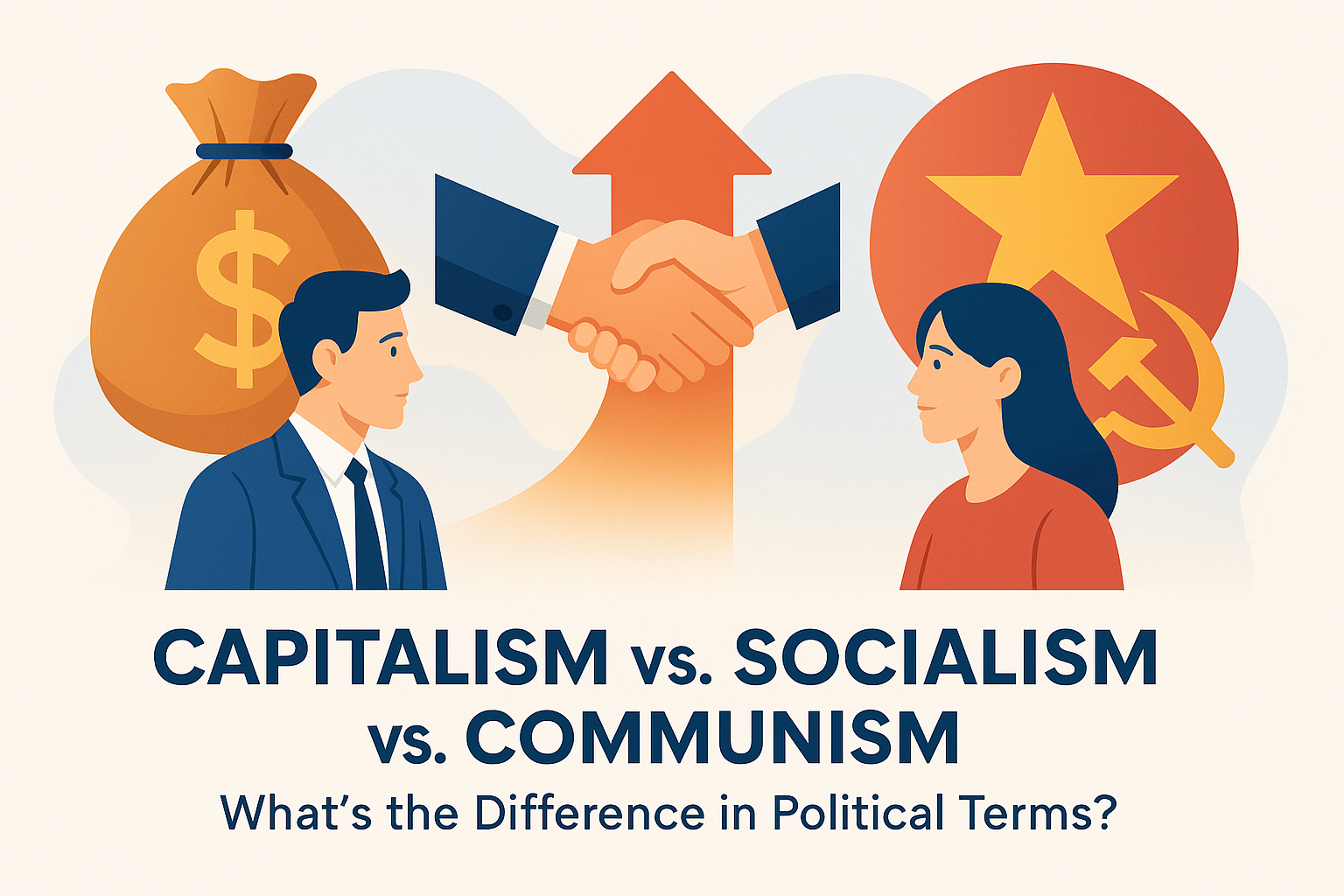
The discourse surrounding capitalism, socialism, and communism often permeates political discussions, news headlines, and casual conversations about the world’s economic frameworks. While these terms are frequently tossed around interchangeably or with great fervor, their meanings and implications are distinct and significant. Understanding these different economic and political ideologies is not just an academic pursuit but a critical aspect of being an informed global citizen. Each system presents unique perspectives on how societies should be organized, disparities addressed, and wealth generated or distributed. At its core, these ideologies differ in their approach to ownership, control, and power dynamics within society. As such, examining them can offer insights into why certain countries thrive, struggle, or ultimately transition between these systems over time. Comprehending these differences is key to engaging in thoughtful debates about the future direction of societal developments, and it provides the foundation for making informed decisions about governance, policy-making, and personal philosophy.
Capitalism: Definition and Real-World Examples
Capitalism is an economic system characterized by private ownership of the means of production and operation for profit. Central features include capital accumulation, competitive markets, voluntary exchange, and wage labor. The primary goal of a capitalist economy is to foster competition among businesses to drive innovation and efficiency, which, ideally, leads to higher productivity and economic growth. Governments in capitalist societies tend to take a hands-off approach, allowing market forces to dictate prices, production, and distribution of goods.
A prime example of capitalism is the United States. In the U.S., the majority of industries operate under private ownership with minimal government intervention. This has allowed for the flourishing of technology giants like Apple, Google, and Amazon, which leverage competitive markets and innovation to achieve outstanding gains. Proponents of capitalism argue that this system encourages individual freedom and economic growth. However, critics point to issues such as income inequality, market failures, and the potential for monopolies that can arise when competition is inadequate or mismanaged. Understanding capitalism requires recognizing both its ambitions for economic freedom and its challenges in managing the consequences that may result from unchecked market forces.
Socialism: Definition and Real-World Examples
Socialism is an economic and political system where the means of production, distribution, and exchange are owned or regulated by the community or government. Unlike capitalism, socialism emphasizes collective ownership and aims to reduce inequalities by ensuring that wealth is distributed more equitably among all members of society. The idea is to prioritize societal welfare over individual profits, focusing on reducing disparities through redistributive policies and public welfare programs.
One of the most illustrative examples of socialism is found in the Scandinavian countries like Sweden and Norway. These nations implement a social welfare model that combines free-market capitalism with extensive social welfare provisions. Citizens benefit from comprehensive healthcare, high-quality education, and social security funded through higher taxation on individuals and businesses. The socialist approach in these countries has led to relatively low levels of inequality and high measures of happiness and social well-being. However, critics of socialism argue that such extensive governmental control can lead to reduced incentives for individual achievement and innovation, potentially stifling economic growth. The balance achieved by these countries demonstrates how socialism can be implemented while still engaging the benefits of a market economy.
Communism: Definition and Real-World Examples
Communism is a political and economic theory advocating for a classless society where all property is publicly owned, and each person works and is remunerated according to their abilities and needs. True communism, as envisioned by Karl Marx, is a stateless, moneyless society where all individuals have equal access to resources, and power disparities are eliminated. The state’s role is to administer resources until the need for government disappears altogether.
The People’s Republic of China presents an intriguing example of an attempt to achieve a communist society. Originally modeled on strict communist principles, China’s economy has gradually incorporated aspects of capitalism, leading to significant economic transformation and growth. The country is governed by a single-party system that maintains control over political life while the economy has elements of private enterprise and capital accumulation. Critics of communism highlight the system’s tendency toward authoritarianism, lack of incentives for individual innovation, and challenges in resource allocation. Despite its original goals, true communist ideals have rarely been fully realized, remaining largely theoretical in modern contexts.
Below is a comparison table highlighting key aspects of these ideologies:
| Aspect | Capitalism | Socialism | Communism |
|---|---|---|---|
| Ownership | Private | Public/Collective | Common/Public |
| Market Control | Market-driven | Regulated by Government | Planned Economy |
| Wealth Distribution | Market-based | Redistributive | Equal |
| Incentives | Profit-based | Social Welfare | According to Need |
Hybrids and Modern Applications
The rigid boundaries between capitalism, socialism, and communism have increasingly blurred in contemporary society as countries adopt hybrid models to suit their unique socio-economic challenges and opportunities. Many nations incorporate elements from multiple systems, aiming to leverage the benefits while mitigating the downsides.
The Nordic model, as seen in countries like Denmark and Finland, is often cited as a successful hybrid. These countries maintain a capitalist economy, fostering business competition and innovation, while state policies ensure social welfare provision to aid in reducing inequality. Such approaches demonstrate how capitalism’s efficiency can coexist with socialism’s commitment to societal welfare, creating a balanced socio-economic framework.
This hybrid model is not without challenges, as it requires careful calibration of economic policies and taxation to sustain social programs without stifling economic growth. As globalization and technological advancements continue to redefine the economic landscape, the adaptability of hybrid models may offer a blueprint for others seeking to reconcile economic performance with social equity.
Conclusion
The distinctions between capitalism, socialism, and communism lie at the heart of global economic and political discourse. Each presents a different viewpoint on ownership, control, and distribution of resources, with immense implications on societal organization and individual lives. Understanding these differences is crucial for anyone engaged in discussions about policies or seeking to comprehend the political and economic challenges faced by different nations.
By exploring real-world examples, we learn that no system in its pure form exists without challenges. Instead, countries often adopt hybrid structures that blend elements from these ideologies, aiming for a balance that maximizes economic efficiency and social welfare. The dynamic interaction among these systems shapes our world, and understanding their principles allows us to make informed decisions about the kind of society we desire to live in. The next step is to reflect on these insights, engage in discussions, and strive towards solutions that promote a fair and prosperous world for all.
Frequently Asked Questions
Q1: What is the fundamental difference between capitalism, socialism, and communism?
At their core, capitalism, socialism, and communism represent different ways of organizing an economy and society, primarily focusing on who controls the resources and means of production. Capitalism is an economic system where private individuals or businesses own the means of production and operate for profit. It’s characterized by voluntary exchange, competition, and a free market largely unfettered by government intervention. On the other hand, socialism aims to bridge the gap between wealthy and poorer classes by redistributing wealth and resources. This system can vary greatly in practice but typically features significant government involvement in the economy and ownership of essential services to promote equality. Communism takes these ideas even further, advocating for a classless society where the means of production are owned communally, and there is no private property. Each system carries profound implications for how resources are distributed, who makes economic decisions, and the overall structure of society.
Q2: How do capitalism, socialism, and communism affect economic equality?
Each of these systems approaches economic equality differently. Capitalism, with its roots in market-driven competition, often results in significant disparities in wealth. This is because resources and profit incentives can lead to concentrated ownership of wealth. However, proponents argue that capitalism encourages innovation, efficiency, and economic growth, which can eventually elevate all segments of society. Conversely, socialism seeks to alleviate economic disparities directly through government-implemented policies like progressive taxation, welfare programs, and public ownership of key industries. The goal is to provide a more equitable distribution of wealth and opportunity. Communism, in its theoretical form, seeks to eliminate class distinctions entirely by abolishing private property and implementing common ownership. In practice, however, achieving such a classless society is extremely challenging and has led to different outcomes historically in various attempts.
Q3: What are the political implications of adopting capitalism, socialism, or communism?
Politically, these economic systems translate into different governance structures and societal values. Capitalism is often linked with democratic ideals, valuing individual freedom, personal responsibility, and limited government intervention. It champions the notion that individuals control their destiny through market choices and entrepreneurial endeavors. In contrast, socialism can range from liberal democracy with social welfare systems to more centralized control seen in some authoritarian regimes. It prioritizes social equity and collective well-being, which often translates into higher levels of government involvement in citizens’ lives. Communism, especially in its most rigid form, often results in authoritarian political systems because achieving a classless society without private property requires significant state control. However, this often leads to reduced personal freedoms and political repression as centralized power can become absolute.
Q4: How do these systems impact innovation and economic growth?
Under capitalism, innovation is driven by competition and the profit motive. Entrepreneurs and businesses are incentivized to innovate to gain a market edge or create new markets, spurring economic growth. However, critics argue that this can also lead to short-term thinking focused on profit rather than sustainable development. Socialism may restrain innovation due to reduced competition compared to capitalism but can potentially support innovation through public investment in research and development, and by creating safety nets that allow individuals to take risks without dire consequences. Communism theoretically allows for resources to be allocated towards innovation beneficial to the community as a whole, but historical attempts have often stifled innovation due to bureaucratic control, lack of incentives, and central planning inefficiencies. In all systems, the balance between fostering innovation and ensuring fair distribution of its benefits is a critical, ongoing challenge.
Q5: Can a country incorporate elements of all three systems?
Absolutely, and this is frequently the case in modern economies. Many countries operate with a mixed economy that incorporates elements of capitalism, socialism, and to some extent, communism. For example, countries like Sweden and Norway have capitalist economies with significant social welfare elements such as universal healthcare and comprehensive unemployment benefits, hallmarks of socialism. Meanwhile, cooperative enterprises and communal living arrangements, which echo communist ideals, exist within capitalist societies to provide alternative economic models. Such hybrid systems aim to leverage the strengths of each ideology—motivating individual achievement and innovation through capitalism, while ensuring a degree of social equity and public welfare associated with socialism and communism. Balancing these elements is complex and continually evolving, but it reflects a pragmatic approach to addressing the nuances of modern economic and social challenges.