
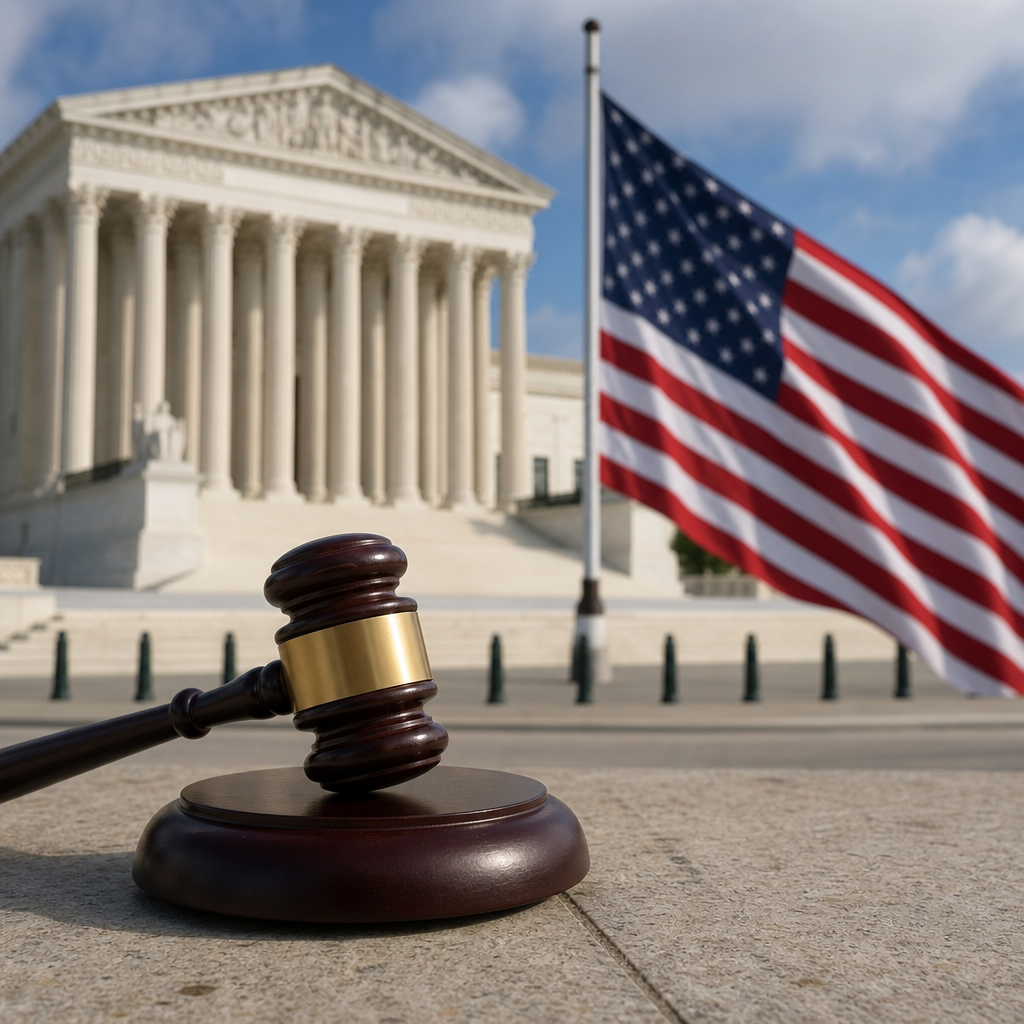
Campaign finance and the First Amendment sit in constant tension because money helps people speak, organize, publish, and persuade, yet government also has a legitimate interest in preventing corruption and preserving public confidence in elections. In AP Government and Politics, this issue matters because it connects constitutional rights, federalism, political participation, parties, interest groups, and the Supreme Court’s role in interpreting vague constitutional boundaries. Campaign finance refers to the raising and spending of money to influence elections, including contributions to candidates, spending by campaigns, party spending, and independent expenditures by individuals or groups. The First Amendment protects freedom of speech, press, assembly, and petition, and the Court has long treated political speech as occupying the highest rung of constitutional protection. The central constitutional question is straightforward: when does regulating election money prevent corruption, and when does it unlawfully burden political expression?
From teaching this topic and working through actual case law, I have found that students understand it best when they stop treating campaign finance as one issue and instead break it into categories. The Court does not draw one bright line for all political money. It distinguishes contributions from expenditures, candidate speech from independent advocacy, disclosure from outright bans, and corruption from mere influence or access. Those distinctions explain why some laws survive review while others are struck down. They also explain why campaign finance doctrine often feels fragmented. A rule that is constitutional in one context can fail in another because the Court weighs different governmental interests and different burdens on speech.
This hub article covers the major concepts, cases, and recurring disputes that define this part of AP Government and Politics. It explains the constitutional tests behind campaign finance regulation, the key holdings students are expected to know, and the practical impact on modern elections. It also serves as a foundation for related topics such as political action committees, super PACs, soft money, disclosure law, dark money, and the role of the Federal Election Commission. If you understand where the Court draws the line, you can make sense of nearly every controversy involving election spending in the United States.
The Core Constitutional Framework
The Supreme Court’s modern campaign finance doctrine begins with a basic premise: spending money on politics is often inseparable from speech. Printing flyers, buying airtime, building a digital operation, conducting voter outreach, and producing issue ads all require resources. Because of that reality, campaign finance laws are reviewed under the First Amendment rather than treated as ordinary economic regulations. The Court, however, has never said all political money is identical. Its framework asks what kind of political activity is being regulated and what governmental interest supports the restriction.
The most important governmental interest the Court recognizes is preventing quid pro quo corruption or its appearance. Quid pro quo means an exchange of an official act for money or something of value. A donor gives because a candidate promises a vote, contract, appointment, or other official favor. The Court has repeatedly said this kind of corruption can justify restrictions on campaign finance. By contrast, the Court is far less receptive to laws aimed at reducing general political influence, leveling the playing field, or equalizing speakers. In the Court’s view, the First Amendment does not permit government to mute some voices simply because they are louder, richer, or more effective than others.
The framework also separates contributions and expenditures. Contributions are funds given to a candidate, campaign committee, party, or political committee. Expenditures are funds spent to advocate electoral outcomes. That distinction matters because contributions are seen as only indirectly linked to speech, while expenditures are seen as direct political expression. As a result, contribution limits are more likely to be upheld, while expenditure limits face much more demanding constitutional scrutiny. This split, first articulated clearly in Buckley v. Valeo, still shapes campaign finance law today.
Buckley v. Valeo and the Contribution-Expenditure Divide
Buckley v. Valeo, decided in 1976, is the foundational case. It reviewed major provisions of the Federal Election Campaign Act, enacted after Watergate to regulate federal campaign money more aggressively. The Court upheld limits on contributions to candidates because such limits served the anti-corruption interest and imposed only a marginal restriction on speech. A donor could still support a candidate, volunteer, speak independently, and associate politically. The Court reasoned that capping the amount one person may give directly to a candidate reduces the risk that large donations will buy political favors.
At the same time, Buckley struck down limits on independent expenditures, candidate self-financing, and overall campaign spending ceilings. The Court held that spending limits directly restrain the quantity and reach of political expression. A campaign with a spending cap must buy fewer ads, print fewer mailers, hire fewer staff, and speak to fewer voters. The government’s anti-corruption rationale was not enough because independent spending, by definition, is not coordinated with the candidate. Without coordination, the Court saw less risk of a corrupt bargain. This distinction remains controversial, but it still anchors nearly every later decision.
Buckley also approved disclosure and reporting requirements in principle. The Court said disclosure can inform voters, deter corruption, and help enforce contribution limits. That holding matters because disclosure has become one of the most durable forms of campaign finance regulation. Even justices skeptical of spending restrictions often support transparency rules, though they sometimes recognize exceptions when disclosure would expose speakers to threats or harassment. In practice, Buckley established a three-part constitutional map: contribution limits are often permissible, expenditure limits are usually unconstitutional, and disclosure requirements are frequently allowed if they are properly tailored.
What Counts as Corruption and Why That Definition Matters
Much of campaign finance litigation turns on how the Court defines corruption. Earlier reform efforts often used broad language about improper influence, unequal access, or distortion of politics by concentrated wealth. The modern Court, especially in recent decades, has narrowed the concept. It generally recognizes only quid pro quo corruption or the appearance of such corruption as a sufficiently important interest to justify strong restrictions on political money. That narrow definition sharply limits what legislatures may regulate.
This matters because American politics runs on access and influence. Large donors often get meetings, phone calls returned, and invitations to events. Interest groups spend heavily to shape agendas. The Court has acknowledged that donors may gain access and that elected officials naturally respond to supporters. But it has said ingratiation and access are not corruption in the constitutional sense. That statement appears most famously in Citizens United. The practical effect is profound: if access alone is not corruption, many campaign finance restrictions cannot survive unless government can tie them more directly to explicit exchanges.
Critics argue this definition is too cramped because democratic accountability can be warped long before a literal bargain is proved. Supporters respond that a broader standard would let government suppress too much political advocacy. The Court has generally sided with the latter view, insisting that the First Amendment does not allow broad efforts to sanitize politics by reducing influence. For students, the key takeaway is simple: the narrower the definition of corruption, the stronger the constitutional protection for campaign spending.
Citizens United, Independent Spending, and Corporate Speech
Citizens United v. Federal Election Commission, decided in 2010, is the most famous modern campaign finance case. Federal law had barred corporations and unions from using treasury funds for electioneering communications close to elections. The government defended the law as a way to prevent corruption and limit the distorting effects of aggregated wealth. The Court rejected that rationale and held that corporations and unions have a First Amendment right to make independent political expenditures. The identity of the speaker, the majority said, cannot justify suppressing political speech.
The case did not allow direct corporate contributions to candidates; those remained prohibited under separate law. Instead, Citizens United protected independent spending that is not coordinated with a candidate. That distinction is essential. A corporation may spend its own money on an ad urging voters to elect or defeat a candidate, but it still cannot write a direct check to the candidate’s campaign where federal law forbids it. The Court also upheld disclosure requirements for electioneering communications, reinforcing the idea that transparency is more constitutionally acceptable than speech bans.
In real elections, Citizens United helped accelerate the growth of outside spending groups, especially super PACs after the lower court decision in SpeechNow.org v. FEC. Super PACs may raise unlimited funds from individuals, corporations, and unions and spend unlimited amounts independently. They cannot contribute directly to candidates and are not supposed to coordinate with campaigns. In practice, that independence line is heavily debated, especially when super PACs are run by former aides or close allies. Still, under current doctrine, unlimited independent spending is constitutionally protected.
Major Cases Every AP Government Student Should Know
The best way to master this hub topic is to link cases to legal rules and practical outcomes. The following decisions appear repeatedly in textbooks, classrooms, and exam questions because each marks a shift in where the Court draws the line.
| Case | Year | Main Holding | Why It Matters |
|---|---|---|---|
| Buckley v. Valeo | 1976 | Upheld contribution limits; struck down expenditure limits | Created the core distinction between contributions and expenditures |
| McConnell v. FEC | 2003 | Upheld major parts of McCain-Feingold, including soft money restrictions | Temporarily endorsed broader regulation of party fundraising and electioneering |
| Citizens United v. FEC | 2010 | Protected corporate and union independent expenditures | Expanded speech protection for outside groups |
| SpeechNow.org v. FEC | 2010 | Allowed unlimited donations to independent expenditure groups | Cleared the way for super PACs |
| McCutcheon v. FEC | 2014 | Struck down aggregate contribution limits | Narrowed anti-corruption reasoning to quid pro quo concerns |
McConnell v. FEC upheld key sections of the Bipartisan Campaign Reform Act of 2002, often called McCain-Feingold, including limits on soft money given to national parties and restrictions on certain broadcast ads near elections. But Citizens United later overruled major parts of McConnell related to independent corporate speech. McCutcheon then continued the trend by invalidating aggregate limits on how much one donor could contribute in total to all federal candidates, parties, and committees during an election cycle, while leaving base limits intact. Together, these cases show a Court that permits targeted anti-corruption rules but rejects broad restraints on political participation through spending.
Disclosure, Dark Money, and the Federal Election Commission
If contribution caps and spending bans face constitutional limits, disclosure often becomes the government’s strongest regulatory tool. Disclosure laws require campaigns and political committees to report who gave money, how much they gave, and how money was spent. The Court has repeatedly said this serves important interests: voters can evaluate messages more intelligently, journalists can trace political influence, and regulators can detect evasion. In federal elections, the Federal Election Commission administers these rules under the Federal Election Campaign Act.
The modern problem is dark money, a term used for political spending where the original funding source is not fully visible to the public. Nonprofit groups organized under sections such as 501(c)(4) of the Internal Revenue Code may engage in issue advocacy and sometimes election-related messaging without the same disclosure requirements imposed on candidate committees or super PACs. As a result, voters may see large ad campaigns without knowing who ultimately paid for them. This is legal in some contexts because campaign finance law depends heavily on technical definitions, including whether communications expressly advocate election or defeat, whether they are electioneering communications, and whether spending is coordinated.
In practice, the FEC is often criticized as weak or deadlocked. It has six commissioners, no more than three from one party, and major enforcement actions often stall on partisan splits. That institutional reality matters as much as constitutional doctrine. A law on the books does little if the agency cannot interpret, enforce, or update it effectively. For AP Government students, this is a useful reminder that policy outcomes depend not just on constitutional rules but also on administrative design, enforcement capacity, and political incentives.
Where the Court Draws the Line Today
The Court’s current line can be stated clearly. Government may limit direct contributions to candidates to prevent quid pro quo corruption or its appearance. Government may require disclosure and disclaimers in many election-related contexts. But government usually may not cap independent expenditures by individuals, corporations, unions, parties, or outside groups, and it may not restrict political speech simply to reduce influence or equalize participation. That is the doctrinal center of gravity in contemporary campaign finance law.
There are still gray areas. Coordination rules matter because truly independent spending receives the strongest protection, while coordinated spending can be treated more like a contribution. Public financing systems can be constitutional if they are voluntary, but they cannot punish privately financed candidates for spending more. Disclosure can be upheld broadly, but courts may scrutinize burdens on small groups or controversial speakers. State laws can vary, yet they must operate within the same First Amendment framework. These unresolved questions keep campaign finance in litigation and make it one of the most dynamic areas of constitutional law.
For students studying AP Government and Politics, the practical lesson is that the Court does not ask whether money affects politics; everyone agrees it does. The Court asks what kind of money, what kind of political activity, what risk of corruption, and what burden on speech. Once you apply those questions, the cases become much easier to remember. Campaign finance and the First Amendment are not separate topics but two sides of the same constitutional problem: how to protect democratic debate without allowing government to control it.
The key takeaways are consistent across the major cases. First, political speech receives the strongest constitutional protection, and spending is often treated as part of speech. Second, direct contributions may be limited because they pose a clearer risk of quid pro quo corruption. Third, independent expenditures are far more protected, even when they come from corporations, unions, or super PACs. Fourth, disclosure remains the most durable form of regulation because it informs voters without directly silencing speakers. Fifth, enforcement matters; the FEC’s structure affects how these rules operate in real elections.
As a hub for this AP Government and Politics subtopic, this article gives you the framework needed to connect related issues such as soft money, hard money, PACs, super PACs, dark money, party committees, and election law reform. If you can explain Buckley, Citizens United, McCutcheon, and the anti-corruption rationale in plain language, you already understand the heart of the debate. Use this page as your starting point, then move outward to the connected articles in this subtopic to deepen your command of campaign finance, civil liberties, and the Supreme Court’s role in American democracy.
Frequently Asked Questions
1. Why does campaign finance raise First Amendment issues in the first place?
Campaign finance raises First Amendment issues because political speech often depends on money. Candidates, parties, interest groups, and ordinary citizens need resources to print materials, run ads, organize events, build websites, and reach voters. In that sense, spending money is not exactly the same thing as speech, but it is often treated as closely tied to speech because limiting funds can limit how effectively a person or group participates in politics. That is why the Supreme Court has repeatedly said that campaign finance laws must be examined carefully when they affect expression, association, and participation in elections.
At the same time, the First Amendment does not automatically invalidate every campaign finance regulation. The government has recognized interests in preventing corruption, stopping the appearance of corruption, and protecting public trust in elections. The constitutional debate centers on where the Court draws the line between legitimate regulation and unconstitutional restraint. In AP Government terms, this controversy is important because it shows how broad constitutional language, such as “Congress shall make no law… abridging the freedom of speech,” must be interpreted in modern political contexts the framers never specifically anticipated. It also highlights the Court’s role in balancing rights against competing public interests in a democratic system.
2. What is the difference between campaign contributions and campaign expenditures, and why does the Court treat them differently?
The Supreme Court has often distinguished between contributions and expenditures. A contribution is money given directly to a candidate, campaign, party, or political committee. An expenditure is money spent to advocate for or against a candidate, often independently rather than as a direct donation. This distinction became especially important in Buckley v. Valeo (1976), one of the foundational campaign finance cases. In that decision, the Court upheld limits on direct contributions to candidates but struck down limits on independent expenditures by individuals and groups.
The reasoning was that direct contributions pose a clearer risk of corruption or quid pro quo arrangements, meaning an exchange of money for political favors or access. If a donor gives large sums directly to a candidate, the government can argue that the relationship threatens the integrity of elected office. Independent expenditures, by contrast, are made without coordinating with a candidate’s campaign, so the Court has generally viewed them as less directly tied to corruption. Because of that, spending independently to support political messages has received stronger First Amendment protection.
This distinction matters because it explains much of modern campaign finance doctrine. The Court has been more willing to let Congress and the states regulate donations than regulate political advocacy spending. Critics argue that this line is too formal and does not reflect political reality, since outside spending can still buy influence. Supporters argue that robust protection for expenditures is essential if citizens and organizations are to speak freely about elections. Either way, understanding the difference between contributions and expenditures is central to understanding where the Court places constitutional limits.
3. How did Citizens United change campaign finance law?
Citizens United v. Federal Election Commission (2010) is one of the most consequential campaign finance decisions in modern constitutional law. The Court held that the government may not suppress independent political spending by corporations and unions simply because of their organizational identity. In practical terms, the ruling invalidated restrictions that prevented corporations and labor unions from using their general treasury funds for certain election-related communications. The Court reasoned that political speech is indispensable to democracy and does not lose First Amendment protection because the speaker is a corporation, association, or union rather than a single individual.
The decision did not say that corporations can donate unlimited sums directly to candidates. Direct contribution limits and other anti-corruption rules still remain important. What Citizens United expanded was the ability of outside groups to spend independently on political advocacy, as long as those expenditures are not coordinated with candidates. The ruling also helped pave the way for the rise of Super PACs, which can raise and spend unlimited money independently to support or oppose candidates.
The case remains controversial because it reflects two very different views of democratic fairness. Supporters say the ruling protects political expression and prevents the government from deciding which speakers are too powerful or too disfavored to participate. Critics say it gives wealthy interests and large organizations outsized influence over elections, making the political system less responsive to ordinary voters. For AP Government students, Citizens United is a major example of how the Supreme Court interprets the First Amendment in ways that shape parties, interest groups, elections, and public confidence in government.
4. What kinds of campaign finance regulations has the Court generally allowed?
Although the Court has struck down some restrictions, it has also allowed several types of campaign finance regulations. Most importantly, it has generally permitted limits on direct contributions to candidates, because those restrictions are tied to preventing corruption or the appearance of corruption. The Court has also supported disclosure and disclaimer requirements in many situations. Disclosure laws require campaigns and political organizations to report who is giving and spending money, while disclaimers identify who paid for political advertisements. The constitutional idea behind these rules is that transparency informs voters and can discourage improper influence without directly banning speech.
The Court has also accepted public financing systems in some forms, so long as participation is voluntary and the government is not punishing candidates for spending beyond certain thresholds in ways that burden speech. In addition, rules barring foreign nationals from contributing to U.S. elections have received support because of the government’s interest in protecting self-government. Some regulations on coordination between campaigns and outside groups may also be upheld, since coordinated spending can function much like a direct contribution.
The key point is that the Court usually asks whether a law is truly aimed at corruption prevention or whether it instead tries to equalize political influence by limiting speech. The Court has been skeptical of laws justified primarily by a desire to level the playing field among speakers. It has been more receptive when regulations are narrowly focused on transparency, accountability, and preventing direct exchanges of money for influence. That is where much of the constitutional line-drawing happens.
5. Why is this topic so important in AP Government and Politics?
This topic is especially important in AP Government and Politics because it connects several major themes in the course at once. First, it is a constitutional issue involving the First Amendment and the Supreme Court’s power of judicial review. Students are expected to understand how the Court interprets broad principles, applies precedent, and balances civil liberties against government interests. Campaign finance is a strong example because the Constitution does not explicitly spell out how election spending should be regulated, so the Court must define the boundaries.
Second, campaign finance is deeply tied to political participation, interest groups, political parties, and electoral institutions. Money affects who can run competitive campaigns, how parties support candidates, how interest groups influence public debate, and how voters receive information. Third, the issue raises questions about legitimacy and democratic representation. If too much money from a small number of donors dominates elections, citizens may believe the system is unfair. If the government regulates political spending too aggressively, citizens may believe their freedom to speak and organize is being suppressed.
Finally, campaign finance demonstrates that constitutional law is not abstract. It shapes the real structure of American politics. Debates over contribution limits, independent spending, disclosure rules, and outside groups all affect how power is exercised in elections. For students, understanding this issue means seeing how constitutional rights, institutional power, and democratic accountability interact in practice. That makes campaign finance and the First Amendment one of the clearest examples of how law and politics are inseparable in the American system.