
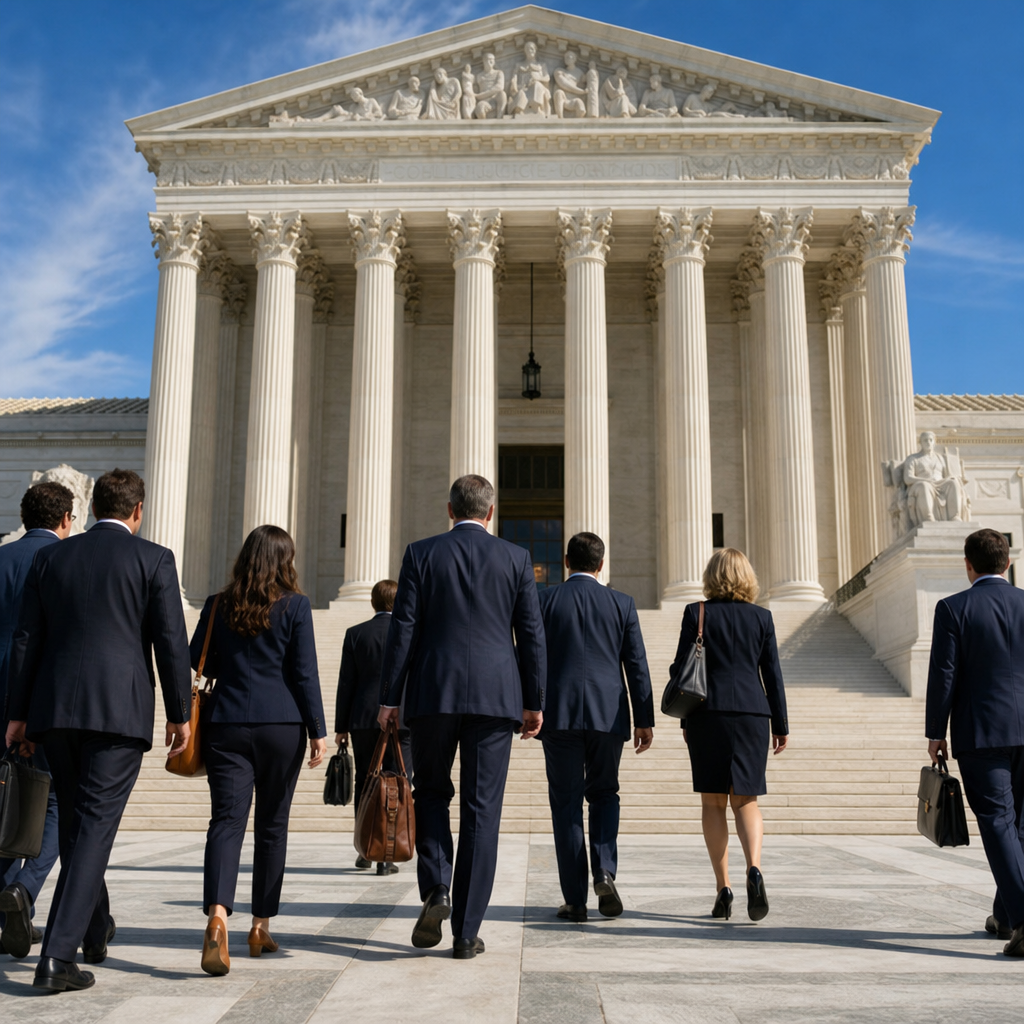
Amicus briefs shape major court cases long before a justice announces a vote. In AP Government and Politics, students usually meet them as a vocabulary term, but in practice they are one of the clearest ways organized interests try to influence judicial outcomes. An amicus brief, short for amicus curiae or “friend of the court,” is a written submission from a person, group, government, or organization that is not a direct party in the case but believes the court should consider its perspective. These filings matter because courts often decide issues with consequences far beyond the named plaintiffs and defendants. When that happens, outside groups rush to explain what a ruling could mean for elections, schools, business regulation, civil rights, religious liberty, criminal procedure, labor law, and executive power.
I have seen students assume that judges ignore these filings because outsiders are not litigants. The opposite is often true, especially at the U.S. Supreme Court. When a case raises broad constitutional questions, amicus briefs can help frame the stakes, supply historical context, present social science data, signal elite support, and identify doctrinal paths the parties did not emphasize. They do not replace the merits briefs filed by the actual sides, and they do not guarantee influence. Still, they are a central part of modern judicial politics.
For a hub article in the AP Government and Politics “Misc” area, this topic connects directly to interest groups, linkage institutions, the judiciary, constitutional interpretation, and policy making. If you understand why outside groups file amicus briefs, you understand something larger about American government: formal institutions make decisions, but organized actors constantly try to shape those decisions from the outside. That interaction is not a side note. It is one of the defining features of pluralist politics in the United States.
Students also need the practical distinction between legal advocacy and political messaging. An effective amicus brief is not just a press release in legal format. It must fit court rules, cite relevant precedent, and explain why the filer adds value. The Supreme Court’s Rule 37 specifically says an amicus brief should bring relevant matter to the Court’s attention that has not already been presented by the parties. Lower federal and state courts have similar standards. In plain terms, the brief should teach the court something useful.
What an amicus brief is and how it differs from a party brief
A party brief is filed by the people or institutions directly involved in the lawsuit. It argues who should win under the facts, the record, and the law. An amicus brief is filed by someone outside the case who wants to influence how the court understands the issue. That outside filer might be the American Civil Liberties Union, the Chamber of Commerce, the NAACP Legal Defense Fund, a state government, a group of historians, former military leaders, medical associations, labor unions, technology companies, or law professors. Sometimes dozens of briefs appear in a single case.
The key difference is role. Parties have standing, control litigation strategy, and can appeal. Amici do not. They cannot introduce new evidence outside the permitted record in the same way a trial party would, and they generally cannot dictate the arguments the litigants choose. Their influence comes from persuasion. Courts read them because they can widen the lens. In contentious public law cases, the named parties may represent only a tiny slice of the interests affected by the decision. Amici help map that broader terrain.
In AP terms, this makes amicus briefs an important linkage mechanism between civil society and the judiciary. Interest groups use campaign donations and lobbying to influence elected branches, but they also litigate and file amicus briefs to affect court doctrine. That is especially important when Congress is gridlocked or when rights claims depend on constitutional interpretation rather than ordinary statute writing. Outside groups turn to courts because courts can create national precedent.
Why outside groups file amicus briefs
Outside groups file amicus briefs for several concrete reasons. First, they want to shape legal reasoning. A business association may urge a narrow interpretation of an agency’s power. A civil rights organization may argue that a law triggers heightened scrutiny. A group of former judges may explain how a proposed rule would work in actual courtrooms. Second, they want to signal the broader consequences of a ruling. This is common in cases involving abortion, gun rights, affirmative action, voting rules, environmental regulation, and digital privacy, where the immediate dispute points toward much larger policy effects.
Third, groups use amicus briefs to build long-term doctrine. Not every filing aims to win instantly. Experienced advocates sometimes use briefs to introduce concepts that may gain traction across several terms. I have seen this pattern in administrative law and religious liberty disputes, where organizations repeatedly advance a framework until it becomes familiar to judges and clerks. Fourth, filing helps groups communicate with supporters, donors, and policymakers. A brief is legal advocacy, but it is also a public statement of institutional priorities.
Fifth, outside groups file because they possess expertise the parties may lack. Medical associations can explain standards of care. Economists can discuss market structure and antitrust effects. Historians can evaluate original public meaning and longstanding practice. Former national security officials can address operational realities. When courts face technical questions, credible amici can be especially valuable. The best briefs do not simply repeat the winner’s talking points; they add information the court can use.
| Reason for filing | What the brief tries to do | Example |
|---|---|---|
| Shape doctrine | Offer a legal test or constitutional framework | Rights groups arguing what level of scrutiny should apply |
| Show real-world impact | Explain policy consequences beyond the parties | Hospital associations describing effects on patient care |
| Provide expertise | Supply technical knowledge or professional standards | Cybersecurity experts in digital privacy disputes |
| Signal political support | Demonstrate that influential actors back one side | States joining together in multistate briefs |
| Build future arguments | Introduce ideas that may influence later cases | Scholars advancing a new reading of an old precedent |
How courts use amicus briefs in real cases
Courts use amicus briefs in several ways, and the Supreme Court is the clearest example. First, amicus briefs can affect whether the Court grants certiorari. If numerous respected groups warn that lower courts are divided or that a rule is causing nationwide confusion, the justices may see a stronger reason to hear the case. Second, once review is granted, amici can help frame the Question Presented in practical terms. A dispute that looks narrow on paper may become obviously far reaching when states, industries, veterans’ groups, or constitutional scholars explain the ripple effects.
Third, justices and clerks often mine amicus briefs for historical material, empirical studies, and doctrinal arguments. In landmark cases, briefs from historians, economists, and professional associations have been cited in opinions or echoed in oral argument. Brown v. Board of Education is famous partly because social science materials helped illuminate the harms of segregation. In Obergefell v. Hodges, numerous briefs addressed family law, equal protection, and the practical harms of denying marriage recognition. In National Federation of Independent Business v. Sebelius, briefs from states, economists, and policy organizations tried to shape the Court’s understanding of the Affordable Care Act’s individual mandate and Medicaid expansion.
That said, influence is uneven. Some amicus briefs are skimmed and forgotten because they are duplicative, weakly sourced, or transparently theatrical. Others matter because they arrive from highly credible filers with something original to say. Repeat players know this. The Supreme Court receives thousands of amicus filings over time, so quality and relevance are decisive. A concise, rigorous brief from a specialized trade association or a respected bipartisan group can matter more than ten generic briefs saying the same thing.
Who files them most often and what that reveals about judicial politics
The groups most likely to file amicus briefs are repeat participants in national policy conflicts. These include ideological organizations, business associations, public interest law firms, state attorneys general, federal agencies, cities, unions, religious organizations, and cause-based advocacy groups. Their filing patterns reveal an important reality: courts are not isolated from politics. Judges are not legislators, and legal rules constrain outcomes, but politically organized actors know that judicial decisions allocate power and resources. They therefore invest in legal strategy the way they invest in lobbying or elections.
State attorneys general are especially significant. When many states file on one side, they send a signal that the issue affects federalism, administration, or state budgets. The solicitor general of the United States is even more influential. The Supreme Court often gives serious weight to the federal government’s position because it combines legal expertise with national institutional perspective. In many terms, the solicitor general is called the “tenth justice” informally because of that credibility, though the phrase should not be taken literally.
For students, this is a reminder that judicial politics is not only about the justices themselves. It is also about the ecosystem around the Court: advocacy groups selecting plaintiffs, litigators building records, think tanks crafting arguments, and amici broadening the narrative. The litigation campaign behind a major ruling can take years. Amicus briefs are one visible product of that long strategy.
Limits, criticisms, and why influence is not guaranteed
Amicus briefs are influential, but they are not magic. Courts can disregard them. Some critics argue that the amicus process favors wealthy organizations that can afford specialized Supreme Court counsel. That criticism has force. Elite law firms and repeat advocates often write polished briefs that smaller groups cannot match. There is also concern about “amicus inflation,” where too many filings create noise rather than clarity. If twenty briefs repeat nearly identical claims, their collective value may be limited.
Another criticism involves transparency. Not every brief reflects a purely independent voice. Funding networks, litigation coalitions, and political alliances sometimes shape what looks like broad support. Court rules require disclosures about authorship and funding in many circumstances, but casual readers may still overestimate how organic a filing wave really is. Students should therefore treat amicus participation as evidence of organized engagement, not automatic proof of neutral expertise.
There is also a legal limit. An amicus brief cannot rescue a weak case indefinitely. If precedent, jurisdiction, standing, or statutory text strongly cuts against a position, outside support may not change the result. Good judges distinguish between useful supplemental analysis and advocacy dressed up as expertise. In my experience, the briefs with the best chance of influence are the ones that acknowledge tradeoffs, state the governing standard accurately, and give the court a workable rule rather than a slogan.
How to analyze amicus briefs for AP Government and Politics
For AP Government and Politics, analyze amicus briefs as part of a larger system of participation and policymaking. Start with five questions. Who filed the brief? What interest does that group represent? What specific outcome does it want? What kind of argument is it using: constitutional text, precedent, history, social science, administrative practicality, or economic impact? Finally, why might judges find this source credible or unpersuasive? Those questions move you beyond memorizing vocabulary.
It also helps to connect amicus briefs to core course concepts. In pluralism, they show how organized groups compete to shape public policy. In linkage institutions, they show how people and organizations connect societal interests to government action. In the judiciary unit, they show that courts respond to formal legal claims but operate in a broader political environment. In civil rights and liberties, they show how strategic litigation can expand or limit rights over time. If you are building study notes for this subtopic hub, pair this page with articles on interest groups, judicial review, standing, precedent, civil liberties, and the role of the solicitor general.
The practical takeaway is simple. Amicus briefs matter because they give outside groups a structured, legitimate way to influence courts. They can sharpen doctrine, explain consequences, and reveal which coalitions care most about the outcome. They can also exaggerate consensus, privilege repeat players, and clutter the record when overused. The best way to study them is to treat them as evidence of organized political action aimed at judicial decision making.
As you review AP Government and Politics “Misc” topics, use amicus briefs as a bridge concept. They connect institutions, participation, rights, federalism, and public policy in one concrete practice. When you read a major Supreme Court case in the news, look up who filed amicus briefs and what arguments they made. That habit will show you how much of American government happens outside the spotlight of oral argument and final opinions, where organized groups work persistently to shape what the law becomes.
Frequently Asked Questions
What is an amicus brief, and how is it different from a brief filed by the actual parties in a case?
An amicus brief is a written legal argument submitted by someone who is not one of the direct parties in a lawsuit but believes the court should hear an additional perspective before making its decision. The term comes from the Latin phrase amicus curiae, meaning “friend of the court.” In practice, these briefs are often filed by interest groups, trade associations, advocacy organizations, civil rights groups, professional associations, state governments, academics, or sometimes former officials who want to highlight legal reasoning, policy consequences, historical context, or technical expertise that the parties themselves may not fully address.
The key difference between an amicus brief and a party brief is standing and role. The parties in the case are the people, organizations, or governments directly involved in the dispute. Their briefs argue for outcomes that will directly affect their legal rights or obligations. An amicus filer, by contrast, is not asking the court to resolve a personal injury or direct legal claim. Instead, the amicus is trying to shape how the judges understand the law, the facts, or the broader effects of a ruling.
That distinction matters in AP Government and Politics because it shows how judicial decision-making is influenced by more than just the two sides listed in the case caption. Courts, especially appellate courts and the U.S. Supreme Court, often hear disputes with consequences far beyond the immediate litigants. Amicus briefs give outside groups a formal way to participate in that larger constitutional and political conversation. Even though they are not supposed to turn judges into policymakers, courts do often pay attention to well-crafted amicus arguments that provide useful information or persuasive frameworks for deciding a case.
Why do outside groups file amicus briefs if they are not actually parties to the case?
Outside groups file amicus briefs because court decisions can have sweeping effects on public policy, constitutional interpretation, administrative power, business regulation, civil liberties, and the balance of power in government. A case may begin with a narrow dispute between two parties, but the final ruling can establish a precedent that affects millions of people or entire sectors of society. Organized interests understand that if they cannot directly control the litigation, they may still be able to influence the legal reasoning that shapes the outcome.
For many groups, filing an amicus brief is a strategic form of political participation. Interest groups lobby Congress and executive agencies, but they also target the judiciary because courts interpret laws and the Constitution in ways that can either advance or restrict their goals. A labor union may file to explain how a ruling would affect workers. A business association may warn about economic or regulatory consequences. A civil rights organization may provide historical and constitutional arguments about equal protection or free speech. State governments may file because a decision could affect federalism, state authority, or enforcement responsibilities.
Amicus briefs are especially valuable when a group believes the parties may not present the strongest version of a particular argument. The direct litigants are limited by the facts of the case and by the claims they have raised. Outside groups can sometimes broaden the court’s view by introducing social science research, historical evidence, industry expertise, institutional concerns, or doctrinal arguments tied to future cases. In that sense, amicus briefs are not just about supporting one side. They are about shaping how judges frame the question itself.
There is also a signaling function. When many organizations line up on one side of a case, they show the court that the issue has national significance and that the ruling may have consequences well beyond the parties in the courtroom. That can matter both at the stage when the Supreme Court decides whether to hear a case and later when it decides how to rule.
Do amicus briefs really influence the Supreme Court and other appellate courts?
Yes, they can influence courts, although not every amicus brief has the same impact. Judges and law clerks do not treat all submissions as equally helpful, and many briefs are repetitive or openly political. Still, in major cases, amicus briefs can matter quite a bit. They may help persuade the Court to grant review, supply legal theories that appear later in opinions, provide practical information about how a ruling would work in the real world, or show that a case has broad consequences for governments, industries, or constitutional rights.
The most effective amicus briefs usually do one of three things. First, they add genuine expertise. For example, medical associations, historians, economists, military leaders, or technical specialists may explain evidence or consequences the parties cannot present as effectively on their own. Second, they frame the issue in a broader doctrinal or institutional way, helping the court see how one decision could affect future cases. Third, they demonstrate that the dispute has significance beyond the two parties, which can make the Court more likely to treat the case as important.
Influence does not always mean a justice simply reads an amicus brief and changes a vote. More often, influence is subtle. A brief might shape the language a justice uses, reinforce a concern already developing in chambers, offer a limiting principle that makes a legal rule seem more workable, or supply historical support that strengthens one interpretation over another. Sometimes arguments first advanced in amicus briefs later appear in oral argument questions or even in majority, concurring, or dissenting opinions.
That said, courts are also aware that amicus practice can reflect disparities in resources and access. Well-funded organizations can file repeatedly and coordinate sophisticated legal campaigns. So while amicus briefs are an important part of judicial politics, their influence depends on quality, timing, relevance, and the receptiveness of the judges hearing the case.
Who is allowed to file an amicus brief, and what kinds of groups typically do so?
A wide range of individuals and organizations can file amicus briefs, subject to the rules of the court. At the Supreme Court level and in appellate courts generally, amici may include nonprofit advocacy groups, corporations, trade associations, unions, state and local governments, members of Congress, legal scholars, religious organizations, civil liberties groups, former judges or public officials, and professional associations such as medical or bar organizations. In some instances, the federal government may also file an amicus brief in a case to express the interests of the United States even when it is not a direct party.
Courts usually require that amicus briefs meet procedural standards, including filing deadlines, formatting rules, and disclosures about authorship or funding. In many courts, amici need either the consent of the parties or permission from the court. These requirements exist in part to prevent the process from becoming a free-for-all and to ensure that the briefs serve a useful purpose rather than merely repeating the same talking points.
The types of groups that file often reflect the stakes of the case. In a First Amendment dispute, media organizations, civil liberties groups, and educational institutions may weigh in. In an environmental case, business groups, scientists, state governments, and public interest organizations might all submit briefs. In a separation-of-powers case, former executive branch officials, constitutional scholars, and government entities may participate. The common thread is that these filers believe the ruling could affect their mission, their members, their authority, or the legal principles they care about most.
From an AP Government perspective, this illustrates pluralism in action, but with an important caveat. Not every voice has equal capacity to be heard. Groups with money, experienced attorneys, and established networks are often better positioned to submit polished, influential briefs. So amicus participation reflects both democratic access and inequalities in political resources.
Why are amicus briefs important for understanding interest groups and judicial politics in AP Government?
Amicus briefs are important because they show that courts are not isolated from the broader political system. In AP Government, students often learn that interest groups influence public policy through lobbying, campaign activity, and grassroots mobilization. Amicus briefs reveal another major pathway: judicial influence. They demonstrate that organized interests do not stop once a law is passed or an executive policy is announced. They continue the fight in court, where constitutional meaning and legal precedent can reshape policy for years or even decades.
They also help explain how the judiciary fits into the system of linkage institutions and policymaking. Courts do not simply apply neutral rules in a vacuum. They receive information, arguments, and pressure—formal rather than electoral—from many actors. Amicus briefs are one of the clearest examples of that process because they create an official channel through which outside groups try to shape judicial outcomes without being direct litigants. This makes them especially useful for understanding how public policy can be influenced at multiple stages, from legislation to implementation to litigation.
In addition, amicus briefs connect to major AP Government themes such as civil rights, civil liberties, federalism, separation of powers, and the role of political participation. When interest groups file briefs, they are often trying to affect how the Constitution will be interpreted in future disputes. That means one amicus campaign in a major case can have lasting effects far beyond the immediate controversy. Students who understand amicus briefs are better able to see why Supreme Court cases become focal points for advocacy groups and why judicial appointments matter so much to organized interests.
Ultimately, amicus briefs matter because they make visible a central reality of American government: courts are legal institutions, but they are also part of a larger political environment in which organized groups compete to define rights,