
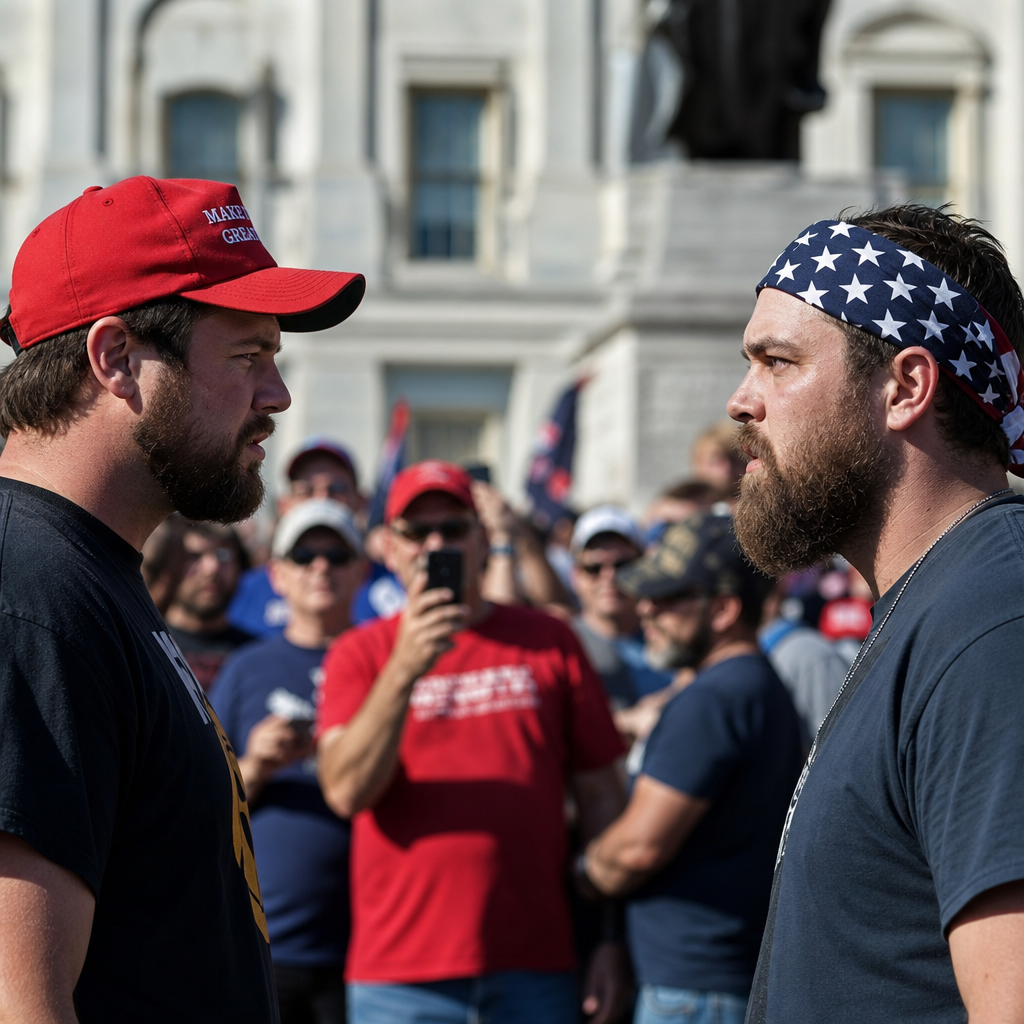
Affective polarization describes a political divide driven less by disagreement over policy and more by mutual dislike between partisan groups. In plain terms, Democrats and Republicans may disagree about taxes, immigration, or climate policy, but affective polarization focuses on how strongly they distrust, resent, and avoid one another as social groups. That distinction matters because a democracy can function with sharp policy conflict if citizens still accept opponents as legitimate. It functions poorly when political identity becomes a marker of moral worth, social belonging, and personal threat.
In AP Government and Politics, this topic sits within broader debates about political behavior, parties, public opinion, elections, media, and institutions. It helps explain why compromise has become harder, why candidates gain support by attacking opponents, and why many voters interpret ordinary political losses as existential dangers. In my experience working through campaign data, survey research, and classroom case studies, students often assume polarization simply means people hold more extreme issue positions. That is only part of the story. Americans can be affectively polarized even when many still hold mixed or inconsistent policy views, because emotion, identity, and perceived cultural distance often drive hostility more powerfully than detailed ideological reasoning.
Political scientists usually separate ideological polarization from affective polarization. Ideological polarization refers to widening distance in policy preferences or legislative voting. Affective polarization refers to emotional sorting: warmer feelings toward one’s own party and colder feelings toward the other. Researchers frequently measure it with feeling thermometers in surveys such as the American National Election Studies, where respondents rate parties or groups on a scale from cold to warm. Over recent decades, ratings of one’s own party have risen while ratings of the opposing party have fallen, indicating that partisan identities now carry more social and emotional weight.
This matters beyond elections. Affective polarization shapes friendships, marriages, hiring judgments, neighborhood preferences, media habits, and trust in public institutions. It also influences whether citizens accept election results, support democratic norms, or tolerate political violence. As a hub topic for AP Government and Politics, affective polarization connects to pluralism, elite cues, party realignment, interest groups, socialization, the media environment, and constitutional structures that can either channel or intensify conflict. Understanding why partisans dislike each other more is essential for explaining current American politics and for evaluating whether democratic disagreement can remain healthy rather than destructive.
What Affective Polarization Means in Practice
The fastest way to understand affective polarization is to ask a simple question: do people dislike the other party because of what it proposes, or because of what they believe its members are like? Increasingly, the answer is both, but the second element has grown more powerful. Partisans often describe the other side as selfish, ignorant, dangerous, or unpatriotic. Those labels are social and moral judgments, not just policy critiques. A Republican may assume Democrats look down on religion and traditional values; a Democrat may assume Republicans are motivated by prejudice or cruelty. Once those stereotypes harden, every news event becomes evidence that the other side is not merely wrong but fundamentally bad.
This dynamic appears in everyday life. Survey research has shown that Americans are more uncomfortable with cross-party marriages than they were decades ago. Employers in experimental settings have favored job applicants sharing their party label. People increasingly cluster into social networks, churches, media ecosystems, and neighborhoods where their partisan identity is reinforced. In campaign work, I have seen volunteers describe persuasion targets not as fellow citizens with different priorities but as people “too far gone” to reason with. That mindset reveals the core of affective polarization: opposition is personalized and moralized.
It is important to note that affective polarization does not mean all citizens are equally engaged or equally hostile. Strong partisans, frequent voters, political donors, and highly attentive news consumers often show the highest levels. Many Americans remain less ideological and less politically active than headlines suggest. Still, the loudest and most organized participants disproportionately shape nominations, activism, media narratives, and online discourse. As a result, the emotional temperature of politics can rise even when many individuals remain less consistently polarized in their own issue preferences.
Why Partisans Dislike Each Other More
Several long-term forces have increased partisan dislike. First, party sorting has made the parties more socially distinct. In earlier eras, conservative Democrats and liberal Republicans created overlap. Today, party labels align more closely with ideology, race, religion, geography, education, and cultural identity. When one party becomes associated with urban secular professionals and the other with rural religious conservatives, partisan conflict carries broader social meaning. People are not just defending a platform; they are defending a way of life.
Second, negative partisanship has become a central feature of voting behavior. Many citizens are motivated less by admiration for their own party than by fear of the other. Candidates understand this and often mobilize supporters by emphasizing threats posed by opponents. Attack ads, fundraising emails, and cable news segments repeatedly frame elections as last chances to stop catastrophe. That messaging works because fear and anger are powerful political motivators, but it also deepens emotional hostility and makes compromise look like surrender.
Third, media fragmentation rewards outrage. The rise of partisan cable programming, talk radio, algorithmic social platforms, and engagement-driven news distribution has created incentives to highlight the most offensive examples from the other side. A local policy dispute becomes national content if it can symbolize broader decline or hypocrisy. People see curated clips of opponents at their worst and rarely encounter ordinary, reasonable members of the other party. The result is a distorted picture in which outliers appear typical and conflict appears constant.
Fourth, elite polarization sends strong signals to mass publics. Members of Congress vote more cohesively by party than in the mid-twentieth century, and party leaders communicate in intensely adversarial terms. When elites stop cross-party cooperation, citizens infer that the stakes must be unusually high. In AP Government terms, party polarization among political elites can cue public polarization by simplifying identities and reducing the space for cross-cutting loyalties. If trusted leaders insist the opposition threatens the Constitution, national security, or basic rights, supporters absorb that judgment.
Fifth, social identity theory helps explain why these divisions feel personal. People derive self-esteem and belonging from group membership. Once party becomes a salient identity, favoring the in-group and disliking the out-group follows familiar psychological patterns. This is especially true when identities stack together. For example, if someone’s party, religion, region, and media habits all point in the same direction, political disagreement can feel like an attack on the self and one’s community.
How Affective Polarization Is Measured and Observed
Researchers do not rely on intuition alone. They use surveys, experiments, and behavioral data to track partisan animosity. Feeling thermometer scores remain the classic measure. If respondents rate their own party warmly and the opposing party coldly, the gap indicates affective polarization. The American National Election Studies and Pew Research Center have documented large increases in this gap over time. Scholars also examine social distance questions, such as whether respondents would be upset if a child married someone from the other party, or whether they trust members of the opposing party as neighbors, coworkers, or friends.
Experimental studies add another layer. Participants may evaluate resumes, scholarship applications, or online profiles that differ only by partisan cues. When otherwise identical candidates are judged more harshly because they belong to the other party, researchers can isolate partisan bias from other factors. Shanto Iyengar and colleagues have been particularly influential in showing that partisan discrimination can rival or exceed older social biases in certain contexts. That does not mean partisanship replaces race, religion, or class; rather, it increasingly interacts with them and amplifies group-based judgments.
| Measure | What It Captures | Example | Why It Matters in AP Government |
|---|---|---|---|
| Feeling thermometer | Warmth toward one’s party and the opposing party | Respondents rate Democrats at 70 and Republicans at 20 | Shows emotional party alignment beyond issue positions |
| Social distance question | Comfort with cross-party relationships | Reaction to a child marrying someone from the other party | Links political identity to family and social life |
| Behavioral experiment | Bias in decisions triggered by party labels | Choosing a less qualified co-partisan job applicant | Demonstrates real-world consequences of animosity |
| Trust measure | Perceived honesty or threat from the out-party | Belief that the other party endangers democracy | Explains declining legitimacy and rising conflict |
Behavior outside surveys also matters. Residential sorting, partisan consumer behavior, and social media unfollow patterns reveal how people increasingly organize daily life around politics. Some studies find that Americans overestimate how extreme the other side is, especially on contentious social issues. That misperception itself intensifies dislike. If voters believe most opponents reject democracy or basic fairness, they become less willing to bargain or trust institutional outcomes.
Consequences for Democracy, Campaigns, and Governance
The most immediate consequence of affective polarization is that compromise becomes politically risky. If voters view the other party as illegitimate or dangerous, elected officials who negotiate across party lines can be punished by their own supporters. Primary elections magnify this pressure because the most attentive and partisan voters often dominate turnout. Legislators then have incentives to perform conflict rather than solve problems. Government shutdown threats, debt ceiling crises, and symbolic investigations become more common because confrontation energizes partisan audiences.
Affective polarization also undermines democratic norms. Losers in elections are more likely to suspect fraud when they believe the other side would naturally cheat. Winners are more likely to justify hardball tactics when they think opponents pose an exceptional threat. This helps explain rising acceptance of norm-breaking behavior, from court-packing proposals to refusals to concede defeat. The danger is not ordinary competition; democracy requires competition. The danger arises when competition is framed as warfare between enemies who cannot be trusted with power.
Campaign strategy has adapted to this environment. Mobilization often matters more than persuasion, especially in closely divided states. Consultants target supporters with messages about fear, identity, and threat because those themes increase turnout and donations. Social media allows rapid microtargeting, and outrage content spreads faster than nuanced policy explainers. As a result, campaigns may invest less in broad civic persuasion and more in sharpening in-group loyalty. For AP Government students, this connects directly to electoral behavior, public opinion formation, and the changing role of parties in candidate-centered elections.
The consequences reach governance after Election Day. Agencies face lower trust, courts become viewed through partisan lenses, and factual disputes become harder to settle. Public health guidance, economic statistics, and election administration can all be interpreted as party weapons rather than neutral processes. When citizens reject shared sources of authority, policy implementation slows and conspiracy thinking grows. In classrooms, one useful way to frame this is that constitutional design assumes disagreement but still depends on a baseline willingness to accept institutional legitimacy. Affective polarization erodes that baseline.
Can Affective Polarization Be Reduced?
There is no single cure, and anyone promising one is overselling. Still, research and practice suggest several partial remedies. Cross-partisan contact can help when it is sustained, cooperative, and personal rather than performative. Structured deliberation programs, civic associations, and community problem-solving efforts work better than one-off debates because they give participants a reason to see opponents as multidimensional people. Simply exposing people to more conflict online usually does not reduce hostility; under the wrong conditions, it increases it.
Institutional reforms may also lower incentives for constant demonization. Open primaries, ranked-choice voting in some contexts, and redistricting reforms can encourage candidates to seek broader coalitions, though evidence is mixed and effects vary by state. Media literacy matters as well. Citizens who understand how algorithms amplify outrage are better positioned to question viral caricatures of the other side. Local journalism can reduce nationalized resentment by focusing attention on concrete governance problems instead of endless symbolic conflict.
For students and citizens, the most practical step is disciplined political interpretation. Ask whether a claim describes actual opponents or the loudest fringe. Separate criticism of policies from condemnation of all people who support them. Look for overlapping interests, not because differences are trivial, but because functioning democracy requires some common ground. Affective polarization is powerful, but it is not inevitable. Understanding its causes is the first step toward resisting its most damaging effects and studying American politics with greater clarity. Explore the related AP Government and Politics articles in this hub to connect this concept to parties, media, elections, ideology, and democratic legitimacy.
Frequently Asked Questions
What is affective polarization, and how is it different from ordinary political disagreement?
Affective polarization is the tendency for people to feel increasingly hostile toward members of the opposing political party, even when the conflict is not mainly about specific policy details. In other words, it is less about whether people disagree on taxes, health care, immigration, or climate policy, and more about how much they distrust, dislike, and socially distance themselves from partisan opponents. This distinction is important because disagreement is normal in a democracy. Citizens can hold very different views on public policy and still accept that their political rivals are legitimate participants in the same system. Affective polarization becomes more dangerous when the opposing party is seen not simply as wrong, but as immoral, threatening, or fundamentally un-American.
That makes affective polarization a social and emotional divide as much as a political one. It shapes whom people want to be friends with, date, marry, hire, live near, or listen to. It can turn party identity into a kind of social identity, similar to religion, ethnicity, or sports fandom, where loyalty to one’s side and resentment toward the other side become central to how people understand themselves. As a result, even relatively small political disagreements can feel deeply personal. The real concern is not that people care strongly about politics, but that they increasingly see opponents as people to fear or avoid rather than fellow citizens with different priorities.
Why do partisans seem to dislike each other more now than in the past?
Several long-term trends help explain why partisan dislike has intensified. One major factor is the growing alignment of political identity with other parts of social identity. In earlier periods, party coalitions were often more mixed, with greater ideological overlap and less consistency across geography, religion, education, and culture. Today, partisan identity is more tightly bundled with lifestyle, media habits, moral values, and even consumer preferences. That means political disagreement is no longer experienced as a narrow argument about public policy. It often feels like a broader clash between different ways of life.
Media and technology have also played a major role. Cable news, partisan commentary, social media algorithms, and online political content often reward outrage, conflict, and caricature. People are more likely to encounter dramatic examples of the other side at its worst than nuanced examples of ordinary voters. Repeated exposure to inflammatory messages can make the other party seem more extreme, more unified, and more dangerous than it really is. At the same time, political elites often use fear-based messaging because it mobilizes supporters effectively. When leaders frame every election as an existential battle, voters are more likely to interpret opponents as enemies rather than competitors.
Geographic sorting contributes as well. Many Americans increasingly live, work, worship, and socialize in politically homogeneous environments. When direct contact with people from the other party declines, stereotypes can harden. Without regular, humanizing interaction, it becomes easier to believe exaggerated claims about what the other side thinks or intends. All of these dynamics reinforce one another, making partisan hostility more emotionally charged and more socially entrenched than simple ideological disagreement alone would suggest.
Why is affective polarization a problem for democracy if disagreement is normal and even healthy?
Disagreement is essential to democratic politics because democracies are designed to manage conflict peacefully. Citizens and parties are supposed to debate, compete, and advocate for different visions of public life. The system starts to weaken, however, when that competition is driven by contempt and dehumanization rather than argument and persuasion. Affective polarization can make it harder for people to accept election results, trust public institutions, or believe that political opponents are acting in good faith. When voters assume the other side is inherently malicious, compromise begins to look like betrayal instead of democratic problem-solving.
This emotional hostility also raises the stakes of every political contest. If citizens believe losing an election means handing power to people who are not just mistaken but dangerous and illegitimate, they may become more tolerant of norm-breaking tactics by their own side. That can include excusing misinformation, supporting anti-democratic behavior, or endorsing leaders who promise to punish opponents rather than govern fairly. In that sense, affective polarization can erode the informal norms that help democracies function, such as mutual toleration and institutional restraint.
There are social consequences too. High levels of partisan animosity can strain families, friendships, workplaces, schools, and local communities. It becomes harder to cooperate on shared problems when political identity shapes everyday trust. Over time, this can create a feedback loop: weaker social trust fuels more political suspicion, and more political suspicion further weakens social trust. A democracy can survive intense policy conflict, but it becomes far more fragile when large numbers of citizens no longer view one another as members of the same civic community.
What causes affective polarization to grow beyond actual policy differences?
Affective polarization often grows because people use party labels as shortcuts for making judgments about character, intelligence, morality, and social belonging. Once partisan identity becomes emotionally powerful, voters may react to the opposing party in ways that go far beyond any specific issue position. Psychologists and political scientists often point to the role of social identity: people naturally divide the world into “us” and “them,” favoring their own group while becoming more suspicious of outsiders. In politics, this tendency can become especially intense because parties compete for power, shape national narratives, and signal larger cultural meaning.
Misperception is another key driver. Partisans frequently overestimate how extreme the other side is and underestimate the diversity of opinion within it. They may believe most opposing voters hold the most radical views associated with that party, when in reality many people are less ideologically rigid than media portrayals suggest. Selective exposure worsens the problem. If someone mainly encounters outlandish clips, viral outrage, or partisan attack ads, they are likely to form an exaggerated picture of the opposition. That picture becomes emotionally sticky because negative information is often more memorable than balanced information.
Elite rhetoric matters as well. Politicians, activists, and media personalities can intensify affective polarization when they describe rivals as existential threats or portray compromise as weakness. This style of communication can be strategically useful because fear and anger increase engagement and turnout. But it also trains citizens to interpret politics in moral absolutes. Over time, policy disputes become symbols of deeper loyalty and identity. People do not just oppose an argument; they reject the people associated with it. That is how partisan conflict expands from issue disagreement into social aversion and reciprocal contempt.
Can affective polarization be reduced, or is it now a permanent feature of modern politics?
Affective polarization can be reduced, although it is unlikely to disappear completely. Some degree of partisan rivalry is inevitable in any competitive democracy, and citizens will always have strong feelings about politics. The goal is not to eliminate disagreement or ask people to abandon deeply held beliefs. The goal is to lower the level of mutual hatred and restore the idea that political opponents are still legitimate fellow citizens. Research suggests that this is possible when people have more accurate information about the other side, more meaningful cross-partisan contact, and fewer incentives to view every conflict as a total moral war.
One practical step is improving the quality of political communication. Media organizations, public institutions, and political leaders can reduce distortions by avoiding sensational framing that presents the other party only in its most extreme form. Citizens can help too by diversifying their information sources, slowing down before sharing inflammatory content, and being cautious about treating online outrage as representative of millions of voters. Face-to-face interactions also matter. Conversations across political differences are not a cure-all, but regular, respectful contact can weaken stereotypes and remind people that partisan identity is only one part of a person’s life.
Institutional reforms may help as well, depending on the political context. Changes that reward coalition-building, reduce zero-sum incentives, or encourage broader representation can ease some of the pressures that fuel partisan hostility. Civic education is another important tool because it can reinforce democratic norms such as pluralism, disagreement without dehumanization, and peaceful acceptance of electoral competition. None of these solutions is quick or easy. Still, affective polarization is not destiny. It is shaped by incentives, institutions, media environments, and social behavior, which means it can be moderated if citizens and leaders decide that democratic coexistence matters more than perpetual partisan escalation.