
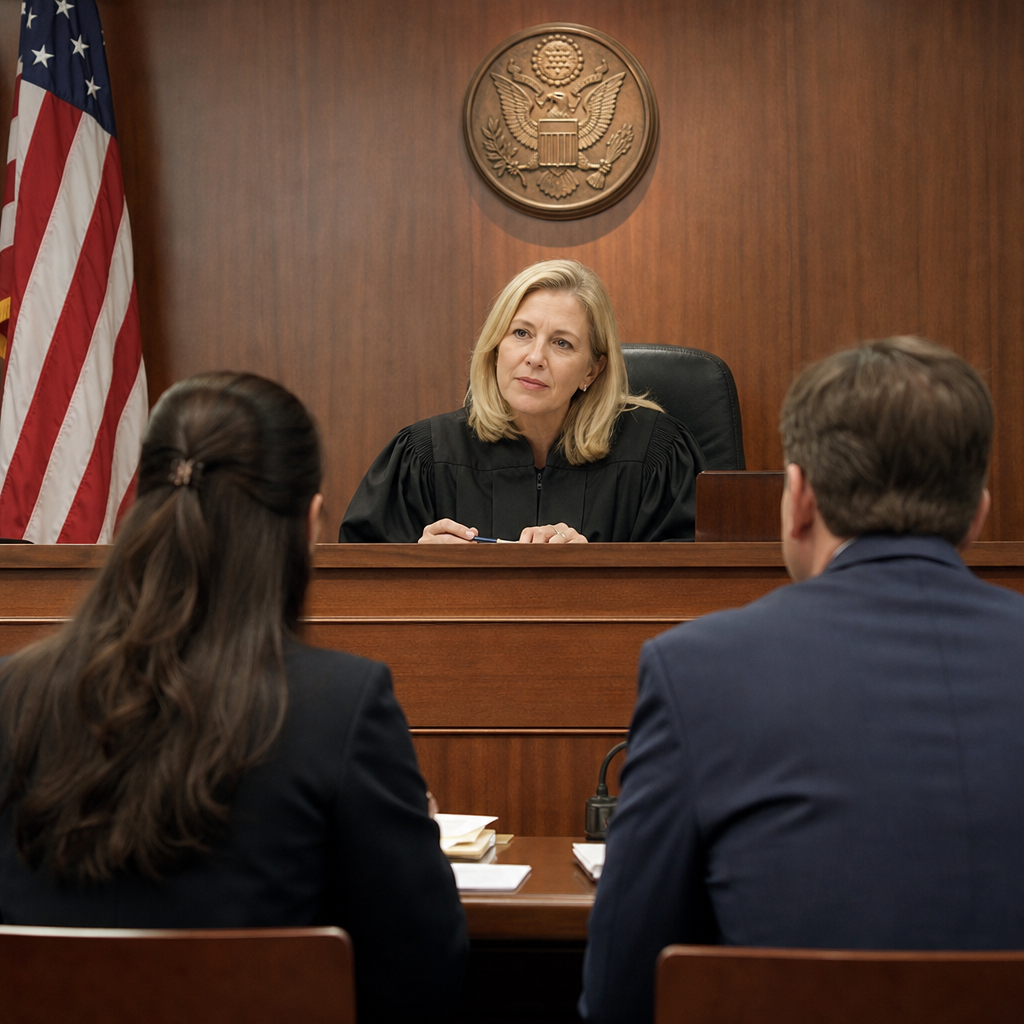
Administrative law judges sit at the intersection of law, policy, and public administration, deciding thousands of disputes that never reach a traditional courtroom. In the United States, an administrative law judge, usually called an ALJ, is an official who conducts hearings for government agencies, rules on evidence, makes factual findings, and issues decisions under statutes and regulations. These judges work inside the bureaucracy rather than in Article III courts, yet their rulings can determine whether a worker receives disability benefits, whether a company pays a regulatory penalty, or whether a professional loses a license. For AP Government and Politics, they matter because they show how the modern state exercises power through procedures that look judicial but remain part of the executive branch.
This topic belongs in a broader Misc hub because administrative law judges connect many core themes at once: separation of powers, due process, delegation, rulemaking, bureaucratic accountability, and judicial review. In practice, they also reveal the tension between efficiency and independence. I have seen students assume that every legal dispute begins in a courthouse with a robed judge and a jury. Administrative adjudication corrects that misconception. Federal agencies such as the Social Security Administration, Securities and Exchange Commission, National Labor Relations Board, and Environmental Protection Agency rely on in-house adjudication to resolve specialized disputes quickly and consistently. States do the same through workers’ compensation boards, tax tribunals, professional licensing bodies, and public utility commissions.
Understanding administrative law judges starts with a few key terms. Adjudication is the process of resolving a dispute by applying law to facts. Rulemaking creates generally applicable regulations, while adjudication applies those rules in specific cases. Due process refers to fair procedures, including notice, an opportunity to be heard, and an impartial decision-maker. Judicial review is the power of courts to examine agency action for legality. When Congress delegates authority to agencies, it often authorizes both rulemaking and adjudication. ALJs are the officials designed to make that adjudication credible. They are not identical to constitutional judges, but they are not ordinary agency employees either. Their procedural protections are meant to preserve impartiality inside agencies that also investigate, prosecute, and regulate.
That hybrid status is exactly why the subject matters. Administrative law judges help government function at scale. Without them, benefit claims, enforcement actions, and licensing disputes would overwhelm courts and delay basic governance. At the same time, because they exercise significant authority within agencies, they raise constitutional and democratic questions. How independent should they be from agency leadership? How much power can Congress give agencies without violating separation of powers? When should agency experts receive deference, and when should courts step in? Those questions shape modern governance, and they regularly appear in major Supreme Court cases, congressional oversight debates, and public controversies about the administrative state.
What Administrative Law Judges Do
An administrative law judge conducts formal hearings that resemble trials but usually operate under streamlined procedures. A case often begins when an agency issues a complaint, denies an application, or challenges eligibility for a benefit. The parties receive notice of the issues, may submit evidence, present witnesses, cross-examine opposing witnesses, and file legal arguments. The ALJ manages the hearing, rules on procedural motions, assesses credibility, and builds the record that later reviewers will examine. In many agencies, the ALJ issues an initial decision that the agency head or commission may adopt, modify, or reverse. In other systems, the ALJ decision becomes final unless appealed internally.
The work varies by agency. At the Social Security Administration, ALJs hear disability claims and decide whether applicants meet statutory and regulatory standards for benefits. At the National Labor Relations Board, ALJs hear unfair labor practice cases involving employers and unions. At the Securities and Exchange Commission, ALJs have handled allegations of securities fraud, disclosure violations, and industry misconduct. State administrative law judges may resolve teacher discipline, unemployment benefits, environmental permits, tax assessments, or medical licensing cases. The common thread is specialization. These judges develop deep familiarity with technical regulatory schemes, which is one reason agencies depend on them.
Administrative hearings differ from ordinary civil and criminal trials in several important ways. Discovery is often narrower. Rules of evidence may be relaxed compared with the Federal Rules of Evidence, though irrelevant or unreliable material can still be excluded. There is usually no jury. The governing procedures often come from the federal Administrative Procedure Act of 1946, state administrative procedure acts, agency regulations, and constitutional due process principles. In my experience reviewing hearing records, the most important practical difference is the standard of review on appeal. Courts usually do not retry the facts. They ask whether the agency followed proper procedures, interpreted the law reasonably where applicable, and supported its findings with substantial evidence in the record.
The Legal Foundation and Why It Exists
The legal architecture of administrative adjudication rests on the growth of the modern administrative state. As industrialization, financial markets, labor relations, environmental regulation, telecommunications, and public benefits programs expanded, legislatures created agencies to administer complex statutes. Congress could not realistically resolve every dispute itself, and traditional courts lacked the capacity and often the technical expertise to handle the resulting volume efficiently. The answer was delegated authority: agencies would write rules, investigate violations, and adjudicate disputes within statutory limits. Administrative law judges became the procedural safeguard that made this arrangement more lawful and more credible.
The federal Administrative Procedure Act was a turning point because it established baseline procedural protections for formal adjudication. It addressed concerns that agencies combined prosecutorial and adjudicative functions in ways that threatened fairness. The Act sought separation within agencies by insulating ALJs from some forms of managerial pressure. Federal ALJs are selected through a merit-based process and receive protections against arbitrary removal, although debates over appointment and removal have intensified in recent years. The core objective is simple: if agencies are going to decide cases internally, the hearing officer must have meaningful independence from investigators and political appointees.
One helpful way to understand the system is to compare institutional design across forums.
| Forum | Decision-maker | Typical subject matter | Key procedural traits |
|---|---|---|---|
| Federal district court | Article III judge | Civil and criminal cases | Strong evidentiary rules, jury possible, life-tenured judge |
| Federal agency hearing | Administrative law judge | Benefits, enforcement, licensing, labor, securities | Specialized rules, no jury, agency record central on review |
| State administrative tribunal | ALJ or hearing officer | Taxes, utilities, professional discipline, employment claims | Procedures vary by state, often streamlined and technical |
This structure exists because modern governance needs both expertise and throughput. A disability claim may turn on vocational evidence, medical records, and detailed regulatory listings. A securities case may involve insider trading rules, accounting standards, and disclosure obligations. A utility rate dispute may require engineering testimony and economic modeling. Specialized adjudicators can process those records more consistently than generalist courts working from scratch. The tradeoff is institutional legitimacy. Because the same agency may investigate, prosecute, and ultimately control the final decision, critics worry that internal judging can favor the government. The law answers that concern through hearing rights, decisional independence, published standards, and judicial review.
Constitutional Debates and Supreme Court Controversies
Administrative law judges have become central to constitutional disputes over appointments, removal, and the separation of powers. The Appointments Clause requires principal officers to be appointed by the president with Senate confirmation and allows Congress to vest appointment of inferior officers in the president alone, courts, or heads of departments. For years, agencies treated some adjudicators as mere employees. In Lucia v. SEC in 2018, the Supreme Court held that SEC administrative law judges are officers, not employees, because they exercise significant authority. That ruling required proper appointment and prompted agencies to review how their ALJs were hired or ratified.
Removal protections are even more contested. Supporters of insulation argue that decisional independence is essential to fair hearings. Opponents argue that too many layers of tenure protection weaken presidential control over executive officials. Cases involving administrative adjudication now sit within a broader debate about the constitutional limits of the administrative state. Students should see that these are not abstract disputes. If the Court narrows agency adjudication, agencies may have to shift more cases into federal court, redesign enforcement systems, or alter how hearing officers are supervised.
Another recurring issue is the Seventh Amendment right to a jury trial when agencies seek civil penalties. In SEC v. Jarkesy in 2024, the Supreme Court held that when the SEC seeks civil penalties for securities fraud, the defendant is entitled to a jury trial in federal court. The decision did not abolish administrative adjudication, but it significantly limited agency power in an important category of enforcement. The practical lesson is that administrative law judges remain important, yet their jurisdiction is shaped by constitutional boundaries that continue to evolve.
There is also the broader question of judicial deference to agencies. For decades, courts often deferred to reasonable agency interpretations of ambiguous statutes. That doctrine affected the power relationship among agencies, ALJs, reviewing courts, and regulated parties. When courts reduce deference, agencies face closer judicial scrutiny, and the practical influence of internal adjudicators can change. For AP Government and Politics, this is a vivid example of how constitutional structure, statutory design, and judicial doctrine interact rather than operate in isolation.
How Administrative Hearings Affect Citizens and Regulated Industries
The most immediate impact of administrative law judges is on ordinary people. A claimant seeking Social Security Disability Insurance may wait months or years for a hearing that determines access to income and medical support. In those hearings, the ALJ weighs medical evidence, testimony about symptoms, work history, and vocational expert opinions about jobs available in the national economy. Small procedural choices matter. Whether the record is fully developed, whether the claimant understands the burden of proof, and whether medical opinions are evaluated consistently can determine the outcome. These are not minor bureaucratic details; they shape livelihoods.
Businesses also feel the force of administrative adjudication. A broker accused of misleading investors, a hospital facing Medicare reimbursement disputes, or a manufacturer contesting an environmental citation may prefer an agency hearing to a full trial because the process can be faster and more specialized. Yet companies often worry about home-field advantage. Agency staff may investigate the case, litigate it, and then submit the record to officials within the same institution. In practice, skilled counsel focus heavily on preserving objections, building the factual record, and understanding the agency’s own precedents, because later review usually turns on that record.
Administrative hearings can also promote uniformity. When many similar disputes arise under the same statute, agencies can apply standards consistently across cases and regions. That consistency benefits both regulated entities and claimants by making outcomes more predictable. Still, the system can struggle with backlogs, uneven resources, and variable decision quality. I have seen the practical difference that training, docket management, and clear written decisions make. The strongest administrative courts explain their reasoning in plain terms, cite the governing standard precisely, and create records that permit meaningful review.
Why This Topic Anchors an AP Government and Politics Misc Hub
As a hub topic, administrative law judges connect to nearly every “miscellaneous” issue students encounter when studying government beyond textbook branch diagrams. They illuminate iron triangles and issue networks because agencies do not operate in isolation; they are influenced by Congress, courts, interest groups, professionals, and the president. They connect to public policy because implementation often matters as much as legislation. They connect to civil liberties because due process, notice, confrontation, and impartiality determine whether rights are real in practice. They connect to federalism because state administrative systems mirror federal ones while differing in structure and procedure.
This hub should also point readers toward related subjects: the Administrative Procedure Act, independent regulatory commissions, the nondelegation doctrine, judicial review of agency action, presidential control of the bureaucracy, discretionary authority, and the difference between rulemaking and adjudication. If someone understands administrative law judges, they can better understand why modern government is often experienced not through Congress or the Supreme Court, but through agencies making case-by-case decisions. That insight is essential for exams, civic literacy, and any realistic picture of how American government actually works.
Administrative law judges are the courts inside the bureaucracy, and that phrase captures both their value and their controversy. They bring order, specialization, and procedural structure to a vast administrative system that handles benefits, enforcement, licensing, labor conflicts, and technical regulatory disputes every day. They also expose the constitutional tensions of modern governance, because they operate within agencies that combine executive power with quasi-judicial functions. For students of AP Government and Politics, they are a practical lens on delegation, due process, separation of powers, and judicial review.
The key takeaway is straightforward. Administrative adjudication is not a side issue; it is one of the main ways government exercises authority over citizens and organizations. When you understand how ALJs are appointed, what hearings look like, why agencies use them, and where courts place constitutional limits, you understand a large share of the real administrative state. Use this hub as your starting point, then continue to related topics such as agency rulemaking, bureaucratic discretion, and Supreme Court oversight of federal power.
Frequently Asked Questions
What is an administrative law judge, and how is an ALJ different from a regular judge?
An administrative law judge, or ALJ, is a government adjudicator who conducts formal hearings for administrative agencies and resolves disputes arising under statutes, regulations, and agency programs. Unlike a judge in a traditional state or federal court, an ALJ works within the executive branch rather than in the judicial branch established by Article III of the U.S. Constitution. That structural difference matters. ALJs generally do not preside over criminal trials or broad civil lawsuits between private parties. Instead, they hear cases involving agency action, such as disputes over benefits, licensing, enforcement penalties, regulatory compliance, workplace safety, securities violations, immigration matters in some systems, and many other specialized areas of public administration.
Even so, the work of an ALJ often looks very judicial. ALJs administer oaths, rule on motions, manage hearings, decide what evidence may be considered, assess witness credibility, make factual findings, apply legal standards, and issue written decisions. In many agency systems, they serve as the first neutral decision-maker a person or business encounters after an investigation, denial of benefits, or proposed enforcement action. Their role is designed to bring order, fairness, and due process to agency decision-making.
The biggest difference from a “regular judge” is institutional placement and legal authority. A federal district judge derives power from the Constitution and exercises the judicial power of the United States. An ALJ derives authority from statutes enacted by Congress or state legislatures and from the regulations of the agency in which the judge serves. That means ALJs operate within a narrower, specialized framework. Their decisions may also be subject to review inside the agency before any court becomes involved. In short, an ALJ is not simply a lesser version of a courtroom judge. It is a distinct office created to handle the enormous volume of legal disputes generated by the modern administrative state.
What kinds of cases do administrative law judges hear?
Administrative law judges hear a wide range of disputes, but the common thread is that the cases arise from government programs or agency enforcement rather than from ordinary private litigation. In the federal system, one of the most familiar examples is the Social Security Administration, where ALJs hear appeals involving disability benefits. Other agencies use ALJs to decide disputes over Medicare and Medicaid reimbursement, labor and employment matters, environmental compliance, workplace safety citations, securities enforcement, customs issues, agricultural regulation, and professional licensing or debarment proceedings. State agencies use ALJs for similarly varied matters, including unemployment benefits, workers’ compensation in some jurisdictions, teacher discipline, utility regulation, tax disputes, and occupational licensing cases.
Some cases begin when an individual seeks a government benefit and the agency denies or limits the claim. Others begin when the government alleges that a person, company, or institution violated a regulation and should face penalties, corrective orders, or loss of a license. There are also cases that involve highly technical policy questions, where the hearing record may include expert testimony, agency guidance, economic data, scientific evidence, or detailed compliance histories. Because agencies regulate specialized fields, ALJs often become deeply familiar with the legal and factual issues unique to those fields.
This specialization is one reason ALJs are so important. They handle disputes that require both procedural fairness and subject-matter expertise. A traditional court could hear some of these matters on review, but it usually would not be the first forum to build the factual record. The ALJ hearing is often where witnesses testify, documents are introduced, technical arguments are tested, and the practical consequences of agency action are examined in detail. For many people, that hearing is the most significant legal proceeding they will ever face, even though it happens outside a conventional courthouse.
How do hearings before administrative law judges work?
Hearings before administrative law judges are generally less formal than jury trials, but they are still structured legal proceedings governed by statutes, agency regulations, and due process principles. A typical case begins with a triggering agency action, such as a denial of benefits, a notice of violation, a proposed fine, or a license suspension. The affected party then requests a hearing or files an appeal within the agency. Once the matter is assigned to an ALJ, the judge may issue scheduling orders, set deadlines, require disclosures, and oversee preliminary motions.
At the hearing itself, the parties may present testimony, documents, expert opinions, and legal arguments. The ALJ usually has authority to administer oaths, question witnesses, and rule on evidentiary disputes. The evidentiary rules are often more flexible than in court, but that does not mean “anything goes.” ALJs still evaluate relevance, reliability, prejudice, and the weight that evidence should receive. In many systems, hearsay may be admitted more readily than in a civil trial, yet the final decision still must rest on a record that satisfies the governing legal standard.
After the hearing, the ALJ typically issues a written decision containing findings of fact and conclusions of law. Depending on the agency, that decision may be final immediately, may become final unless reviewed by agency leadership, or may serve as an initial decision subject to internal appeal. In all of these variations, the hearing performs a critical function: it creates the official record. If the case later moves to judicial review, a court often examines whether the agency’s decision is supported by substantial evidence, follows the law, and respects procedural rights. That means the ALJ stage is often the decisive moment for developing facts, preserving objections, and shaping the outcome of any later appeal.
Are administrative law judges independent if they work inside government agencies?
That is one of the most important and debated questions in administrative law. ALJs are designed to be independent adjudicators even though they work within agencies. Various legal protections exist to reduce pressure from investigators, prosecutors, or policy officials inside the same bureaucracy. In the federal system, for example, ALJs generally have protections regarding hiring, pay, and removal that are intended to insulate them from political or managerial interference. They are not supposed to be supervised in the same way as ordinary agency employees when it comes to case outcomes, and agencies are restricted in how they evaluate ALJ performance. The goal is to ensure that hearings are fair and that decisions are based on the record and the law, not institutional pressure.
Still, independence in administrative adjudication is not absolute. Because ALJs are part of agencies, critics sometimes argue that the system creates tension between neutrality and bureaucratic mission. In some agencies, the final word may rest not with the ALJ but with agency heads or appellate boards that can review or modify the judge’s decision. There are also constitutional debates about the appointment and removal of ALJs, especially when their decisions carry significant legal consequences. The Supreme Court and lower courts have, at times, weighed in on whether certain adjudicators were appointed in a constitutionally proper way and whether statutory protections interfere with presidential control over executive officers.
The practical reality is that ALJs occupy a hybrid position. They are not independent constitutional judges in the Article III sense, but they are also not meant to function as ordinary agency advocates. Their legitimacy depends on procedural fairness, transparent reasoning, and institutional safeguards that preserve impartiality. For litigants, the key point is that an ALJ hearing is intended to provide a neutral forum within the agency system, even if the broader structure remains part of the executive branch.
Can decisions by administrative law judges be appealed or reviewed by courts?
Yes. In most systems, an ALJ’s decision can be reviewed, although the route and standard of review depend on the statute and agency involved. Often the first level of review is internal to the agency. A party may appeal to an agency appeals board, commission, secretary, or other senior official. In some agencies, the ALJ’s ruling becomes the agency’s final decision unless a higher authority chooses to review it. In others, internal review is automatic or required before a party can go to court. This layered structure reflects the idea that agencies should have the first opportunity to interpret and apply the statutes they administer.
Once the agency issues a final decision, judicial review may be available in state or federal court. Courts do not usually rehear the case from scratch. Instead, they review the administrative record created below and ask whether the agency acted lawfully. Depending on the governing law, a court may consider whether the agency exceeded its statutory authority, violated the Constitution, failed to follow required procedures, acted arbitrarily or capriciously, or issued a decision unsupported by substantial evidence. Courts often give some deference to agency fact-finding and, in certain contexts, to agency interpretations of law, though the scope of that deference has been the subject of major legal and political debate.
This review process shows why ALJs matter so much. Their hearings are not side proceedings with little consequence. They are often the foundation on which the final agency action and any later court review rest. A well-developed record, clear factual findings, and careful legal analysis can determine whether an agency decision stands or falls on appeal. For individuals and businesses navigating the administrative state, the ALJ is often the most important judge they will encounter, even if the dispute never enters a traditional courtroom.