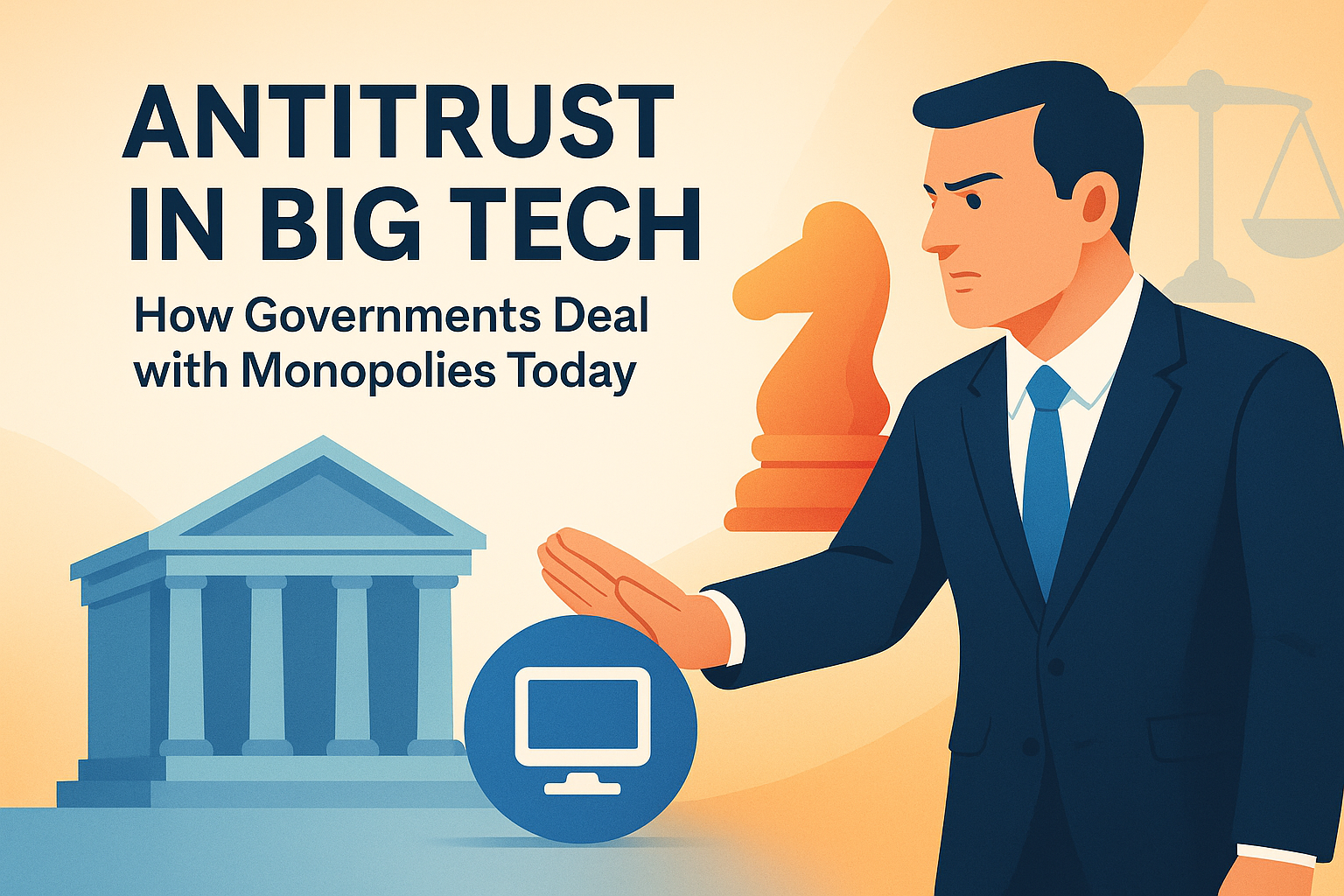
The rise of technology giants has shaped the landscape of our digital economy, but it has also ignited worries about monopolistic practices. Antitrust, a term rooted in regulation, refers to legislation aimed at promoting competition in the marketplace by preventing anti-competitive practices or unfair business monopolistic tendencies. The focus on Big Tech companies like Google, Amazon, Apple, and Facebook exemplifies the global concern that these entities wield excessive control, stifling competition and innovation. This discussion matters because technology impacts nearly every facet of modern life, from the services we use daily to our access to information. Understanding how governments address these challenges is crucial for both consumers and businesses to ensure a fair and competitive market environment.
The Evolution of Antitrust Laws
Antitrust laws have evolved significantly since their inception in the late 19th century as a means to curb corporate monopolies and promote fair competition. In the United States, the Sherman Antitrust Act of 1890 marked a pioneering effort, targeting companies that restrained trade or attempted to form monopolies. Europe followed suit, developing its own regulations under the Treaty of Rome in 1957. As the business environment transformed with technological advancements, so did the application of antitrust laws.
Today, governments must adapt these laws to the unique challenges presented by Big Tech. A key example of this evolution is the 2018 European Union fine on Google for illegal practices in Android mobile device sales to cement its search engine’s dominant role. This fine illustrated how traditional antitrust principles could be applied to digital platforms. By interpreting existing laws with a focus on current technological contexts, regulators are better equipped to address contemporary monopolistic threats.
Real-World Applications: The Microsoft Case
The Microsoft antitrust case of the late 1990s serves as a landmark example of how antitrust laws were applied in the tech world. The U.S. Department of Justice accused Microsoft of maintaining a monopoly by bundling its Internet Explorer with the Windows operating system, effectively stifling other web browsers’ competition.
This case underscored the need for legal systems to address how market dominance in software could harm competition. The resolution resulted in Microsoft agreeing to share its application programming interfaces with third-party companies and appointing a panel of three people to monitor its adherence to antitrust law over five years. This decision not only upheld the competition but also set a precedent for future antitrust probes in the technology sector.
Current Landscape: Big Tech Under Scrutiny
Today, the focus on antitrust regulation has shifted toward major tech players like Google, Amazon, Apple, and Facebook. These companies face investigations worldwide for their business practices perceived as unfairly hindering competition. The European Commission, for instance, has levied several significant fines against Google relating to search manipulation and online advertising practices.
Antitrust inquiries into Facebook’s acquisition strategies, Apple’s App Store practices, and Amazon’s treatment of third-party sellers showcase the multifaceted nature of regulatory challenges. Authorities must weigh whether these companies’ scale and behavior impede market competition or if they merely result from offering superior products and services. Such scrutiny is crucial to ensuring transparency and fairness across the digital marketplace.
Global Perspectives: How Different Regions Address Big Tech Monopolies
Antitrust approaches can differ greatly from one region to another, reflecting varying economic and political contexts. The European Union takes a proactive stance with stringent regulations and fines, whereas the United States sometimes opts for more dialogue and minimal interventions due to differing regulatory philosophies.
In China, the government adopts a more controlled approach, having recently imposed substantial fines on technology firms such as Alibaba for monopolistic behaviors. Meanwhile, countries like Australia and India are crafting their laws and regulations to safeguard against the monopolistic tendencies of tech behemoths. This global variety highlights that while the intent of antitrust laws remains consistent—curbing monopolistic power—execution is tailored to the region’s specific legal and economic frameworks.
| Region | Key Approach | Notable Actions |
|---|---|---|
| European Union | Proactive | Fined Google for search manipulation, Android practices |
| United States | Minimal intervention | Ongoing investigations into multiple Big Tech companies |
| China | Controlled | Fines on Alibaba, new data protection laws |
| Australia | Targeted legislation | Digital platforms inquiry, News Media Bargaining Code |
The Role of Innovation in Antitrust Cases
While combating monopoly, regulators must carefully consider the role of innovation. Monopolistic behaviors can stifle innovation by reducing competition; however, severely punishing tech giants could inadvertently hamper their capacity for innovating. This delicate balance requires regulators to protect against monopolistic practices while allowing these companies to innovate and drive technological progress.
A pertinent example is the inquiry into Amazon’s e-commerce strategies. On one hand, its dominance can suffocate small retailers and limit market entries. On the other hand, Amazon’s logistical efficiencies and consumer insights vastly enhance customer experience. Striking a balance requires understanding how to preserve competitive pressures alongside nurturing environments where innovation doesn’t come at the cost of stifling smaller players.
Challenges and Future of Antitrust in Big Tech
The regulatory landscape dealing with Big Tech is evolving, presenting numerous challenges. Data privacy, cross-border tech policies, and rapid digital transformations require governments to remain agile and innovative in their antitrust strategies. Crafting regulations potent enough to curtail monopolistic practices without stifling growth is a persistent challenge in this domain.
Future antitrust efforts must actively accommodate technology trends, anticipating issues with artificial intelligence, blockchain, and digital markets previously unexplored by regulators. Ongoing discourse on how to modernize antitrust laws is essential, dealing with emerging monopolistic threats while fostering an environment conducive to fair competition and technological growth.
Conclusion: Navigating the Complex Antitrust Terrain
Antitrust in Big Tech is a multifaceted challenge that requires vigilance and adaptability from global regulators. As technology continues to evolve, so too must the laws designed to maintain fair competition and prevent monopolies. The ongoing scrutiny and regulation of major tech companies underscore the importance of these efforts for consumer protection and balanced market dynamics.
Ensuring effective antitrust measures benefit everyone: consumers gain from diverse, competitive offerings; businesses, both small and large, thrive within fair marketplaces, and the economy is sparked by innovation rather than inhibited by monopolistic barriers. For readers and stakeholders, staying informed and advocating for transparent, balanced regulatory policies is crucial. The key lies in refining an antitrust approach attuned to both technological innovation and competitive integrity, charting a course for equitable advancement in the digital age.
Frequently Asked Questions
1. What is antitrust law and why is it important in regulating Big Tech companies?
Antitrust laws are crucial regulations designed to promote market competition by restricting anti-competitive conduct by businesses. These laws aim to prevent monopolistic practices and ensure a fair playing field for all companies within an industry. When applied to Big Tech companies like Google, Amazon, Apple, and Facebook, antitrust laws become especially important. These tech giants possess extensive power, able to influence markets, economies, and even social and political arenas globally. Their power may sometimes lead to practices that stifle competition—from buying out competitors to creating barriers for new entrants. Antitrust enforcement prevents these giants from becoming too dominant, ensuring that no single entity can choke innovation or limit consumer choices. In essence, they maintain a competitive environment where startups and smaller enterprises can thrive, thus spurring more innovation, better services, and products for consumers. Governments apply these laws to check the influence of Big Tech and assure that the digital economy remains dynamic and competitive.
2. How do governments investigate and address potentially monopolistic behaviors in Big Tech?
Governments use a variety of strategies to investigate and address potentially monopolistic behavior in Big Tech. Primarily, they conduct exhaustive investigations into the business practices, mergers, acquisitions, and overall market strategies of these companies. Regulatory bodies like the Federal Trade Commission (FTC) in the United States or the European Commission in the European Union carry out these probes. They analyze factors like market share, revenue models, control over data, and consumer impact. If they identify anti-competitive behavior, governments can impose several remedies—from fines and penalties to restructuring mandates, which may include breaking up parts of the companies to mitigate unfair market dominance. Beyond immediate penalties, antitrust authorities might also place ongoing restrictions on business operations to prevent future anti-competitive conduct, compelling them to adhere to fairer practices. Such scrutiny ensures these tech behemoths remain innovatively active while operating within the boundaries of a competitive, lawful framework.
3. What are some high-profile cases where Big Tech companies faced antitrust action?
Several high-profile cases have come to light where Big Tech companies have faced significant antitrust action. For instance, Google has continually been in the spotlight with several cases filed against it, particularly by the European Union. In 2018, Google was fined a record €4.34 billion for antitrust violations related to its Android operating system, accused of using mobile dominance to stifle competition. Similarly, Facebook faced scrutiny over its acquisition strategies, notably in the U.S. where recent discussions revolve around whether its acquisitions of Instagram and WhatsApp reduced consumer choices. Amazon has also been under the regulatory radar for policies allegedly disadvantaging third-party sellers on its platform. Apple was scrutinized for App Store policies that allegedly hurt developers’ market access. These cases reflect the extensive measures regulatory bodies are willing to take to curtail monopolistic tendencies within the dynamic tech industry.
4. What challenges do governments face in regulating antitrust in the context of Big Tech?
Governments confront numerous challenges in effectively regulating antitrust in the rapidly evolving Big Tech sector. One significant hurdle is the sheer complexity and global reach of these companies. Big Tech’s operations transcend traditional market boundaries, often involving intricate algorithms, data analytics, and digital marketplaces not easily governed by conventional competition law frameworks. Additionally, the pace at which technology advances makes it challenging for legislative bodies to keep regulations up to date with current digital realities. These companies’ vast resources allow them to mount formidable legal defences or lobby against regulatory efforts. Moreover, regulators must balance enforcing antitrust laws with nurturing innovation—a task sometimes at odds when intervening aggressively in tech-driven markets. Finally, uniformity in global enforcement poses a challenge, as differing national priorities and regulatory standards can lead to inconsistent antitrust outcomes across regions. Despite these challenges, continuous efforts are made to evolve regulatory frameworks to meet the unique demands posed by Big Tech’s dominance.
5. How do antitrust proceedings against Big Tech impact consumers and the market?
Antitrust proceedings against Big Tech have significant implications for both consumers and the market overall. For consumers, vigorous antitrust enforcement can lead to more choices, better services, and lower prices. Unchecked monopolistic behavior can often result in the opposite, with higher prices, less innovation, and reduced service quality as dominant companies lack competitive incentives. When regulatory bodies intervene, they restore an equitable competitive environment where new and smaller companies can emerge, compelling Big Tech entities to rethink and often better their offerings. For the market, robust antitrust actions introduce a healthier innovation ecosystem. Startups and smaller technology firms can capitalize on the opportunities created by disrupting the power of monopolistic giants. This vibrancy is essential to a dynamic economy, fueling a cycle of innovation, job creation, and economic growth. Overall, antitrust proceedings help ensure that the digital economy functions more efficiently, equitably, and with consumer interests vigorously protected at its core.