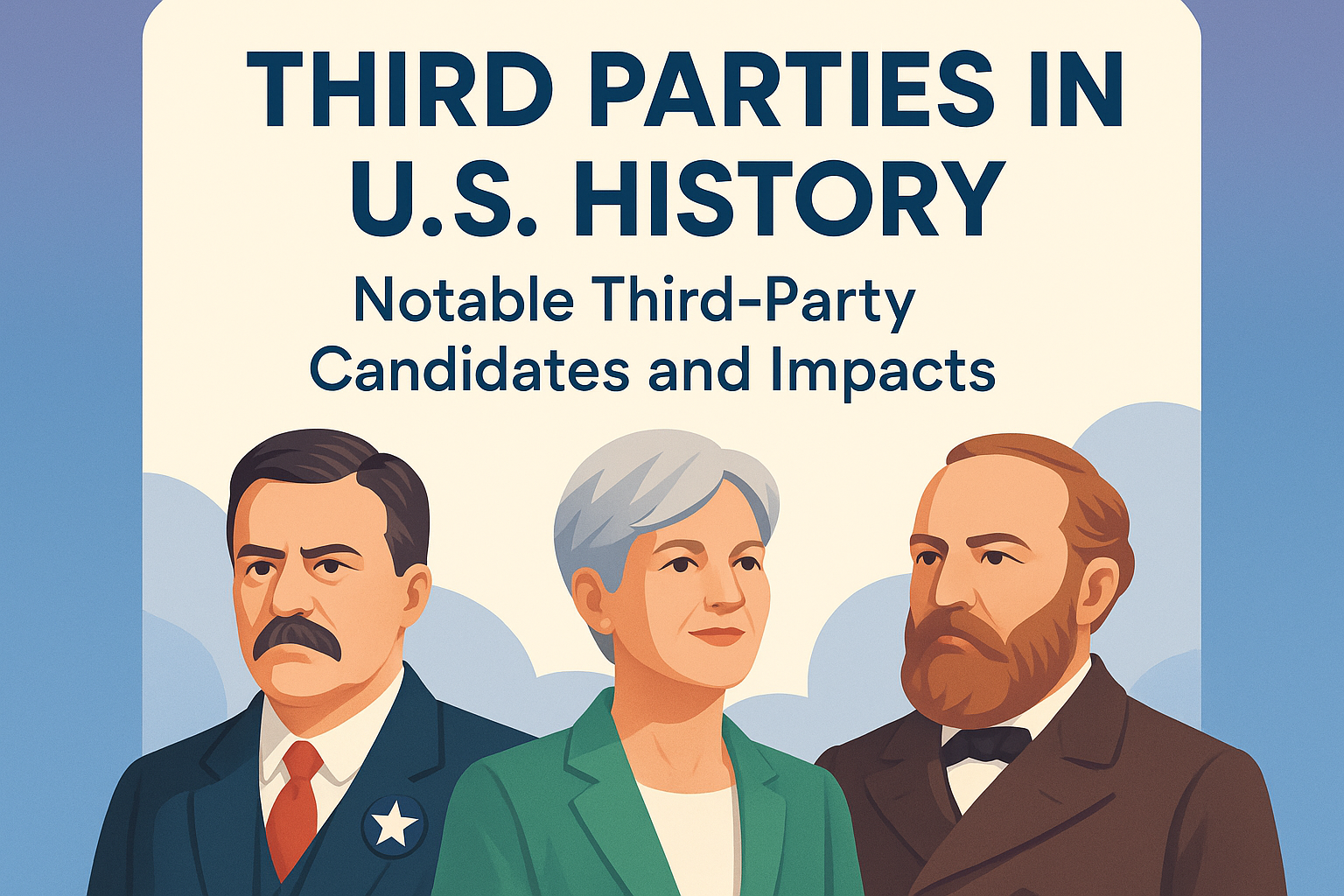
The political landscape of the United States is often characterized by its dominant two-party system, which comprises the Democratic and Republican parties. However, throughout history, third parties have played a vital role in shaping American politics, offering alternative viewpoints and influencing the trajectory of policy debates. Third parties, or minor parties, are political parties that operate alongside the major parties but often struggle to maintain long-term success due to various systemic challenges. Nonetheless, third-party candidates can have a profound impact on elections, bringing attention to issues that may otherwise be overlooked and forcing major parties to address new or existing concerns. This article will delve into the significance of third parties in the U.S., highlighting notable third-party candidates and examining their historical and electoral impacts.
The Role and Challenges of Third Parties in the US
Third parties have been a fixture in American politics since the early 19th century, offering alternatives to the predominant political ideologies of their time. Although they rarely win major elections, third parties serve several critical functions. They often introduce new ideas and policies that challenge the status quo, addressing issues that the major parties may neglect. Third parties can also act as a barometer for public discontent, gauging the electorate’s appetite for change and innovation.
However, the path for third parties is fraught with challenges. The American electoral system, primarily the “winner-takes-all” approach, disadvantages minor parties. Unlike proportional representation systems, where seats are allocated based on vote share, the U.S. system awards victory to the candidate with the most votes in each election. This structure makes it difficult for third-party candidates to gain traction at both local and national levels.
Another hurdle is the lack of resources and support. Major parties benefit from established voter bases, substantial funding, and extensive media coverage—all of which third parties often lack. Despite these obstacles, third parties persist, significantly impacting political discourse and policy directions.
Real-World Example: The Progressive Party and Teddy Roosevelt
The Progressive Party, also known as the Bull Moose Party, is one of the most notable third parties in U.S. history. Formed in 1912 by former President Theodore Roosevelt after a split within the Republican Party, the Progressive Party advocated for reforms such as women’s suffrage, social welfare programs, and the regulation of corporations and monopolies.
The candidacy of Roosevelt under the Progressive Party banner had a significant impact on the 1912 presidential election. The division within the Republican Party allowed the Democratic candidate, Woodrow Wilson, to win the presidency despite not having a majority of the popular vote. Roosevelt secured 27% of the popular vote, marking one of the most successful third-party runs in U.S. political history. This outcome illustrated the power of third parties to influence election results, even if they do not secure victory themselves.
Impact on Policies: The Populist Party and Economic Reform
The Populist Party, or the People’s Party, emerged in the late 19th century during a period of economic distress for American farmers and laborers. This party championed issues such as the direct election of senators, a graduated income tax, and the free coinage of silver to combat deflation. The Populist Party was pivotal in bringing attention to the economic struggles of rural and working-class Americans, catalyzing political debate and policy reform.
Although the Populist Party itself dissolved by the early 20th century, many of its policy proposals were absorbed by the major parties and eventually implemented. For instance, the 16th Amendment, authorizing a federal income tax, and the 17th Amendment, mandating the direct election of senators, reflect the Populists’ influence on American policy. This demonstrates the capacity of third parties to reshape political platforms and agendas, even if they do not maintain lasting political power.
Notable Third-Party Candidates in the Modern Era
In recent decades, third-party candidates have continued to make their presence felt in American elections. One prominent example is the candidacy of Ross Perot in the 1992 presidential election. Running as an independent, Perot centered his campaign on fiscal responsibility and reforming the nation’s economic policies. His campaign attracted significant public attention, and he garnered 19% of the popular vote, one of the highest percentages for a third-party candidate in the modern era.
Perot’s campaign is credited with influencing the political conversation around the federal deficit and government spending. His success demonstrated that third-party candidates could harness media platforms and public dissatisfaction to challenge the political duopoly and bring critical issues to the forefront. Despite his impact, the structural challenges of the U.S. electoral system remained—highlighting the persistent barriers to third-party success.
| Candidate | Election Year | Party | Popular Vote (%) |
|---|---|---|---|
| Theodore Roosevelt | 1912 | Progressive (Bull Moose) | 27% |
| Ross Perot | 1992 | Independent | 19% |
| Ralph Nader | 2000 | Green Party | 2.7% |
Third Parties and Their Role in Democratizing Politics
While third parties often face an uphill battle in the American political system, their contributions to democracy and political discourse are invaluable. They encourage voter engagement by providing alternatives to the mainstream options, potentially increasing voter turnout by appealing to those dissatisfied with major party candidates. Third parties also foster a more dynamic and responsive political environment, forcing major parties to address emerging issues and public demands.
A case in point is Ralph Nader’s 2000 presidential campaign under the Green Party. Nader focused on environmental issues, corporate accountability, and political reform, which resonated with voters concerned about environmental protection and sustainable development. Despite receiving only 2.7% of the popular vote, Nader’s campaign drew attention to ecological concerns, prompting major parties to integrate environmental policies into their platforms more prominently.
The Future of Third Parties in American Politics
The future of third parties in U.S. politics remains uncertain but full of potential. As political polarization continues to grow, the desire for alternative voices and solutions may increase, providing an opportunity for third parties to gain traction. Technological advancements and changes in media consumption offer new avenues for third-party candidates to connect with voters and spread their messages outside traditional platforms.
Moreover, ongoing discussions about electoral reform, such as ranked-choice voting, could create a more favorable landscape for third parties. Ranked-choice voting allows voters to rank candidates in order of preference, potentially reducing the “spoiler effect” where third-party candidates split the vote and inadvertently aid the victory of a less favored candidate. These reforms could empower third parties to compete more effectively, enhancing the diversity of political representation.
Conclusion
In conclusion, third parties have played a crucial role in U.S. political history, influencing elections and policies by introducing new ideas and challenging the status quo. Despite significant structural barriers, third-party candidates continue to shape political discourse and highlight issues that might otherwise be ignored. Their presence underlines the importance of a pluralistic political system that accommodates diverse viewpoints and encourages innovation in governance. As voters and policymakers consider ways to enhance democratic participation and representation, recognizing and supporting the contributions of third parties becomes increasingly essential.
As a citizen or voter, you can explore and engage with third-party platforms, understanding their positions on critical issues and advocating for electoral reforms that promote inclusivity and fairness. By doing so, you contribute to a more vibrant and representative political system, ensuring that the voices of diverse constituencies are heard and valued in the democratic process.
Frequently Asked Questions
1. What are third parties, and why do they matter in US politics?
Third parties in the United States are political parties that exist alongside the two major parties, the Democrats and Republicans. They’re known as “minor parties” because they typically don’t hold as much political power or electoral success as the major parties. However, they matter significantly in US politics because they introduce new ideas and perspectives that may not be addressed by the main political entities. Third parties often spotlight issues that are ignored by the two-party system and can influence major party platforms by bringing attention to these issues. They can also impact elections by drawing votes away from major party candidates, sometimes altering the outcome of elections. Throughout history, third parties have advocated for pivotal reforms and changes, contributing to shaping the nation’s political dialogue.
2. Can you provide examples of notable third-party candidates in US history?
Certainly! Let’s dive into the stories of a few memorable third-party candidates and the mark they left on the political landscape. One notable figure is Theodore Roosevelt, who ran as a Progressive Party candidate (often referred to as the Bull Moose Party) in 1912 after serving as the 26th President of the United States. Roosevelt’s candidacy is famous for disrupting the two-party dynamic, and his platform was centered on progressive reforms including women’s suffrage and labor rights. His campaign managed to garner significant support, securing 27% of the popular vote and even surpassing the Republican incumbent, William Howard Taft, although he ultimately lost to Democrat Woodrow Wilson.
Another impactful third-party candidate was H. Ross Perot, a billionaire businessman who ran as an independent in the 1992 presidential election. His campaign focused heavily on fiscal responsibility and tackling the national debt, resonating with voters frustrated by the economic policies of the time. Perot’s candidacy is credited with drawing attention to budget issues that later influenced mainstream political discourse. Winning 19% of the popular vote, Perot didn’t win the presidency, but his campaign showed the potential for a third-party candidate to attract substantial popular support.
Finally, Ralph Nader, a long-time consumer advocate, stands out for his 2000 Green Party presidential campaign. Advocating for environmental sustainability and corporate accountability, his platform sought to introduce progressive values into the political arena. Many argue that his candidacy drew votes away from Democratic candidate Al Gore, potentially influencing the close outcome of the election which saw George W. Bush become president. Nader’s impact lies in his ability to shift public focus towards environmental and social issues long before they became mainstream concerns.
3. What factors have historically contributed to the challenges third parties face in the United States?
Third parties confront a myriad of obstacles that make their long-term sustainability challenging in the United States. One major hurdle is the country’s electoral system, particularly the “first-past-the-post” voting system used in most elections. This system encourages a winner-takes-all approach, making it difficult for third-party candidates to gain traction, as only the candidate with the majority of votes wins, leaving no room for proportional representation that could benefit smaller parties.
Ballot access laws are another significant barrier. Each state in the US has its own set of requirements for candidates to appear on ballots, often involving complex procedures and hefty fees. These requirements can be prohibitively expensive and time-consuming for third-party candidates who frequently lack the financial resources and extensive organizational support that major parties benefit from.
Media coverage plays a crucial role as well. Major news outlets typically focus on the dominant parties, granting third-party candidates significantly less visibility and exposure. This lack of coverage can stymie their efforts to reach potential supporters and spread their platform. Additionally, public perception of the viability of third parties often leads to a “wasted vote” mentality, where voters might support the major party candidates they view as having a better chance of winning, further limiting third-party success.
4. How have third-party movements influenced major party platforms and policies?
Throughout history, third-party campaigns have pushed the boundaries of political debate and spurred significant changes in major party platforms and national policies. Third parties often prioritize issues that major parties overlook, bringing new ideas into the political sphere and exerting pressure on traditional parties to adopt or respond to these concerns.
For example, the Populist Party in the late 19th century championed issues such as the direct election of senators, a progressive income tax, and banking reforms. Even though they never won a presidential election, their platform successfully forced these ideas onto the national agenda, leading to the eventual adoption of such reforms. Similarly, in the early 20th century, the Progressive Party brought attention to social justice issues, worker rights, and governmental transparency, subsequently nudging the major parties to incorporate these elements into their policies.
The Socialist Party in the early 1900s also influenced American political discourse by advocating for labor rights and social welfare programs. Although they never gained significant electoral success, the platforms they espoused eventually found their way into the New Deal programs of the 1930s under Franklin D. Roosevelt’s administration. Thus, while third-party candidates often face uphill battles in elections, their lasting impact often lies in their ability to introduce and normalize ideas that eventually become part of mainstream political dialogue.
5. What are some strategies third parties have employed to gain greater influence or electoral success in the US?
In their quest to overcome systemic disadvantages, third parties have adopted various strategies to amplify their influence and improve their chances of electoral success. One common approach is coalition-building, where third-party candidates may form alliances with like-minded interest groups and organizations to expand their base of support. This approach can help consolidate scattered resources and boost voter mobilization and outreach efforts.
Some third parties focus on local or regional elections where they might have a more realistic chance of success. By building a track record at the local level, they can develop credibility and demonstrate the practical viability of their ideas, potentially using this grassroots success as a stepping stone to influence larger-scale elections.
Additionally, third parties often work to introduce ranked-choice or proportional representation voting systems at local or state levels. These systems can offer a more favorable electoral environment by allowing voters to rank candidates in order of preference, thus reducing the “wasted vote” syndrome and increasing their chances of winning seats.
Ultimately, third parties continue to seek innovative ways to engage with the electorate. By leveraging modern communication technologies and social media platforms, they can bypass traditional media gatekeeping, directly reaching a broader audience to gain visibility and support. Despite considerable challenges, these strategies reflect a vivid determination to carve out space amid the entrenched two-party system in the U.S.