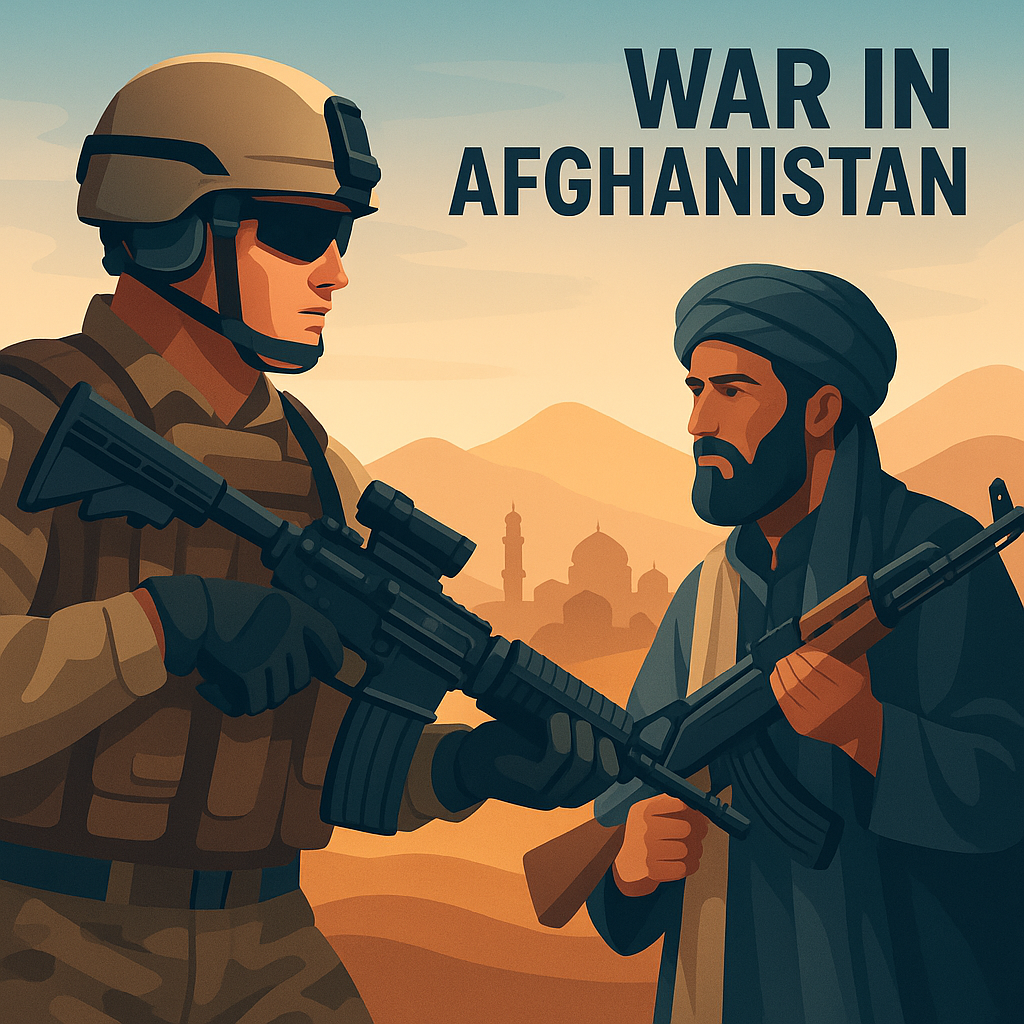
The War in Afghanistan, often referred to as America’s longest war, commenced in October 2001. It officially ended with the U.S. troop withdrawal in August 2021, spanning two decades and significantly altering global geopolitics. The conflict initiated when the United States and its allies aimed to dismantle al-Qaeda and eliminate its safe haven in Afghanistan, hosted by the Taliban, who controlled much of the country at that time. This protracted war embodies a complex mosaic of military operations, political strategy, and humanitarian challenges, with profound implications for international relations, American foreign policy, and the socio-political landscape of Afghanistan.
Defining key terms is essential in comprehending the war’s scope. ‘Taliban’ refers to an Islamic fundamentalist group that ruled Afghanistan from 1996 until their overthrow in 2001, re-emerging as an insurgent force during the war. ‘Al-Qaeda’ is a global militant Islamist organization, responsible for the September 11 attacks in 2001, which catalyzed the war. ‘NATO’ (North Atlantic Treaty Organization), a military alliance including the U.S., played a crucial role in supporting Afghan security forces and conducting combat operations during the conflict.
The war’s significance extends beyond military engagements. It has enduring effects on global terrorism, regional stability in South Asia, and the humanitarian landscape within Afghanistan. Furthermore, it underscores the challenges of nation-building, counterinsurgency, and the intricacies of foreign military involvement in local conflicts. Therefore, examining this war offers critical insights into future international interventions and the persistent quest for global security.
The Evolution of the Mission and Military Strategy
The initial phase of the mission focused on dismantling al-Qaeda and removing the Taliban from power to prevent future terrorist attacks. The strategy included airstrikes, ground operations, and coalition-building. Early successes, such as the swift removal of the Taliban regime, demonstrated the effectiveness of U.S. military capabilities. However, the mission soon expanded into a more complex counterinsurgency effort, aiming to stabilize the region, establish a democratic governance system, and rebuild Afghan society.
As the conflict evolved, challenges in adapting military strategies emerged. Insurgent tactics, such as guerrilla warfare, necessitated changes in U.S. military approaches. The increased deployment of troops under strategies like the 2010 “surge,” led by General Stanley McChrystal, reflected attempts to counteract rising insurgencies. Despite tactical adjustments, the war’s duration indicated the struggles in achieving sustainable peace and effective governance.
Nation-Building: Challenges and Outcomes
Nation-building, a cornerstone of U.S. efforts in Afghanistan, involved establishing a functioning government, civil institutions, and economic stability. However, this task proved arduous due to pre-existing political fragmentation, widespread corruption, and persistent insurgency threats. Real-world examples include the repeated failures to secure political stability, highlighted by contested elections and power-sharing agreements that struggled to stabilize governance.
| Year | Event | Outcome |
|---|---|---|
| 2004 | First Democratic Election | Hamid Karzai elected, but governance issues persisted. |
| 2014 | National Unity Government | Power-sharing between Ghani and Abdullah; political instability continued. |
Further complexities in nation-building were underscored by efforts to develop Afghan security forces. Despite significant investment, training, and resources, Afghan forces often struggled with self-sufficiency and operational effectiveness, exemplified by the Taliban’s rapid takeover in 2021 following U.S. withdrawal.
Afghanistan’s Humanitarian Landscape
The war severely affected Afghanistan’s humanitarian situation, leading to significant civilian casualties, mass displacement, and socio-economic hardships. The war-ravaged infrastructure and disrupted services, exacerbating poverty and creating dependency on international aid.
A particularly concerning aspect was the impact on Afghan women and children. Initiatives aimed at education and women’s rights faced relentless challenges. Despite progress, such as increased female participation in schools and government, cultural and security barriers remained formidable. The return of Taliban rule in 2021 poses renewed threats to these fragile gains, as reports of regressive policies emerge.
The Global and Regional Implications
Internationally, the war influenced global power dynamics, particularly U.S. foreign policy, NATO’s role in global security, and counterterrorism strategies. It served as a backdrop for debates on military intervention efficacy and the ethical considerations of long-term occupation.
Regionally, the war reshaped South Asia’s security landscape. Pakistan, sharing a porous border with Afghanistan, played a critical yet controversial role in counterinsurgency efforts, complicating U.S.-Pakistan relations. The conflict also highlighted geopolitical interests among neighboring powers, like India and China, influencing their strategic posturing in the region.
Moreover, the war facilitated discussions on the future of international coalitions, the viability of peace negotiations with non-state actors, and the humanitarian responsibilities of foreign powers. Consequently, it has become a pivotal reference point for policymakers navigating contemporary security challenges.
Conclusion: Key Takeaways and Future Implications
The War in Afghanistan remains an indelible chapter in military history, teaching profound lessons on the complexities of international conflict, nation-building, and counterterrorism efforts. Key takeaways include the recognition of cultural, political, and geographical intricacies that complicate foreign military interventions and the significance of comprehensive, locally-informed strategies for establishing sustainable peace and governance.
The primary benefit for readers is gaining an understanding of the intricacies involved in such a global conflict and its lasting implications for future military and diplomatic ventures. It underscores the necessity for informed decision-making in international policy and intervention scenarios. As we reflect on this protracted conflict, it calls for proactive engagement in fostering stability and supporting humanitarian efforts in conflict-affected regions.
As the dust of America’s longest war settles, its lessons urge us to strive for more adaptable and empathetic approaches to achieving global peace and security. A call-to-action for policymakers and global citizens alike is to continue advocating for and participating in dialogues that center sustainable solutions and prioritize human welfare. Through collective effort and understanding, we can endeavor to prevent the recurrence of such prolonged, devastating conflicts.
“`htmlFrequently Asked Questions
1. What were the main objectives of the War in Afghanistan?
The War in Afghanistan, which began in October 2001, had several primary objectives from the outset. The United States and its allies entered the conflict with the aim of dismantling the terrorist network al-Qaeda. This group had orchestrated the September 11 attacks, and its leader Osama bin Laden was at large, believed to be under the protection of the Taliban, who were then the ruling power in Afghanistan. The U.S. aimed to eliminate al-Qaeda’s operational capabilities and prevent it from using Afghanistan as a haven for further attacks. Another objective was to remove the Taliban from power due to their support of al-Qaeda, thereby stabilizing the region, promoting a more democratic government, and preventing future terrorism inspired from this strategic location. These complex goals led to prolonged military engagements and international political developments over the years.
2. How did the conflict change the geopolitical landscape?
The War in Afghanistan brought profound changes to the geopolitical landscape, influencing international relations on several levels. Initially, it garnered widespread international support, with NATO invoking Article 5 for the first time, declaring the attack on the U.S. as an attack on all members. This coalition effort helped redefine military alliances and strategies around global terrorism. Over time, the prolonged presence of U.S. and allied forces in Afghanistan became a point of contention and fatigue, influencing diplomatic ties, particularly with countries in the Middle East and South Asia. The war impacted U.S.-Pakistan relations considerably, as Pakistan was accused of harboring elements supportive of the Taliban. Additionally, the war indirectly highlighted the increasing power of China and Russia as influential counterbalances in global affairs. Challenges in governance and persistent insurgencies in Afghanistan pointed to broader implications about nation-building efforts by external forces, shaping future U.S. foreign policy and military strategy.
3. What were some of the reasons for the war’s protracted duration?
The reasons behind the prolonged duration of the War in Afghanistan are multifaceted, involving military, political, and socio-cultural dimensions. Militarily, rugged terrain and the use of guerrilla tactics by insurgents made combat operations difficult and resource-intensive. Politically, efforts to establish a stable and democratic Afghan government were hampered by corruption, tribal dynamics, and lack of infrastructure, which impeded effective governance and public support. The resurgence of the Taliban, particularly in rural areas, posed persistent challenges despite significant efforts to curb their influence. Attempts at peace talks faced obstacles due to complex tribal and political allegiances as well as deteriorating conditions undermining civilian trust both in the Afghan government and coalition forces. Over time, shifts in international political will and resource allocation attributed to the war’s continuation, further complicated by evolving regional security threats, illustrate why the war became the longest in U.S. history.
4. What was the outcome of the U.S. withdrawal in 2021?
The outcome of the U.S. troop withdrawal in August 2021 was significant and immediate, marking the official end of America’s longest war. The expedited withdrawal process led to rapid advances by the Taliban, who quickly regained control of the Afghan capital, Kabul, and subsequently the entire country. The swift Taliban takeover highlighted the vulnerabilities and dependency of the Afghan government and defense forces despite years of international training and support. The withdrawal then became the subject of significant international discussion regarding refugee crises, with many Afghans seeking to flee the country amidst fears of reprisal and persecution. Domestically in the U.S., it sparked debates about the nature and implications of the exit strategy, military sacrifices, and long-term consequences for Afghan citizens and global counterterrorism initiatives. This outcome has reshaped perspectives on interventionism and inspired dialogue on future engagements in foreign conflicts.
5. How has the war affected Afghanistan and its people?
The War in Afghanistan has had profound and long-lasting impacts on the nation and its people. Over two decades, the conflict has resulted in significant civilian casualties and displacement, contributing to a humanitarian crisis marked by poverty and underdevelopment. Many Afghans endured disruption in their day-to-day lives, with security threats from ongoing violence and the destruction of infrastructure leaving the country in a fragile state. Efforts at rebuilding included considerable international investment in education, health, and governance, leading to improvements in some areas such as increased access to education for women and girls, although these gains remain precarious under Taliban rule. The war has also deeply affected Afghan society, shaping people’s experiences, aspirations, and relationships with both local authorities and foreign entities. The cultural and political landscape remains complex, evolving under the weight of conflict legacies and external influences.
“`