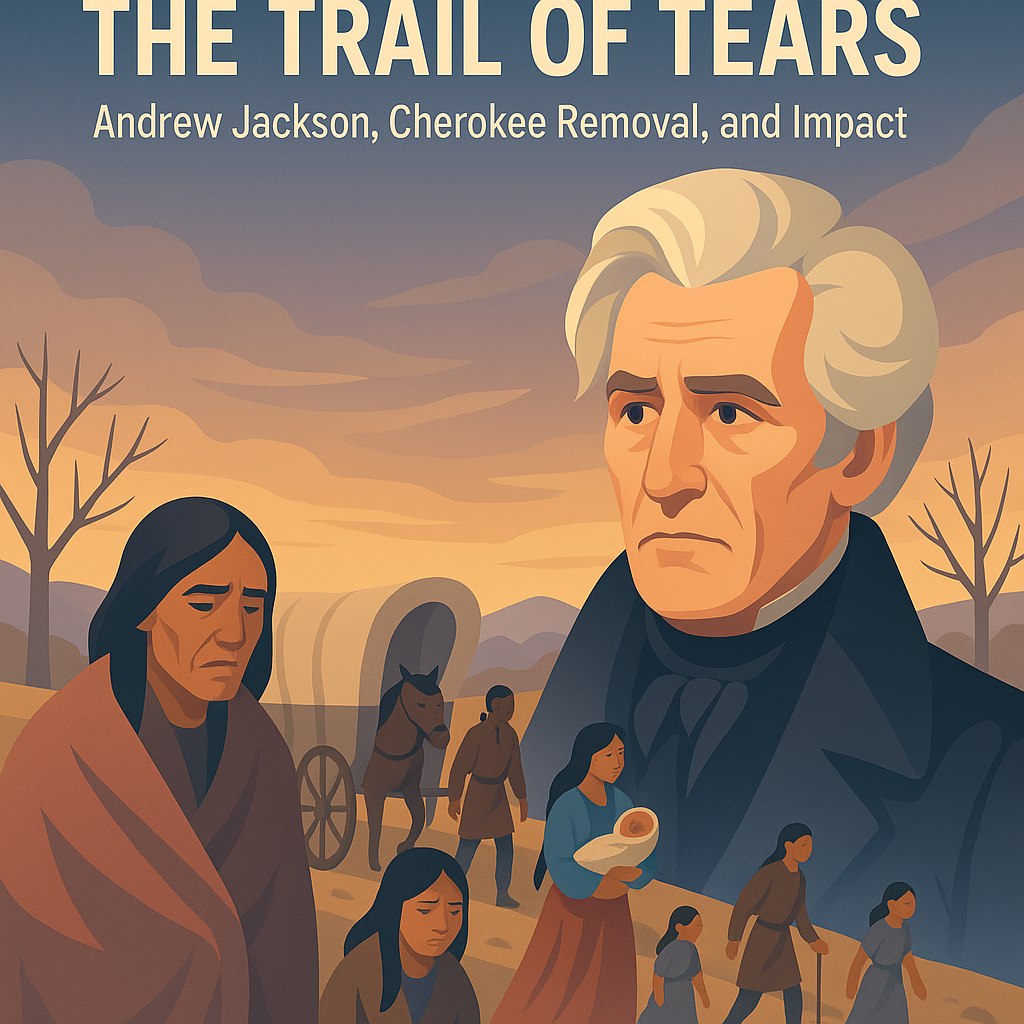
The Trail of Tears remains a profound and somber chapter in American history, a stark reminder of the consequences of expansionist policies and the indelible impact on Native American communities. This event refers to the forced relocation of the Cherokee Nation and several other tribes from their ancestral homelands in the southeastern United States to territories west of the Mississippi River during the 1830s. The relocation was part of the Indian Removal policy enacted by the U.S. government, under the leadership of President Andrew Jackson. Understanding the Trail of Tears is crucial as it highlights a significant period of conflict between American settlers and indigenous peoples, profoundly altering the social landscape of the nation. Moreover, its historical significance and continuing implications hold valuable lessons about human rights, government authority, and cultural resilience. To comprehend the full extent of the Trail of Tears and its repercussions, one must explore the motivations, execution, and enduring legacy of this tragic event.
Andrew Jackson and the Indian Removal Act
Andrew Jackson, the seventh President of the United States, played a pivotal role in the enactment and enforcement of the Indian Removal policy. His belief in the superiority of American settlers and the necessity for expansion led to the implementation of policies that disregarded the rights and sovereignty of Native American tribes. The Indian Removal Act of 1830 authorized Jackson to negotiate the relocation of southeastern tribes to federal lands westward. This act was marketed as a voluntary exchange but soon became coercive and compulsory.
Jackson’s perspective was strongly influenced by his experiences and the political climate of the time. Settlers in states like Georgia, Alabama, and Mississippi were eager to expand into fertile lands occupied by Native American tribes. With Jackson’s encouragement, the government argued that relocating the tribes was necessary to ensure their survival amidst the encroaching influence of European Americans.
Despite significant opposition from the tribes and advocacy groups, Jackson firmly believed in the policy’s necessity. His controversial leadership style and determination ultimately led Congress to pass the act, setting the stage for forced relocations like the Trail of Tears.
The Cherokee Nation and Legal Battles
The Cherokee Nation, one of the principal tribes affected by the Indian Removal Act, resisted fiercely through political and legal avenues. Prominent leaders like John Ross sought to defend their land and rights, arguing that their sovereignty was protected by treaties previously signed with the United States. The Cherokee adopted various aspects of European-American culture, creating a written constitution, establishing schools, and developing a written language to demonstrate their capability to coexist alongside settlers.
Amidst mounting pressure, the Cherokee Nation took their case to court, ultimately resulting in a landmark Supreme Court decision in Worcester v. Georgia (1832). The court ruled that the Cherokee Nation was a distinct political community entitled to federal protection from Georgia’s encroachments. Chief Justice John Marshall asserted that treaties agreed upon by tribes must be honored, thus recognizing indigenous sovereignty.
However, President Andrew Jackson famously defied the ruling, allegedly stating, “John Marshall has made his decision; now let him enforce it.” Jackson’s refusal to uphold the court’s decision showcases the tension between different branches of government and highlights the prevailing attitudes towards indigenous people during this era.
The Forced Relocation: Execution and Hardships
The removal of the Cherokee Nation, along with tribes like the Muscogee (Creek), Seminole, Chickasaw, and Choctaw, commenced under dire circumstances. The Treaty of New Echota (1835), signed by a minority faction without the consent of majority tribal leaders, provided a semblance of legality to the forced relocation but was widely disputed and considered illegitimate by the larger Cherokee community.
The subsequent journey, known as the Trail of Tears, saw approximately 16,000 Cherokee forcibly uprooted from their homes, with thousands more from other tribes facing similar fates. The trek to the designated Indian Territory, present-day Oklahoma, spanned over a thousand miles and was fraught with extreme weather conditions, disease, and inadequate supplies. An estimated 4,000 Cherokee perished due to exposure, starvation, and illness during the harrowing journey.
The ramifications of the relocation were devastating, fragmenting families and communities. Yet, it also highlighted the resilience of the Cherokee people, who, despite immense adversity, managed to rebuild and preserve their cultural identity in the new lands.
Cultural Resilience and Legacy
In the face of overwhelming hardship, the Cherokee and other relocated tribes exemplified remarkable resilience. Their ability to adapt and preserve their culture amidst tumultuous changes underscores the strength and continuity of indigenous communities. Upon arrival in the new territories, they faced the complex task of reestablishing their social, political, and economic infrastructures.
The Cherokee rebuilt schools, governmental structures, and farms, striving to retain their cultural heritage and autonomy under new and challenging circumstances. The development of a new written constitution and establishment of the Cherokee National Council reflected their enduring commitment to self-governance and cultural preservation.
| Native American Tribe | Origin Region | Relocation Impact |
|---|---|---|
| Cherokee | Georgia, Tennessee, North Carolina | Displacement led to economic and cultural restructuring |
| Muscogee (Creek) | Alabama, Georgia | Experienced loss of traditional lands and societal upheaval |
| Seminole | Florida | Faced armed conflict and long-term resistance |
| Chickasaw | Mississippi, Alabama | Negotiated provisions provided some financial compensation |
| Choctaw | Mississippi | First to relocate under duress, served as precedent for other removals |
Real-World Consequences and Reflection
The Trail of Tears left a lasting impact not only on the Cherokee but also on American society as a whole. It set a precedent for federal policies that would continue to marginalize Native American communities in the pursuit of expansion. The broader implications of these actions were seen in subsequent policies and treaties that continually eroded indigenous sovereignty.
In retrospect, the Trail of Tears serves as a cautionary tale about unchecked governmental power and the importance of honoring commitments to indigenous peoples. It embodies the historical struggle for rights and recognition faced by Native American communities, a struggle that persists in various forms even today.
Efforts to commemorate the Trail of Tears journey, through monuments, educational initiatives, and acknowledgments of historical injustice, stress the importance of historical awareness. These initiatives aim not only to memorialize those who suffered but also to prevent the repetition of such injustices.
Contemporary Lessons and Indigenous Advocacy
Today’s discourse around the Trail of Tears and Indian Removal reflects a broader movement towards recognizing indigenous rights and contributions. Indigenous advocacy has gained momentum, focusing on land rights, cultural preservation, and political representation. The injustices of the past continue to inform current policies and societal attitudes towards indigenous peoples.
By revisiting events like the Trail of Tears, contemporary society can reassess its values and reassess present-day relationships with Native American communities. Governments, organizations, and individuals are now increasingly compelled to acknowledge past wrongs, embrace cultural diversity, and promote policies that honor the self-determination and wealth of wisdom found within indigenous traditions.
Concluding Reflections
The Trail of Tears and the broader policy of Indian Removal remain defining moments of American history, underscoring the complex dynamics of expansion, governance, and indigenous relations. This epoch marks a profound episode of suffering, resilience, and the ongoing journey towards justice for Native American communities. As we reflect on the series of events that led to this tragic relocation, it is crucial to recognize its impact on shaping indigenous identity and American policies toward native populations.
The lessons drawn from the Trail of Tears resonate with a timeless significance, urging us to honor diverse narratives and advocate for the rights of marginalized communities. By acknowledging the past and learning from it, we pave the way for a more inclusive and respectful society. This historic episode implores us to engage actively with indigenous voices and commit to preserving their heritage as a vital part of the broader narrative.
As a call-to-action, delve deeper into local history and support indigenous-led organizations working towards cultural preservation and rights advocacy. Sharing knowledge and engaging in open dialogue can foster understanding and lead to meaningful progress. Let understanding and empathy guide our journey towards reconciliation and healing, acknowledging that history’s lessons are not forgotten but rather serve as stepping stones to a more equitable future.
Through education, awareness, and active participation, the tale of the Trail of Tears can transcend sorrow and emerge as a beacon for change, guiding modern society to honor and uplift the rich tapestry of Native American cultures and histories.
In summary, the Trail of Tears and its enduring legacy offer invaluable perspectives on justice, resilience, and the ongoing journey towards healing for Native American communities. It’s an opportunity to engage with history, enrich our understanding, and foster a more equitable dialogue moving forward.
Frequently Asked Questions
1. What was the Trail of Tears and why is it considered a significant event in American history?
The Trail of Tears refers to the tragic and forced relocation of the Cherokee Nation and several other Native American tribes during the 1830s. It’s considered significant because it illustrates the severe consequences of U.S. expansionist policies and the impact these had on Native American communities. Initiated under President Andrew Jackson, the Indian Removal Act of 1830 authorized the removal of Native American tribes from their ancestral homelands in the southeastern United States to lands west of the Mississippi River. This act, driven by the promise of land and resource acquisition, pushed thousands of Native Americans into harsh conditions, resulting in tremendous loss of life and culture. The term “Trail of Tears” encapsulates the suffering, death, and despair endured by the Cherokee and other tribes during their forced migration. The ramifications of these events are still felt today, echoing the dark legacy of American governmental policies towards indigenous peoples.
2. What role did Andrew Jackson play in the Cherokee Removal, and what were his motivations?
Andrew Jackson, the seventh President of the United States, was a pivotal figure in the enactment and enforcement of the Indian Removal policy. His administration passed the Indian Removal Act in 1830, legally sanctioning the relocation of Native American tribes. Jackson was a staunch advocate of expanding American territory, and he believed that the removal of Native Americans would pave the way for western expansion and economic development. He rationalized that relocation was supposedly beneficial for the tribes, arguing they’d avoid conflict with encroaching settlers. However, his motives were rooted in the desires of settlers and government interests in acquiring fertile lands, particularly for agriculture and mining. Jackson’s policies and their execution reflected a disregard for the sovereign rights and welfare of Native American peoples and have since been criticized for their inhumanity and illegality, laying bare the prejudice and utilitarian dismissiveness prevalent in government dealings with Native communities at the time.
3. How did the process of removal impact the Cherokee Nation and other tribes involved?
The process of removal had devastating effects on the Cherokee Nation and the other tribes forced to migrate. The Cherokee, Choctaw, Chickasaw, Creek, and Seminole were among the tribes affected, each suffering through the arduous journeys known collectively as the Trail of Tears. These journeys were marked by harsh conditions, inadequate supplies, extreme weather, and disease. The Cherokees, for instance, were marched over 1,000 miles under military supervision, with an estimated 4,000 of the 15,000 forced to relocate dying from disease, exposure, and starvation. The trauma of displacement ripped apart communities, destroyed cultural practices, and inflicted deep psychological and social damage. Families were separated, and many were unable to rebuild their lives in their forced new homes. The trauma endured by the affected tribes has had enduring effects, shaping the socio-political landscapes of these communities to this day. The loss of lands fundamental to their identity and way of life remains a poignant and painful aspect of their history.
4. How was the removal resisted, and what were some outcomes of these resistances?
Resistance to the Indian Removal policy took several forms, both judicial and physical. The Cherokee Nation took legal action against the U.S. government, resulting in two landmark Supreme Court cases: Cherokee Nation v. Georgia and Worcester v. Georgia. The latter case in 1832 ruled in favor of the Cherokee, acknowledging their sovereignty and the illegality of the imposed state laws. However, President Jackson notoriously defied this ruling, illustrating the limits of judicial power when faced with executive authority. Beyond legal battles, some tribes such as the Seminole in Florida actively resisted removal through armed conflict. The Second Seminole War (1835-1842) was a drawn-out and costly endeavor for the U.S. government, demonstrating the Seminole’s determination to remain in their lands. While some resistance efforts were ultimately unsuccessful due to overwhelming military force and coercion, these acts of defiance have become enduring symbols of Native American resilience and have informed both past and present advocacy for Native rights and sovereignty.
5. What is the contemporary significance of the Trail of Tears in American society?
Today, the Trail of Tears is recognized as a harrowing episode in U.S. history, serving as a somber reminder of past injustices and the importance of acknowledging and learning from these historical events. It underscores the need to address the long-lasting effects of colonization and displacement on Native American communities. This chapter is essential in understanding the complex relationship between Native American tribes and the U.S. government. Educational programs and commemorations highlight the resilience and survival of the affected tribes, and there’s a growing effort to incorporate these perspectives into the broader narrative of American history. Furthermore, the Trail of Tears acts as a call to action for the protection of indigenous lands and rights in current times, advocating for policies that respect tribal sovereignty and cultural heritage. Recognizing this history fosters awareness and supports ongoing movements for reconciliation and justice for Native peoples in the U.S.