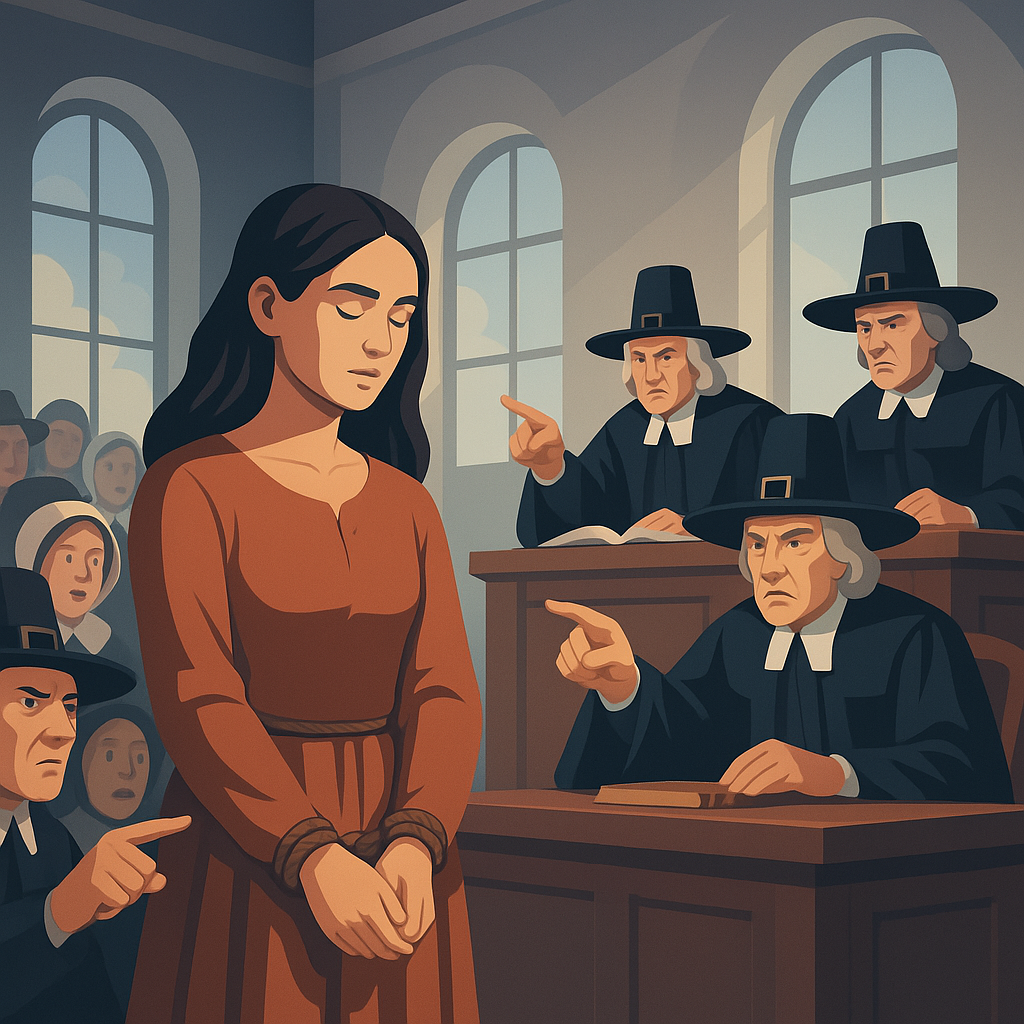
The Salem witch trials were one of the darkest episodes in American history, demonstrating how fear and superstition can spiral into tragedy. These events unfolded in 1692 in colonial Massachusetts, leading to the execution of twenty individuals, most of whom were women, for alleged witchcraft. The term “witch trial” refers to both the formal court process and the broader societal panic that swept through the region. Understanding the causes, the widespread hysteria, and the aftermath of the Salem witch trials matters because it offers a cautionary tale about the dangers of mass hysteria and the importance of due process and rational thought in judicial proceedings. The Salem witch trials are not just historical curiosities; they provide essential lessons on the potential dark side of human psychology and societal pressures that are still relevant today.
Causes of the Salem Witch Trials
The roots of the Salem witch trials are complex and multifaceted, intertwined with social, religious, and political factors. One of the primary causes was the deeply held belief in the supernatural, particularly in rural Puritan New England, where daily life intermixed with the divine and demonic. The Puritans believed that they were living in a world full of visible and invisible dangers, and their understanding of witchcraft was deeply tied to their religious convictions. They regarded witches as instruments of the devil, conspiring to harm the godly.
Another significant factor was the existing social tensions and personal conflicts within the Salem community. With a rapidly growing population and scarce resources, economic disparities created friction among neighbors. These tensions were exacerbated by a rigid social order that marginalized certain individuals, making accusations of witchcraft a convenient tool for settling scores.
The political climate at the time also contributed to the outbreak of hysteria. In 1689, England’s Protestant monarchs, William and Mary, ascended to the throne, triggering the Glorious Revolution in the colonies. The upheaval disrupted the existing government, leading to uncertainty and discontent. This tumultuous environment fostered a fertile ground for the witch trials as a means to exert control and re-establish order in the community.
- Supernatural Beliefs: Deep-seated conviction in the unseen and magical world.
- Social Tensions: Economic disparities and personal vendettas played a significant role.
- Political Instability: Upheavals in governance created a climate of uncertainty.
The Hysteria Unfolds
The hysteria began in the winter of 1692 when several young girls in Salem Village began exhibiting strange behaviors. They complained of being pinched and pricked with pins, while experiencing fits and other bodily contortions. Unable to account for the phenomena through medical means, suspicion quickly turned to witchcraft. The girls accused several local women of bewitching them, setting off a chain reaction that enveloped the entire community.
The court proceedings were marked by spectral evidence, a controversial form of testimony based on dreams and visions, where the accusers claimed to see the shape or spirit of the accused afflicting them. This method of evidence, lacking concrete proof and heavily reliant on personal belief, allowed for wild allegations and fueled the frenzy.
Real-world example: One notable case involved Tituba, a slave of mixed African and Native American descent, who was one of the first to be accused. During her trial, Tituba’s confession, whether coerced or voluntary, lent credibility to the proceedings. Her elaborate tales of consorting with the Devil included descriptions of strange animals and spectral forms, which further inflamed the paranoia gripping Salem.
The Trials and Executions
As the witch trials progressed, they encompassed a broad cross-section of Salem’s population. More than 200 people were accused of witchcraft during this period, with several trials held in Salem’s meetinghouse. Judges appointed for the trials, such as Samuel Sewall, John Hathorne, and William Stoughton, conducted them with grim seriousness, believing they were ridding the colony of evil.
The trials themselves were a grim spectacle. Accusations were often based on hearsay, with alleged witches facing trials by ordeal or confession extracted under duress. As the number of accused grew, so too did the executions. In total, twenty people were put to death, nineteen by hanging, and one, Giles Corey, was pressed to death with stones for refusing to enter a plea.
| Age Group | Number Accused | Number Executed |
|---|---|---|
| Children | Less than 10 | None |
| Young Adults (18-30) | 30 | 5 |
| Adults (30-50) | 80 | 9 |
| Seniors (50+) | 90 | 6 |
The End of the Trials
By the latter part of 1692, the fervor surrounding the witch trials began to subside. The tide started to turn when influential voices, such as Increase Mather, a prominent minister, publicly condemned the reliance on spectral evidence. His publication, “Cases of Conscience Concerning Evil Spirits,” played a crucial role in altering public opinion.
Furthermore, as more accusations arose, including those targeting prominent figures and eventually even those who had previously been accusers, it became evident that the trials were spiraling out of control. Public sentiment began to shift, fueled by doubts about the fairness of the trials and skepticism about the veracity of the accusations.
Governor William Phips eventually intervened, halting the trials and later ordering a reprieve for those awaiting execution. In May 1693, Phips pardoned all accused witches still in custody, marking an end to the judicial proceedings. The legal use of spectral evidence was formally denounced, signifying a critical shift in judicial practices.
The Aftermath and Lessons Learned
The repercussions of the Salem witch trials extended far beyond the immediate community. Many of the families of the accused and executed spent years attempting to clear their relatives’ names, battling the lasting stigma and legal disarray left in the trials’ wake. The Massachusetts General Court eventually declared the trials unlawful and provided some financial restitution to the survivors and families of victims. However, the deeply ingrained trauma and societal disruption lingered for generations.
The fallout from the witch trials prompted a broader reevaluation of the judicial process in the American colonies. It highlighted the critical importance of due process and the dangers of allowing fear and superstition to override rationality and justice. As a result, safeguards were gradually put into place to prevent similar miscarriages of justice.
Real-world example: In 1957, more than 250 years after the trials, the state of Massachusetts formally apologized for the events of 1692. In 2001, this effort was extended to officially pardon five remaining victims who had been omitted from previous gestures of redress. These ongoing acknowledgments underline the lasting impact of the trials and the importance placed on reconciliation and historical accountability.
Conclusion and Call to Action
The Salem witch trials serve as a powerful lesson in how hysteria can eclipse reason and lead to injustice. They underscore the dangers of unchecked authority and highlight the necessity for fair legal practices and critical thinking in society. By examining the causes and aftermath of these trials, we are reminded of the resilience required to confront and rectify historical wrongs. The remnants of this dark chapter implore us to remain vigilant against allowing fear to dominate our judgment.
As we reflect on the Salem witch trials, we are encouraged to apply their lessons to modern society. Whether through public forums, educational systems, or legal reforms, there remains an ongoing need to foster cultures of understanding, justice, and scientific inquiry.
In seeking to further understand the complexities and emotions of the past, it is vital to continue studying historical occurrences like the Salem witch trials. By doing so, we not only honor those who suffered but also strengthen our commitment to ensuring a more just future.
Consider how your community and educational systems can learn from this tragic episode. Explore ways to promote historical awareness and critical thinking by getting involved in local history groups or providing support for historical research that facilitates understanding and reconciliation. Let the lessons of Salem inspire us to reinforce our collective commitments to justice and truth.
Frequently Asked Questions
1. What were the main causes of the Salem Witch Trials?
The causes of the Salem Witch Trials were multifaceted, involving a mixture of social, religious, and economic factors. At the heart of this tragic event was a deeply rooted fear of the unknown; a fear exacerbated by the Puritanical belief system that dominated the region. The Puritans held a strict interpretation of the Bible, which they applied fervently to their daily lives, leading to an environment where any deviation from religious norms could be seen as malevolent or even diabolical.
Economic stress also played a critical role. Salem Village was experiencing notable socio-economic disparities, with wealth concentrated among a few families, breeding jealousy and resentment. This, combined with land disputes and family rivalries, created a fertile ground for suspicions and accusations that often had more to do with personal vendettas than actual evidence of witchcraft. Additionally, the recent inclusion of a smallpox epidemic and fear of attack from nearby Native American tribes contributed to a heightened state of paranoia.
2. How did hysteria contribute to the unfolding of events during the Salem Witch Trials?
Hysteria played a central role in transforming the Salem Witch Trials from isolated accusations into a full-blown panic. The hysteria began with a small group of young girls who, exhibiting strange fits and behaviors, accused several women of witchcraft. Their accusations were given weight by the prevailing beliefs of the time, which considered witchcraft a real and present danger. The fear of demonic influence was so intense that it caused rational thinking to take a backseat to an emotional and frenzied reaction.
Mass hysteria quickly ensued as more and more people started making accusations, feeding off one another’s fears. Confessions and accusations snowballed largely because those who confessed were often spared from execution, giving individuals a powerful incentive to accuse others in turn. As the community descended into chaos, normal legal procedures and critical thinking were abandoned, replaced by a mob mentality that demanded swift and severe action against perceived threats.
3. What legal processes were involved in the trials, and why were they flawed?
The legal processes of the Salem Witch Trials were deeply flawed and their haphazard nature is partly why the trials are so infamous. The use of “spectral evidence” — testimonies that claimed the spirits or spectral forms of the accused were seen committing witchcraft — was one of the most significant procedural flaws. This type of evidence was notoriously unreliable but was nonetheless accepted as admissible in court.
Additionally, there was an absence of a proper defense for those accused. The accused individuals were often afforded no legal representation and were presumed guilty from the start. The use of leading questions and the practice of jailing individuals who refuted the accusations further delegitimized any semblance of a fair trial. The court proceedings were dominated by a sense of urgency and retribution rather than justice, with societal fear overpowering any argument for due process.
4. What was the aftermath of the Salem Witch Trials on the community and American society?
The aftermath of the Salem Witch Trials had profound effects on both the local community in Salem and the broader American society. In the immediate aftermath, there was a struggle to make amends. Many involved publicly admitted to the miscarriages of justice and the wrongful executions. The community of Salem gradually attempted to reconcile this dark chapter of its history, with apologies issued and reparations paid to the families of the accused.
On a larger scale, the trials sparked a reconsideration of legal and judicial processes in colonial America. There was a greater push towards the need for proper evidence and safeguards against the types of hysteria that had fueled the trials. Over time, these events contributed to a growing emphasis on individual rights and due process within the American legal framework. They also left an enduring legacy, serving as a cautionary tale about the dangers of mass hysteria and the need for rational thinking and legal integrity.
5. How have the Salem Witch Trials impacted cultural understanding and representation of ‘witch hunts’?
Over the centuries, the Salem Witch Trials have become emblematic of the term “witch hunt,” which is now commonly used to describe the practice of unjust persecution or accusation against supposed enemies. They have become a cultural touchstone across various forms of media, from literature to film, providing a narrative grounded in the danger of unchecked hysteria, scapegoating, and the suspension of reason.
The trials have been portrayed in numerous novels, plays like Arthur Miller’s “The Crucible,” and even documentaries — each artistic piece reflecting different facets of human psychology such as mob mentality, paranoia, and the scapegoating dynamic. They continue to resonate in contemporary discussions about similar phenomena, where the use of “witch hunt” frequently surfaces in political discourse to critique the misuse of power against perceived enemies without substantial proof. The lessons drawn from Salem’s history remind society of the vital importance of upholding fairness, evidence, and justice in all forms of societal judgment.