
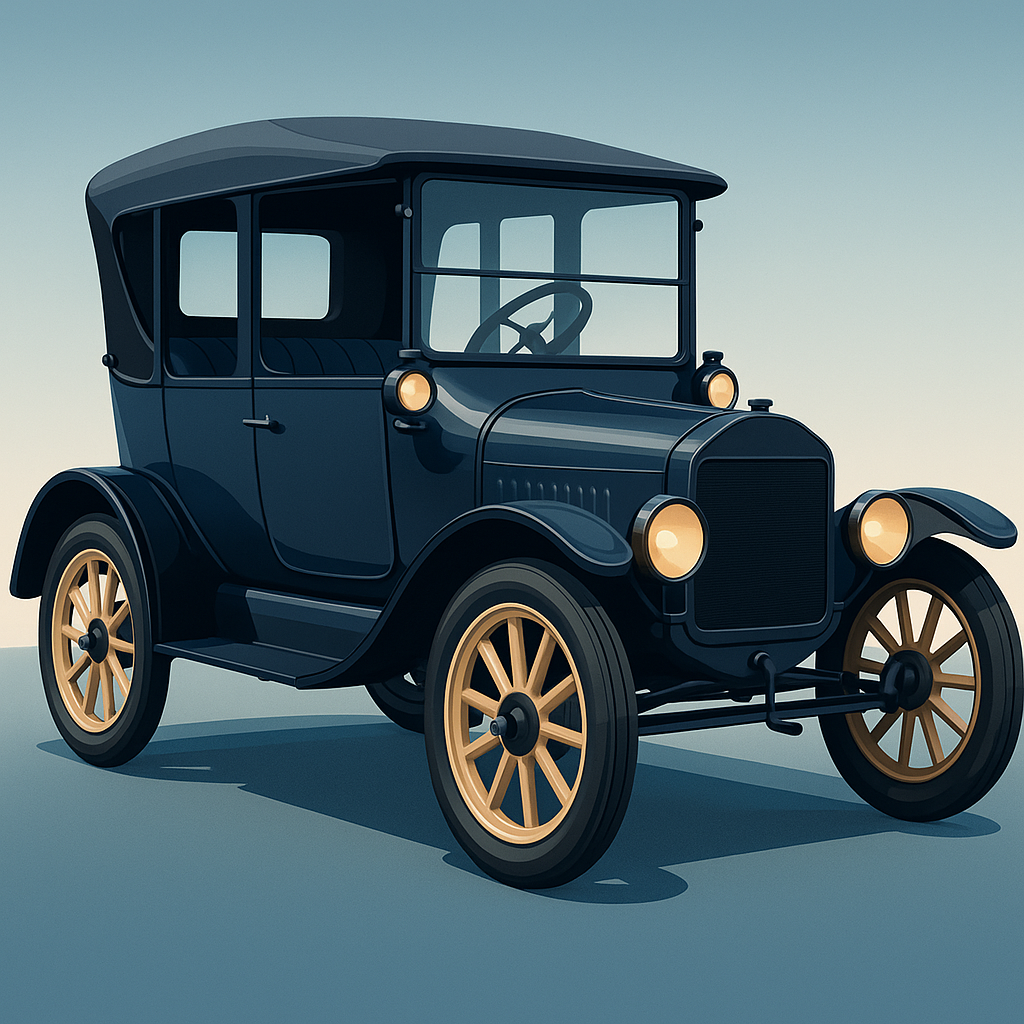
The Model T, introduced by the Ford Motor Company in 1908, was not merely an automobile; it was a groundbreaking phenomenon that redefined the contours of American life. Commonly known as the “Tin Lizzie” or “Flivver,” the Model T democratized transportation much like smartphones have democratized communication in modern times. By making car ownership accessible to the average American, the Model T catalyzed changes in lifestyle, culture, and economics, creating ripples that echo to this day.
The significance of the Model T extends far beyond its mechanical components. At a time when automobiles were considered a luxury item, the Model T became the first car accessible to the masses. By employing the assembly line method, Henry Ford drastically reduced the cost of production, therefore reducing the price for consumers. But why does this matter? To understand, we must consider that before the Model T, American society was predominantly agrarian, with limited mobility options. The availability of an affordable automobile reshaped cities, altered economic practices, and even played a role in defining American culture itself.
Revolutionizing Manufacturing: The Assembly Line
One of the most significant contributions of the Model T was its role in revolutionizing the manufacturing process through the use of the assembly line. Prior to Ford’s innovation, cars were built manually, which was time-consuming and expensive—affordable only to the wealthy. By introducing the assembly line, Ford reduced the time it took to build a car from more than 12 hours to just about 90 minutes. This allowed Ford to significantly lower the retail price of the Model T, bringing car ownership within reach for the average salaried worker.
The assembly line concept was not just about efficiency; it was also about consistency, enabling each Model T to have interchangeable parts, therefore simplifying repairs and maintenance. This increased reliability added another compelling reason for Americans to consider buying a car.
The assembly line model wasn’t just a win for Ford. It became a standard in manufacturing, affecting various industries from electronics to food processing. This process opened pathways for innovations in other sectors, having lasting impacts on the American economy.
Economic Ripple Effects
The affordability and mass production of the Model T created a multiplier effect in the American economy. An entire network of jobs and industries emerged as a result. Consider for example the rise in demand for road construction, as people started traveling greater distances. Small towns began to grow as they were now connected by paved roads to larger cities, leading to increases in businesses such as restaurants and hotels serving new travelers.
Here’s a simple breakdown of the economic impacts:
- Road and infrastructure development
- Growth in tourism and hospitality sectors
- Increased demand for rubber, steel, and gasoline
- Creation of new jobs in car maintenance and sales
As these sectors grew, so did the need for skilled labor, providing more jobs and contributing to the economic prosperity that defined the era.
Transforming Urban and Rural America
The Model T was not just an urban delight; it transformed rural America by breaking down the barriers of isolation. Before the Model T, farmers and rural dwellers rarely traveled far from home. With the introduction of this affordable car, people started exploring cities, moving to urban areas for better opportunities, or simply enjoying the newfound freedom to travel.
Urban centers expanded as people began suburban living, opting for larger homes away from crowded city centers. This trend gave birth to the “American Dream” of owning a home with a car in the driveway. Even schools and churches saw changes, as students and congregants could now travel longer distances for education and services.
Cultural Shifts and the Roaring Twenties
In cultural terms, the Model T was significant in spearheading several societal shifts. Automobiles allowed people more freedom in personal mobility, effectively changing courtship rituals and social norms. The newfound freedom enabled weekend getaways and expanded dating activities, liberating people from parental supervision and societal constraints.
The 1920s, often termed “The Roaring Twenties,” bear testament to this cultural impact. Automobiles became symbols of freedom and progress, influencing music, literature, and even fashion of the era. Families ventured on road trips, and car ownership became part of the American identity.
Environmental Considerations: The Other Side of the Coin
Despite its many benefits, the widespread adoption of the Model T also laid the groundwork for environmental challenges. With more cars on the roads, pollution levels rose, leading to early debates on air quality in urban areas. While environmental awareness was not as pronounced as it is today, the Model T set a precedent for problems that later generations would need to address.
The proliferation of automobiles also contributed to urban sprawl, requiring vast stretches of land to be converted into roads and highways. This impacted natural landscapes, affecting ecosystems and biodiversity. Thus, the Model T serves as an early example of the dual-edged consequences of technological advancement.
Conclusion: The Legacy of the Model T
In summary, the Model T was a transformative force in American life, introducing a series of changes that extended far beyond the confines of the automobile industry. It was through the Model T that America realized the potential of mass production, which rippled across various sectors, spurring economic growth and altering social dynamics. The automobile reshaped urban landscapes, fueled cultural shifts, and even sowed the first seeds of environmental concerns.
The legacy of the Model T teaches us that innovation carries both opportunities and challenges. As we stand on the brink of the future with advances like electric and autonomous vehicles, understanding the profound implications that a single innovation can have on society is invaluable.
The road ahead may be uncharted, but if history has taught us anything, it’s that innovation and adaptation are central to progress. As we forge ahead, let us carry forward the lessons of the past, stepping into a future where technology and sustainability can coexist harmoniously.
Consider what role you might play in this journey. Whether by embracing new technologies, advocating for responsible innovation, or contributing to solutions for future challenges, each of us has a stake in the unfolding story.
Frequently Asked Questions
1. What was the Model T, and why is it considered so important in history?
The Model T, introduced by Ford Motor Company in 1908, was an iconic automobile that forever changed the landscape of American transportation and life. Henry Ford’s vision was revolutionary; he wanted to build a car that was affordable, sturdy, and simple enough for the average American to drive. Prior to the Model T, cars were luxury items reserved for the wealthy elite. The Model T, often endearingly called the "Tin Lizzie" or "Flivver," broke down these barriers. It was the first automobile produced using assembly line techniques, drastically reducing costs and making ownership possible for many Americans. Its significance extends beyond just mobility—it symbolized a cultural shift toward individualism, freedom, and democratization of technology. By 1927, when production ended, over 15 million Model Ts had been produced, illustrating its profound impact on society. The introduction of the Model T was transformative—it figureheaded a shift in American society toward modernity, not only by altering transportation but by fostering urbanization, influencing industrialization, and stimulating economic growth across the country.
2. How did the Model T change daily life for Americans?
The impact of the Model T on daily American life was nothing short of transformative. Before its introduction, travel was time-consuming and limited to short distances; most Americans used horses, carriages, or relied on trains for longer journeys. With the Model T, people had the freedom to travel beyond their local communities. It gave rise to a new form of mobility that reshaped where people lived, worked, and played. Suburbs became more popular as people could now easily commute to urban centers. Rural communities, having greater difficulty in accessing rail transport, found new opportunities and efficiencies through increased access to cities. Commercial sectors saw growth as businesses could reach wider markets and receive goods more rapidly. The landscape of leisure activities also broadened with individuals and families enjoying road trips and vacations. In essence, the Model T did more than just alter transportation—it redefined personal relationships, portrayed social status, and even influenced the spread of ideas, contributing to the intensely interconnected world we see today.
3. What was the economic impact of the Model T?
Economically, the Model T was a colossal force. It was not only a product that people yearned to own, but its production revolutionized the labor force. The introduction of the moving assembly line by Ford cut costs and increased efficiency dramatically. This method fundamentally altered manufacturing processes wth lightning speed and systematic simplicity, setting standards for industries worldwide. The affordability of the Model T, which eventually fell below $300 per vehicle, drove massive demand and consumption. This catalyzed various sectors within the economy including steel, rubber, paint, and glass industries as these materials were needed in large volumes for production. Additionally, the advent of the Model T stimulated secondary industries, such as auto repair shops, service stations, and motels. The need for improved roads led to infrastructure advancements. Overall, the Model T significantly contributed to the thriving economy of the 1920s, underlining the automobile's modern role as a centerpiece of industrialization and mass production.
4. What social changes occurred in the United States due to the Model T?
The Model T catalyzed several notable social changes in America, playing a vital role in altering perceptions and routines. First and foremost, it helped to foster a greater sense of independence and freedom among citizens. With the ability to travel quickly and affordably, people were no longer restricted by their immediate location. This mobility empowered individuals to seek employment opportunities at farther distances and to explore new environments. The car also played a significant role in changing social dynamics and family structures as it facilitated adventures and family road trips, thus strengthening familial bonds through shared experiences. Furthermore, the automobile culture led to a shift in social norms and leisure activities, with car racing, drive-in theaters, and the iconic American road trip becoming entrenched in the cultural ethos. Another sociological change can be seen in gender roles; women, in particular, found a new degree of independence through driving, breaking traditional norms and entering new spaces of personal and professional life. Additionally, the ubiquitous use of the automobile reshaped social behaviors, with notions of privacy and personal space shifting as cars became places where social interactions took novel forms.
5. How did the Model T contribute to the development of America's infrastructure?
The Model T was a significant driver behind infrastructure development across the United States. As the car's popularity surged, it highlighted the inadequacies of existing roadways, many of which were unpaved and ill-suited for automobiles. The demand for better roads led to substantial investments in infrastructure by both the government and private sectors. This resulted in the creation and expansion of national road networks, including the eventual development of highways, which facilitated improved transportation and logistics. The increased emphasis on road construction stimulated technological and engineering advancements in pavement materials and construction methods. Moreover, the need for support infrastructure like service stations and convenience lodgings sprang up to match the growing ubiquity of the automobile. The latter also encouraged urban planning advancements, promoting coordinated efforts in transportation and city development. The expansion of infrastructure not only bolstered economic growth but also established a model for modern transportation systems that continue to influence our roads today.