
Introduction to the Home Front During WWII
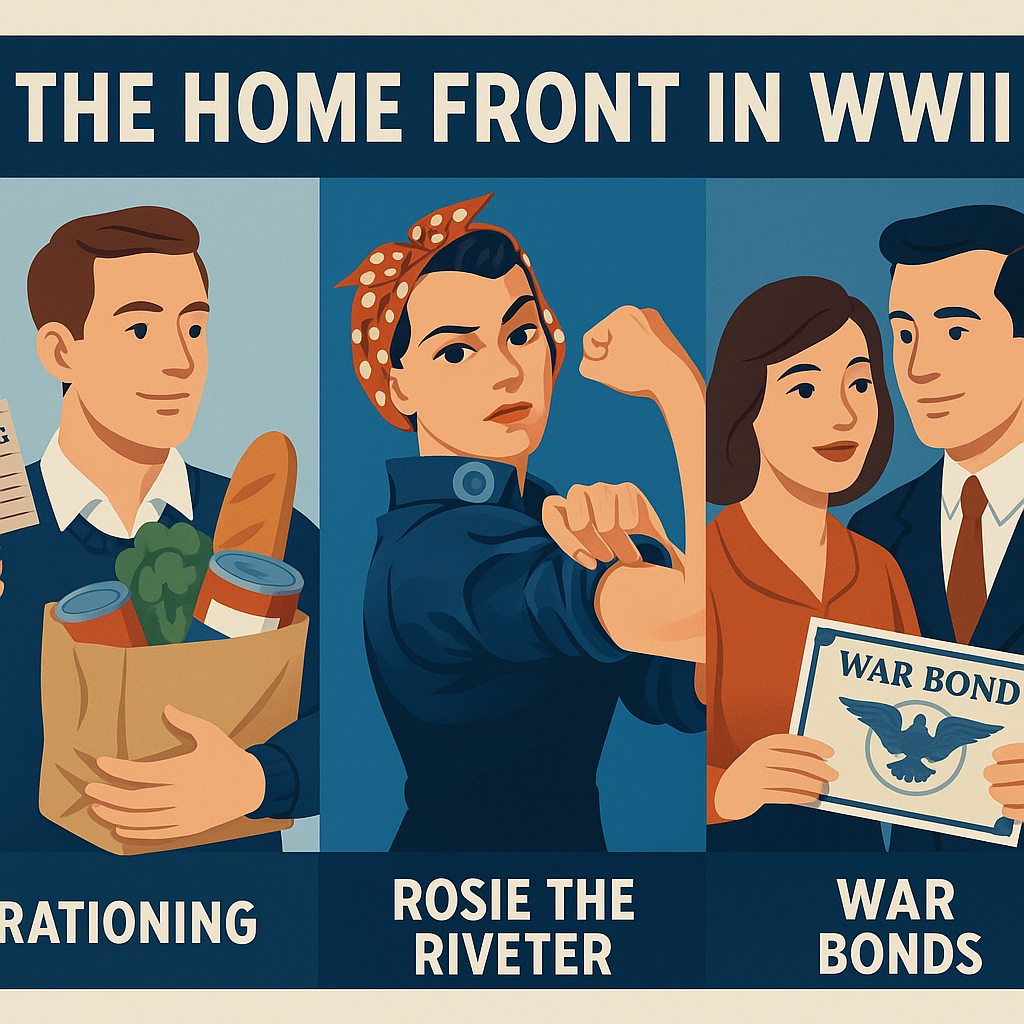
World War II was not only fought on battlegrounds across Europe, Africa, and the Pacific; it also represented a significant shift in the domestic landscape. Known as the “home front,” this aspect of the war saw civilians and industry at the heart of the Allied war effort. Key terms such as “rationing,” “Rosie the Riveter,” and “war bonds” were not just government initiatives; they became cultural icons representing sacrifice, empowerment, and financial strategy essential for victory. Understanding these components is vital to appreciating the comprehensive effort that was required to win the war. The activities and adaptations at home underscored the collective endeavor made by ordinary people to defeat the Axis powers. By examining the impacts of rationing, the role of women represented by Rosie the Riveter, and the importance of war bonds, we can grasp how these elements were intricately connected to the success of WWII.
Rationing: A Shared Sacrifice for Greater Gain
Rationing involved carefully controlled distribution of scarce resources to support the war effort. Essential items like food, fuel, and rubber were redirected primarily towards military needs, affecting everyday life for many households. This system required civilians to use ration cards and stamps, limiting how much of each item they could purchase weekly. While initially challenging, this approach soon became a unifying endeavor. Rationing fostered a sense of shared sacrifice among the public, encouraging communal support for the troops abroad.
Britain’s particularly stringent rationing policies serve as a clear example of effectiveness and necessity. Due to aggressive German U-boat campaigns disrupting shipping lanes, Britain faced severe shortages. The Ministry of Food launched campaigns to educate the populace about how to stretch rationed goods, introducing recipes and advice for growing “Victory Gardens” to supplement fresh produce. This collective initiative ensured that the British people could withstand the daunting blockade and continue supporting the Allied cause.
Rationing didn’t only foster sacrifice but also encouraged creativity. Households adapted new recipes, compelled by necessity to innovate in cooking and meal planning. This approach highlights how adversity can lead to resourcefulness, showcasing human resilience in dire circumstances.
Rosie the Riveter: Embodying Women’s Strength
The campaign for women to take on traditionally male roles reshaped the industrial and gender landscape of the time. As male workers enlisted in military service, factories needed labor to maintain production levels of weapons, aircraft, and other critical wartime materials. The iconic figure of “Rosie the Riveter” emerged as a symbol of female empowerment in these working spheres, illustrating the unprecedented shift in gender roles.
Rosie originated from a 1942 song and was popularized by artist Norman Rockwell’s depiction in a Saturday Evening Post cover which caught the national imagination. This representation encouraged women to step into workspaces previously dominated by men. Factories across America were populated by women, many of whom had never worked outside their homes before. This workforce revolution had enduring effects on social norms and laid groundwork for future gender equality movements.
A notable real-world instance was the prodigious output of the Kaiser Shipyards in Richmond, California, where women outnumbered men. Women worked tirelessly to construct the famed Liberty ships at record pace, their productivity a testament to female contributions crucial for Allied victory. Their successful involvement exemplified adaptability and collective resolve among civilian populations to rise to the immense challenges posed by wartime demands.
This shift not only filled the immediate wartime need but also set a precedent for future employment opportunities for women, paving the way for gender inclusiveness in various labor sectors long after the war’s conclusion.
War Bonds: Financing Victory
War bonds were essential financial instruments during WWII, aiding governments to raise funds necessary to fuel military operations. These bonds served two purposes: providing immediate capital for war expenses and inculcating a spirit of patriotism among citizens. By purchasing war bonds, civilians were essentially lending their savings to the government with the promise of eventual repayment with interest.
- War bond drives were organized as grand public spectacles, rallying communities across America.
- Cultural icons and celebrities helped promote bonds, reinforcing their importance in the public psyche.
- The widespread purchase of bonds harnessed civilian resources contributing billions to war financing.
A prime example of enthusiasm for war bonds is the “Bond Tour” arranged by the United States Treasury Department. The tour featured Hollywood stars like Bette Davis and Clark Gable, who traveled the nation, combining entertainment with patriotic appeals to purchase bonds. This mixture of populism and financial necessity underscored the significance of civic contributions in economic sustainability during wartime.
The success of these campaigns was staggering. By the end of WWII, Americans had purchased over $185 billion in bonds, a testament to the popular willpower aligned with national objectives. Bonds underpinned fiscal strategies, showcasing pragmatic ways citizenry could materially impact war efforts further highlighting the intricate interdependence between the battlefield and home front.
Conclusion: The Enduring Legacy of the Home Front
In conclusion, the home front during World War II was essential to the ultimate victory over Axis powers. Through cooperative endeavors such as rationing, women stepping into roles epitomized by Rosie the Riveter, and the pervasive acquisition of war bonds, civilians demonstrated resilience, solidarity, and strategic financial intelligence. These methods effectively bridged the gap between military needs and civilian capabilities, cementing the home front’s crucial role in the broader Allied success.
For contemporary audiences, these historical insights reinforce a potent lesson: collective efforts anchored in shared sacrifice and cooperation can overcome seemingly insurmountable odds. The WWII home front serves as an inspirational example of leveraging civilian strength for a greater cause. In an era defined by complex challenges, these lessons urge us to remain steadfast in fostering unity and resourcefulness in the face of adversity.
If you wish to further delve into the dynamics of the WWII home front, visiting your local library or historical society can be an excellent first step. Engage in dialogues, explore archives, and participate in community activities to continue learning about this pivotal part of history. As history shows, communal effort and informed participation can lead to profound outcomes.
Frequently Asked Questions
1. What was rationing during WWII, and why was it necessary on the home front?
Rationing during WWII was a government-controlled system that limited the amount of certain goods available to the public. The main goal of rationing was to ensure fair distribution of scarce resources, like food, fuel, rubber, metal, and certain fabrics, which were crucial for sustaining military campaigns abroad. During the war, resources were redirected to the war fronts to supply the troops with necessities like ammunition, vehicles, uniforms, and food. This left less available for those at home. Rationing was a practical method to prevent hoarding, black-market dealings, and ensure each citizen got a fair share. The system worked through ration books and stamps that people used to purchase restricted items. Sugar, meat, fats, canned goods, and even coffee were among items severely controlled. Rationing necessitated a level of patience and adaptation, with citizens encouraged to grow “victory gardens” and minimize waste, emphasizing the spirit of communal cooperation and sacrifice during wartime.
2. Who was Rosie the Riveter, and what impact did she have on the United States during WWII?
Rosie the Riveter was not a real person but a cultural icon representing the women who entered the workforce in massive numbers during WWII to fill roles traditionally occupied by men. With millions of men deployed overseas, the demand for labor in factories – notably those producing munitions and war supplies – surged. Rosie the Riveter, immortalized through posters and propaganda, depicted a strong, determined woman flexing her bicep under the slogan “We Can Do It!” This image became a symbol of female empowerment and resilience, reflecting the crucial role women played in supporting the war effort and challenging traditional gender roles. The influx of women into workforces previously dominated by men laid groundwork for future gender equality movements, proving that women could perform these so-called “men’s jobs” and excel at them, altering perceptions, and setting a precedent for post-war generations.
3. What were war bonds, and how did they contribute to the war effort?
War bonds were debt securities issued by a government to finance military operations during times of war. During WWII, the United States heavily promoted the sale of war bonds to its citizens, offering them as a patriotic investment in the nation’s victory. The concept was relatively straightforward: citizens would buy war bonds with their money, which the government used to fund army equipment, healthcare for soldiers, and other crucial expenses. In return, the government promised to pay back the bond’s value with interest after a set period. Selling war bonds not only provided necessary funds but also helped control inflation by reducing cash in circulation. Public campaigns to encourage purchasing war bonds were creatively widespread; they featured appeals from celebrities, concerts, radio shows, and posters, all fostering a sense of unity and shared purpose under the war effort. Buying a bond became almost synonymous with contributing to an Allied victory, and the aggressive promotion efforts ensured the public’s financial involvement in the nation’s success.
4. How did women’s involvement in the workforce change during WWII, and what lasting effects did it have?
During WWII, with a significant portion of the male population enlisted in the military, women were called upon to fill the vacancy in the workforce, drastically changing social norms of the time. Approximately 6 million women entered the labor force, undertaking roles in factories, shipyards, and offices, areas previously dominated by men. They worked as riveters, welders, and machine operators, roles critical to maintaining the war supply chain. This shift was characterized by symbolic figures like Rosie the Riveter, who captured the essence of women’s contributions and capabilities. The involvement of women during this era was a powerful testament to their ability to perform in these environments, disrupting conventional gender roles. After the war, many women were expected to return to “traditional” homemaker roles, but the wartime opportunities had long-term social implications. These changes not only laid foundations for future labor rights and women’s equality movements but also rewrote the narrative, acknowledging women as a crucial component of any industry.
5. What were some of the challenges faced by families and communities on the home front during the wartime rationing system?
During the wartime rationing system of WWII, families and communities encountered several challenges that required adjustments and resilience. Many households faced shortages of everyday essentials like meat, butter, sugar, and gasoline, leading to creative solutions and adaptations. The cultivation of “victory gardens,” where families grew their own fruits and vegetables, became common as a supplementary food source to alleviate the ration strains. Additionally, the rationing demanded lifestyle changes such as reduced travel to conserve fuel, carpooling, and repurposing materials. Communities had to manage with less and adapt to recycling drives for materials like scrap metals and rubber, which were redirected for war efforts. This not only involved a behavioral shift but also emotional stress, as conserving and maintaining morale under constraints tested communal bonds. Nevertheless, these efforts fostered a spirit of unity and shared sacrifice, with a broader acknowledgment of contributing towards the greater war efforts which was pivotal in maintaining public morale until the culmination of the war.