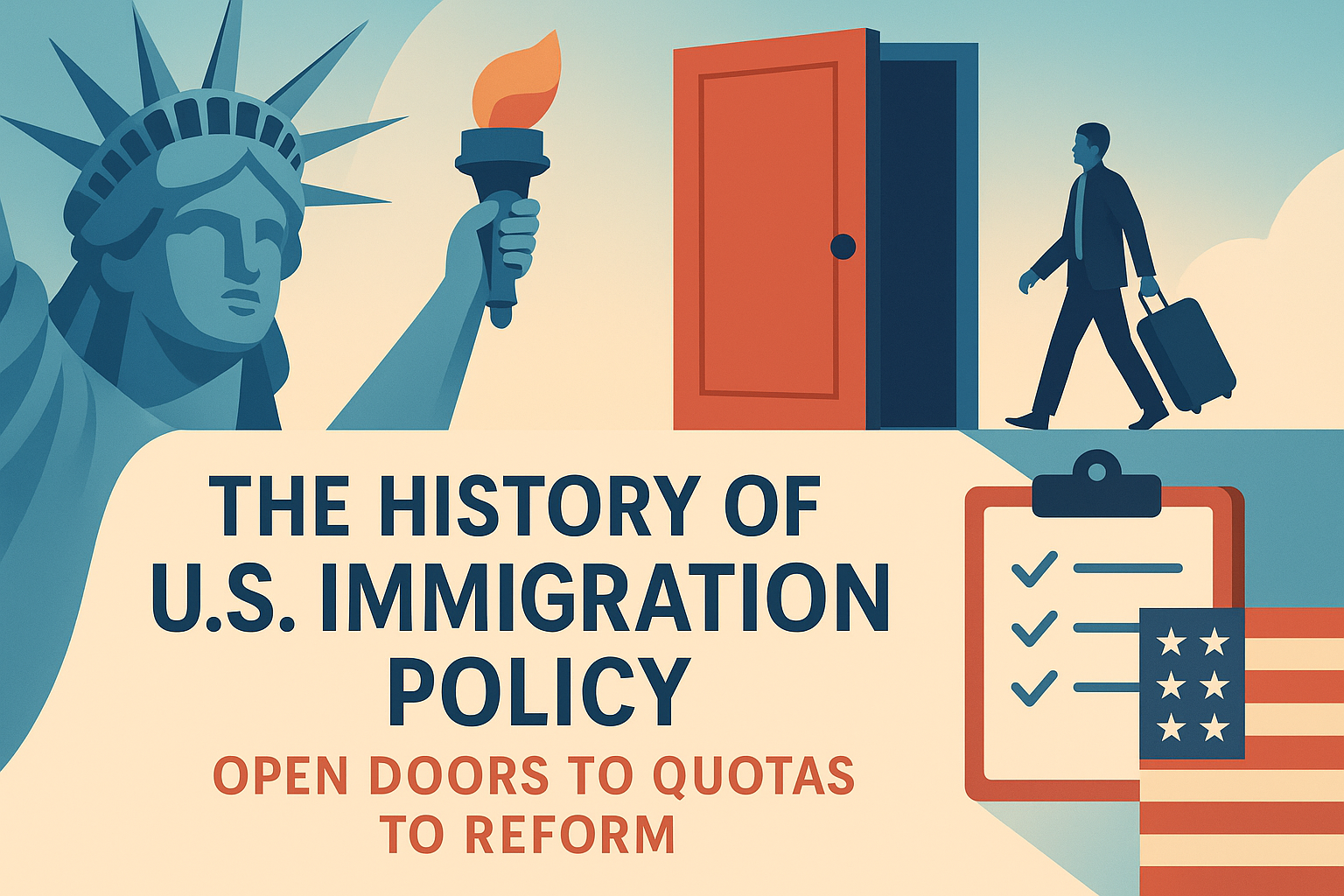
Immigration policy in the United States has undergone transformative changes since the country’s inception. From an era of open doors to restrictive quotas, and eventually to ongoing reforms aimed at balancing open immigration with national security and economic interests, U.S. immigration policy serves as a reflection of the nation’s evolving ideals, demographics, and geopolitical concerns. Understanding this history is essential because it highlights the challenges and considerations involved in accommodating immigrants while addressing national imperatives. Immigration policies don’t just affect those who seek to enter the country; they also shape economies, influence cultural exchanges, and alter alliance dynamics on the global stage. Knowing the timeline and reasoning behind specific policy changes is crucial for anyone involved in policy discussions, social planning, or advocacy work, as it provides context for the present and insight for future reforms.
Open Doors: The Early Days of Immigration
In the early years of the United States, immigration policies were virtually non-existent. The young nation encouraged immigration to help populate vast territories. During this period, almost anyone who could make the journey was welcome. The country’s open-door policy was inherently linked to its foundational principles of freedom and opportunity. Immigrants primarily from Europe began settling in large numbers, seeking economic opportunities and religious freedom that were unavailable in their home countries.
Real-world examples of this policy can be found in the waves of Irish and German immigrants during the mid-1800s. Many of these immigrants left their homelands due to famine and political unrest and found new beginnings in America. Their arrival was largely unregulated, and they quickly became an integral part of the burgeoning American workforce, especially in industrial and agricultural sectors.
Quota Systems: Restriction and Regulation
As the United States grew, so did concerns over cultural assimilation, labor markets, and national security. Enter the era of quotas, characterized by restrictive policies designed to curb immigration. The Immigration Act of 1924, also known as the Johnson-Reed Act, set numerical limits on immigrants based on nationality. The quotas favored Western European countries and drastically reduced numbers from Eastern Europe and Asia.
This policy shift was largely a reaction to political and social pressures. During this time, there was a growing belief that the country needed to preserve its cultural identity and protect American jobs from foreign competition. The act’s implementation had a profound impact on immigration patterns and demographics, increasing European influence while limiting diversity from other regions.
- 1924 Immigration Act specifically targeted Eastern and Southern Europeans
- Asian immigration limited, affecting Chinese, Japanese, and Indian populations heavily
- Fueled by economic and racial factors, including post-WWI labor concerns
Reform Era: Adapting to Modern Realities
Post-World War II, the attitude towards immigration began to shift once more, leading to modern reforms. The Immigration and Nationality Act of 1965 changed the framework of U.S. immigration policy by abolishing the National Origins Formula that was part of the 1924 act. This change was a part of a broader civil rights shift, emphasizing equality and non-discrimination. The 1965 Act placed an equal cap on all countries and prioritized family reunification and skilled migrants.
One notable example of the impact of this policy is the dramatic increase in Asian and Latin American immigration. These communities grew extremely fast, contributing significantly to the American economy and cultural landscape. The result was a more diverse and multicentric society reflective of the global community.
In recent years, further reforms have sought to address undocumented immigration, especially following the 1986 Immigration Reform and Control Act, which offered pathways to legalization for millions of undocumented immigrants while strengthening border enforcement. Ongoing debates about DACA (Deferred Action for Childhood Arrivals) and border security underline the complex, evolving nature of America’s immigration policies.
| Policy/Act | Year | Main Focus |
|---|---|---|
| Immigration Act | 1924 | National Quotas |
| Immigration and Nationality Act | 1965 | End of Quotas, New Priorities |
| Immigration Reform and Control Act | 1986 | Legalization, Enforcement |
Impact on Society and Economy
Throughout all these stages, U.S. immigration policy has shaped and been shaped by concurrent economic and social factors. Immigrants have historically bolstered the U.S. economy by filling labor needs, contributing to innovation, and enriching the culture. For instance, Silicon Valley’s tech boom owes much to the influx of skilled foreign talent nurtured by visa programs like H-1B. However, concerns about job displacement, cultural integration, and security have led to recurring debates and policy revisions.
Today, immigration remains a hot-button issue, as governments and societies navigate the complexity of globalization, climate change-induced migration, and geopolitical shifts. Legislation is continually evaluated to meet the demands of a rapidly changing world. Addressing these considerations requires a nuanced understanding of past policies and their consequences on both domestic and global scales.
The Future of U.S. Immigration Policy
Current discussions around immigration reform center on providing clear pathways to citizenship for undocumented immigrants, reforming visa programs, and implementing technology-driven border security measures. Proposals like the Dream Act aim to give young immigrants who were brought to the U.S. illegally as children a chance to gain legal status. There is also a push to streamline legal immigration processes, which would benefit both immigrants and the economic interests of the U.S. by allowing for rapid adaptation to labor market needs.
A real-world example of evolving attitudes toward immigration is the controversial stance on sanctuary cities. These cities prioritize local advisory over federal mandates when it comes to immigration enforcement, acknowledging the contributions of immigrant communities while advocating for humanitarian concerns. Public opinion remains divided, yet it underscores the necessity of evolving immigration policies to balance justice, economic growth, and national security.
Conclusion: Key Takeaways and Future Steps
The history of U.S. immigration policy is a journey from open doors to quotas and ongoing reform. Each era has brought its own set of challenges and advancements that have shaped the nation. Historical understanding of these policies offers critical insights into current debates, helping policymakers, advocates, and citizens craft equitable and effective solutions moving forward.
The key takeaway for readers is that while immigration policies are necessary for managing the flow of people across borders, they also reflect broader societal values and priorities. These policies can have long-lasting effects on the nation’s cultural fabric and economic vitality. Therefore, when discussing and shaping future policies, it’s pivotal to consider these historical contexts and their outcomes critically.
As the debate over immigration reform continues, there is an opportunity for constructive dialogue and action. Those interested or affected by these concerns can participate in local advocacy groups, remain informed about legislative developments, and engage in discussions aimed at fostering inclusive and just policies that align with American values of diversity and opportunity.
United States immigration policy’s journey is far from over, and staying actively engaged and informed is the best way to contribute to crafting a policy that is both compassionate and pragmatic.
For readers looking to understand how they can engage with ongoing reforms, the first step is to educate themselves and others on the nuances of immigration issues, emphasizing the importance of balanced and informed approaches to creating policies that reflect America’s dynamic role in the world.
Recognizing the complexities and consequences of past policies empowers us to advocate more effectively for forward-thinking changes. Informed individuals are better prepared to contribute to the discourse and action surrounding immigration, leading to impactful and sustainable reform.
Frequently Asked Questions
1. What was the United States’ immigration policy like during its early years?
In the early years of the United States, the country had a largely open-door immigration policy. This approach mirrored the nation’s intent to populate vast lands with immigrants who could contribute to economic development and frontier expansion. Initially, there were no restrictions on who could enter or become part of the country’s melting pot, symbolizing a commitment to freedom and opportunity for all. This open immigration stance allowed a diverse array of newcomers from Europe, Asia, and other parts of the world to arrive, seeking new beginnings on American soil. Before the late 19th century, there were virtually no federal laws governing immigration, and people could easily come and go. This period fostered rapid growth and a dynamic and rich cultural tapestry, laying the groundwork for the modern United States.
2. How did U.S. immigration policy transition from open doors to restrictive quotas?
The shift from open doors to restrictive quotas began in the late 19th and early 20th centuries, driven by various socio-economic, political, and cultural factors. The Industrial Revolution had enticed waves of immigrants to seek work in booming factories, and cities swelled with a growing populace. However, this influx soon led to a nativist backlash, as established residents started to view the new arrivals with suspicion and fear, often blaming them for economic woes and cultural changes. In response, the U.S. government began implementing restrictive measures to curb immigration, notably with the Chinese Exclusion Act of 1882, which targeted a specific ethnic group for the first time. These restrictions continued to grow more comprehensive with the Immigration Act of 1924, establishing national-origin quotas that favored immigrants from Northern and Western Europe while severely limiting those from other regions. The shift reflected a turn towards isolationism, protectionism, and a perception that American cultural identity needed safeguarding.
3. How did U.S. immigration policy evolve through the mid-20th century to focus on reform?
In the mid-20th century, U.S. immigration policy began shifting focus towards reform, driven by a changing world and evolving national consciousness. The horrors of World War II and the Holocaust highlighted the consequences of restrictive immigration policies, prompting a reassessment. Post-war economic prosperity and the civil rights movement further influenced public opinion and policy shifts. The Immigration and Nationality Act of 1965 marked a significant turning point, abolishing the national-origin quotas and implementing a system that prioritized family reunification and skilled immigrants. These reforms were crucial in diversifying the immigrant population, reflecting broader geopolitical realities and humanitarian concerns. This era saw immigration policy increasingly tied to America’s role on the global stage and its domestic issues of racial equality and economic growth.
4. What role does national security play in modern U.S. immigration reform efforts?
National security concerns have become a central consideration in modern U.S. immigration reform efforts. Events such as the 9/11 terrorist attacks profoundly influenced immigration policies, leading to stricter security measures and enhanced vetting processes for those entering the country. Homeland security involves not only safeguarding physical borders but also implementing technologies and systems that identify potential threats from abroad. The establishment of the Department of Homeland Security and laws like the Patriot Act underscore the ongoing effort to balance openness with vigilance. Moreover, policymakers face the challenge of ensuring these security measures do not infringe on the rights and freedoms that underpin American values. Current reform discussions strive to find a balance between welcoming immigrants who contribute positively to society and ensuring that such openness does not compromise national safety.
5. How does U.S. immigration policy reflect the country’s evolving ideals and demographics?
U.S. immigration policy is deeply intertwined with the country’s evolving ideals and demographics, mirroring shifts in national priorities and societal values. As America has grown more diverse, so too has the conversation around what it means to be an American. This is evident in the emphasis on family reunification policies, which recognize the fundamental role of families in fostering stable, thriving communities. Additionally, the focus on skilled labor and economic contribution reflects an understanding of America’s position in a globalized economy, relying on talent from across the globe. Changes in policy also reveal attempts to reckon with past prejudices and systemic inequalities, as seen in efforts to address and rectify biases against certain nationalities or ethnic groups. Furthermore, public sentiment often drives these policy shifts, as public support or opposition to immigration heavily influences legislative decisions. Ultimately, immigration policy serves as both a reflection and a driver of America’s ongoing conversation about identity, opportunity, and inclusion.