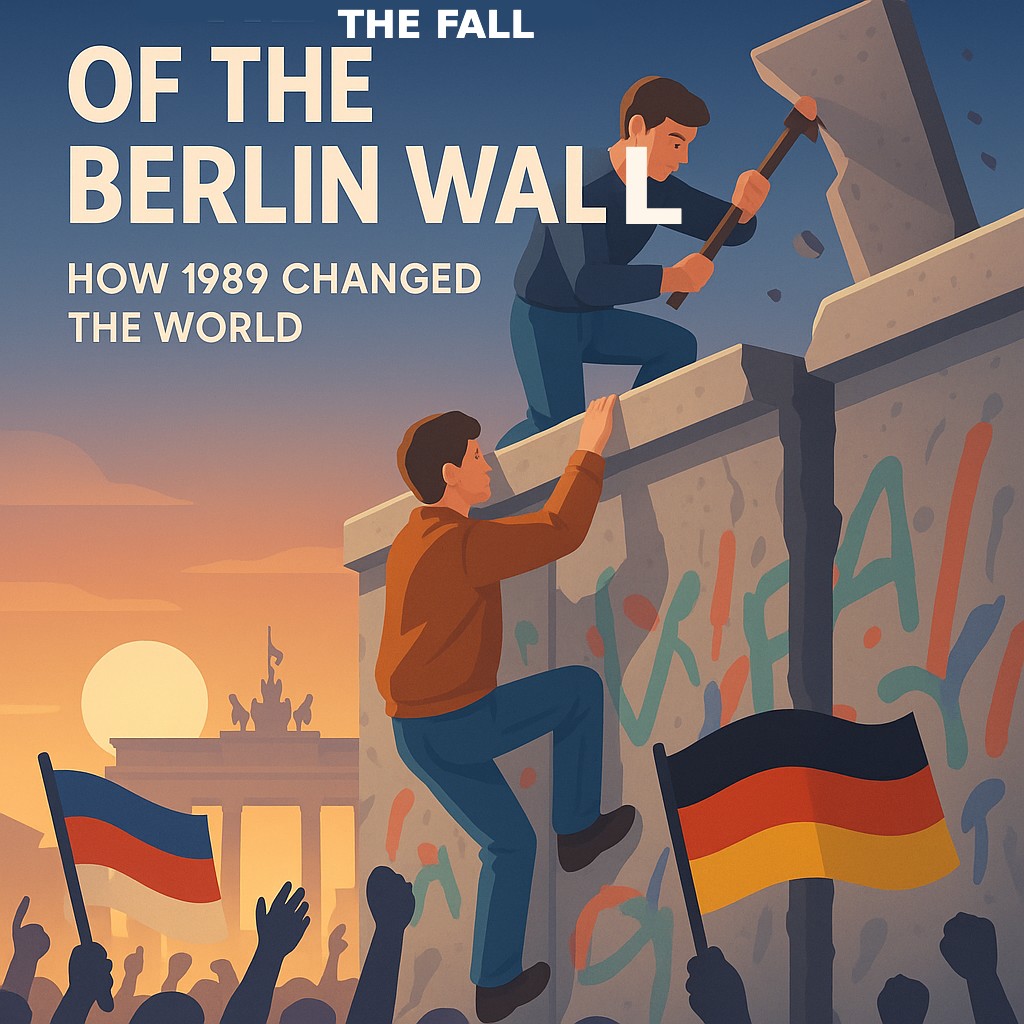
On November 9, 1989, the world watched in awe as the Berlin Wall, a symbol of Cold War division, fell. This historic event evoked a global reaction and marked a significant turning point in world history. The Berlin Wall, erected in 1961, physically and ideologically divided East and West Berlin and symbolized the tensions between the communist Eastern bloc and the democratic Western nations. Its fall signaled not only the reunification of Germany but also foreshadowed the subsequent collapse of the Soviet Union and transformation of the geopolitical landscape. Understanding the implications of this event is crucial because it highlights the power of human will, political change, and long-lasting global impacts. The fall of the Berlin Wall was much more than the destruction of concrete; it was a herald for freedom and democracy. This article explores how 1989 changed the world by examining the build-up to the wall’s collapse, the event itself, and its consequences.
The Origins and Symbolism of the Berlin Wall
To appreciate the significance of the Berlin Wall’s fall, one must first understand its origins and symbolism. Constructed in 1961 by the German Democratic Republic (GDR), the wall aimed to stem the tide of East Germans fleeing to the West through Berlin, an area that had become a convenient flea from oppressive communist regimes. It stood as a grim physical reminder of the “Iron Curtain” dividing Eastern and Western Europe during the Cold War.
The wall was not just a barrier of brick and mortar; it symbolized the ideological conflict between the Soviet-led Eastern bloc and Western capitalist democracies. The East German government justified the wall as a protective measure against “fascist” elements, but it was clear to the citizens of both sides that this structure represented something starker—oppression, lack of freedom, and a poignant loss of family ties. For nearly three decades, the Berlin Wall symbolized a world divided by political ideologies.
The Climactic Fall: A Night that Changed History
By the late 1980s, mounting economic issues and political reforms in the Soviet Union, under the leadership of Mikhail Gorbachev, began to erode communist strongholds. The policy of Glasnost (openness) allowed freer discussion and criticism, while Perestroika (restructuring) aimed to rejuvenate economic practices. These policies fostered reformist movements in Eastern Europe and catalyzed demands for democratic freedoms.
On the evening of November 9, 1989, political blunders and rising public unrest contributed to the spontaneous fall of the Berlin Wall. An East German spokesperson mistakenly announced that citizens could freely cross into West Berlin, leading thousands to storm the wall. Crowds jubilantly crossed into the West, celebrating with family and friends whom they had been separated from for decades.
Television broadcasts of Berliners chipping away at the wall became iconic images of this period. The fall was pivotal not only because it symbolized the lifting of barriers but because it inspired similar movements across Eastern Europe. Countries like Czechoslovakia, Hungary, and Poland began to dismantle their communist regimes, leading to a wave of democratization across the continent.
Cascading Effects on Global Geopolitics
The fall of the Berlin Wall was a catalyst for the dismantling of the Soviet Union and the redrawing of global political alliances. Without the strictures of authoritarian control, former Eastern bloc countries pursued autonomy and capitalist economies. Germany was reunified in 1990, becoming an emblem of the triumph of liberal democracy over communism.
As countries transitioned, the European Union’s foundation was laid, strengthening economic cooperation and integration within Europe. NATO expanded eastward, encompassing former Soviet allies and intensifying the shift towards cooperative security among European nations. This geopolitical transformation diminished Cold War tensions and set the stage for a new era of US-European relations.
- Germany Reunification: The East and West formally united on October 3, 1990.
- Democratization of Eastern Europe: Symbolized by Poland’s first free elections in 1989.
- End of Soviet Union: Disbanded in 1991, marking the Cold War’s conclusion.
- Expansion of the European Union: Facilitated economic and political ties.
- NATO Enlargement: Included former Warsaw Pact members, fostering stability.
The Economic and Social Impact Post-1989
The fall of the Berlin Wall catalyzed economic transformations that have profoundly influenced global markets. Former socialist states transitioning to market economies experienced initial hardships, including inflation and unemployment. However, over time, many countries saw substantial economic growth and development.
Germany’s economy, the bedrock of Europe, benefitted significantly from the reunification. The opening of former Eastern markets provided opportunities for expansion and investment, resulting in prosperity not only for Germany but for interconnected economies worldwide. Global businesses, like those in technology and manufacturing, saw new opportunities in a united Europe.
On a social level, the fall of the wall facilitated personal freedom and self-expression. East Germans no longer faced travel restrictions, and the symbolic victory over oppression inspired movements for human rights across the globe. The era encouraged cultural exchanges and brought a newfound appreciation for diversity and freedom of expression.
A New World Order: Legacy of the Berlin Wall’s Fall
The aftermath of the Berlin Wall’s fall reshaped international relations and agreements. The United Nations saw a shift in priorities from managing Cold War tensions to addressing global issues like climate change, terrorism, and economic development. The non-aligned states also found new roles as mediators in wider geopolitical disputes.
The reunification narrative became a model for resolving conflicts in divided regions such as Korea and Kashmir. While these regions remain unresolved, the peaceful resolution and integration of East and West Germany laid down pathways for diplomatic negotiations and peacebuilding activities worldwide.
The fall not only changed diplomacy but also reinforced the notion that totalitarian regimes could be challenged. As evidenced by the Arab Spring and democratic uprisings in Asia and Africa, citizens worldwide became more emboldened to challenge oppressive governments, advocating for liberties that remain cornerstones of democracy.
Conclusion: Reflecting on the Changed World
The fall of the Berlin Wall in 1989 remains one of history’s emblematic events symbolizing dramatic change. The end of the Berlin Wall was a crucial factor in the dissolution of Soviet control over Eastern Europe and the collapse of communist governments across the region. The ramifications of this event were enormous, spanning across political, economic, and cultural domains, laying the foundation for a more interconnected and united global society.
The Berlin Wall’s fall teaches important lessons about the strength of the human spirit and the unstoppable tide of change driven by people’s aspirations for freedom and unity. It underscores the influence individuals and reformist movements can have in shifting the course of history. For future generations, understanding this period in history offers significant insights into the power of collective actions against oppressive regimes.
As we reflect on this transformative time, it’s essential to remain vigilant and proactive in nurturing democracy around the world. The events of 1989 remind us of our shared responsibility to continue promoting and protecting human rights globally. Let the fall of the Berlin Wall inspire us to work towards dismantling the remaining barriers and fostering a future characterized by peace and cooperation.
To delve deeper into the implications and ongoing influence of the Berlin Wall’s fall, I encourage readers to engage with historical accounts, visit museums dedicated to this era, and participate in dialogues that examine the critical lessons from this pivotal moment in history.
Frequently Asked Questions
1. What were the main factors that led to the fall of the Berlin Wall?
The fall of the Berlin Wall was influenced by a myriad of factors. Political pressure within Eastern Europe, particularly in the Eastern Bloc countries, played a crucial role. By the late 1980s, many Eastern European countries were experiencing economic stagnation and political unrest, driven by demands for greater freedoms and reforms. The policies of Soviet leader Mikhail Gorbachev, including Perestroika (restructuring) and Glasnost (openness), encouraged more liberal reforms across the Eastern Bloc. These policies created an environment where strict government control could no longer be maintained as effectively as before. Moreover, mass protests and demonstrations in East Germany, notably in cities like Leipzig and East Berlin, reflected a growing public desire for change. The persistent chants for an end to state oppression and the reunification of Germany made it increasingly clear that reform was inevitable. International factors also contributed, as the thawing of the Cold War tensions between the USSR and Western nations opened the door for dialogue and change. Overall, the combination of internal pressure for reform, Gorbachev’s policies, and the international climate of rapprochement culminated in the opening of the Berlin Wall.
2. How did the fall of the Berlin Wall impact Germany?
The fall of the Berlin Wall had profound and wide-reaching impacts on Germany. The most immediate effect was the reunification of East and West Germany. The physical and ideological division that had persisted through the Cold War was dissolved, leading to Germany’s formal reunification on October 3, 1990. Economically, reunification posed both challenges and opportunities. The East German economy, having been under a centrally-planned socialist system, lagged significantly behind the more robust market-driven economy of the West. This disparity required substantial investment to integrate and modernize the East. Politically, Germany emerged as a stronger and more unified actor on the European stage, playing a pivotal role in the formation and expansion of the European Union. On a societal level, the fall of the Berlin Wall allowed for the free movement of people, the reunification of families separated for decades, and the blending of divergent cultures into a new, cohesive national identity. The psychological impact on Germans was significant, as the fall of the Wall symbolized freedom and the end of authoritarian rule, marking the beginning of a new era of hope and opportunity for the entire nation.
3. What significance did the fall of the Berlin Wall have on the global stage?
Globally, the fall of the Berlin Wall was a pivotal moment that heralded the end of the Cold War, a period of geopolitical tension and rivalry between the Soviet Union and the United States along with their respective allies. The Wall’s collapse signified the weakening of Soviet influence in Eastern Europe, leading to the eventual dissolution of the Soviet Union in 1991. This event marked the triumph of democratic ideals over authoritarian regimes, reinforcing the global spread of democracy and capitalism in the years to follow. The ending of the Cold War also had significant military implications, leading to a reduction in nuclear arsenals and a general demilitarization of Europe as it became less of a potential battleground between the superpowers. The geopolitical landscape shifted, with former Eastern Bloc countries transitioning to democratic governance and some, such as Poland, Hungary, and the Czech Republic, eventually joining NATO and the European Union. The emphasis on cooperative international relations and free trade paved the way for globalization, defining a new era of political and economic interaction. The fall of the Berlin Wall, thus, has left an indelible mark on international relations and has shaped the political, economic, and societal dynamics of the modern world.
4. How did public perception and media coverage influence the events surrounding the fall of the Berlin Wall?
The public perception and global media coverage played critical roles in shaping the events leading up to and following the fall of the Berlin Wall. The dramatic scenes of East and West Berliners meeting, celebrating, and chipping away at the Wall were broadcast worldwide, and they evoked an overwhelmingly emotional response that highlighted the yearning for freedom and unity. The continuous media coverage drew international attention to the reality of life under the oppressive regimes in the Eastern Bloc and humanized the plight of those affected by the Wall. Media also served as a platform to amplify the voices of Eastern Bloc citizens who were yearning for reform and democracy. Additionally, in the months leading up to November 9, 1989, there were numerous live broadcasts of the protests and demonstrations occurring in East Germany and other Eastern Bloc countries. These images of defiance and resistance against oppressive regimes galvanized global public opinion and ultimately encouraged political leaders to support change. The media coverage provided a real-time narrative of history in the making, illustrating the power of mass communication to influence political action and public sentiment. The fall of the Berlin Wall became a potent symbol splashed across television screens worldwide, capturing a historic moment of transformation, hope, and liberation.
5. What were the key events that happened on the night of November 9, 1989?
The events on the night of November 9, 1989, were both dramatic and somewhat unexpected. The day started as ordinary but took an extraordinary turn during a press conference held by Günter Schabowski, a member of the East German Politburo. During the conference, Schabowski erroneously announced that East Germans could immediately and freely cross into West Germany. This announcement was not clearly communicated and created confusion both in the crowd and amongst the border guards. By evening, thousands of East Berliners gathered at various border crossings, demanding entry into West Berlin. Overwhelmed and without clear instructions, the border guards, seeing the mass of people, eventually yielded and opened the checkpoints. Streams of East Berliners flooded into West Berlin, where they were met with cheers, celebrations, and impromptu parties. People climbed onto the Wall, danced, embraced one another, and began to physically dismantle the Wall using hammers and chisels. It was an astonishing scene of euphoria and unity, symbolizing the end of decades of division and signaling the beginning of a new era. The actions and decisions of that fateful night initiated a cascade of events that would lead to the eventual reunification of Germany and the revolutionary change experienced across Eastern Europe and the globe.