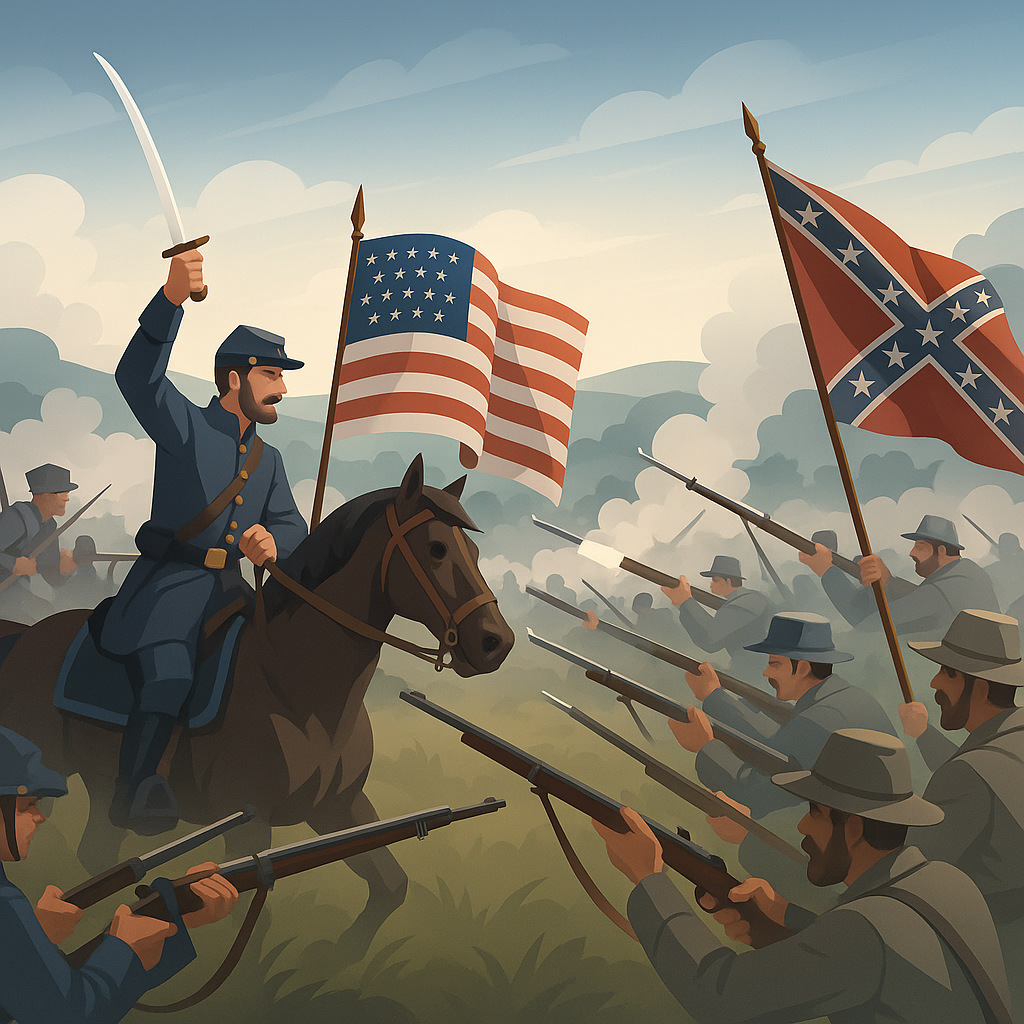
The Battle of Gettysburg, an engagement during the American Civil War that took place from July 1 to July 3, 1863, stands as a significant turning point in American history. This battle was fought in and around the town of Gettysburg, Pennsylvania, between the Union Army of the Potomac, commanded by General George G. Meade, and the Confederate Army of Northern Virginia, led by General Robert E. Lee. The importance of this battle cannot be overstated, as it marked the furthest advancement of Confederate forces into Union territory and resulted in one of the largest casualties in the war. Understanding the Battle of Gettysburg allows us to appreciate the crucial military, political, and social ramifications it had on the outcome of the Civil War.
The Civil War was a definitive period in U.S. history marked by its divisive nature over issues such as states’ rights and slavery. The Battle of Gettysburg was a consequential event that not only demonstrated the ferocity of the conflict but also signaled a shift in momentum in favor of the Union forces. By engaging in this critical analysis of Gettysburg, historians and enthusiasts alike gain insights into the complexities of warfare, leadership decisions, and the vast implications the battle had in reshaping the nation. This article will delve into various facets of the battle, from strategic movements to its impact on subsequent events, ensuring a comprehensive understanding of why Gettysburg is often referred to as the turning point of the Civil War.
The Prelude to Gettysburg: Setting the Stage
The Battle of Gettysburg did not occur in isolation; it was the result of a complex series of military maneuvers and strategic necessities. As the summer of 1863 dawned, the Confederacy was seeking to capitalize on previous victories in battles such as Chancellorsville. General Robert E. Lee aimed to initiate an offensive into Northern territory, hoping not only to acquire much-needed supplies but also to influence political pressure in the North.
One pivotal decision was Lee’s choice to move his army northward into Pennsylvania. This movement placed pressure on Union resources and sought to sway the Northern public opinion, influencing the upcoming elections and promoting peace talks. With growing confidence after their victories, the Confederates believed that a significant win on Northern soil might broker a favorable peace settlement.
As Union forces tracked Lee’s army, they understood the potential implications of the Confederate incursion. General Meade, freshly appointed as the commander of the Union Army of the Potomac, faced the task of intercepting Lee. His strategic decisions were made under pressure, against an adversary emboldened by recent successes.
The Three Days of Battle: Clash at Gettysburg
The Battle of Gettysburg unfolded over three days, each marked by intense confrontations and critical moments that swayed the battle’s outcome. On the first day, July 1, Confederate forces encountered Union troops and engaged in heavy combat outside the town. Despite initial Confederate successes, Union forces held critical high ground, notably at Cemetery Hill, setting the stage for the subsequent days.
Day 1: Initial Clashes and Strategic Maneuvers
On the morning of July 1, Confederate forces advanced towards Gettysburg mainly for supplies but soon engaged Union cavalry. Union forces, under the command of General John Buford, held their lines long enough for reinforcements to arrive. The control of key high grounds became a pivotal factor, allowing Union forces to sustain a strategic advantage for artillery placements.
Day 2: The Struggle for the High Ground
July 2nd saw intensified fighting as Lee aimed to capitalize on Confederate gains. Known for its brutal close combats in locations like Little Round Top, Devil’s Den, and the Wheatfield, this day of the battle saw fierce assaults. Lee’s strategy involved attacking the Union flanks; however, due to miscommunication and staunch Union defenses, his objectives fell short.
Day 3: Pickett’s Charge and the High Water Mark
The final day, July 3, witnessed the infamous Pickett’s Charge, a massive Confederate assault directed at the center of the Union lines. Nearly 12,500 Confederate soldiers marched across open fields under heavy Union artillery and rifle fire. Despite its scale and audacity, the attack was repelled with significant Confederate losses, marking the ‘high-water mark’ of the Confederacy.
- Confederate Army: Approximately 71,000 soldiers
- Union Army: Approximately 93,000 soldiers
- Casualties: Estimated 51,000 total (killed, wounded, or missing)
The repulsion of Pickett’s Charge effectively ended Confederate hopes of a victorious campaign in the North and marked a turning point for the Union in the war.
The Aftermath and Strategic Impact
The conclusion of the Battle of Gettysburg signaled a turning point in multiple ways. Strategically, it ended Lee’s invasion of the North and forced him into a defensive posture for the remainder of the war. Union forces strengthened their control over the North-Eastern front, leveraging the high morale gained from the victory.
Importantly, the battle also had political ramifications. The Union victory gave President Abraham Lincoln the confidence to issue the Gettysburg Address, a speech that would galvanize the Union cause and redefine the war’s purpose. Lincoln’s short yet powerful address, delivered in November 1863, emphasized national unity, equality, and the importance of completing the mission to honor those who had perished.
Economically, the battle altered the war’s momentum. The Union’s industrial and logistical advantages began to exert greater pressure on the Confederate war machine, which struggled increasingly with supply shortages and economic strain.
Real-World Implications and Legacy
The Battle of Gettysburg holds a profound legacy, not only in military history but also in the collective consciousness of the United States. Its implications extended beyond immediate military outcomes, deeply affecting civilian life and national identity.
The Gettysburg battlefield became a symbol of sacrifice and resilience, immortalized by the establishment of the Gettysburg National Cemetery. In the modern-day, reenactments and preservation efforts serve to educate and remind future generations of the sacrifices endured during the Civil War.
To measure the battle’s enduring impact, consider its influence on American culture and politics. The battle has been a subject of numerous academic studies, artistic interpretations, and has embedded itself as a cornerstone of American historical discourse.
Preservation and Continued Study
Today, historians and educators continue to analyze and reinterpret the Battle of Gettysburg. The evolution of military tactics, leadership qualities exemplified by both Confederate and Union officers, and the broader socio-political impacts remain critical areas of scholarly interest.
Preservation efforts at Gettysburg continue to thrive, ensuring that this historical site endures as a place of reflection and learning. Visitors are encouraged to explore and understand the significance of Gettysburg, fostering a deeper appreciation of American history and the values that have shaped the nation.
Summary and Call to Action
The Battle of Gettysburg remains a watershed moment in the American Civil War, embodying a significant turn of tides that favored the Union forces. From its strategic inception to the reverberating effects on American society, the battle serves as an exemplar of military strategy, leadership, and the indomitable human spirit.
In retrospect, key takeaways from Gettysburg include the importance of strategic decision-making, the impact of leadership under pressure, and the lasting influence of the battle on national identity. These lessons continue to be relevant today, serving not only military strategists but also policymakers, educators, and historians.
As we reflect on the Battle of Gettysburg, consider the importance of preserving such historical landmarks and the stories they tell. By studying history, we strengthen our understanding of the past, enabling us to make informed decisions for the future. To those interested in American history, let Gettysburg be a beacon for further exploration and commitment to preserving the lessons of our past.
Next time you visit a historical site or engage in a conversation about the Civil War, think of Gettysburg as more than just a battle—view it as a pivotal moment that transformed a nation. Let its legacy inspire an enduring quest for knowledge and unity.
Frequently Asked Questions
1. Why is the Battle of Gettysburg considered a turning point in the American Civil War?
The Battle of Gettysburg is renowned as the turning point of the American Civil War primarily due to its strategic, psychological, and political impacts. Strategically, this battle ended General Robert E. Lee’s second and most ambitious invasion of the North, and it was the closest the Confederacy would come to achieving independence through military success. The Union victory halted the Confederate momentum, leading to a shift in morale. For the North, it was a significant resurgence of hope and determination, while for the South, it marked the beginning of a gradual decline. Politically, the Union’s success bolstered President Abraham Lincoln’s position and galvanized support for the Union cause. The infamous losses incurred by the Confederate forces weakened their ability to wage an offensive war and set the stage for Union military dominance in subsequent battles.
2. What were the main factors that led to the Union victory at the Battle of Gettysburg?
Several critical factors contributed to the Union victory at Gettysburg. Firstly, the Union forces occupied advantageous positions on the high ground surrounding the town, such as Cemetery Hill, Cemetery Ridge, and Little Round Top. This allowed them to fend off Confederate attacks more effectively. General George G. Meade and his commanders made sound tactical decisions, utilizing their defensive positions wisely and effectively managing troop movements. On the other hand, the Confederate forces, under the leadership of General Lee, faced challenges due to issues with reconnaissance. The absence of cavalry commander J.E.B. Stuart during crucial phases of the battle meant that Lee lacked vital intelligence on Union positions and movements. Moreover, some Confederate assaults, notably Pickett’s Charge, were ill-fated, leading to substantial casualties and contributing to the Southern defeat.
3. How did the Battle of Gettysburg impact the overall morale of the Union and Confederate armies?
The psychological impact of the Battle of Gettysburg on both the Union and Confederate armies was profound. For the Union, this victory served as an enormous boost to morale. It provided a much-needed demonstration of their fighting capability and reassured soldiers and citizens alike that the Union cause could prevail. Abraham Lincoln’s powerful Gettysburg Address further cemented the significance of the battle in the public consciousness, imbuing the war effort with new meaning and resolve. Conversely, for the Confederates, the defeat dealt a severe blow to morale. The loss was devastating not just in terms of casualties, but also because it destroyed the aura of invincibility that had previously surrounded Lee’s army. The realization that they could be defeated on Union soil shifted the perspective on long-term success in favor of the North.
4. How significant were the losses at the Battle of Gettysburg, and how did they affect both sides?
The Battle of Gettysburg was one of the bloodiest engagements in the Civil War, with significant losses on both sides. The Union suffered approximately 23,000 casualties, while the Confederate forces incurred about 28,000 casualties. This staggering toll had considerable long-term effects. For the Union, despite the high cost, the victory justified the losses and invigorated their war effort. The Confederate losses were more detrimental to their overall capacity to continue an aggressive campaign due to their more limited resources and manpower. The high casualties on both sides underscored the brutal nature of the war and the immense sacrifices required. For the Confederacy, the inability to recover such heavy losses marked a noticeable decline in military fortunes, ultimately weakening their war effort considerably over time.
5. How did the leadership decisions during the Battle of Gettysburg influence its outcome?
The leadership decisions during the Battle of Gettysburg were crucial in determining its outcome. On the Union side, General George G. Meade’s leadership was instrumental. His defensive strategy and his circuitous retreat lured the confederate force into an unfavorable position. He effectively utilized the geographical advantages of Gettysburg, making prudent decisions in deploying his forces to maximize their strengths. Conversely, General Robert E. Lee’s decisions played a significant role in the Confederate defeat. His insistence on an aggressive offensive, despite the Union’s defensive stronghold, led to unnecessary risks, demonstrated particularly in the failed assault known as Pickett’s Charge. The absence of cavalry intelligence due to J.E.B. Stuart’s delayed return further complicated Lee’s ability to maneuver effectively. These leadership dynamics were pivotal, making clear the importance of intelligent command and strategic foresight in battle.