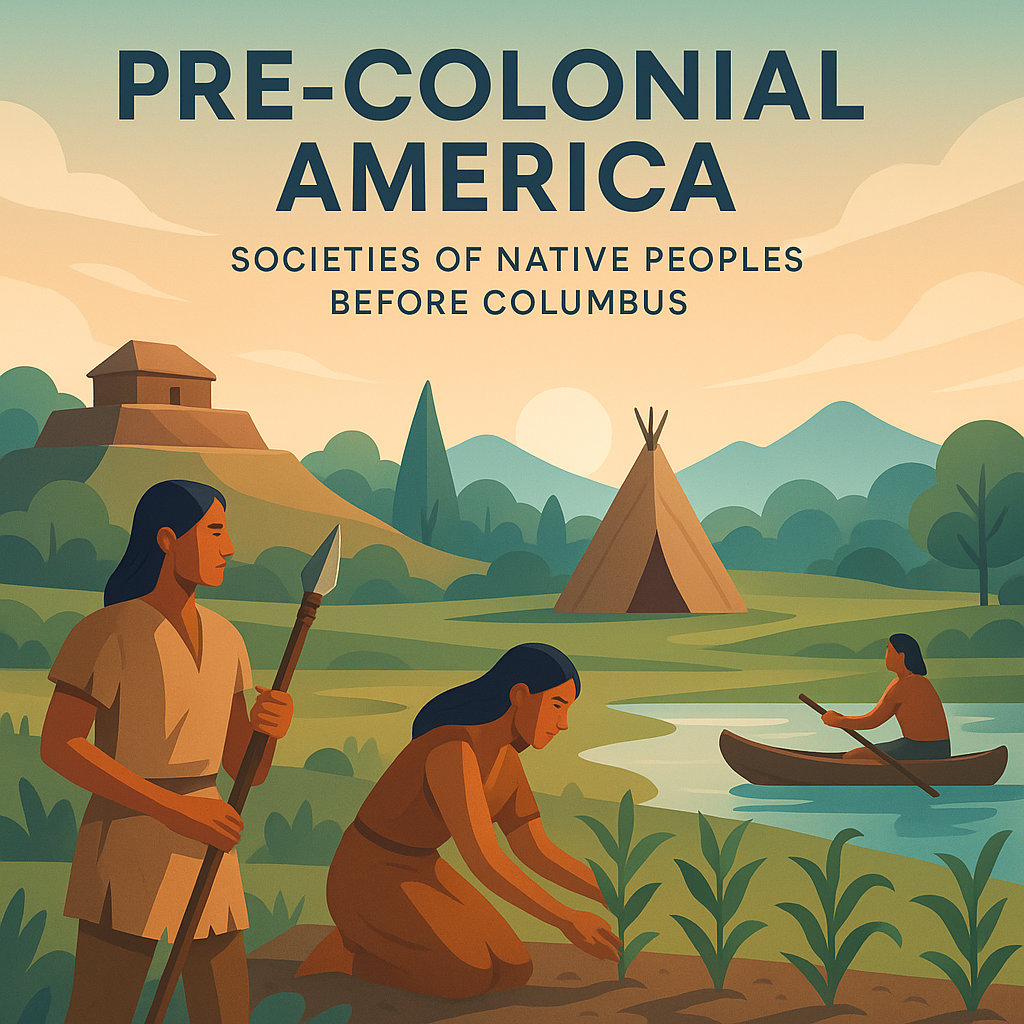
The societies of Native American peoples before the arrival of Christopher Columbus were diverse and rich in culture, displaying sophisticated social structures, complex trade systems, and deep spiritual practices. Understanding the nature of these societies is crucial because it provides insight into the indigenous roots of the United States, illuminating the history and resilience of Native peoples. Remarkably, these societies were thriving long before European contact, evolving unique ways of life adapted to their varying environments. This knowledge is significant not only for its historical value but also for its implications on present-day cultural perspectives, identity, and ancestry of countless Americans. Exploring these pre-colonial societies offers us a richer understanding of the complexity and the immediacy of socio-cultural dynamics prior to colonization and how these dynamics were abruptly altered by the arrival of Europeans.
Political Structures and Government
Long before European explorers set foot on the Americas, Native American societies had developed complex political structures. Different tribes had different forms of governance, ranging from loose confederations to sophisticated political structures that resemble constitutional governments. For example, the Iroquois Confederacy is one of the earliest known examples of a participatory government system. Established in the northeastern region of what is now the United States, the Iroquois Confederacy—comprising the Mohawk, Oneida, Onondaga, Cayuga, Seneca, and later the Tuscarora tribes—exemplifies a sophisticated confederation that influenced American democratic practices. These tribes operated under the Great Law of Peace, which standardized practices like diplomacy and established a council of chiefs representing each member tribe. This intertribal council system was a powerful political entity that managed to bring unity and maintain peace among its members over many generations.
Economic Systems and Trade
The economic systems of pre-colonial Native American societies were as varied as the landscapes they inhabited. Highly skilled traders, many tribes developed extensive trade networks that spanned vast distances across the continent. One exemplary trade route was that of the Mound Builders, particularly the Cahokia culture located near present-day St. Louis, Missouri. These people engaged in long-distance trade with other indigenous groups and facilitated the exchange of exotic goods like shells, gemstones, and pottery. The Cahokia settlement was remarkable for its massive earthen mounds and complex urban planning—indicating a flourishing society rich in resources and trade. Furthermore, the prosperity of the Cahokia highlighted the significance of trade in establishing social hierarchies and connections between distant communities.
Technological Innovations
Native American societies were also characterized by their inventive technological advancements, which were typically aligned with their environment and societal needs. These innovations were not as standardized as today’s technological gadgets but were no less transformative for their time. The Ancestral Puebloans, for instance, developed intricate systems for using water effectively in the arid regions of the Southwest United States. These advances included complex irrigation infrastructure that allowed them to farm corn, beans, and squash—known as the “Three Sisters”—enabling them to thrive in what many would consider inhospitable conditions. Additionally, while European settlers marveled at tangible technologies, many Native societies knew the subtleties of nature, mastering techniques like controlled burns to manage forest lands or the art of canoe-building that optimized fishing and trade along waterways.
Sociocultural Practices and Art
Art and cultural practices represented the spiritual, social, and political intricacies woven into everyday life in pre-colonial Native American societies. The art created by these natives was deeply symbolic and significant, intended to communicate religious beliefs, historical events, and tribal identity. The Inuit people of the Arctic regions carved intricate figures from ivory and stone, often depicting animals and spiritual figures central to their mythologies. These art forms were tools for storytelling and were often used in ritualistic contexts. Moreover, cultural practices such as storytelling, dance, and music played a vital role in preserving histories and nurturing community bonds. These artful expressions were more than mere decorations; they were integral to the societal and ceremonial life, serving to educate, inspire, and unite communities across generations.
Farming, Fishing, and Hunting Techniques
Farming, fishing, and hunting were essential for the survival and prosperity of Native American societies. These practices were passed down through generations, melding tradition with practical innovation to meet the nutritional and economic needs of their people. For example, the Plains Indians are renowned for their buffalo hunts, which were complex, coordinated efforts among tribesmen. These hunts were not only for sustenance but also fostered communal unity and celebrated tribal identity. Meanwhile, the Pacific Northwest tribes took advantage of plentiful salmon runs by developing intricate fishing tools and storage techniques that allowed them to smoke and preserve fish for off-season periods. Such a combination of advanced agricultural techniques and sustainable hunting practices allowed these societies to efficiently utilize their resources, ensuring food security and economic stability over time.
| Region | Main Subsistence Strategy | Example Tribes |
|---|---|---|
| Northeast | Agriculture, Hunting | Iroquois, Ojibwe |
| Great Plains | Hunting (Bison), Gathering | Santee Sioux, Cheyenne |
| Southeast | Farming, Fishing | Cherokee, Creek |
| Southwest | Agriculture (Irrigation) | Hopi, Navajo |
| Northwest Coast | Fishing, Gathering | Tlingit, Haida |
Religious Beliefs and Spiritual Practices
The spiritual life of Native Americans was deeply intertwined with nature and profoundly influenced their culture and daily lives. Spiritual beliefs varied widely from tribe to tribe, but many common themes included reverence for the Earth, a deep connection to the land, and respect for the plant and animal worlds. The Lakota Sioux, for instance, practiced a spiritual system where the timeless traditions of the Sun Dance and vision quests sought harmony with the spirits and natural world. These ceremonies were rich with symbolism and often guided the moral and ethical decisions of the tribe. Native American spiritual practices were diverse but consistently emphasized balance, harmony, and the interconnectivity of all living things—guiding principles that continue to be respected and practiced today.
Conclusion
In summary, the societies of Native American peoples before the advent of European influence were multifaceted and culturally distinct, each adapted to their unique environments. These societies demonstrated advanced political systems, dynamic economic exchanges, and inventiveness in addressing environmental challenges. Art and culture flourished under these societies’ autonomy, acknowledging their spiritual beliefs and fostering deep community and environmental ties. Recognizing these pre-colonial societies dispels the myth of the “uncivilized” native, replacing it with an appreciation for the complexity and diversity of Native American cultures. As modern individuals, we benefit from this knowledge by fostering respect and understanding, which is crucial for cultural reconciliation. To delve deeper, one might seek out opportunities to learn from Native storytelling, art, and credible historical accounts that honor the rich legacy of indigenous peoples before Columbus. This exploration not only enriches our grasp of the past but also fortifies our cultural intersections in the present.
Frequently Asked Questions
1. What were the main societies of Native American peoples before Columbus?
The societies of Native American peoples before the arrival of Columbus were incredibly diverse. Major groups included the Iroquois Confederacy, the Ancestral Puebloans (also known as the Anasazi), the Mississippian culture, and the Great Plains tribes, among others. Each of these societies had its own structures and customs. For example, the Iroquois Confederacy, composed of five, later six, nations, was notable for its sophisticated political system, which included the Great Law of Peace. The Ancestral Puebloans were renowned for their unique cliff dwellings and advancements in agriculture in the harsh desert environment. The Mississippians were known for their large earthen mounds that served as ceremonial centers, and the Great Plains tribes, like the Sioux and the Cheyenne, were adept buffalo hunters and expert horsemen. These societies were not static but evolved over time, developing systems that were adaptable to their environments and needs.
2. How did Native American societies practice trade?
Trade among Native American societies was extensive and highly organized, and it played a crucial role in their economies and cultures. Goods were exchanged over vast distances, with items such as shells from the coastal regions, copper from the Great Lakes, and obsidian from the Rocky Mountains reaching far-flung areas. The trade networks were not just about exchanging goods; they also facilitated the exchange of ideas, technologies, and even marriage alliances, which strengthened ties between different groups. Canoes and later horses were primary means for transporting goods, and waterways were vital trade routes. Trade fairs were common, serving as hubs where various tribes could meet and trade openly. The systems of trade were sophisticated and integral to the way of life, demonstrating the complex social and economic interactions between different Native American groups.
3. What kind of spiritual practices were common among Native American societies?
Spirituality was a central part of life for Native American societies, with practices varying widely across different groups. Common themes included a deep connection to the natural world, with the belief that all elements of nature were saturated with spirituality. Many societies practiced animism, seeing spirits in animals, plants, waterways, and even in the elements like wind or fire. Rituals and ceremonies were often tied to agricultural cycles, hunting success, and communal gatherings, each with its unique purposes and forms of expression. For instance, the Sun Dance was a sacred practice among the Plains tribes, and the Green Corn Ceremony was significant for the Southeastern tribes. Shamans or spiritual leaders often played critical roles in these practices as mediators between the human and spirit worlds. The emphasis on storytelling, music, and dance in many ceremonies reflected the importance of oral tradition in conveying spiritual teachings and social values from one generation to the next.
4. What were the social structures like in pre-colonial Native American societies?
Social structures varied significantly among different Native American societies but shared some commonalities, such as kinship and clan systems. Many tribes organized themselves into clans or extended families, which provided social stability and a clear sense of identity. Leadership structures also differed; some societies, like the Iroquois, had sophisticated political systems with elected leaders, while others, such as the Sioux, relied on councils of elders or chiefs chosen for their leadership abilities and wisdom. Social roles were often clearly delineated by gender, with specific tasks and responsibilities being defined for men and women, although these roles could be more fluid than commonly perceived. Systems of justice and conflict resolution were integral, often relying on consensus and mediation to maintain harmony within and between groups. These social systems were adaptive, allowing societies to thrive by addressing the needs of their people and the challenges they faced.
5. How did Native American societies adapt to their environments?
Native American societies demonstrated remarkable adaptability to their respective environments, which was crucial to their survival and sustainability. They had distinct methods of agriculture, hunting, and gathering that were suited to their regional climates and landscapes. For instance, the Native American peoples of the Southwest, like the Hopi and Pueblo, developed intricate irrigation systems to cultivate crops such as corn, beans, and squash in arid environments. In contrast, the tribes of the Pacific Northwest, such as the Tlingit and the Haida, largely relied on the abundant fish, particularly salmon, as well as marine and forest resources. In the Eastern Woodlands, the Iroquois and Cherokee used “slash-and-burn” agriculture to clear land for farming, which restored soil’s fertility and promoted the growth of their staple crops. This effective resource management ensured that societies could meet their needs sustainably. Moreover, the use of traditional ecological knowledge, honed over generations, allowed Native American societies to thrive consistently despite environmental challenges.