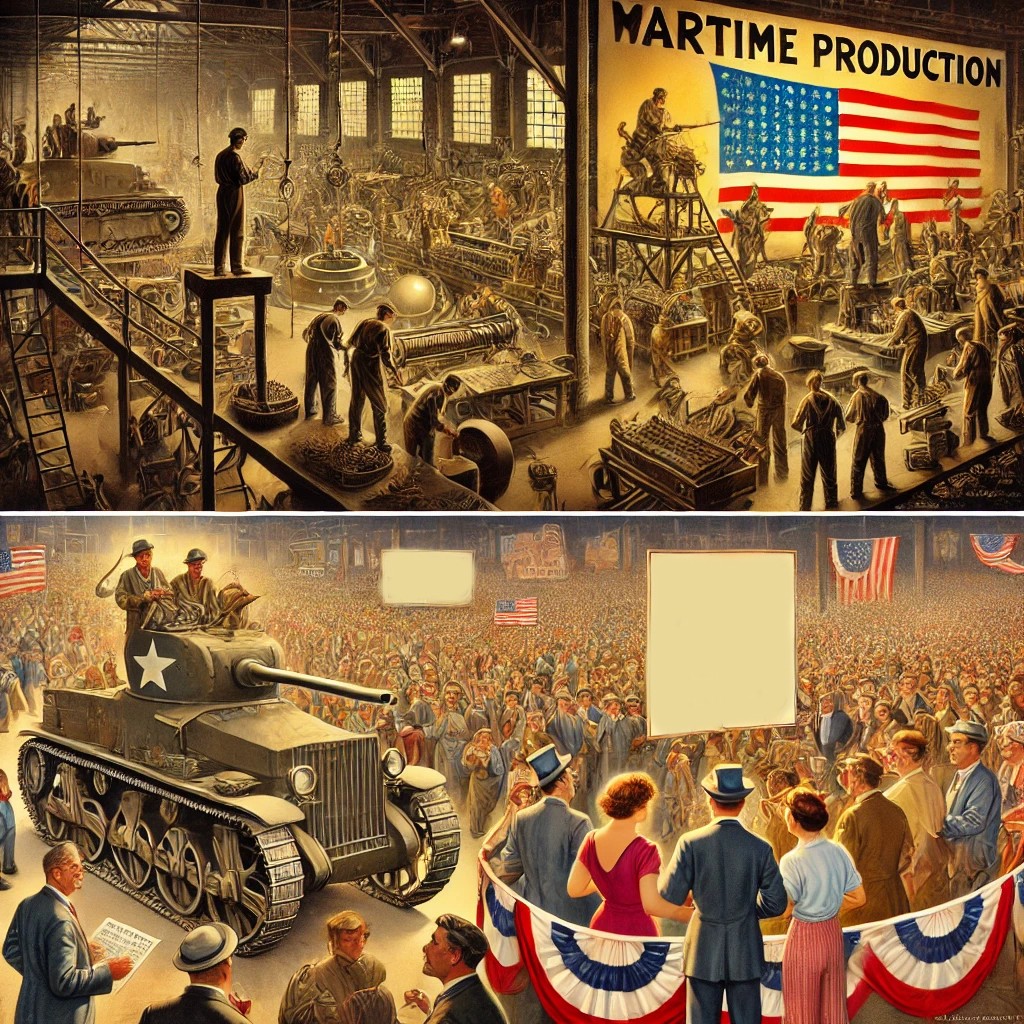
World War I marked a pivotal moment in American history, not just on the battlefield but also on the home front. The United States underwent a significant transformation to support the war effort, mobilizing its economy in unprecedented ways. This article explores the strategies and measures America employed to shift from a peacetime to a wartime economy, the impact on various sectors, and the lasting effects of these changes.
Introduction
When the United States entered World War I in 1917, it faced the daunting task of transforming its economy to meet the demands of a global conflict. This mobilization involved expanding industrial production, regulating markets, managing labor forces, and fostering innovation. The government took an active role in steering the economy, ensuring that resources were efficiently allocated to support the military efforts abroad.
The Economic Landscape Before WWI
Before the war, the American economy was characterized by rapid industrial growth, technological innovation, and expanding infrastructure. Industries such as steel, automobiles, and textiles were booming, and the country was becoming a leading global economic power. However, the outbreak of World War I disrupted international trade and created new demands that necessitated a swift economic shift.
Government Intervention and Regulation
The War Industries Board (WIB)
One of the most significant steps in mobilizing the economy was the establishment of the War Industries Board in 1917. Led by Bernard Baruch, the WIB coordinated the production and distribution of war materials. It set priorities for industries, allocated raw materials, and standardized products to ensure efficiency and eliminate redundancy.
The Food Administration
Under the leadership of Herbert Hoover, the Food Administration played a crucial role in managing food production and distribution. It promoted voluntary conservation measures, such as “Meatless Mondays” and “Wheatless Wednesdays,” and implemented the Excess Profits Tax to fund the war effort. The administration also negotiated with other countries to secure food supplies for both military and civilian use.
The Fuel Administration
The Fuel Administration, headed by Harry Garfield, was responsible for regulating the use of coal and other fuels. It introduced the “Heatless Mondays” and “Gasless Sundays” campaigns to conserve energy. Additionally, the administration oversaw the allocation of fuel resources to essential industries and the military, ensuring that energy supplies were prioritized for the war effort.
Financial Measures and Economic Policies
Liberty Bonds
To finance the war, the government issued Liberty Bonds, encouraging citizens to invest in the war effort. These bonds not only raised significant funds but also fostered a sense of national unity and shared purpose. Propaganda campaigns, featuring slogans like “Buy a Bond, Fight for Freedom,” were instrumental in mobilizing public support.
The Federal Reserve System
The Federal Reserve played a vital role in stabilizing the economy during the war. It managed interest rates, controlled inflation, and ensured adequate credit was available to industries and the government. The Fed’s actions helped maintain economic stability amid the uncertainties of wartime.
Taxation and Revenue
To increase revenue, the government implemented several tax measures, including the aforementioned Excess Profits Tax and higher income taxes. These taxes were essential in funding the military and supporting the various government agencies involved in the war effort.
Industrial Expansion and Production
Scaling Up Manufacturing
American industries rapidly expanded to meet the increased demand for war materials. Factories that once produced consumer goods shifted to manufacturing weapons, ammunition, and other military supplies. The WIB played a crucial role in coordinating this shift, ensuring that production goals were met efficiently.
Technological Innovation
The war spurred significant technological advancements. Innovations in manufacturing processes, such as assembly line production, increased efficiency and output. The need for advanced weaponry and equipment also led to breakthroughs in engineering and materials science.
Labor Force Mobilization
The demand for labor surged as industries expanded. To address labor shortages, the government promoted women’s participation in the workforce, leading to a significant increase in female employment. Additionally, immigration policies were adjusted to allow more workers to enter the country, ensuring that industries had the necessary manpower.
Agricultural Transformation
Increased Production
Agriculture was a critical component of the war effort, providing food for both the military and civilian populations. The government encouraged farmers to increase production through incentives and support programs. Mechanization and improved farming techniques boosted efficiency and output.
The United States Food Administration
The Food Administration not only managed domestic food production but also coordinated with Allied nations to ensure a steady supply of food. American agricultural exports played a vital role in sustaining the war efforts of Allied countries, further solidifying the United States’ position as a key economic power.
Transportation and Infrastructure
Expanding Railroads
Railroads were the backbone of wartime logistics, transporting troops, supplies, and materials across the country. The government took control of the railroads to ensure that they operated efficiently and prioritized war-related transportation needs. Investments were made to expand and improve rail infrastructure to meet the increased demand.
Shipping and Maritime Efforts
With the threat of German U-boats disrupting maritime supply lines, the United States invested in expanding its merchant marine fleet. Shipbuilding programs were accelerated, and innovations in ship design improved the efficiency and safety of maritime transport.
The Role of the Federal Government
The Committee on Public Information (CPI)
The CPI was established to manage propaganda and maintain public support for the war. Through posters, films, and speeches, the CPI promoted patriotism, encouraged enlistment, and supported government policies aimed at mobilizing the economy. This widespread dissemination of information helped unify the nation behind the war effort.
The Selective Service Act
To ensure a sufficient supply of troops, the Selective Service Act of 1917 was enacted, instituting a draft system. This not only provided the military with the necessary manpower but also allowed the government to manage the labor force by prioritizing critical industries for employment.
Social and Economic Impacts
Women in the Workforce
The war created new opportunities for women, who took on roles traditionally held by men. This shift not only addressed labor shortages but also laid the groundwork for future movements advocating for women’s rights and gender equality in the workplace.
Labor Unions and Workers’ Rights
The increased demand for labor strengthened labor unions, which negotiated better wages and working conditions for workers. The government, recognizing the importance of maintaining industrial peace, often supported union efforts to ensure that industries remained productive and efficient.
Racial Dynamics
While the war effort provided opportunities for many, it also highlighted racial inequalities. African Americans migrated in large numbers to northern cities for industrial jobs, leading to significant demographic shifts. However, they often faced discrimination and were excluded from many of the benefits of the economic boom, laying the groundwork for future civil rights movements.
Financial Markets and the Economy
Stock Market Stability
The government’s financial policies, including the management of interest rates and inflation by the Federal Reserve, helped stabilize the stock market during the war. This stability was crucial for maintaining investor confidence and ensuring that industries had access to necessary capital.
War Bonds and Investment
The widespread purchase of Liberty Bonds demonstrated the public’s willingness to invest in the nation’s future. This not only provided essential funds for the war but also promoted a culture of savings and investment that had lasting economic benefits.
Technological Advancements and Innovation
Manufacturing Techniques
The war accelerated the adoption of new manufacturing techniques, such as mass production and assembly line methods. These innovations increased efficiency and reduced costs, setting the stage for future industrial growth.
Communication and Transportation
Advancements in communication, including the widespread use of the telephone and telegraph, improved coordination across industries and the military. Enhanced transportation networks, particularly railroads and shipping, facilitated the rapid movement of goods and personnel.
The Aftermath of Economic Mobilization
Transition to a Peacetime Economy
After the war, the United States faced the challenge of transitioning from a wartime to a peacetime economy. Industries that had been geared toward military production had to shift back to consumer goods, and the government began to reduce its direct involvement in economic regulation.
Economic Boom and the Roaring Twenties
The successful mobilization of the economy laid the foundation for the economic prosperity of the 1920s. The innovations and infrastructure developed during the war continued to drive growth, leading to significant advancements in technology, consumer goods, and overall economic expansion.
Lessons Learned
The experience of mobilizing the economy during World War I provided valuable lessons in government intervention, industrial coordination, and economic management. These lessons influenced future economic policies and strategies during subsequent conflicts and periods of crisis.
Conclusion
The mobilization of America’s economy during World War I was a complex and multifaceted process that involved significant government intervention, industrial expansion, and social change. Through coordinated efforts across various sectors, the United States successfully transformed its economic landscape to support the war effort, setting the stage for its emergence as a global economic leader. The strategies and innovations developed during this period had lasting impacts, shaping the nation’s economic policies and industrial capabilities for decades to come.
Frequently Asked Questions
1. How did the United States mobilize its economy during World War I?
The mobilization of the American economy during World War I was an expansive and multifaceted process. When the United States entered the war in 1917, it had to transition swiftly from a peacetime economy to one capable of sustaining the war effort. This required a coordinated effort across government, industry, and the general public. The federal government took on a more active role in the economy than ever before, establishing agencies such as the War Industries Board to oversee industrial production and ensure that the military was supplied with the necessary materials.
There were also significant changes in labor practices. The government encouraged mass production techniques, which meant factories had to ramp up production while maintaining efficiency. Women started filling roles traditionally held by men, as many men were enlisted into military service. Furthermore, the National War Labor Board was established to prevent strikes and work stoppages that could hinder production. On the home front, war bonds and savings stamps became common, with widespread campaigns encouraging citizens to support the war effort financially. Overall, the mobilization was a complex reorganization of American industry and labor to meet the demands of a global conflict.
2. What role did the War Industries Board play in the economic mobilization?
The War Industries Board (WIB) was pivotal in the mobilization of America’s economy during World War I. Established in 1917, the WIB was tasked with overseeing and coordinating the production of war materials and managing the allocation of raw materials essential for manufacturing. At its helm was Bernard Baruch, who held enormous sway over industrial production decisions. The board had the authority to prioritize and redirect production efforts to ensure that critical military needs were met first. It could dictate prices, standardize products, and even oversee mergers to streamline production.
The WIB encouraged industries to adopt mass production techniques that increased efficiency and output. By standardizing products, such as bullets and clothing, factories could produce goods more quickly and economically, ensuring the military remained well-equipped. The board worked closely with industries to increase the production of everything from weapons to food supplies. Through its efforts, the WIB was instrumental in transforming the U.S. economy into a dynamic machine capable of meeting the massive requirements of the war effort.
3. How did the shift to a wartime economy impact labor markets in the United States?
The transition to a wartime economy led to significant shifts in the labor markets across the United States. As the country’s workforce contracted due to millions of Americans being drafted into military service, there was a labor shortage in industries crucial to the war effort. In response, the government and industries implemented several measures to fill these gaps. One notable change was the increased employment of women in factories, roles traditionally held by men. Women began working in munitions factories, shipyards, and other critical sectors, making substantial contributions to the war effort.
Moreover, the war effort led to an influx of African Americans moving from the Southern states to Northern cities in a movement known as the Great Migration. They sought job opportunities in industrial centers where their labor was needed. To further stabilize labor markets, the National War Labor Board was established to mediate labor disputes and discourage strikes during this critical time. They promoted fair labor practices and improved wages to ensure a motivated and productive workforce. Overall, these changes not only addressed immediate wartime needs but also laid the foundation for enduring shifts in the American labor landscape.
4. What were some of the economic challenges the United States faced during World War I mobilization?
During the mobilization for World War I, the United States faced several economic challenges that required innovative solutions and strategic planning. One of the primary issues was the sheer scale and speed required to transition the economy from peacetime to wartime production. Industries that had little or no experience in producing war materials had to be retooled and reorganized. Additionally, managing the supply and demand for essential materials, such as steel, coal, and rubber, was a significant challenge that could potentially lead to shortages and production bottlenecks.
Another challenge was inflation, which increased due to heightened government spending and a surge in demand for goods. This period also saw the implementation of significant economic controls, such as price controls and rationing, to manage these pressures. Moreover, the government needed to raise substantial funds, leading to the introduction of war bonds and new taxes to support the war effort. These financial instruments had to be managed carefully to prevent further economic strain. Overall, while these challenges were daunting, they were met with innovative problem-solving and collaboration across sectors, ultimately positioning the U.S. as an economic powerhouse by the war’s end.
5. What long-term impacts did WWI mobilization have on the American economy?
The mobilization for World War I had a myriad of long-term impacts on the American economy, some of which are still felt today. Firstly, the war catalyzed the growth of federal government intervention in economic affairs—a trend that continued through subsequent decades, particularly during the Great Depression and World War II. This period laid the groundwork for future government initiatives in economic planning and regulation.
Additionally, the war spurred technological advancements and the adoption of mass production techniques in various industries, which boosted productivity and efficiency and became standard practices in American manufacturing. The mobilization effort also interrupted traditional labor practices, opening new opportunities for women and minorities in the workforce. Consequently, the role of women in the labor force continued to evolve, influencing economic structures and gender norms. Furthermore, the war helped establish the United States as a preeminent global economic power. By the end of WWI, the U.S. had transitioned from a debtor to a creditor nation, with expanded markets for its goods abroad. The profound changes initiated during World War I left an indelible mark on the American economy, shaping it for the remainder of the 20th century and beyond.