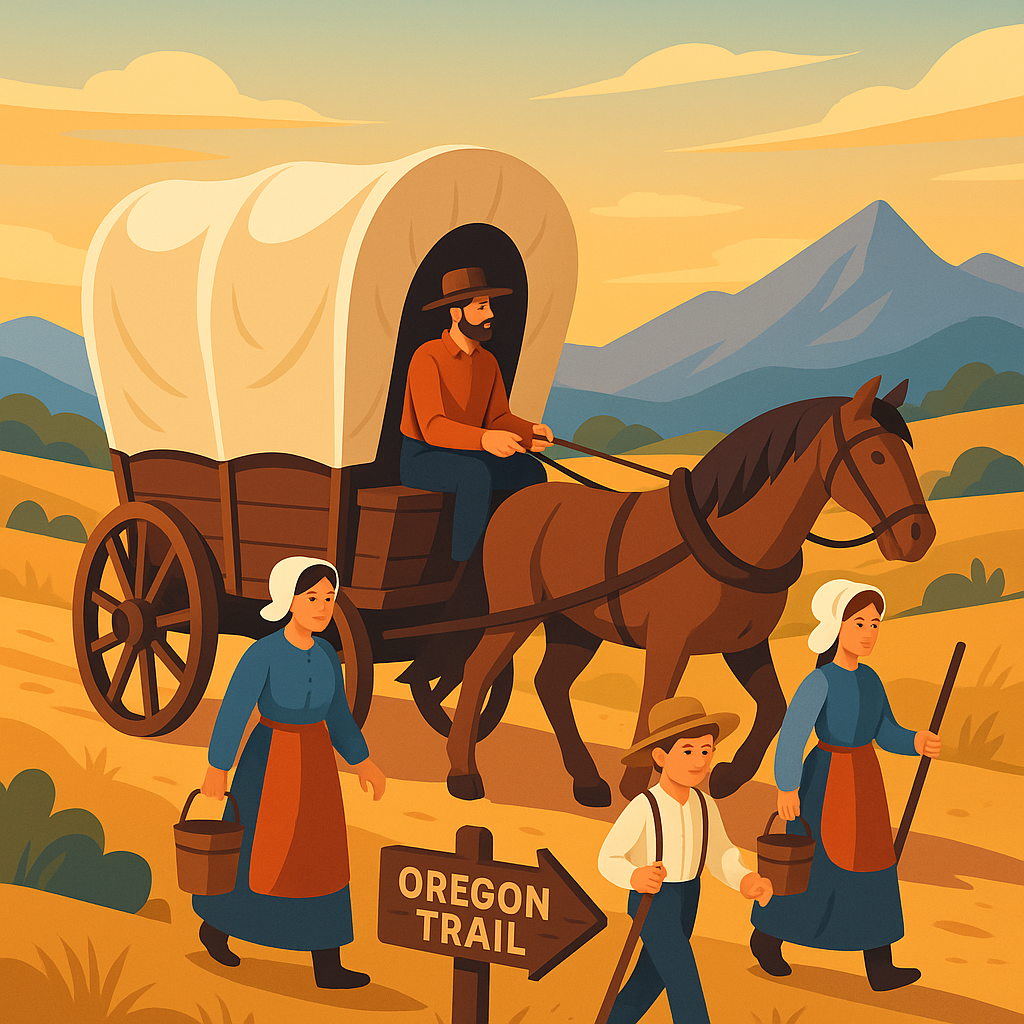
The Oregon Trail was an epic 2,170-mile journey across the American frontier, traversing challenging terrains and vast landscapes. This path, primarily from Missouri to Oregon City, played a crucial role in westward expansion during the 19th century. Pioneers embarked on this arduous trek seeking new opportunities, land, and a fresh start. However, life on the Oregon Trail was much more than an adventure; it was a test of resilience, strength, and endurance that shaped the identities of many American settlers. Understanding life on the Oregon Trail provides insights into the harsh realities of frontier life and the determination that fueled America’s expansionist spirit. This exploration matters because it highlights the human capacity for grit and ambition, qualities still relevant today as people face their own life’s challenges and pursuits.
The Challenges of the Oregon Trail: Rugged Landscapes and Severe Weather
Travelers on the Oregon Trail faced a formidable array of environmental challenges. The trail led pioneers across varied landscapes, including plains, mountains, and rivers. The Rocky Mountains and the Blue Mountains posed particular challenges, pushing settlers’ endurance to the brink. Deadly river crossings, such as those over the Platte and Columbia Rivers, added significant peril to the journey. Weather further complicated their travels, with sudden thunderstorms, extreme heat, or early snowfall threatening their progress.
A vivid example of these difficulties can be seen in the perilous crossing of the Snake River. Many caravans met tragedy here, where swift currents and rugged banks claimed lives and wagons. The adverse weather often delayed the crossing, turning what should have been days into weeks. This exemplifies the unpredictable nature of the Oregon Trail and the challenges pioneers were forced to overcome to reach their destinations.
Disease and Health Risks: The Silent Threats on the Trail
Beyond the visible dangers, settlers faced invisible threats in the form of diseases. Common illnesses included cholera, dysentery, and typhoid fever, often exacerbated by unsanitary conditions and limited medical knowledge. Cholera, for instance, was particularly menacing, sweeping through wagon camps and leaving trails of suffering and death.
In one notably tragic year, 1849, known as the “Year of Cholera,” the disease claimed the lives of thousands. It spread rapidly in crowded camp conditions, and the absence of effective treatment meant almost certain demise for those infected. The fear of disease added another layer of anxiety and helplessness to the emigrants’ lives, emphasizing the harsh realities and risks faced on the Oregon Trail.
Vitality and Community: Shared Responsibilities and Social Dynamics
Despite these adversities, the pioneers’ sense of community and cooperation was integral to their survival. Setting off in wagon trains, groups worked together to share burdens and resources. Duties were distributed among individuals; some individuals scouted ahead for trails and resting spots, while others were assigned to hunt, cook, or repair wagons. Nightly camps served as social hubs where songs, dance, and storytelling provided much-needed morale boosts.
Such cooperation was critical during crossing rivers or negotiating treaties with pivotal Native American tribes. In one noted instance involving the Shoshone tribe, interaction with indigenous leaders allowed the pioneers to secure safe passage and guidance across difficult courses, showcasing how understanding and cooperation extended beyond the confines of the wagon train to include their interactions with Native American tribes. These interactions often proved vital as they navigated unknown territories.
Supplies and Sustenance: The Lifeblood of the Journey
Maintaining supplies was a constant struggle on the Oregon Trail. Initial preparations involved stocking months’ worth of provisions like flour, bacon, beans, and coffee. Draft animals, including oxen and mules, were necessary for pulling heavy wagons filled with personal belongings, food, and tools for the homestead waiting at the journey’s end.
However, as the journey progressed, scarcity became a constant concern. The trail’s harsh conditions often led to the spoilage of goods, broken equipment, or failing animals. Therefore, emigrants had to resort to trading with other trains or Native American tribes, and foraging became a critical survival strategy. Learning to fish local streams or hunt game like deer and buffalo was crucial in providing fresh provisions and, in some cases, life-saving nutrition.
- Typical supplies needed:
- Flour, dried goods, pemmican
- Weapons and ammunition for hunting
- Tools for repairs and building
- Warm clothing for unpredictable weather
- Medicinal kerchiefs and rudimentary medical supplies
Pioneering Spirit and Adventure: Inspiration and Resilience
Despite all adversities, pioneers were driven by a tenacious spirit of adventure and perseverance. This pioneering resolve fueled by dreams of potential farmland and prosperous beginnings powered the settlers through doubt and danger. Many documented their journeys in diaries or letters, immortalizing their experiences for posterity.
The story of the Donner Party comes to mind as an extreme example of this unwavering spirit. Caught in an early Sierra Nevada snowstorm, the party faced starvation, despair, and loss. Remarkably, some members exhibited extraordinary resourcefulness and resilience, later recounting their story as a testament to human fortitude.
The collective experiences of these pioneers have since served as metaphorical guideposts for the human capacity to take giant leaps of faith and explore unknown realms. They remind us that while we might not face physical trails today, the paths ahead in life still require courage and tenacity.
The Legacy of the Oregon Trail: An Enduring Impact
Ultimately, the story of the Oregon Trail extends beyond the tales of hardship and survival. It set the stage for a demographic and cultural transformation as settlers carved new settlements and communities across the West. It laid the foundation for what would become numerous towns and cities along its path, contributing significantly to America’s growth.
The trail’s legacy also includes altering landscapes and ecosystems once dominated by indigenous populations, whose dynamics were permanently changed. Though often seen as a symbol of progress and aspiration, it’s essential to recognize that it came with a cultural cost that affected Native American tribes and their lands.
Today’s commemorations, from historic sites to educational programs, draw on this duality—celebrating the trail’s role in shaping American identity while acknowledging those who were impacted. The Oregon Trail remains an iconic journey that continues to inspire the adventurous spirit that persists in contemporary times.
Summary and Call-to-Action
The Oregon Trail exemplifies an extraordinary chapter in American history, embodying the unparalleled resolve, sacrifice, and pioneering spirit of those who dared to journey westward amid formidable challenges. While pioneers endured treacherous landscapes, precarious health risks, and resource shortages, their cooperative communities fostered resilience and provided support throughout their expeditions. Their tales echo the unyielding human drive for better prospects, leaving a legacy that continues to resonate strongly today.
For the modern reader, the story of the Oregon Trail is an invitation to reflect on the nature of challenges we face today. It prompts contemplation of our own capacity to persevere amid uncertainties, and to find strength and purpose in community and shared endeavors. Let their legacy remind us to harness our grit, to persist when faced with our own trails in life.
In light of this history, consider the region’s broader historical context by visiting local exhibits, joining historical societies, or leveraging online resources to further delve into the Oregon Trail’s rich tapestry. May it inspire you to embark on new journeys with the awareness that determination and camaraderie can transform formidable challenges into opportunities for growth and transformation.
As we move forward, let’s carry these lessons from the Oregon Trail—adventure, resolve, and collective spirit—with us, using them to navigate the terrain of our own lives.
Frequently Asked Questions
1. What was daily life like for pioneers on the Oregon Trail?
The daily life on the Oregon Trail was a mix of routine, challenges, and unpredictability. Pioneers started their days early, often at dawn, as every moment of daylight was precious for travel. Breakfast typically consisted of simple, energy-sustaining foods like bacon, coffee, and bread made from cornmeal or flour. After breaking camp, families would load their belongings into their covered wagons and set off for a long day of trek, which could cover anywhere from 10 to 20 miles if conditions were favorable.
The journey itself was fraught with obstacles, from crossing rivers to navigating rough terrains such as prairies, mountains, and desert landscapes. Families on the trail needed to work together to overcome these challenges. Children would help gather firewood or fetch water, while adults focused on guiding the wagons through treacherous paths. The evenings were usually spent around the campfire, preparing dinner and sharing stories, but they also involved necessary activities like tending to the livestock, wagon maintenance, and planning the next day’s route.
Pioneers faced numerous hardships such as limited access to fresh water and food, hostile weather conditions, and the threat of disease. Despite these trials, many remained hopeful and resilient, driven by the prospect of new opportunities in the West.
2. What were the main hardships pioneers faced on the Oregon Trail?
The Oregon Trail tested the pioneers’ endurance with a range of hardships. One of the most significant challenges was illness, particularly cholera, which claimed many lives due to unclean water sources and unsanitary conditions. There were no medical facilities on the trail, and makeshift remedies were the only aid available.
Pioneers also had to contend with severe weather. Storms could quickly make rivers impassable and create muddy trails, slowing the progress of the wagon trains. Extreme temperatures, both hot and cold, tested the physical limits of both humans and animals. Drought conditions could lead to a scarcity of water and grass, critical for sustaining the oxen and horses pulling the wagons.
In addition, food shortages were a constant concern. While hunters provided some fresh meat through buffalo or elk, most relied on non-perishable staples like beans, rice, and dried fruits. However, these supplies could run low or spoil before reaching their destination.
Lastly, the isolation and ever-present danger of hostile encounters, whether from wild animals or in some instances conflicts with Native American tribes, added another layer of hardship. Each day on the trail was a precarious balancing act of survival.
3. What role did women play on the Oregon Trail?
Women had multifaceted and vital roles on the Oregon Trail, extending far beyond the traditional domestic sphere. They were the backbone of family life on the trail, providing care, comfort, and maintaining morale under harsh conditions. Women were responsible for preparing meals from limited resources, tending to children, and nursing the sick.
They managed household duties with ingenuity, making use of whatever was on hand to sustain their family’s well-being. Washing clothes, sewing, and mending garments were part of their daily tasks, requiring improvisation without access to typical household goods. Women also took part in the physical demands of the journey. They often drove teams of oxen or horses and helped with wagon repairs.
Furthermore, women had a profound impact on community-building during the journey. They formed social networks, shared resources, and knowledge, which strengthened the resilience of their traveling groups. Their contributions were essential to the survival and success of families reaching their new homes in the West.
4. How did the pioneers navigate the trail and find their way?
Navigating the Oregon Trail was no small feat, requiring pioneers to rely on a combination of resources and skills. The trail itself was marked by previous travelers and could often be identified by a series of deep ruts left by the many wagons that had traversed before. However, these tracks were not always reliable due to diverse terrains and varying conditions.
Pioneers used guidebooks written by explorers and former travelers, which provided valuable information on the trail’s geography, locations of critical water sources, and safe passage points. However, these guides were not infallible, and some contained errors that could be perilous.
The travelers also relied heavily on natural landmarks to guide them. Key geographical features like Chimney Rock, Scotts Bluff, and Independence Rock were significant waypoints that guided their journey. Landmarks were both morale boosts and navigational tools, indicating progress and the correct path.
Assembling in larger groups, or wagon trains, benefitted pioneers by pooling knowledge and resources, reducing the risk of getting lost. Experienced scouts were often hired to lead the pioneer caravans through more challenging segments of the trail.
5. What were some of the adventurous aspects of the journey?
While the Oregon Trail was fraught with hardships, it also presented its share of adventure and wonder, igniting the spirit of pioneers with the promise of a new beginning. One of the most adventurous aspects of the journey was the vast and varied landscapes the pioneers encountered. From expansive prairies to rugged mountains, each turn of the trail brought new natural wonders, offering scenic views and moments of awe amidst the challenges.
The sense of adventure was further fueled by the test of self-reliance that the trail demanded. Pioneers learned new skills, from survival strategies to frontier craftsmanship, gaining confidence in their ability to adapt to and conquer the uncertainties of the wild.
For many, the interactions with different cultures, especially the encounters with Native American tribes, were adventurous and enlightening experiences. These interactions varied greatly, from trading and sharing knowledge to tense negotiations. Such exchanges broadened the cultural horizons of the pioneers.
Ultimately, the thrill of the unknown, the resilience shown in overcoming obstacles, and the prospect of reaching a new land of opportunity made the Oregon Trail a truly adventurous endeavor, leaving a lasting impact on those who ventured its path.