
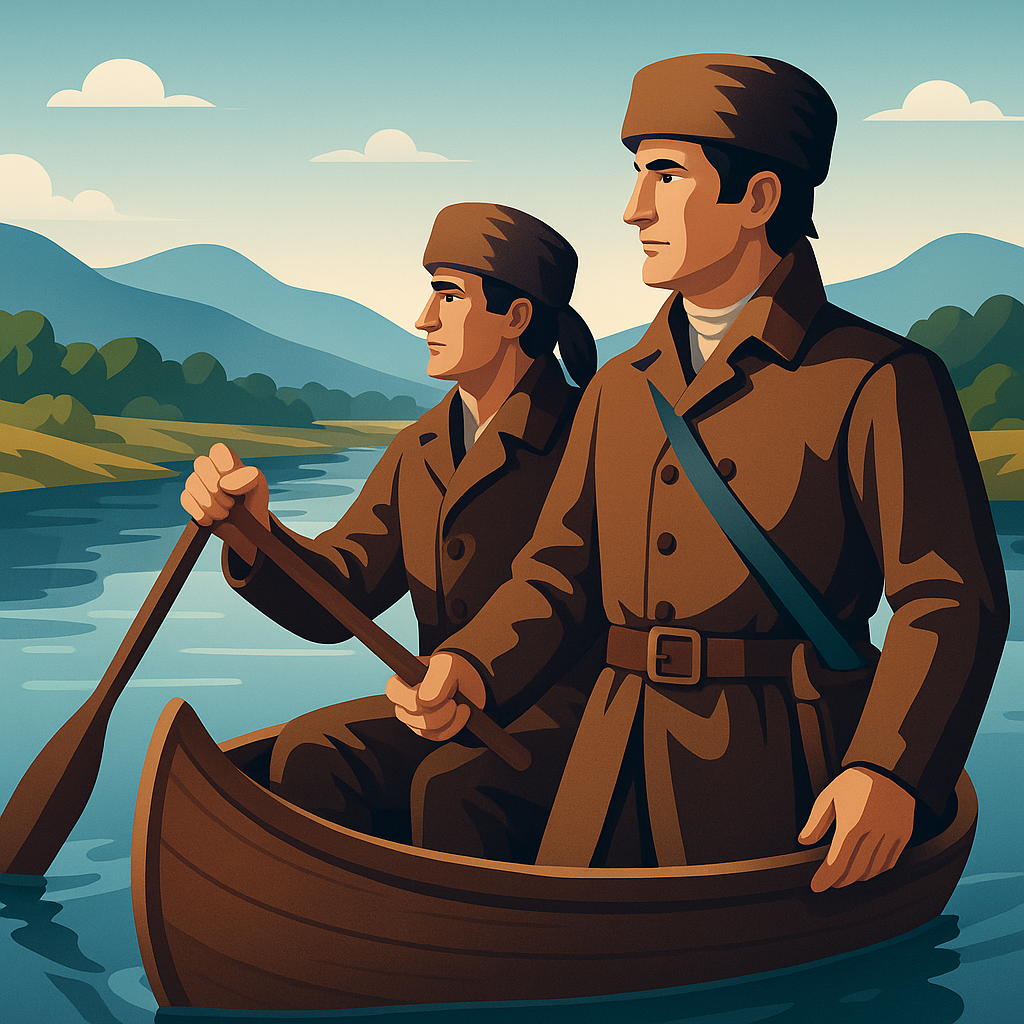
The Lewis and Clark Expedition set the foundation for the United States’ expansion into the western territories, unveiling the vast landscapes and natural wealth of a region that was as mysterious as it was majestic. Comprising a team led by Meriwether Lewis and William Clark, this expedition was commissioned by President Thomas Jefferson shortly after the Louisiana Purchase in 1803. The expedition officially commenced in May 1804, with goals centered around mapping the newly acquired territory, searching for a practical route to the Pacific Ocean, and establishing American presence before European powers and Native American tribes. This journey not only redefined the geographical comprehension of the North American continent but also molded its political and cultural landscape. Understanding the Lewis and Clark Expedition enriches our grasp of American history, illustrating the interplay of exploration, diplomacy, and ambition.
The Genesis of the Expedition
The Lewis and Clark Expedition, formally known as the Corps of Discovery Expedition, was initiated in an era marked by exploration and territorial expansion. After France ceded their claim to western lands in the Louisiana Purchase, President Jefferson saw a golden opportunity to explore the vast uncharted territory. He tasked his personal secretary, Meriwether Lewis, with the mission, who then selected his friend, William Clark, as the co-leader. One significant aim was to explore and map the Missouri River and to find the most direct and practical waterway to the Pacific Ocean for commerce.
In preparation, Lewis took crash courses in botany, zoology, and celestial navigation, ensuring that the team was equipped to document findings with scientific and geographical accuracy. This foundational preparation was critical to the expedition’s success, drawing from the latest scientific and exploratory techniques of the time. This initial stage laid the groundwork for a journey that would span over two years, covering approximately 8,000 miles.
Challenges and Encounters with Native Tribes
Throughout the journey, the expedition faced numerous challenges ranging from harsh environmental conditions to unfamiliar terrains. One of the greatest trials was the harsh winter they encountered at Fort Mandan, which emphasized the importance of cooperation with Native American tribes. Indigenous tribes like the Mandan, Shoshone, and Nez Perce became invaluable allies. They offered guidance, food, horses, and crucial knowledge about the mountainous terrains and difficult river routes.
A pivotal figure in these interactions was Sacagawea, a Shoshone woman, who along with her infant son, accompanied the expedition from the Mandan villages to the Pacific Ocean and back. Her presence symbolized peace to other tribes and her knowledge of the geography proved invaluable. The respectful diplomacy practiced by Lewis and Clark with these tribes often reflected the principles they carried on their mission. However, it was not without tension; misunderstandings occasionally arose, underscoring the complexities of cross-cultural interactions during expansion.
Scientific and Geographic Discoveries
The Lewis and Clark Expedition contributed enormously to the scientific knowledge and geographic mapping of North America. Over the course of their journey, Lewis and Clark recorded over 200 new plant and animal species, documenting unknown aspects of North America’s biodiversity. This included the pronghorn antelope and the grizzly bear, which they encountered on the plains.
The team also mapped waterways and mountain ranges, improving the understanding of North American geography which had been largely speculative before their journey. Such detailed observations later aided settlers and traders who moved westward, catalyzing economic opportunities and expansions. These findings were foundational in the field of natural sciences and geographic studies in the years following the expedition.
A Table of Key Discoveries
| Category | Discoveries | Impact |
|---|---|---|
| Flora | Over 100 new plant species including ‘Camas’ and ‘Showy Milkweed.’ | Informed agricultural and medicinal knowledge. |
| Fauna | Dozens of new animal species like the Prairie Dog and Grizzly Bear. | Expanded the biological understanding of North America. |
| Geography | Mapped the Missouri and Columbia rivers, Rocky Mountains. | Provided critical maps and routes for future explorers. |
Cultural and Political Implications
The expedition’s impact extended well beyond scientific and geographic discoveries. Politically, the successful entry into the western territories established the United States’ legitimacy in these areas before European powers like Britain and Spain could lay claim to them. Jefferson’s vision of a transcontinental nation became a step closer to reality due to the expedition’s success.
Culturally, the expedition opened up the westward expansion to settlers and traders, fundamentally altering the lives of Native American tribes. The introduction of trade opportunities was initially beneficial but often led to future displacement and conflicts as settlement intensified. The journals of Lewis and Clark served as vital literature, shedding light on the essence and demands of the American frontier.
Legacy and Educational Impact
Today, the Lewis and Clark Expedition is a cornerstone in American educational curricula, symbolizing the spirit of exploration and discovery. Their documented experiences offer timeless lessons in leadership, perseverance, and cross-cultural relations. Additionally, the expedition instills a greater appreciation for the environmental richness and diverse heritage of the United States.
Their journey stands as a testament to the early spirit of adventure and curiosity that fueled the United States’ expansion westward. Memorabilia, such as journals and maps, continue to educate and inspire, emphasizing how exploration and education can foster profound personal and societal growth.
Summary and Call-to-Action
In summary, the Lewis and Clark Expedition was not just a geographical exploration but a pivotal event that shaped the historical and cultural landscape of the United States. From their encounters with Native American tribes and the detailed records of over 300 new species to their crucial geographic mappings, they achieved monumental feats. Their journey allowed the United States to strategically claim and map vast territories while implementing a model for future explorations.
The principal takeaway here is the lasting impact of the expedition on the development of the U.S. into a transcontinental nation and how it paved the way for future generations to explore and understand the unique natural landscape of the continent. As modern explorers continue to delve into unknown territories be it in the frontiers of science or space, the lessons from the Lewis and Clark Expedition remain relevant. Reflect on this illustrious journey of discovery and perhaps consider visiting the Lewis and Clark National Historic Trail to gain a firsthand account of their monumental journey.
Frequently Asked Questions
1. What was the primary purpose of the Lewis and Clark expedition?
The Lewis and Clark Expedition, officially known as the Corps of Discovery, was initiated with several key objectives in mind. It was primarily commissioned by President Thomas Jefferson following the Louisiana Purchase in 1803 to explore and map the newly acquired territory to the west of the United States. The team, led by Meriwether Lewis and William Clark, embarked on this monumental journey in May 1804. Their aim was to chart the vast, unknown landscapes, document flora and fauna, and establish trade with Native American tribes. This expedition also sought to find a practical route across the Western half of the continent, bolstering U.S. interests in the region and asserting American presence in this largely unexplored area.
2. Who were Meriwether Lewis and William Clark, and why were they chosen to lead the expedition?
Meriwether Lewis was chosen by President Jefferson for his skills in leadership, knowledge of the frontier, and experience as an army officer. Lewis, in turn, selected William Clark as his co-commander because of Clark’s military acumen and experience in wilderness survival. Both men brought valuable skills to the table that were crucial for the success of the expedition. Lewis was a skilled naturalist who studied medicine and botany to prepare for the journey, while Clark contributed his talent in cartography and leadership, ensuring the crew remained focused and resilient throughout their demanding trek. Together, their complementary skills and personalities made them an ideal team to lead such a challenging and unprecedented mission.
3. How did the Lewis and Clark expedition impact American history and expansion?
The Lewis and Clark Expedition had a profound impact on American history, paving the way for the country’s westward expansion. By mapping and exploring the Western territories, Lewis and Clark provided invaluable information about the geography, resources, and inhabitants of the vast region. Their detailed journals and maps, which disclosed the richness and potential of the landscapes, intrigued settlers and fueled a national interest in expanding the American frontier. The expedition effectively helped the fledgling United States to lay claim to the Oregon Territory, contributed to future negotiations with Native American tribes, and emphasized the importance of the continental divide and potential transcontinental routes. These elements played pivotal roles in shaping the United States’ development into a nation that spanned from coast to coast.
4. What kind of challenges did the expedition team face during their journey?
The Lewis and Clark expedition faced numerous daunting challenges throughout its two-year journey. The team traversed over difficult and varied terrains, including the rugged Rocky Mountains, dense forests, and the vast Great Plains. They dealt with harsh weather conditions spanning scorching summers and freezing winters, which tested their resilience and adaptive skills. Communicating and trading with Native American tribes was another significant hurdle, requiring diplomacy and often the help of Sacagawea, a Shoshone woman who acted as a guide and interpreter. The expedition members also endured supply shortages, illness, and the constant threat of attacks by wild animals or unfriendly tribes. Despite these obstacles, the team maintained remarkable discipline and cooperation, allowing them to complete their expedition successfully.
5. Who was Sacagawea, and what role did she play in the expedition?
Sacagawea was a Native American woman of the Shoshone tribe, who became an integral part of the Lewis and Clark expedition. She joined the journey with her husband, Toussaint Charbonneau, a French Canadian fur trader who was hired as an interpreter. Sacagawea’s knowledge of the region, along with her language skills, proved invaluable to the expedition. She assisted the explorers in many interactions with Native American tribes, using her ability to communicate and negotiate on behalf of the crew. Sacagawea’s presence also symbolized peace to the tribes they encountered since her inclusion on the expedition showed they were not a war party. Her contributions were critical in guiding the team through unfamiliar territories and ensuring safe passage during significant portions of their journey. Her involvement has since cemented her legacy as a vital figure in American history.