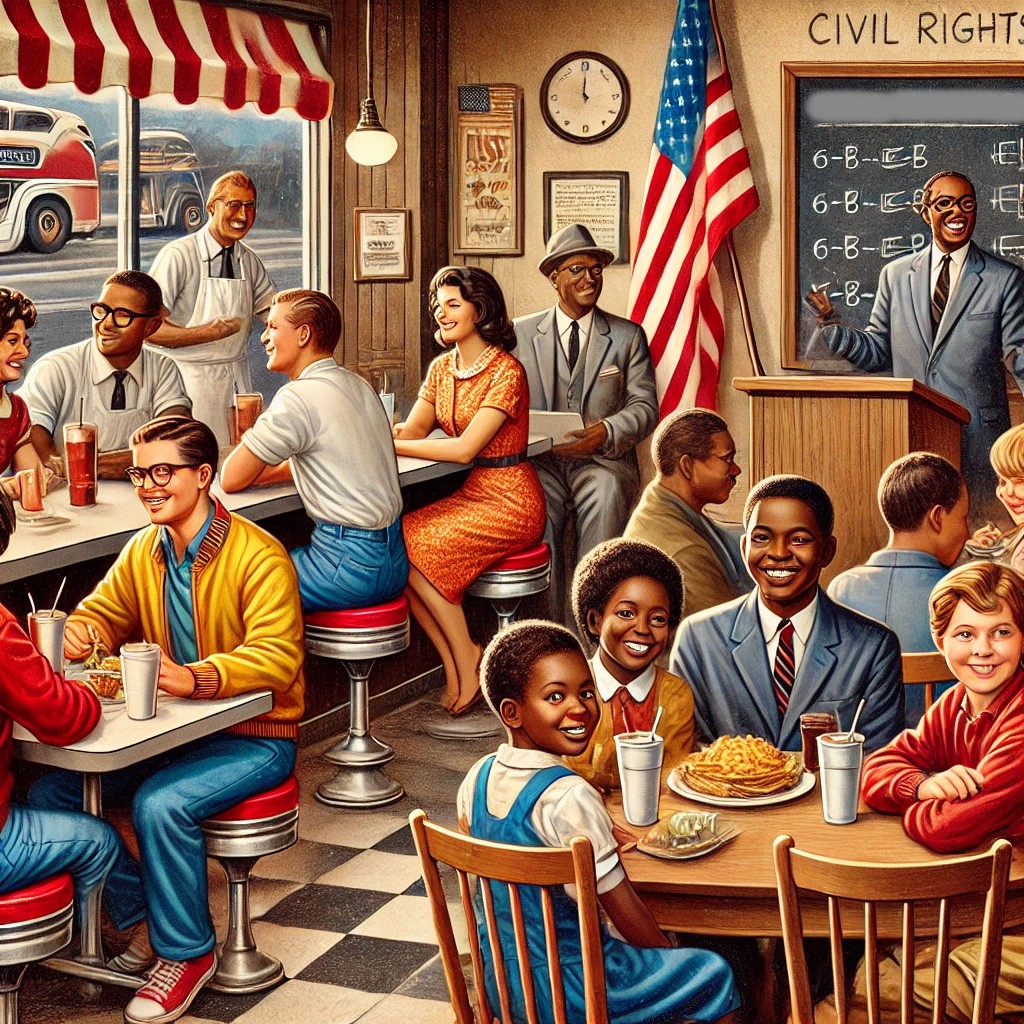
The Civil Rights Act of 1964 is often considered one of the most profound and transformative pieces of legislation in U.S. history. Passed in the midst of the Cold War and not long after World War II, it fundamentally altered the nation’s legal and social landscape. The Act aimed to end racial segregation, dismantle Jim Crow laws, and ensure equal opportunities for all citizens, regardless of race, color, religion, sex, or national origin. This sweeping law did more than just change the wording of the country’s legal code—it helped reshape American culture, politics, education, and daily life for generations to come.
Before the Civil Rights Act became law, racial discrimination was deeply embedded in American institutions. Public accommodations like restaurants, hotels, and theaters commonly practiced segregation; schools were often separated by race; and many employers openly discriminated against people of color. But the Civil Rights Act didn’t just target racial injustice. Over time, its scope helped pave the way for a broader push toward equality and inclusion for many marginalized groups. In the process, it completely changed the face of American society.
The Historical Context: World War II, the Cold War, and Civil Rights
To understand how the Civil Rights Act of 1964 transformed American society, it’s important to consider the historical stage on which it was set. After World War II, the United States emerged as a global superpower, eager to present itself as a beacon of democracy and freedom. The Cold War heightened this need because the U.S. stood in ideological opposition to the Soviet Union. American leaders realized that racial segregation and violence at home provided ammunition for Soviet propaganda. If the United States was to champion human rights and liberty worldwide, it needed to address its racial inequities.
At the same time, the Black freedom struggle had gained momentum after the war. African Americans who served their country overseas returned home determined to secure the rights they had fought to defend. Organizations like the NAACP, the Southern Christian Leadership Conference (SCLC), and the Student Nonviolent Coordinating Committee (SNCC) waged grassroots campaigns, organizing marches, boycotts, and sit-ins. These efforts drew national attention to the brutality and indignity of segregation. Media coverage, especially television news, showed Americans—in real time—the violence Black citizens faced when demanding basic civil rights.
By the early 1960s, the Civil Rights Movement had made undeniable gains in public awareness. High-profile events like the 1963 March on Washington, where Dr. Martin Luther King Jr. delivered his famous “I Have a Dream” speech, brought the cause squarely into the mainstream. President John F. Kennedy had introduced civil rights legislation before his assassination, and President Lyndon B. Johnson made it a priority to see it through. The urgency was clear: if America was to live up to its founding ideals, it had to enact meaningful reforms that would outlaw segregation and discrimination.
Key Provisions of the Civil Rights Act of 1964
The Civil Rights Act of 1964 wasn’t a single blunt instrument; it was a broad-ranging law that tackled discrimination from multiple angles. Its key sections addressed different areas of public life:
- Title II: Prohibited discrimination in public accommodations such as hotels, restaurants, theaters, and other facilities open to the general public. Before this, segregation in these spaces was widespread, particularly in the South.
- Title IV: Gave the federal government the power to assist with the desegregation of public schools. This was a crucial next step after the Supreme Court’s Brown v. Board of Education decision (1954), which declared school segregation unconstitutional. The Civil Rights Act offered mechanisms to enforce that ruling more effectively.
- Title VI: Barred federal funding to programs or activities that practiced discrimination. This meant that hospitals, schools, and other institutions relying on federal money could not keep racist policies and still expect government support.
- Title VII: Prohibited employment discrimination based on race, color, religion, sex, or national origin. It also led to the creation of the Equal Employment Opportunity Commission (EEOC), an agency dedicated to enforcing fair workplace practices.
These provisions not only gave the federal government the power to enforce civil rights but also signaled to businesses, schools, and institutions that discriminatory practices would no longer be tolerated. In doing so, the law laid the groundwork for a society that would become more inclusive and diverse over time.
Transforming Public Accommodations and Daily Life
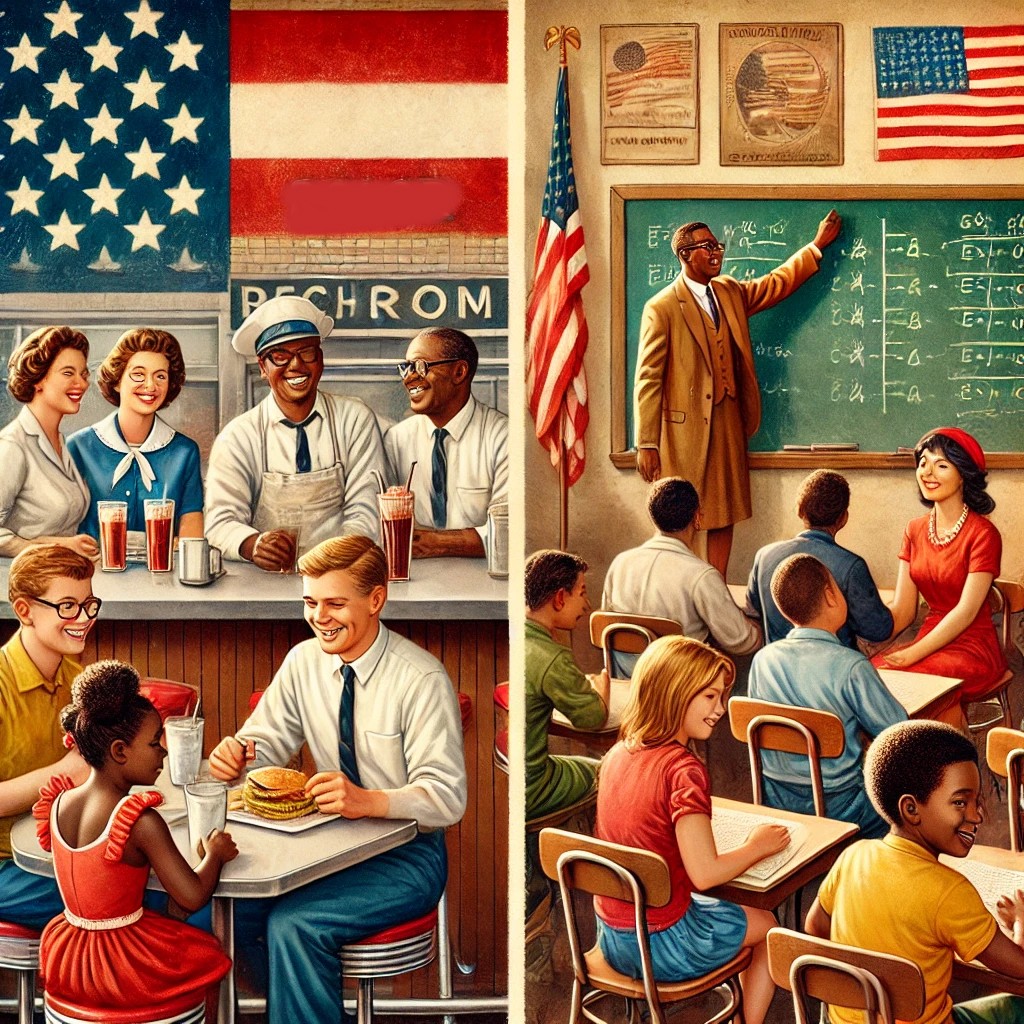
Before the Civil Rights Act, many African Americans were essentially second-class citizens in their own country. They couldn’t sit at the same lunch counters as white customers, dine in certain restaurants, or stay in the same hotels. By outlawing discrimination in these areas, the Act took a direct swipe at the very heart of Jim Crow culture.
In the aftermath, African Americans could now move more freely through public spaces. This was not just a matter of convenience or comfort; it was a step toward full citizenship and personal dignity. The psychological effect was huge: being able to enter a store without fear, to watch a movie in any seat, or to enjoy a meal wherever one chose broke down centuries-old barriers. Over time, these changes became normal and expected. Younger generations grew up in an America where legalized segregation was something they’d learn about in history books rather than experience firsthand.
However, desegregation did not happen overnight. Many businesses resisted. Some white customers objected, and violence or threats sometimes followed. Federal enforcement was often necessary to ensure compliance. Yet, as the years passed, communities adapted. The presence of all races and backgrounds in public life gradually became a simple fact of American society. This shift helped normalize the idea of equality and made it more challenging for racist practices to hide in plain sight.
Reshaping Education: Beyond Brown v. Board
While the Brown v. Board of Education decision of 1954 had already declared school segregation unconstitutional, progress toward integration was painfully slow. By the 1960s, many school districts found loopholes or simply refused to comply. The Civil Rights Act’s provisions, particularly Title IV and Title VI, gave the federal government the leverage it needed to enforce desegregation.
The Act effectively told schools that if they did not desegregate, they risked losing crucial federal funding. Faced with this financial pressure, many districts that had long dragged their feet began to admit Black students into previously all-white schools. Over time, students of different races learned together, shared classrooms, played on the same sports teams, and participated in the same school clubs. This interaction at a young age helped to reduce prejudice and foster a more inclusive mindset.
The integration of schools wasn’t a cure-all. It came with its own challenges, such as so-called “white flight” to suburbs, the lingering issue of de facto segregation, and ongoing inequalities in school funding. Yet, the Civil Rights Act’s impact on education was undeniable. It helped turn the legal principle of Brown v. Board into an enforceable reality. This educational integration laid a foundation for future generations of Americans who, growing up together, would be better equipped to understand and value diversity.
Expanding Opportunity in the Workforce
One of the Act’s most significant long-term impacts was on employment. Before 1964, discrimination in hiring, promotions, and wages was widespread. Many people of color found themselves locked out of better-paying jobs or relegated to menial work, regardless of their skills or education.
With Title VII in place, a legal mechanism existed to challenge unfair employment practices. The EEOC, established by the Act, became a watchdog for workplace discrimination, investigating complaints and sometimes filing lawsuits. Over time, this made employers more cautious about discriminatory policies. They began to recognize the value of a more diverse workforce, both for the sake of compliance and for tapping into a broader talent pool.
These changes did not happen overnight and certainly did not eradicate all forms of workplace inequality. But the Act opened doors that had long been slammed shut. Over the following decades, people of color, as well as women—also protected under Title VII—gained better access to professional careers. This shift in the workforce helped reshape the American middle class. By the late 20th century, the presence of African American professionals, managers, academics, and business leaders became far more common. The ripple effects of these shifts are still felt today, as diversity and inclusion continue to be recognized as pillars of a healthy, dynamic economy.
Influencing the Political Landscape
The Civil Rights Act of 1964 set the stage for further landmark legislation, most notably the Voting Rights Act of 1965. The changes in public life brought about by the Civil Rights Act made it more difficult for local authorities to justify obstructing Black Americans from participating in the political process. The images of integrated spaces, the growing number of Black professionals, and the overall movement toward equal citizenship increased pressure on lawmakers to ensure political rights were also guaranteed.
The Voting Rights Act of 1965 outlawed discriminatory voting practices that had kept African Americans away from the polls. As more Black citizens voted, their political clout grew. Over time, this led to the election of more Black officials at the local, state, and federal levels. The very makeup of American democracy began to reflect the nation’s diversity more accurately.
Political power, in turn, shaped policy. As African American voters and politicians became a more influential force, civil rights legislation expanded. Laws addressing fair housing, equal credit opportunities, and protections for other marginalized groups followed. Eventually, the spirit of inclusion enshrined in the Civil Rights Act broadened to inspire movements for women’s rights, LGBTQ+ rights, rights for people with disabilities, and more. The Act’s legacy, therefore, extends well beyond race, influencing how America thinks about equality in every realm.
Cultural Shifts and Representation
The transformation sparked by the Civil Rights Act went beyond laws and policies; it also permeated American culture. As American society became more integrated, the arts, media, and entertainment industries began to reflect this new reality. Black musicians, actors, writers, and artists began to reach a broader audience and receive more recognition in the mainstream. While Black cultural contributions had long influenced American music and art, the reduced stigmatization and increased visibility of African Americans led to more representation and appreciation in popular culture.
Television shows and films became more diverse, portraying African American characters as complex individuals rather than mere stereotypes. Over time, more media outlets featured people of color in leading roles, news programs employed African American journalists, and businesses recognized that an integrated audience required inclusive marketing. The cultural narrative shifted. Young people growing up after the Civil Rights Act were exposed to a media environment where diversity was increasingly seen as a normal aspect of American life.
Of course, representation was uneven and took decades to improve. But the Civil Rights Act created an environment in which demanding more inclusive representation was possible, supported by the law’s underlying principle that all Americans deserved equal respect and opportunity.
Confronting Ongoing Challenges
While the Civil Rights Act of 1964 was transformative, the struggle for equality was not—and is not—over. The legislation did not automatically end racism, nor did it instantly level the playing field in education, employment, or housing. Deep-rooted biases, economic disparities, and structural inequalities persisted and continue to challenge the nation today.
In the decades since the Act’s passage, Americans have wrestled with issues like mass incarceration, persistent achievement gaps in schools, environmental racism, and disparities in wealth and health outcomes. Activists and legislators still rely on the legal tools established by the Civil Rights Act to fight discrimination in these spheres. The Act set a precedent, establishing that the federal government had both a responsibility and the authority to address civil rights violations. This idea has empowered subsequent generations to push for broader reforms and greater accountability.
Today, conversations about equity and inclusion often circle back to the principles enshrined in the Civil Rights Act. Those principles continue to guide debates over affirmative action, policing, immigration policies, and LGBTQ+ rights. The law’s legacy reminds Americans that progress is possible but demands constant vigilance and effort to maintain and expand.
The Global Perspective
The Civil Rights Act of 1964 also influenced how other nations viewed the United States. During the Cold War, racial discrimination in America was a glaring contradiction to the nation’s claim of moral and democratic superiority. Passing the Act allowed the U.S. to project a more consistent image as a leader in human rights. Over time, the Act inspired civil rights struggles in other countries as well.
International observers looked to the U.S. example as they confronted their own histories of ethnic and racial discrimination. While no two countries share the exact same context, the Civil Rights Act demonstrated that a government could acknowledge and address systemic injustice through legislation. This helped bolster international human rights standards and provided a blueprint—imperfect and always in need of refinement—for others to consider.
A Continuing Evolution
The Civil Rights Act of 1964 was not an endpoint, but rather a crucial milestone in the long march toward a more just and inclusive society. Its passage kicked open doors that had been shut for centuries. It set in motion changes that would influence schools, workplaces, voting booths, television screens, and neighborhoods across the country.
Over half a century later, the Act’s core message remains relevant. Its spirit lives on in ongoing discussions about how to make America a place where everyone can thrive without facing discrimination. The Act’s lasting influence is seen in the continuing fight against voter suppression, the drive for criminal justice reform, the push for pay equity across genders and races, and the movement to ensure that immigrant communities receive fair treatment.
These broader struggles trace their roots back to 1964, when America took a giant step toward living up to its ideals. The transformation of American society set into motion by the Civil Rights Act was not a single event, but an evolving legacy that continues to shape how Americans understand equality, justice, and the meaning of freedom.
Conclusion
The Civil Rights Act of 1964 reshaped American life by making discrimination a matter of national concern—and national prohibition. It gave the federal government stronger tools to enforce equality, opened doors to integrated schools, created fairer employment practices, and set in motion cultural shifts that have reverberated through generations. Its influence reached beyond race, inspiring movements for women’s rights, LGBTQ+ rights, and other social justice causes, all anchored in the principle that everyone deserves a fair shot.
While America still struggles with inequality, the Civil Rights Act remains a powerful reminder of how far the nation has come and how the law can be harnessed to promote change. More than just a historical milestone, it is a living influence, woven into the fabric of the country’s institutions, politics, and everyday life. It teaches that progress is possible when citizens, activists, and leaders confront injustice head-on, and that the quest for equality is an ongoing journey rather than a single destination.
Frequently Asked Questions
1. What was the main purpose of the Civil Rights Act of 1964?
The Civil Rights Act of 1964 was designed to put an end to racial discrimination and segregation in the United States. It aimed to dismantle the Jim Crow laws that had legalized segregation and discrimination based on race, and to ensure equal opportunities for every American, regardless of race, color, religion, sex, or national origin. This legislation marked a crucial turning point by legally binding the nation to uphold principles of equality and human dignity in everyday life. It sought to create a new era where access to public facilities, education, employment, and voting was equally available to everyone, regardless of their background.
2. How did the Civil Rights Act of 1964 impact American workplaces?
The 1964 Civil Rights Act fundamentally transformed workplace dynamics across America by outlawing discrimination based on race, color, religion, sex, or national origin. Prior to the Act, discrimination in hiring, promotions, and wages was rampant, with many opportunities unjustly withheld from minority groups and women. With the implementation of the Act, Title VII made it illegal for employers to make employment decisions based on these discriminatory criteria. Additionally, the Act led to the creation of the Equal Employment Opportunity Commission (EEOC), which was established to enforce federal laws regarding job discrimination. This agency became a cornerstone in the fight to provide fair treatment and create a level playing field for all Americans in their professional lives.
3. What changes did the 1964 Civil Rights Act bring to public accommodations?
One of the most visible changes brought by the Civil Rights Act of 1964 was the desegregation of public accommodations. Before the Act, facilities such as hotels, restaurants, theaters, and public transportations were often segregated by law or custom, forcing people of color to use separate, and often inferior, accommodations. With the passing of the Act, Title II outlawed discrimination in these public places, ensuring that all people would have equal access to enjoy these services and facilities. This not only removed the physical barriers that had been upholding segregation but also paved the way for greater social interaction and cooperation among different racial and ethnic groups, laying the foundation for a more inclusive society.
4. How did the Civil Rights Act of 1964 influence education in the United States?
Education was one of the critical areas affected by the Civil Rights Act of 1964. The Act’s Title IV expedited the desegregation of public schools, reinforcing previous Supreme Court rulings, such as Brown v. Board of Education. By prohibiting discrimination in any education program or activity receiving federal financial assistance, the Act aimed to ensure that educational opportunities were available equally to all students. This legislative backing empowered federal authorities to take meaningful action against non-compliant school districts, leading to significant strides in the integration of public schools. This transformative approach towards education helped break down racial barriers and opened doors for countless students from minority backgrounds to pursue higher education and professional success.
5. In what ways did the Act shape the Civil Rights Movement and its goals?
The enactment of the Civil Rights Act of 1964 was a pivotal moment in the Civil Rights Movement, representing a significant victory for activists who had long fought against systemic racism and inequality. The Act provided legal support to the movement’s demands for equality and justice, bolstering efforts aimed at achieving true racial integration and empowerment for marginalized communities. By legally prohibiting discrimination in several aspects of life, including voting rights (though voting rights were more specifically addressed in the Voting Rights Act of 1965), education, employment, and public accommodations, it gave momentum to the movement and inspired further civil rights initiatives and legislation. It also served as a powerful blueprint for later movements advocating for gender equality, LGBTQ rights, and other social justice causes, illustrating the broad impact of the movement’s achievements on American society.