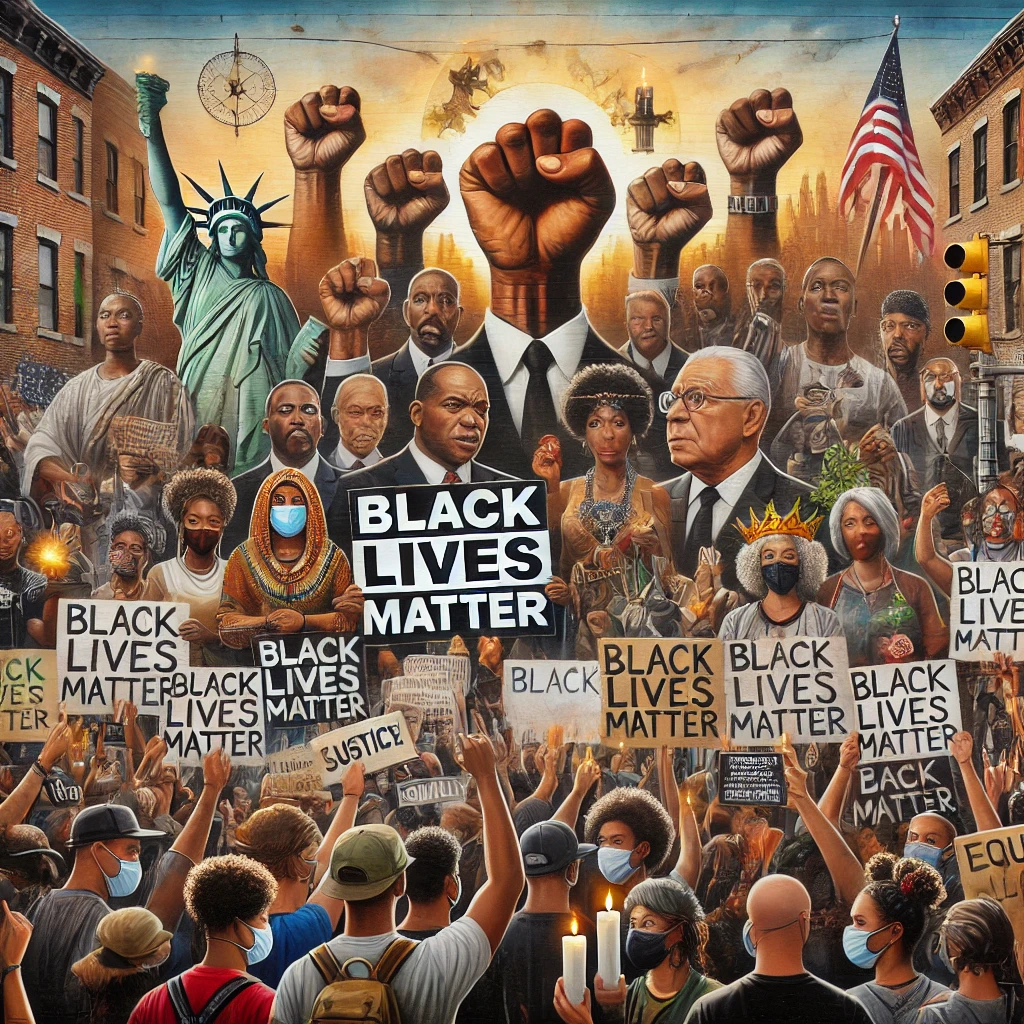
The Black Lives Matter (BLM) movement has played a key role in reshaping how Americans talk about race, justice, and equality. Since its founding in 2013, the movement has grown from a hashtag into a major cultural touchstone, sparking national debates and transforming the political landscape. In doing so, BLM has forced institutions, media outlets, and ordinary citizens to reconsider how racial injustice affects people’s daily lives. While race relations have always been part of the American conversation, Black Lives Matter has amplified these discussions with unprecedented power—making the fight for racial justice a more central, urgent issue in American society. In this article, we will explore how the Black Lives Matter movement emerged, the societal changes it promoted, the challenges it faced, and how it continues to influence conversations about race across the United States.
The Birth of a Movement
Black Lives Matter started in 2013 in response to the acquittal of George Zimmerman, who had been on trial for the killing of Trayvon Martin in Florida. Angered by what they saw as a profound disregard for the value of Black lives, three activists—Alicia Garza, Patrisse Cullors, and Opal Tometi—coined the slogan “Black Lives Matter.” This phrase quickly became a rallying cry for activists around the country. However, it wasn’t until the 2014 protests in Ferguson, Missouri, following the shooting death of Michael Brown at the hands of a police officer, that BLM truly stepped into the national spotlight.
By design, the Black Lives Matter movement was decentralized. Organizers wanted it to be a grassroots coalition that empowered local communities to protest police brutality and other forms of systemic racism. Rather than operating with a traditional top-down structure, BLM functioned as a network of chapters, each with its own local leadership and priorities. This allowed Black Lives Matter to stay agile, relevant, and connected to the specific needs of different communities across the country. Additionally, social media played a massive role in spreading awareness; participants used platforms like Twitter, Facebook, and Instagram to organize protests, share videos of law enforcement abuses, and educate the public about the realities of systemic racism.
Historical Context of Racial Justice Movements
Although Black Lives Matter gained momentum in the 2010s, its roots are intertwined with a long history of Black activism in the United States. From the abolitionist movement to the Civil Rights Movement of the 1950s and 1960s, Black Americans have consistently fought for liberation, equality, and recognition of their humanity. Icons such as Frederick Douglass, Harriet Tubman, Martin Luther King Jr., Malcolm X, and many others laid the groundwork for modern activism. That legacy informs Black Lives Matter’s approach—particularly in how it engages directly with power structures, calls attention to the lived experiences of Black people, and demands institutional change.
However, Black Lives Matter also diverges from older movements in several respects. By leveraging social media, it has circumvented the reliance on traditional media coverage to gain attention. Additionally, the movement is intersectional, embracing issues like LGBTQ+ rights, immigrant justice, and economic inequality as central to the fight for racial equality. Many younger activists see themselves as carrying on the mantle of Civil Rights-era protests but also innovating with decentralized organizing tactics and new digital tools that can rally support far more quickly and broadly than ever before.
The Role of Social Media in Amplifying BLM
Perhaps one of the most significant contributions of Black Lives Matter to discussions about race is how it harnessed the power of social media. By using hashtags like #BlackLivesMatter, #SayHerName, and others, activists could instantly bring attention to stories of police shootings, racial profiling, and other examples of systemic discrimination. Videos captured on smartphones and shared online provided indisputable evidence of police violence. This footage often went viral within hours, sparking national and even international outrage. Media outlets, politicians, and community leaders were then pressured to respond to these incidents, pushing concerns of racial injustice into mainstream headlines.
The ease of organizing on social media lowered the barrier to entry for activism. Individuals who might never have attended a traditional protest could instead tweet, repost videos, or participate in online discussions. This allowed the movement to reach a far wider audience, including people who would not ordinarily follow the news closely. Journalists also became more reliant on social media content to stay informed about the next protest or gathering, further amplifying BLM’s message. At the same time, critics argued that “hashtag activism” sometimes oversimplified complex issues or created echo chambers. Nonetheless, the broad consensus remains that social media made the Black Lives Matter movement more accessible and immediate, fundamentally altering how Americans engage with race-related topics.

Police Reform and Calls for Accountability
One area where Black Lives Matter had a substantial impact is policing. For years, concerns about police brutality existed primarily in communities that experienced it directly, and they rarely received widespread political attention. With the rise of BLM, the demand for police accountability became a national talking point. Proposals once considered radical—such as body cameras for law enforcement, civilian oversight boards, and budget reallocations—started to enter mainstream policy debates. The conversation expanded to include broader questions of how police departments operate, how they are funded, and whether alternative community-based approaches could better ensure public safety.
Several high-profile cases involving the deaths of Black Americans at the hands of the police—most notably George Floyd in 2020—sparked worldwide protests. These demonstrations fueled urgent calls for police departments to confront racial bias and adopt reforms designed to prevent future tragedies. While progress has varied greatly from city to city, a growing number of municipalities began instituting new policies under public pressure. Even though definitive, sweeping reform at the national level remains a challenge, the heightened scrutiny on policing persists. At its core, BLM placed a spotlight on the need for accountability, ensuring that instances of police misconduct are no longer ignored or dismissed as isolated incidents.
Changing the Political Conversation
Before Black Lives Matter became a household name, mainstream politicians rarely spoke openly and consistently about systemic racism. The movement changed that. By galvanizing voters and mobilizing communities, Black Lives Matter supporters forced elected officials to address racial disparities in everything from policing to healthcare to education. Political candidates, particularly in competitive elections, recognized that ignoring these issues could cost them support from a broad swath of the electorate. As a result, campaign platforms began to include explicit commitments to racial justice initiatives and policy proposals aimed at dismantling systemic discrimination.
For instance, politicians from local council members to presidential hopefuls have embraced language once considered too bold or risky, including calls for significant criminal justice reform, acknowledgement of the school-to-prison pipeline, and discussion of economic disparities impacting Black communities. Moreover, the growing influence of progressive activists within the Democratic Party has pushed the party’s agenda toward issues that were once seen as peripheral. While bipartisan support for such measures has been limited, the fact that these discussions are now unavoidable in American politics signifies the substantial shift BLM created.
Impact on Media and Public Discourse
News organizations and commentators also found themselves reshaping their coverage to address the growing influence of Black Lives Matter. Typically, media outlets had covered racially charged stories sporadically, focusing mostly on sensational angles or high-profile court cases. Yet as BLM protests continued to captivate the public’s attention, news outlets were compelled to treat matters of race and policing with more depth and consistency. Podcasts, documentaries, long-form articles, and special investigative reports exploring systemic racism emerged, often highlighting personal stories of those affected by discriminatory practices.
Public figures, celebrities, and athletes also played a critical role in elevating the conversation. NFL quarterback Colin Kaepernick’s decision to kneel during the national anthem to protest police brutality was a direct echo of BLM’s message. It triggered a national debate on patriotism, free speech, and the role of athletes in advocating for social causes. Similar actions by other sports figures and celebrities signaled that the issue of racial justice was no longer confined to community activism—it had become a mainstream conversation, inseparable from American culture and identity.
Shifts in Public Opinion
Black Lives Matter spurred significant changes in how many Americans understand and view systemic racism. Opinion polls suggest that, over time, a greater number of citizens have come to acknowledge that racism is not a relic of the past but an ongoing problem deeply rooted in institutions. While some Americans remain skeptical or openly opposed to the movement, the fact that BLM protests have occurred in predominantly white towns and small cities across the country indicates a broadening awareness of racial injustice. In June 2020, for example, some polls showed record levels of support for Black Lives Matter following nationwide protests sparked by George Floyd’s killing.
However, this support has fluctuated over time, with public attitudes influenced by political polarization, media narratives, and broader social tensions. Nonetheless, even those who disagree with the movement’s approach can hardly ignore the subject of race anymore. Black Lives Matter has injected racial inequities into popular discourse to such an extent that discussing them is part of everyday life. Whether at the dinner table, on social media, or in the workplace, conversations about race and policing that were once rare or tiptoed around are now more open and forthright.
Embracing Intersectionality
From the outset, Black Lives Matter emphasized that it was a movement fighting for freedom and justice for all Black people, including women, LGBTQ+ individuals, immigrants, and those living with disabilities. This intersectional approach recognized that different forms of oppression—such as racism, sexism, homophobia, and classism—often overlap, producing unique challenges for certain groups. This philosophy pushed conversations about race in America to include the specific experiences of Black women, Black transgender individuals, and others whose stories had often been overshadowed in past social movements.
By centering voices from these intersecting identities, Black Lives Matter challenged a singular narrative of Blackness that focused solely on cisgender, heterosexual Black men. Programs like #SayHerName highlighted the deaths of Black women like Sandra Bland, Rekia Boyd, and Breonna Taylor, who had not received the same level of media attention as their male counterparts. In doing so, BLM broadened what it means to fight for racial justice, compelling activists, scholars, and everyday people to recognize that liberation must involve all members of the Black community.
Corporate Responses and Marketing
As Black Lives Matter grew in prominence, businesses and corporations began issuing public statements of support, donating to racial justice organizations, and reassessing their own practices. Whether motivated by genuine concern or public relations, these corporate acknowledgments indicated that conversations about race were hitting the mainstream. Major brands altered their advertising campaigns, pledged to diversify their workforces, and changed product branding considered racially insensitive.
While many activists welcomed the influx of donations and attention, others questioned whether corporate involvement was superficial “performative activism.” This critique pointed to instances where companies posted black squares on social media or made statements of solidarity without making substantive policy changes within their own organizations. Nonetheless, the mere fact that large corporations felt pressured to respond illustrated BLM’s impact on broadening conversations about race. For the first time, public pressure demanded that companies actively address racial inequities or risk backlash from consumers.
Educational Reforms and Curricular Changes
In addition to policing and corporate policies, the Black Lives Matter movement also spurred demand for changes in educational curricula. School districts around the country began reexamining how they teach American history and civics, particularly the role of Black Americans. Activists called for a more honest account of topics like slavery, Reconstruction, Jim Crow laws, and redlining, arguing that many traditional textbooks gloss over these injustices or present them as isolated historical events rather than ongoing systemic issues.
In some regions, these educational reforms have included mandating ethnic studies courses, updating reading lists to feature more authors of color, and offering professional development for teachers on culturally responsive teaching. While these shifts are not uniform and often face political pushback, the pressure to incorporate more diverse perspectives and tackle complex racial issues is a direct outgrowth of the increased visibility and discussions sparked by Black Lives Matter.
The Role of Local Activism
Much of Black Lives Matter’s influence can be seen at the local level, where communities organize to tackle racism in schools, workplaces, and government institutions. Local BLM chapters frequently hold town halls, workshops, and public forums to educate community members and strategize policy changes. Whether it’s pushing for a new police oversight board in a mid-sized city or fighting for more inclusive hiring practices at a local business, these grassroots efforts embody the movement’s decentralized, community-driven ethos.
Additionally, local organizers collaborate with community members to address underlying socio-economic factors that contribute to racial disparities, such as inadequate housing, health care, and educational opportunities. Though national headlines often focus on high-profile demonstrations in major cities, it’s in smaller towns and lesser-known communities where BLM’s commitment to ongoing dialogue and transformation may have the most lasting impact.
Criticisms and Misconceptions
Despite its accomplishments, Black Lives Matter has faced criticism from various corners. Some argue that the slogan itself is exclusionary, interpreting “Black Lives Matter” as suggesting that only Black lives matter, rather than understanding it as a plea for equal value and attention. Others have questioned the decentralized nature of the movement, expressing concerns about its leadership, funding, and the goals it prioritizes. Conservative commentators, law enforcement officials, and certain political figures have also accused BLM protests of fueling anti-police sentiment.
In many cases, these criticisms stem from misunderstandings or disagreements about the movement’s core objectives. For instance, calls to “defund the police” are often interpreted as demands to abolish law enforcement entirely, whereas many activists see it as a strategy to redirect funds toward social services, mental health resources, and community development. While critiques can’t be dismissed outright—no movement is perfect—they often highlight the deep polarization in American politics and the challenges of communicating nuanced policy ideas through soundbites and social media posts.
Global Resonance and Solidarity
Black Lives Matter is not just an American phenomenon. The movement’s message resonated with activists around the world who recognized parallels in their own societies. Protests erupted in Europe, Africa, Asia, and Australia, where local communities connected the fight against anti-Black racism in the United States to issues of police violence, xenophobia, and colonial legacies in their own countries. Hashtags like #BlackLivesMatter trended in multiple languages, and solidarity demonstrations took place outside U.S. embassies in many global capitals.
This international scope showed that struggles for racial justice transcend national boundaries and that BLM’s model of decentralized, hashtag-centered activism can be replicated or adapted for different local contexts. It also sparked important conversations in countries like the United Kingdom and France, where many citizens had considered racism largely an American problem until witnessing the power of BLM across the Atlantic.
Art, Culture, and Representation
Beyond policy, Black Lives Matter has significantly influenced American culture, art, and representation. Musicians, filmmakers, visual artists, and writers have incorporated themes of racial justice and activism into their work, often crediting BLM as an inspiration. From murals honoring victims of police violence to songs that serve as protest anthems, creative expressions have both reflected and reinforced the movement’s call for change.
Television networks, movie studios, and publishing houses have also responded by greenlighting more projects created by and centered on Black voices. Many have committed to increasing diversity among their staff and leadership. While progress is uneven, the broader entertainment industry’s engagement with BLM and racial justice themes represents another dimension of how the movement propelled race-related conversations into mainstream culture.
The 2020 Upheaval
The year 2020 was a watershed moment for Black Lives Matter. The COVID-19 pandemic disproportionately impacted Black and brown communities, underscoring existing inequalities in healthcare, employment, and housing. Then, the killing of George Floyd in Minneapolis ignited a wave of protests in all 50 states and across the world. Unlike previous years, these demonstrations included not only Black activists but also individuals of diverse racial and socio-economic backgrounds. Many Americans, stuck at home under lockdown and witnessing the brutality on video, felt compelled to act or speak out for the first time.
The scale of these protests—involving millions of participants—rivals some of the largest demonstrations in U.S. history. Public figures, businesses, sports leagues, and religious institutions rushed to issue statements of solidarity or contribute donations. While critics questioned the longevity of this outpouring of support, the historic breadth and depth of the demonstrations showcased how deeply Black Lives Matter had penetrated the collective consciousness, changing the national conversation around race in ways that still reverberate today.
Long-Term Policy and Societal Implications
Amid all the debate and controversy, one clear result of the Black Lives Matter movement is that discussions of race in America have become more frequent, nuanced, and informed. The notion of systemic racism is now widely recognized, even if agreement on solutions remains elusive. Many local governments have passed reforms to increase police transparency, such as mandating the release of body camera footage after incidents and encouraging de-escalation training. Activists continue to organize around defunding or reallocating police budgets, advocating for resources to be funneled into mental health care, education, and housing.
Efforts to address racial disparities also extend beyond policing. Institutions are reevaluating hiring practices, the way neighborhoods are zoned, and how hospitals serve communities of color. Educators are pushing for the inclusion of racially diverse perspectives in every subject, not just history or literature. The momentum sparked by BLM has also helped energize other social justice movements, indicating a lasting shift in how Americans view protests, civil disobedience, and demands for equity.
Continuing Challenges and Areas for Growth
Despite progress, numerous challenges remain. The nation remains polarized, and misinformation about BLM’s goals persists. Political will for large-scale policy change can wane once public attention shifts elsewhere. Activists often struggle with burnout, especially after organizing intensive protests and facing backlash both online and offline. The decentralized structure of Black Lives Matter, while an asset in some ways, can also create coordination hurdles and complicate the movement’s public messaging.
In addition, some critics argue that tangible changes—like reduced police budgets or dropping police violence rates—are still not as significant as they should be given the scale of protests. Others feel the movement’s focus should expand further to include aspects like economic justice for Black communities. Yet, the very act of grappling with these disagreements in public forums is part of how BLM has reshaped the conversation. It reminds us that social change rarely happens overnight and that ongoing dialogue, pressure, and community involvement are essential.
Conclusion: The Ever-Evolving Legacy of Black Lives Matter
Black Lives Matter fundamentally altered how Americans talk about race, justice, and equality. What began as a grassroots response to a single court verdict evolved into a wide-ranging movement that encompasses discussions of police brutality, systemic racism, intersectionality, and beyond. It has inspired cultural changes in art, activism, and corporate America, challenged political leaders to address inequality more directly, and led everyday people across the country to reexamine their own assumptions about race.
While the impact of BLM on legislation and long-term societal structures continues to unfold, one thing is clear: conversations around race in the United States are more urgent and expansive than they have been for decades. This heightened awareness compels individuals, institutions, and governments to confront uncomfortable truths about inequality. Whether through mainstream media coverage, grassroots organizing, or personal reflection, Black Lives Matter has left an indelible mark on American society—reshaping discussions about race for generations to come.
Frequently Asked Questions
How has the Black Lives Matter movement influenced race conversations in America?
The Black Lives Matter (BLM) movement has had a profound impact on how Americans discuss race. Before BLM, conversations about racial inequality were often confined to private spheres or academic discussions, largely disconnected from mainstream media and everyday life. Since its inception in 2013, BLM has successfully catapulted racial issues into public consciousness and national debates, driving a more direct and frequently uncomfortable dialogue about systemic racism and police brutality. The movement has provided a platform for voices that were previously marginalized, urging individuals and institutions to critically evaluate their role in perpetuating racial injustice. By emphasizing stories and experiences of Black Americans, BLM has shifted the conversation from abstract policy discussions to personal and emotive narratives that compel people to confront the realities of racial disparities in their communities.
What changes have occurred in media coverage of racial issues since BLM’s rise?
Since BLM started gaining traction, there has been a noticeable shift in media coverage regarding racial issues in America. Previously, many media outlets often approached race-related stories with hesitancy or from a neutral viewpoint that sometimes neglected the voice of the affected communities. BLM has pushed media organizations to be more introspective about their coverage, encouraging them to offer more nuanced and comprehensive stories that center on the perspective of Black individuals and communities. The movement has also challenged media outlets to employ more journalists of color and diversify their panels and contributors to provide a broader range of insights and experiences. Moreover, BLM has fueled initiatives within newsrooms to address bias in reporting, resulting in coverage that is more cognizant of, and sometimes even uplifting, the narratives of those who must navigate racial prejudice daily.
What role has BLM played in influencing institutional policies and practices related to race?
Black Lives Matter has been instrumental in pushing institutions – from governmental bodies to educational facilities, and even corporate entities – to reconsider and often reform their policies and practices concerning race. BLM’s advocacy has sparked numerous policy changes, including the ban of chokeholds and other controversial policing tactics in several jurisdictions. BLM also catalyzed legislative efforts addressing police accountability, such as body camera mandates and police misconduct data collection. In educational settings, the movement has led to the reevaluation of curricula to incorporate more diverse perspectives and histories. On a corporate level, many companies have been prompted to undertake diversity training, create initiatives for minority hiring, and establish more equitable workplace practices. This shift ensures that racial equality discussions are considered when formulating policies, leading to systemic changes that can have a longstanding impact.
Has the BLM movement affected ordinary Americans’ perspectives on race?
Absolutely, the Black Lives Matter movement has significantly influenced the way ordinary Americans perceive and engage with issues of race. Through mass protests, social media campaigns, and educational endeavors, BLM has heightened awareness about systemic racism and its effects on Black communities. The movement has encouraged many Americans to recognize their privileges and reflect on their implicit biases, prompting self-education and active anti-racism efforts. BLM has also fostered empathy by humanizing the struggle against racial injustice, leading to more allies who are committed to advocating for equality alongside Black communities. With the accessibility and virality of social media, first-hand accounts and educational resources are now readily available, making it difficult for anyone to ignore or dismiss racial issues as remote or irrelevant to their lives.
What criticisms has the Black Lives Matter movement faced, and how have they addressed these critiques?
While BLM has been a force for change, it has also faced criticisms, often centered around concerns of divisiveness, the tactics of peaceful protests versus more confrontational demonstrations, and the movement’s decentralized nature. Some critics argue that BLM’s messaging can exacerbate tensions between communities or that property damage during protests detracts from its message. The movement, however, stresses that peaceful protest is a First Amendment right and a historical tool for social change. Additionally, BLM leaders have repeatedly stated that the collective’s decentralized structure allows for a broad swathe of voices and ideas while enabling local chapters to address issues most pertinent to their communities. Despite the critiques, BLM’s capacity to prompt widespread social dialogue and legislative change underscores its lasting influence. The movement remains steadfast in its mission while continuing to evolve its strategies to promote conversations and solutions around racial justice.