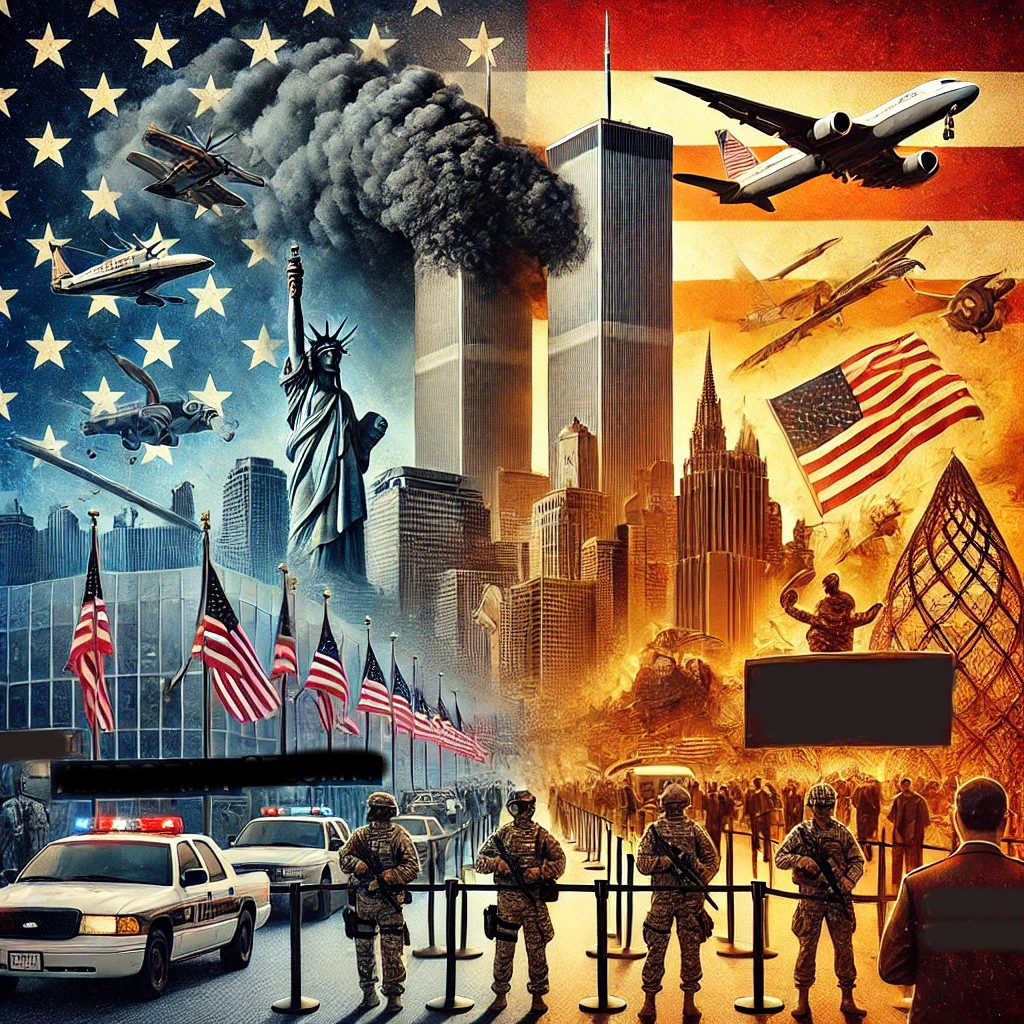
September 11, 2001, is forever etched into the collective memory of the United States and the world. On that morning, a series of coordinated terrorist attacks killed nearly 3,000 people, destroyed the World Trade Center’s Twin Towers, damaged the Pentagon, and left a deep emotional and political impact on Americans. In the days, months, and years following these events, the U.S. government undertook sweeping changes to both its domestic security procedures and its foreign policy goals. These changes had far-reaching consequences, influencing everything from how Americans travel to how the U.S. engages with allies and adversaries abroad.
In this article, we will explore how the 9/11 attacks reshaped American foreign and domestic policy. We will discuss the immediate aftermath, new legislation such as the Patriot Act, the reorganization of government agencies, and the launch of the “War on Terror.” We will also delve into how U.S. foreign policy pivoted to focus on counterterrorism and preemptive action, transforming global relationships and fueling debates about national security versus individual liberties. By understanding these shifts, we gain insight into the complexities of modern American history and how one tragic day altered the course of a nation.
The Immediate Aftermath of 9/11
In the hours and days following the attacks, Americans experienced shock, grief, and anger. The country came together in mourning, and there was a sense of unity across political, social, and cultural lines. Almost immediately, the federal government began crafting emergency measures to prevent another attack on U.S. soil. President George W. Bush declared a “War on Terror,” vowing that America would not rest until the perpetrators were brought to justice and future attacks were thwarted.
Despite the initial rallying cry for unity, the urgency of the situation meant that many policies were enacted quickly, sometimes without extensive debate. Troops were sent to Afghanistan in an effort to dismantle al-Qaeda, the group responsible for planning and orchestrating the attacks, and to remove the Taliban government that provided them safe harbor. Meanwhile, within the United States, law enforcement and intelligence agencies escalated their operations, and new laws were introduced to give authorities expanded powers to investigate and track potential terrorists.
Americans were also coping with new fears about personal safety. Air travel, which had long been seen as relatively secure, suddenly felt like a potential battleground. Questions arose about how hijackers could have passed through airport security, prompting the government to tighten measures nationwide. The Federal Aviation Administration (FAA) implemented immediate security upgrades, and military jets were dispatched to patrol major city skies, demonstrating just how dramatically life changed in the wake of 9/11.
Heightened Domestic Security Measures
One of the most visible transformations after 9/11 was the overhaul of airport security. Before the attacks, airport security was relatively simple, often managed by private contractors hired by airlines. After 9/11, the federal government assumed direct responsibility for passenger screenings by creating the Transportation Security Administration (TSA). This new agency introduced rigorous procedures: passengers removed their shoes, limiting liquids became standard, and scanning technology advanced dramatically to detect any potential threats.
Beyond airports, a heightened sense of vigilance spread to other parts of daily life. Major events, such as sports games and concerts, started incorporating more comprehensive security checks. Federal buildings and even some private institutions introduced stricter ID checks and electronic surveillance measures to monitor visitors. Large cities ramped up the presence of law enforcement in high-profile areas like Times Square in New York City and Union Station in Washington, D.C.
These changes were generally popular in the early days, as Americans craved security. However, over time, some people grew concerned about how far these measures should go, and debates sprang up around personal privacy. While most citizens agreed that preventing terrorism was critical, questions arose: where is the line between necessary security and the overreach of government power? These debates would come to a head when the Patriot Act was signed into law.

The Patriot Act and Civil Liberties
The U.S. Patriot Act, signed into law by President Bush on October 26, 2001, was designed to give law enforcement and intelligence agencies more tools to detect, disrupt, and prosecute terrorist activities. Among its many provisions were expanded surveillance powers, which allowed federal authorities to monitor phone calls, emails, banking, and other records with fewer procedural hurdles. In theory, this made it easier to track suspected terrorists and prevent attacks before they happened.
Initially, many Americans supported the Patriot Act. The trauma of 9/11 left people anxious for any solution that could offer a sense of safety and deter future threats. Lawmakers framed the legislation as a temporary solution to extraordinary circumstances, and the bill passed with significant support in Congress.
However, civil liberties groups, journalists, and an increasing number of everyday citizens began to worry about the scope of these powers. Critics argued that the Patriot Act risked encroaching on constitutional freedoms, including privacy and due process. For example, the Act included provisions allowing “roving wiretaps,” which let authorities track a suspect across multiple communication devices without needing separate warrants. It also permitted “sneak and peek” searches, where federal agents could conduct a search without immediately notifying the target.
Over time, public debate intensified, with some Americans feeling that the Act gave the government too much authority to watch its own people. Supporters countered by saying these measures were necessary in an age when terror groups actively sought to exploit free societies. While certain sections of the Patriot Act have been modified or allowed to expire, the Act largely remains in place, emblematic of how 9/11 rewrote the balance between security and privacy in American society.
Reorganization of Government: The Creation of the DHS
Following 9/11, policymakers also recognized that various federal agencies responsible for national security needed better coordination. At the time, responsibilities were scattered across organizations like the FBI, CIA, Immigration and Naturalization Service (INS), and others. In 2002, President Bush signed the Homeland Security Act, leading to the creation of the Department of Homeland Security (DHS)—the largest government reorganization since the Department of Defense was established in 1947.
The DHS brought together 22 different agencies under one umbrella. These agencies included the TSA, the Federal Emergency Management Agency (FEMA), U.S. Customs and Border Protection (CBP), and the Secret Service, among others. The aim was to consolidate efforts, improve intelligence-sharing, and streamline the government’s capacity to prevent and respond to terrorist threats.
Although the formation of the DHS was generally seen as a necessary step in centralizing homeland security, it did raise questions about oversight and efficiency. Government watchdogs and political leaders have frequently debated whether combining so many agencies, each with its unique culture and priorities, truly achieved the desired outcome of making Americans safer. Even so, the DHS stands as a major legacy of 9/11, acting as a central node in America’s domestic security strategy.
Foreign Policy Shifts: The War on Terror
Beyond its borders, the United States undertook a massive transformation in its approach to foreign policy after 9/11. Soon after the attacks, President Bush addressed Congress and announced the launch of a “War on Terror,” calling out nations that harbored terrorists and stating that the U.S. would make no distinction between terrorist groups and countries that supported them. This new doctrine broke sharply with some prior policies that relied on deterrence or diplomacy to manage international threats.
The Bush administration’s stance was that the traditional notion of waiting for an attack to happen was no longer viable. Al-Qaeda’s willingness to commit large-scale terrorist acts showed that non-state actors could be as dangerous as traditional military adversaries. The administration argued that preemptive action against terrorist organizations and the governments sheltering them was essential to protect American lives. This perspective became known as the “Bush Doctrine,” which emphasized unilateral, preemptive strikes when necessary to defend the United States.
Though many Americans supported this shift in the immediate aftermath of 9/11, the War on Terror would eventually spark global debate. Critics, both at home and abroad, claimed the doctrine gave the U.S. government an overly broad mandate for military intervention, overshadowing diplomatic solutions. On the other hand, supporters insisted that the U.S. had no choice but to aggressively pursue terrorists to stop another catastrophe on the scale of 9/11.
Military Engagements in Afghanistan and Iraq
The first major foreign policy move in the War on Terror was the U.S.-led invasion of Afghanistan in October 2001. The stated goal was to dismantle al-Qaeda’s training camps and oust the Taliban regime, which was accused of sheltering Osama bin Laden and other al-Qaeda leaders. In the early stages, the Taliban was quickly removed from power, and many al-Qaeda bases were disrupted. However, the conflict soon devolved into a long-term struggle with a resurgent Taliban, requiring a sustained U.S. and NATO presence that lasted for two decades.
In 2003, the U.S. invaded Iraq, citing concerns about Saddam Hussein’s alleged weapons of mass destruction (WMD) and potential ties to terrorist groups. This invasion, however, proved far more controversial. While supporters argued it was a logical extension of the War on Terror—removing a dictator who could potentially supply terrorists with WMDs—critics contended that Iraq had no direct link to 9/11 and that the focus on Iraq diverted resources and attention from Afghanistan. Over time, no evidence of active WMD programs was found, fueling public skepticism.
The wars in Afghanistan and Iraq redefined U.S. foreign policy in the early 21st century. They became the longest military engagements in American history up to that point, requiring enormous financial and human capital. Domestic opinion fluctuated as casualties mounted, and debate raged over America’s role in nation-building, counterinsurgency, and the ethical implications of extended military occupations.
Global Implications of the War on Terror
America’s shift in foreign policy had wide-ranging effects on the global stage. Allies such as Britain, Canada, and Australia joined military coalitions in Afghanistan and, in some cases, in Iraq. International organizations like NATO invoked Article 5 for the first time in history, stating that an attack on one member was considered an attack on all. This move underscored the level of solidarity the U.S. initially enjoyed from its allies.
Over time, however, tensions grew. Disagreements about intelligence reports on Iraqi WMDs, as well as the preemptive nature of the Iraq invasion, led some allies to question U.S. leadership. Meanwhile, adversarial countries criticized what they saw as American unilateralism. International sentiment became more divided, and anti-American protests erupted in various parts of the world.
Moreover, the War on Terror contributed to the global spread of terrorism. Many experts argued that al-Qaeda and similar groups used America’s military engagements as propaganda, recruiting new fighters to their cause. In response, the U.S. and its allies expanded counterterrorism efforts worldwide, from North Africa to Southeast Asia, relying heavily on special operations, drone strikes, and intelligence sharing with partner nations.
Impact on Immigration and Travel Policies
Alongside strict domestic security measures, the U.S. government revised immigration and travel policies to prevent terrorists from entering the country. Background checks became more rigorous, visa approvals more time-consuming, and certain visitor programs were scrutinized for potential abuse. The Department of Homeland Security introduced the US-VISIT program, which collected biometric data—like fingerprints and photographs—from foreign nationals upon entry to the United States.
The National Security Entry-Exit Registration System (NSEERS) was also implemented to keep track of certain non-citizens, particularly those from countries viewed as a higher security risk. Although some argued that such programs were necessary to safeguard the nation, critics pointed out instances of racial profiling and discrimination, especially against people from predominantly Muslim countries.
Travel within the U.S. changed as well. Domestic flights now require valid photo IDs at multiple checkpoints, and advanced imaging technology was deployed. While many travelers saw these measures as inconvenient but necessary, they sparked discussions about personal freedoms. In a country that cherishes civil liberties, these policy changes tested the balance between protecting the public and preserving individual rights.
Technological Surveillance and Data Collection
The 9/11 attacks also accelerated the government’s reliance on sophisticated surveillance and data collection tools. Intelligence agencies, such as the National Security Agency (NSA), began to develop more advanced methods of intercepting and analyzing communications. The internet, cell phones, and electronic databases became focal points for intelligence gathering, with agencies arguing that monitoring global communication networks was vital to preventing future attacks.
One of the most debated aspects of this shift came to light in 2013, when former NSA contractor Edward Snowden leaked information about extensive government surveillance programs. These leaks revealed that the NSA had been collecting metadata from phone calls and online activity, often without the explicit knowledge of the public. While many Americans were shocked by the scope of these programs, others felt the disclosures merely confirmed suspicions that the government had broad surveillance capabilities.
The resulting debate on privacy rights versus national security has roots in the post-9/11 era. Defenders of large-scale surveillance argue that it has prevented potential terrorist plots. Opponents worry about the erosion of personal freedoms and the risk of government overreach. In many ways, the modern conversation about internet privacy, data collection, and Big Tech’s role in facilitating government surveillance can be traced back to the policies and mindsets shaped by 9/11.
The Ongoing Legacy of 9/11
The events of 9/11 had immediate and powerful consequences, but their influence continues to shape American life and policy more than two decades later. People who grew up in the post-9/11 world have never known air travel without stringent security checks or a world where the War on Terror wasn’t an underlying current in foreign affairs. The creation of the DHS, the passage of the Patriot Act, and the invasions of Afghanistan and Iraq remain pivotal chapters in the story of modern America.
Politically, 9/11 also shifted the way candidates for public office talk about national security. Pledges to keep America safe became staples of presidential and congressional campaigns, regardless of party affiliation. Opinions on how best to achieve security—and how much personal liberty should be sacrificed—remain hotly contested topics. These debates reflect deeper divides in American society about the role of government, the ethics of military intervention, and the balance between transparency and secrecy.
Internationally, the U.S. has recalibrated some of its strategies. Although large-scale troop deployments have been scaled down and the conflict in Afghanistan formally ended in 2021, counterterrorism efforts persist through drone strikes, cyberwarfare, and partnerships with local forces in other regions. Relations with allies and rivals remain colored by the legacy of the War on Terror, influencing diplomatic and military decisions even today.
Conclusion
The 9/11 attacks represent a watershed moment in American history, triggering profound changes in both foreign and domestic policy. From the establishment of the Department of Homeland Security to the passing of the Patriot Act, the United States entered a new era of security measures that continue to influence daily life. Airports, federal buildings, and major events adopted rigorous protocols, while intelligence and law enforcement agencies gained more latitude to investigate potential threats.
Abroad, the War on Terror reoriented America’s global strategy, leading to prolonged military engagements in Afghanistan and Iraq. While some view these interventions as essential to preventing further attacks, others argue they have strained international relationships, spurred anti-American sentiment, and sparked debates about the ethics and efficacy of military intervention. At the same time, America’s approach to immigration, travel, and technological surveillance evolved drastically, sometimes igniting controversies about privacy, civil liberties, and the treatment of minority communities.
Although time has passed, the legacy of 9/11 remains powerful. People across the United States still grapple with the balance between liberty and security, questioning how far the government should go in the name of national defense. On the global stage, alliances and tensions forged in the wake of 9/11 continue to shape international relations. Understanding these policies—and the debates they inspire—provides a crucial lens through which we can examine modern American history. In a post-9/11 world, the question is not just how we remember that day, but how we learn from it to build a more secure and equitable future for all.
Frequently Asked Questions
1. How did the 9/11 attacks lead to changes in U.S. domestic security policies?
The 9/11 attacks fundamentally transformed U.S. domestic security policies, primarily sparking the creation of the Department of Homeland Security, a centralized body focused on bolstering national security and preventing further terrorist attacks. It consolidated 22 different federal departments and agencies into one, making it one of the largest reorganizations of the federal government. Moreover, the PATRIOT Act, enacted in October 2001, expanded the surveillance capabilities of law enforcement agencies, allowing them greater latitude in monitoring communications, accessing records, and conducting searches without a warrant. Enhanced airport security measures were also implemented, including the establishment of the Transportation Security Administration (TSA) to oversee airline and airport safety. These changes aimed to prevent terrorists from exploiting vulnerabilities within the United States.
2. What impact did 9/11 have on U.S. foreign policy?
Following 9/11, U.S. foreign policy underwent major shifts towards more aggressive counterterrorism initiatives and military actions abroad. The attacks were a catalyst for the War on Terror, leading to the invasion of Afghanistan to dismantle al-Qaeda and remove the Taliban from power. The attacks also influenced the decision to invade Iraq in 2003 under the belief that Saddam Hussein possessed weapons of mass destruction and posed a terrorist threat. American foreign policy became heavily focused on preventing and combating terrorism worldwide. The events of 9/11 fueled an increase in defense spending and multinational cooperation to pursue terrorists across borders. Additionally, the United States strengthened alliances with nations pivotal in the counterterrorism effort, adjusting diplomatic ties to focus on security-centric alliances.
3. How did the 9/11 attacks alter the perception of security and privacy among American citizens?
In the aftermath of 9/11, American citizens experienced a paradigm shift in their perception of security and privacy. The collective trauma heightened awareness of terrorism, leading to an increased public tolerance for intrusive security measures in airports and public spaces, viewed as necessary trade-offs for safety. The PATRIOT Act raised significant privacy concerns, as it allowed extensive government surveillance without requiring traditional court-issued warrants, sparking debates about the balance between national security and civil liberties. This tension persisted, leading to ongoing discussions and legal challenges around privacy rights, data collection by government agencies, and the implications of enhanced surveillance on individual freedoms. Americans grappled with the need to feel secure against potential threats while also valuing their constitutional rights.
4. What role did intelligence and defense agencies play post-9/11 in shaping U.S. policies?
In response to 9/11, intelligence and defense agencies became integral in shaping U.S. security and foreign policies. There was a significant effort to overhaul the intelligence community, leading to the enactment of the Intelligence Reform and Terrorism Prevention Act of 2004. This created the role of the Director of National Intelligence (DNI) to better coordinate and streamline intelligence efforts across multiple agencies. The National Counterterrorism Center was also established to enhance real-time intelligence sharing and strategic planning against terrorism. Defense agencies saw increased budgets and expanded roles, focusing on counterterrorism operations worldwide. These agencies’ contributions became crucial in national decision-making processes, wielding influence on policies pertaining to international relations and homeland defense strategies.
5. How have the 9/11 attacks influenced American social and cultural perspectives?
The attacks on September 11, 2001, had profound effects on American social and cultural perspectives, leading to a reinvigorated sense of patriotism and national unity, albeit temporarily. This period saw a surge in national solidarity, with people rallying around symbols such as the American flag. However, it also led to increased suspicion and sometimes hostility towards Muslim and Middle-Eastern communities within the U.S., complicating the social fabric with instances of discrimination and xenophobia. The arts, literature, and media endeavored to process the trauma and reflect on themes of loss, heroism, and resilience, contributing to a collective healing process. Sociopolitical dialogues around topics such as immigration, civil liberties, and America’s role in global politics were invigorated, continuing to resonate in the national consciousness more than two decades later.